Disclaimer: You are using Google Translate. The ICESCO is not responsible for the accuracy of the information in the translated language .

your opinion

User Feedback

Overall, how satisfied are you about the website?

    Extremely Dissatisfied Extremely Satisfied

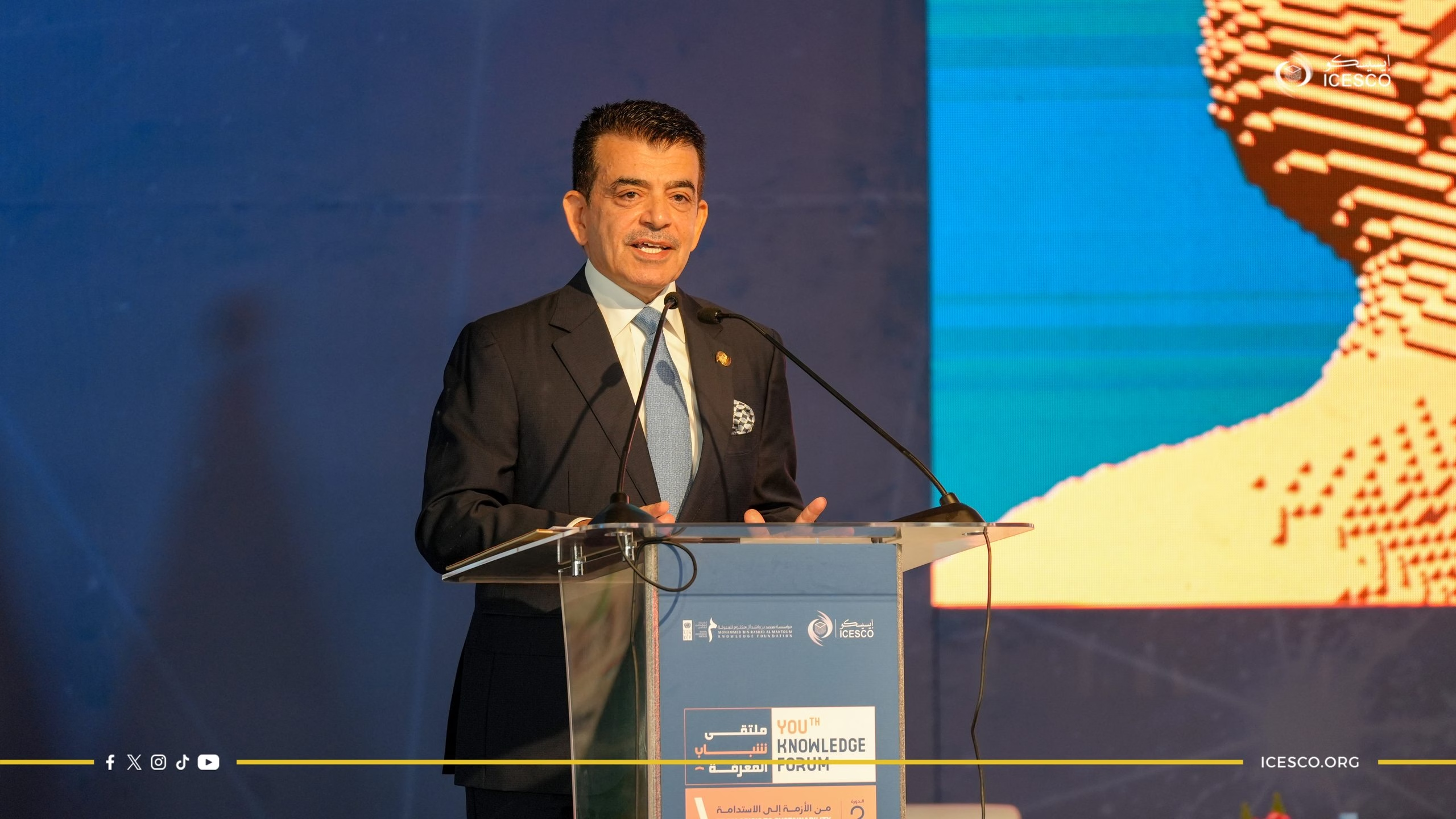
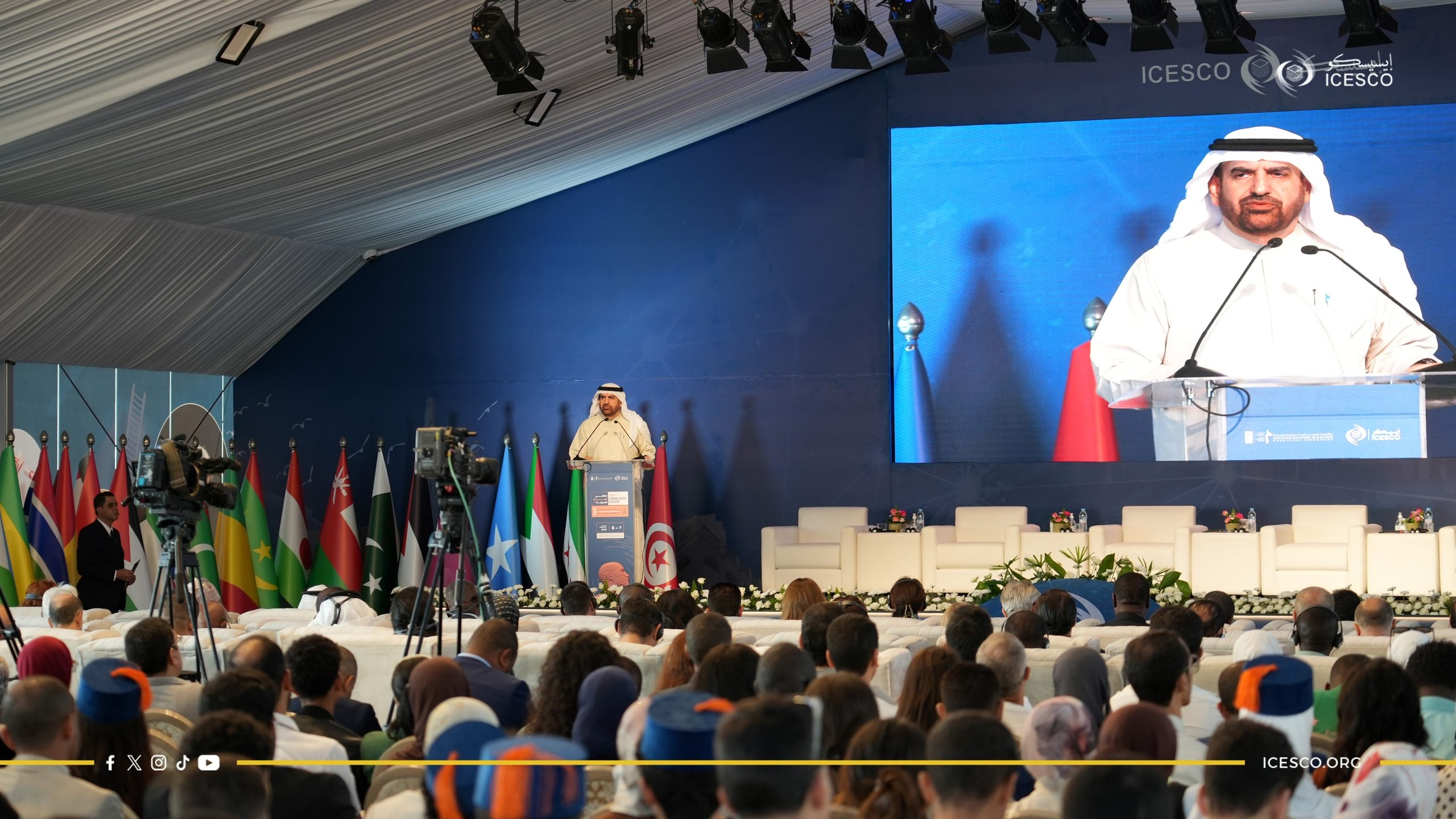
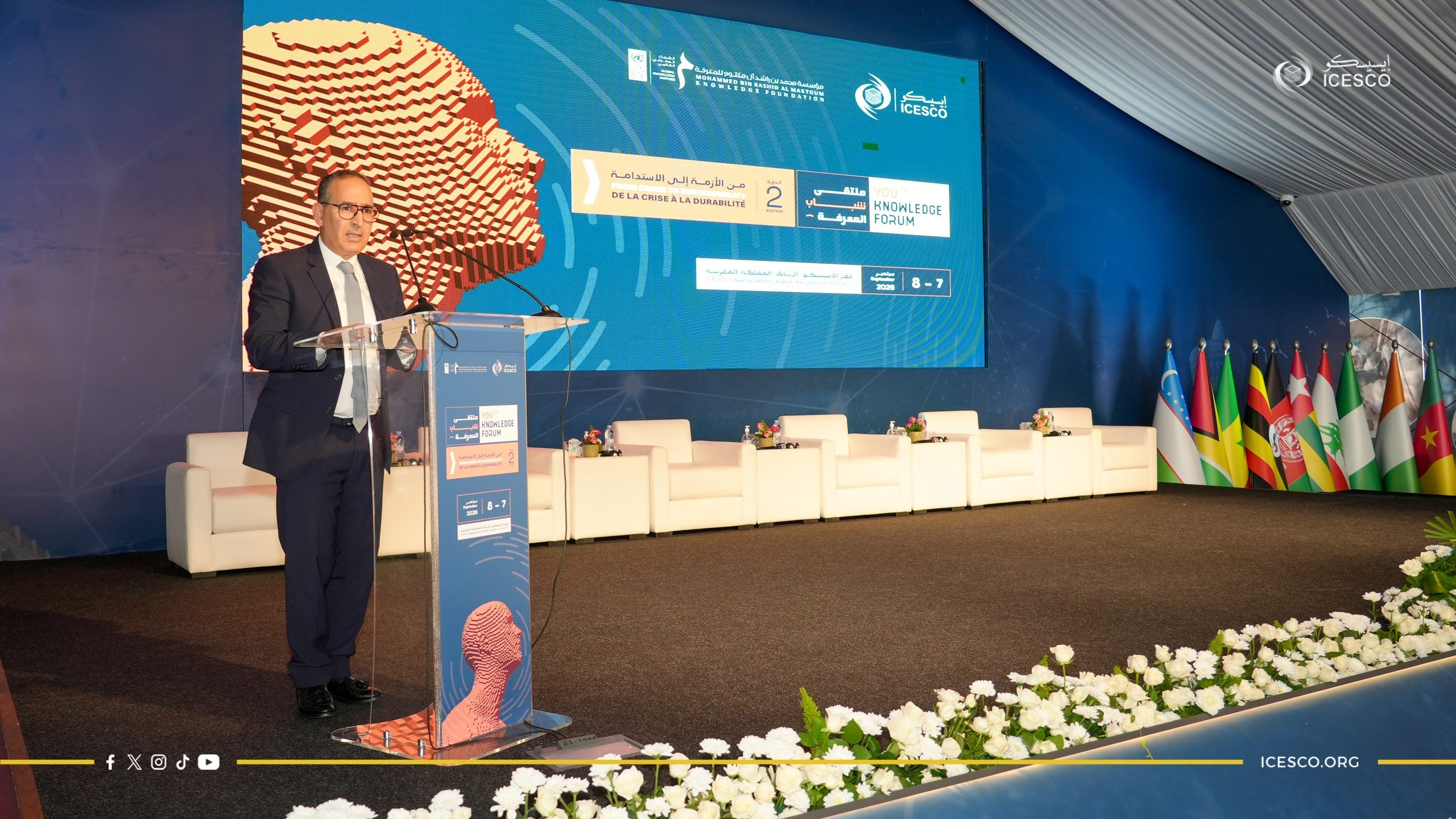
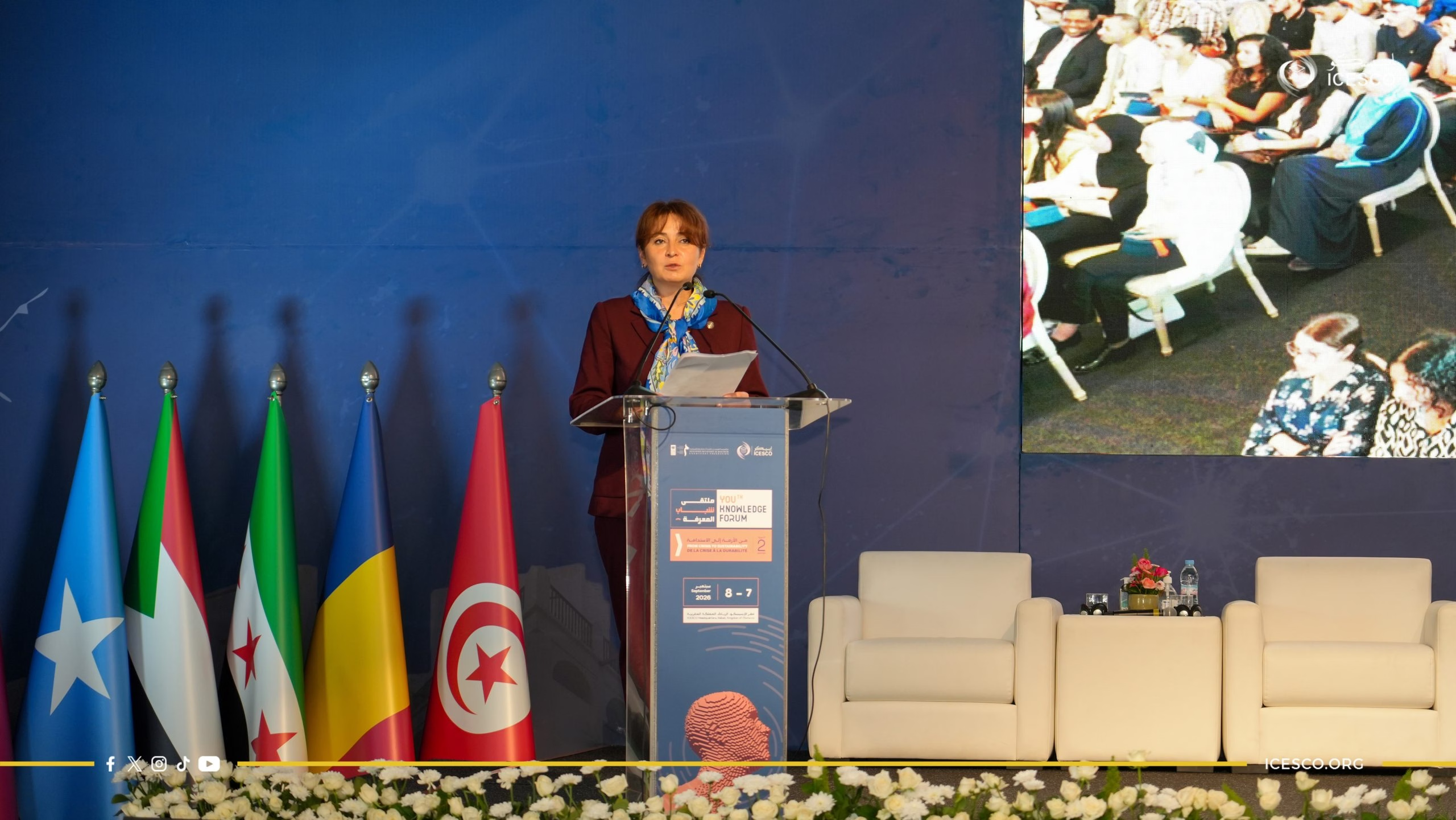
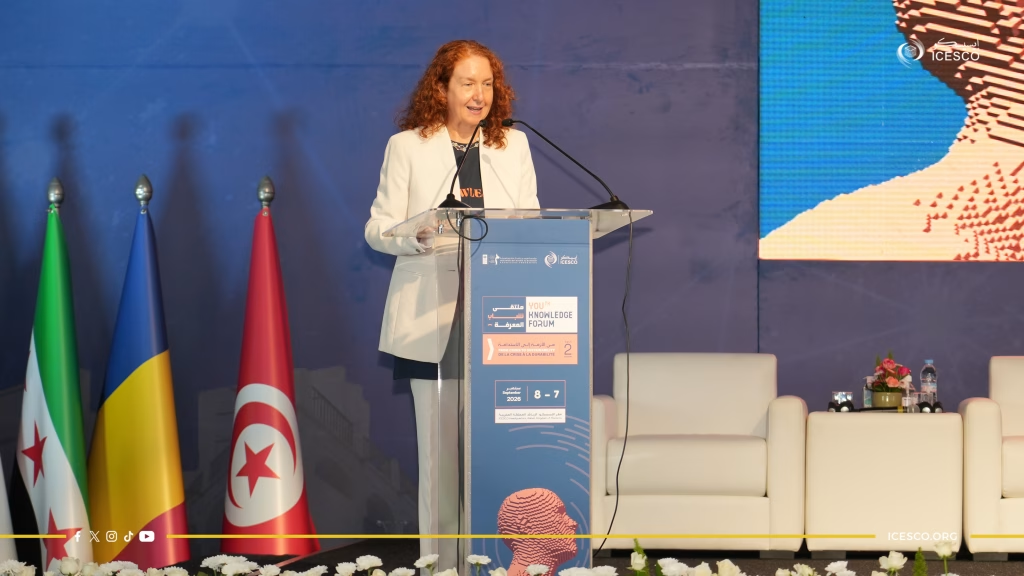
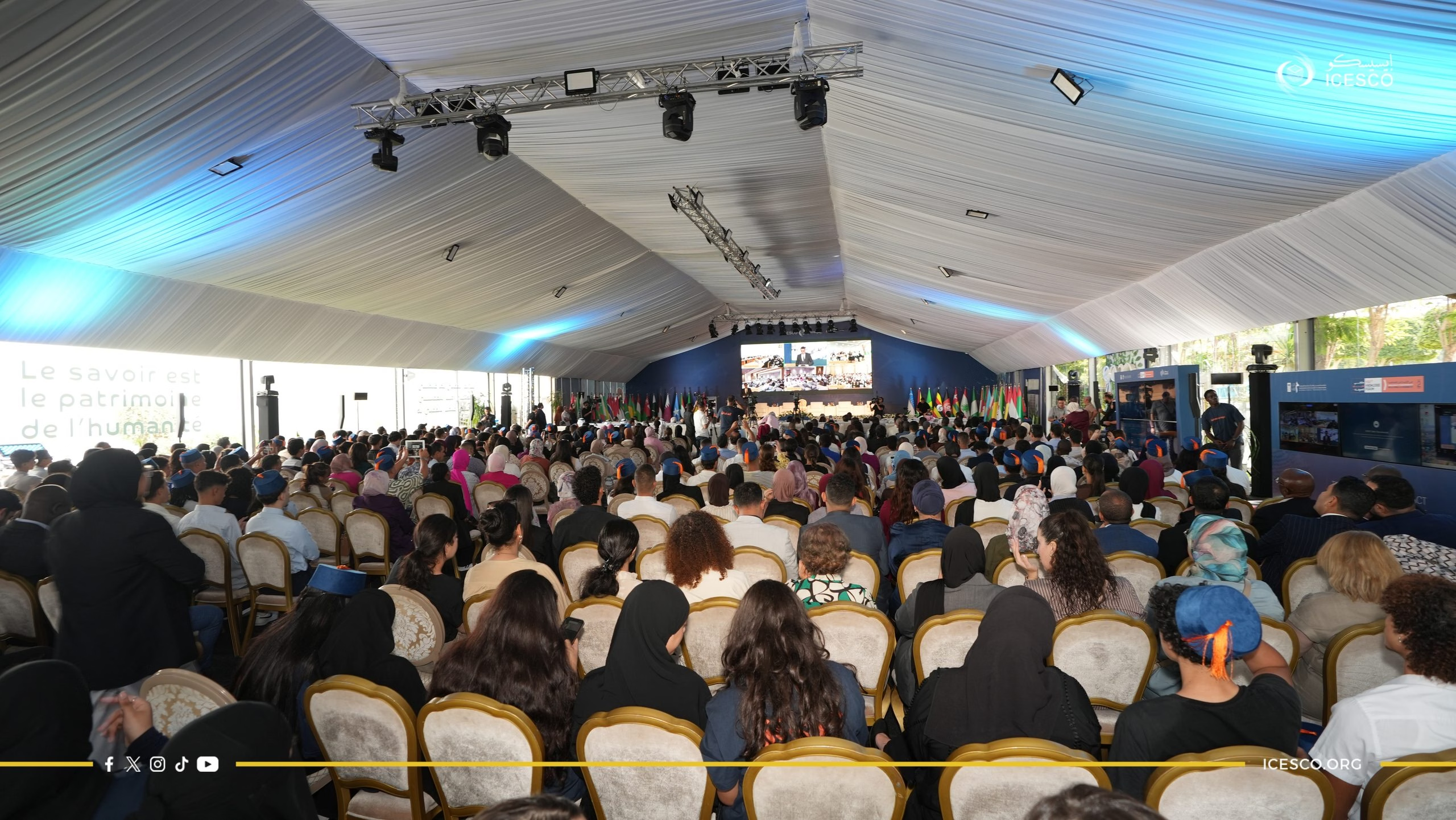
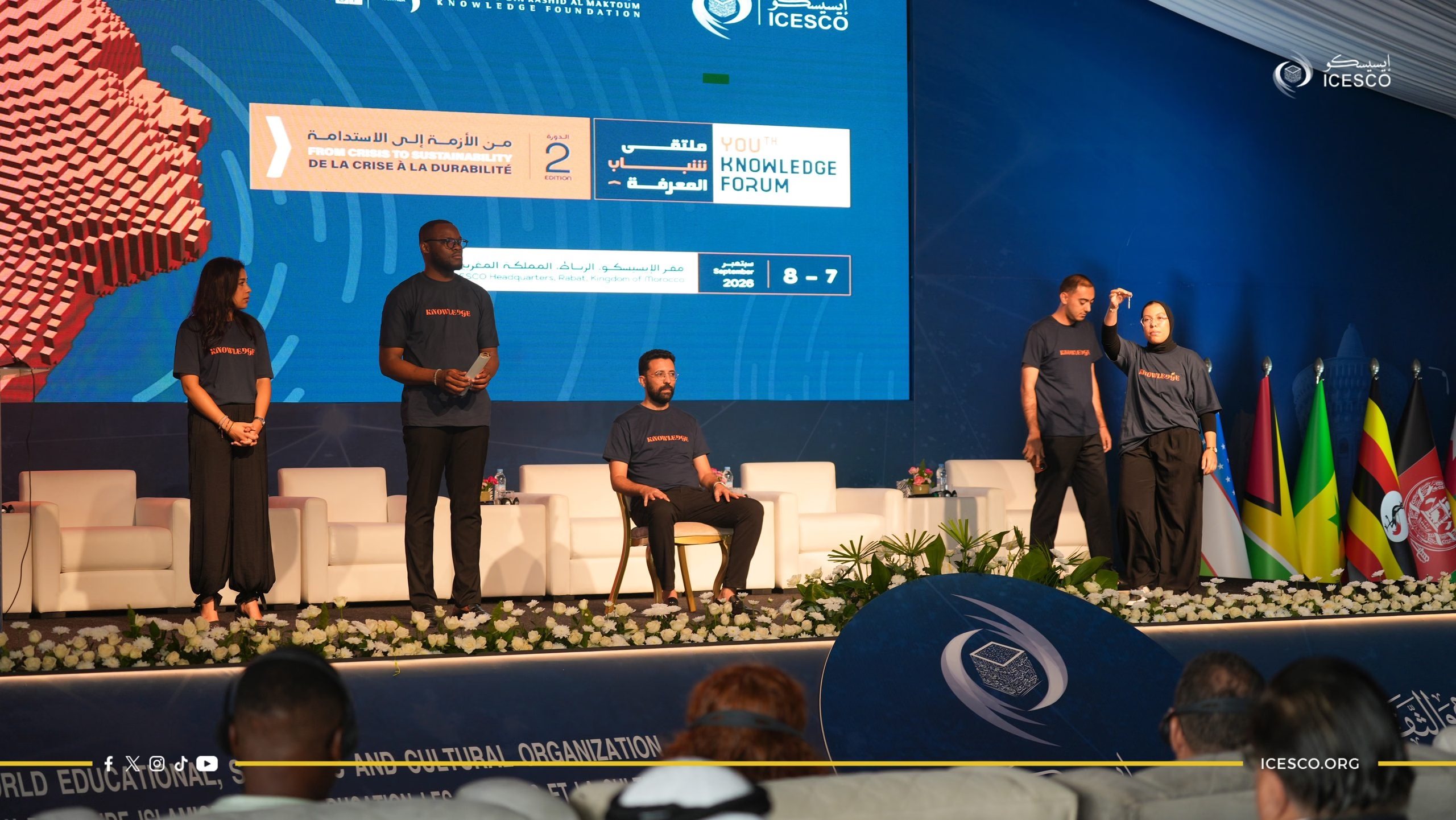
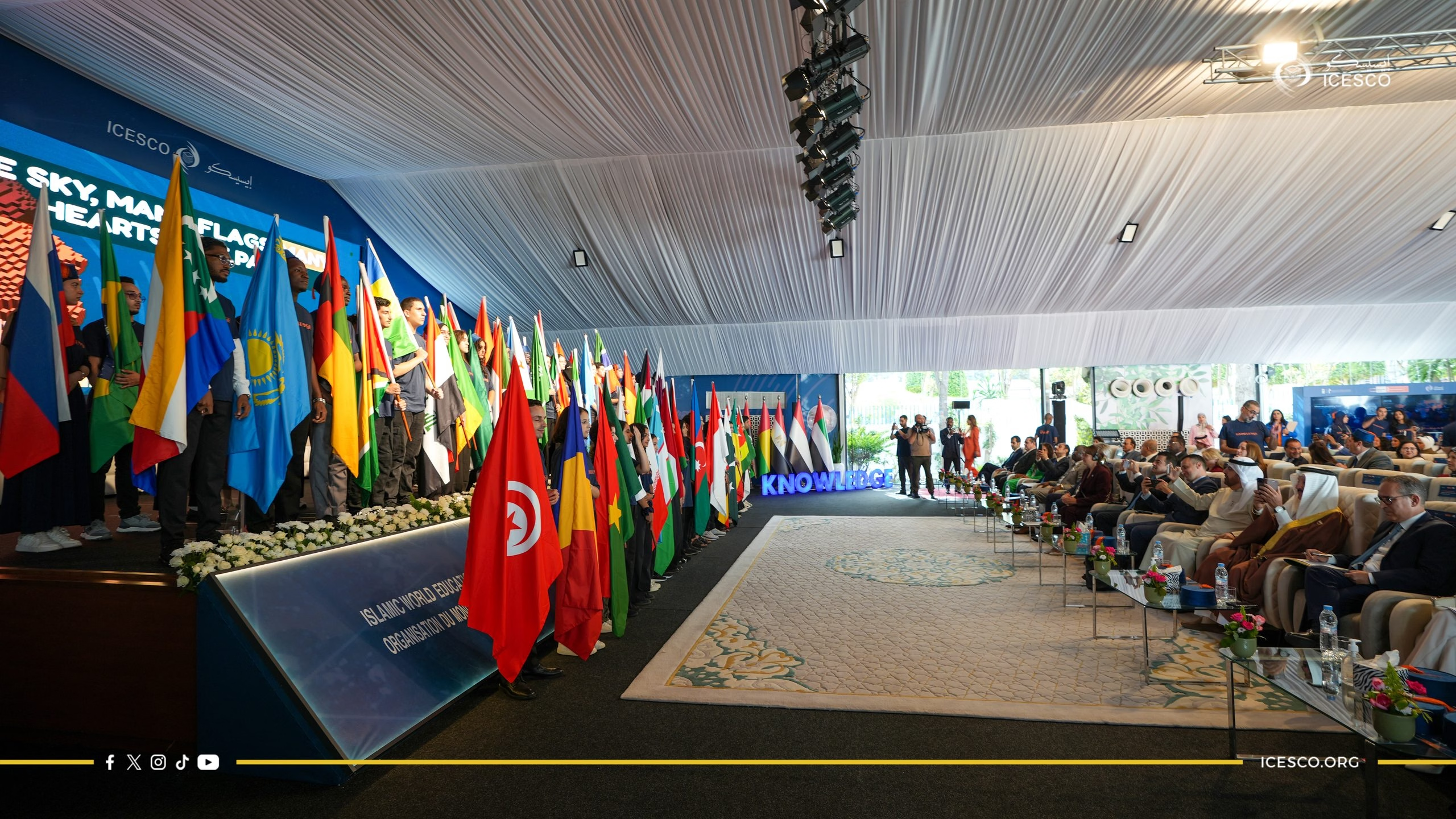
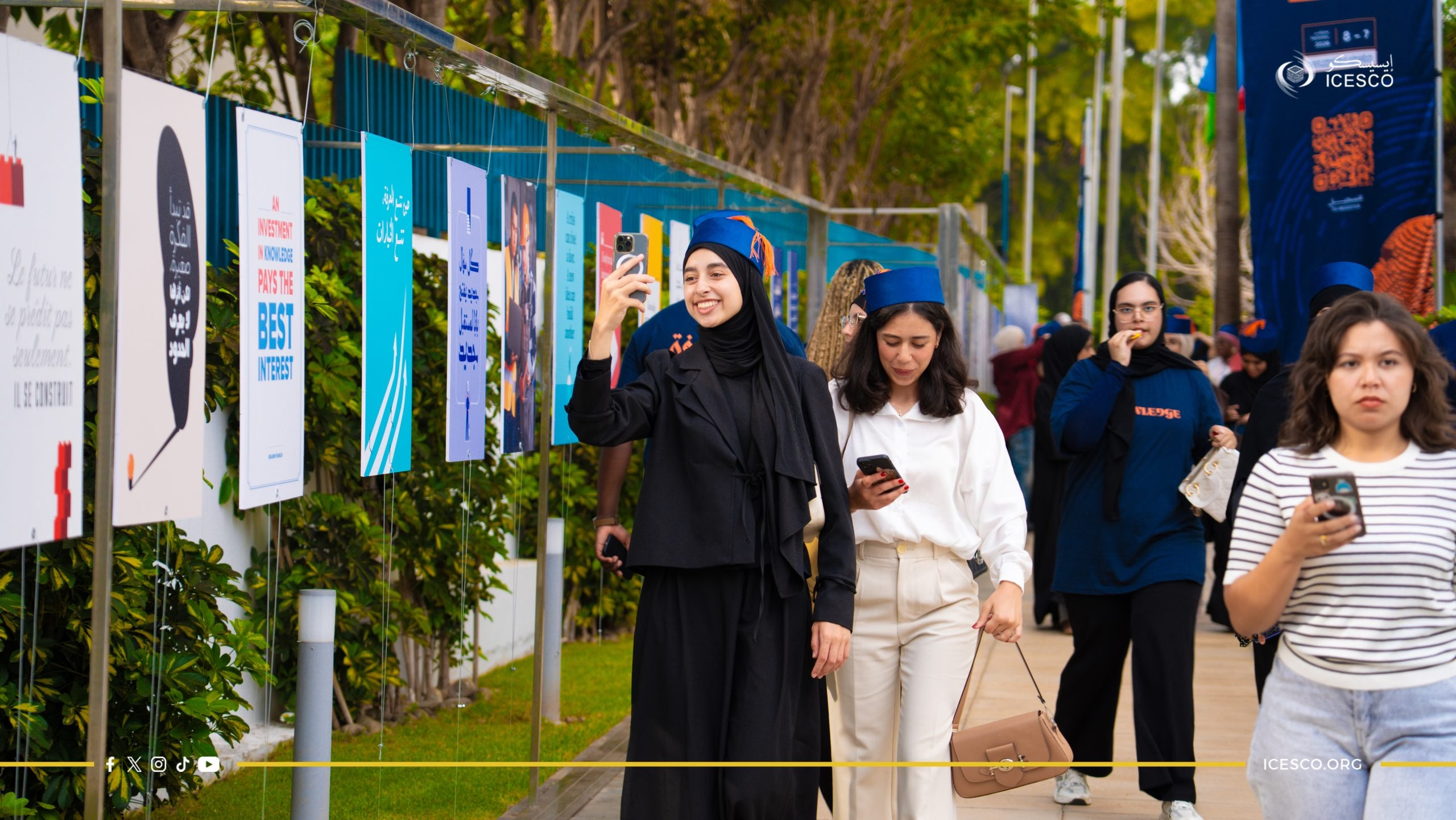
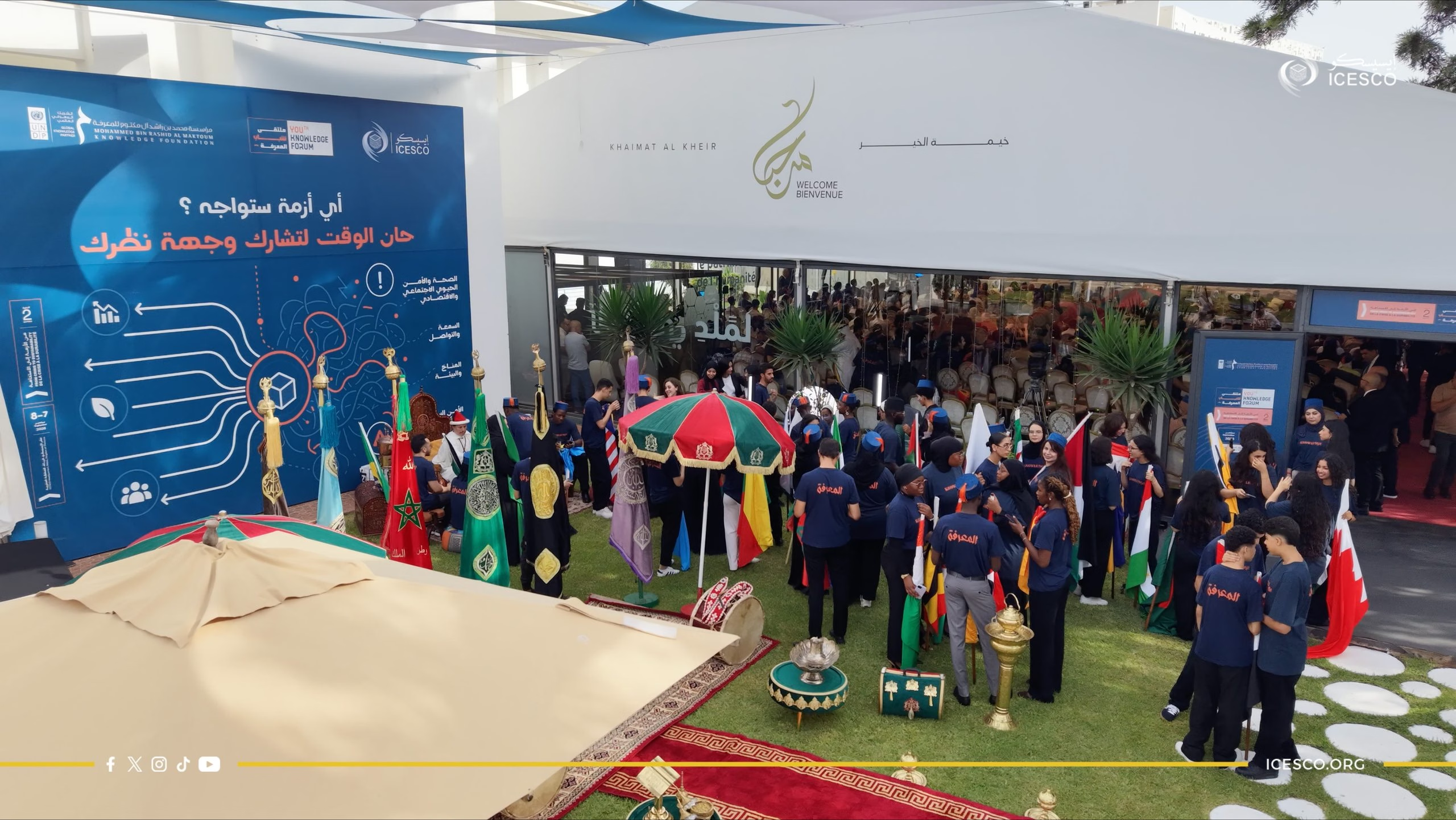
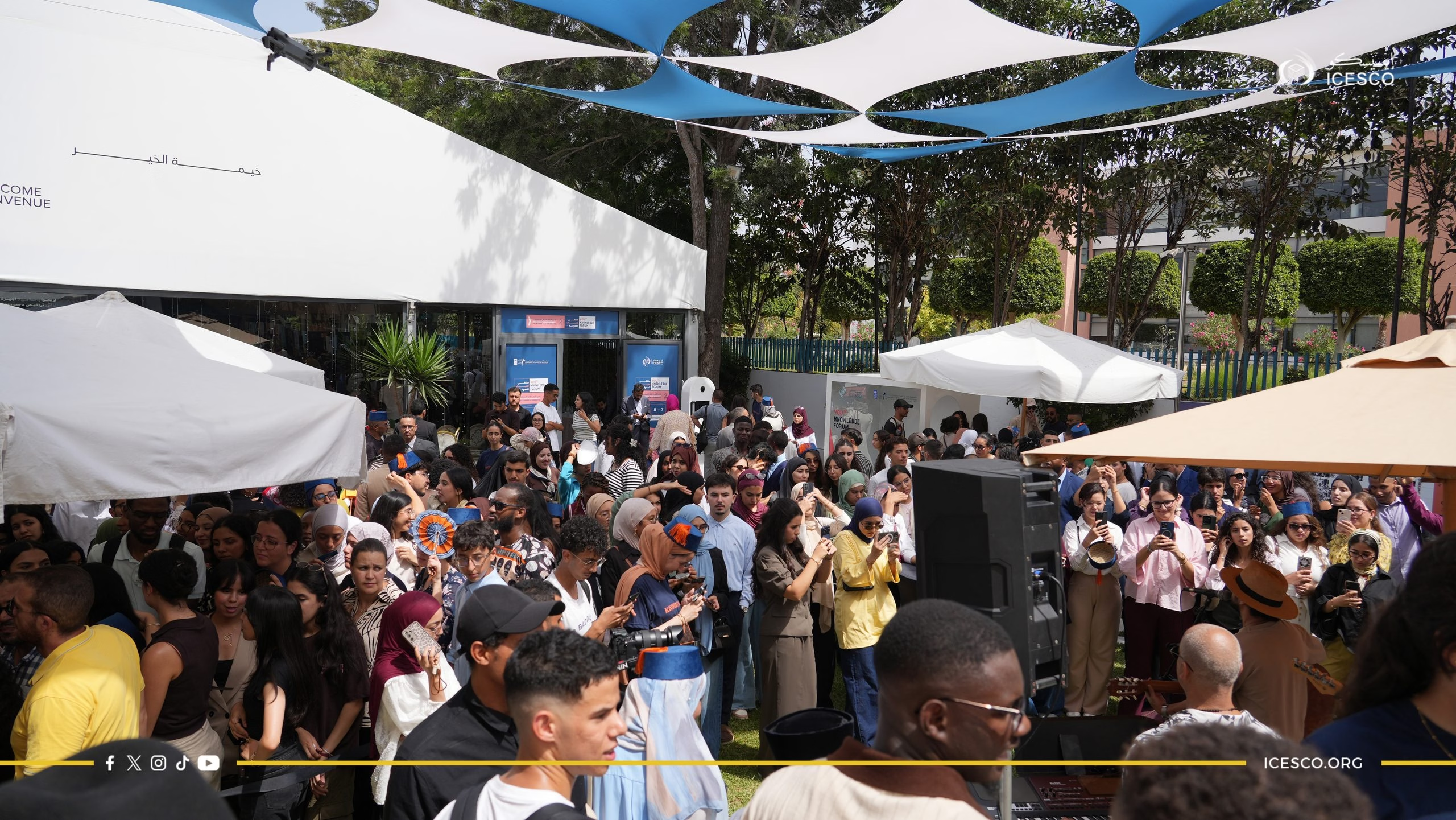
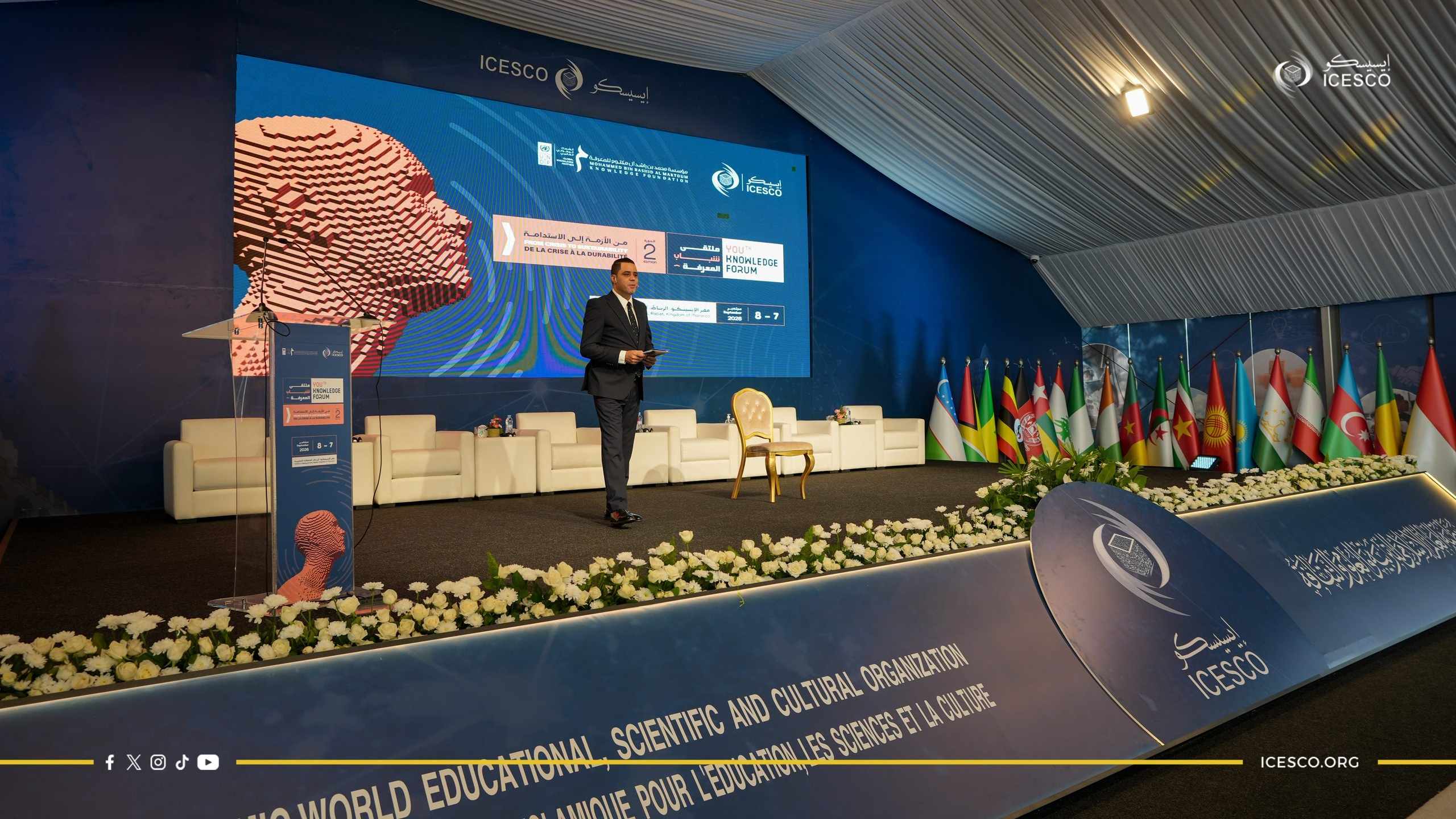
    With nearly 3,000 participating young people, Youth Knowledge Forum Kicks Off at ICESCO Headquarters

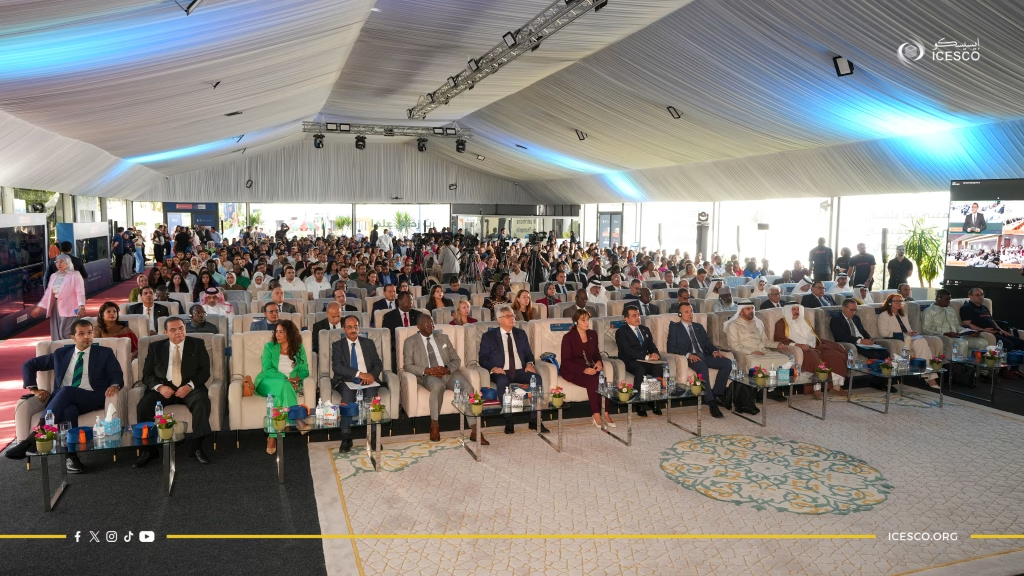
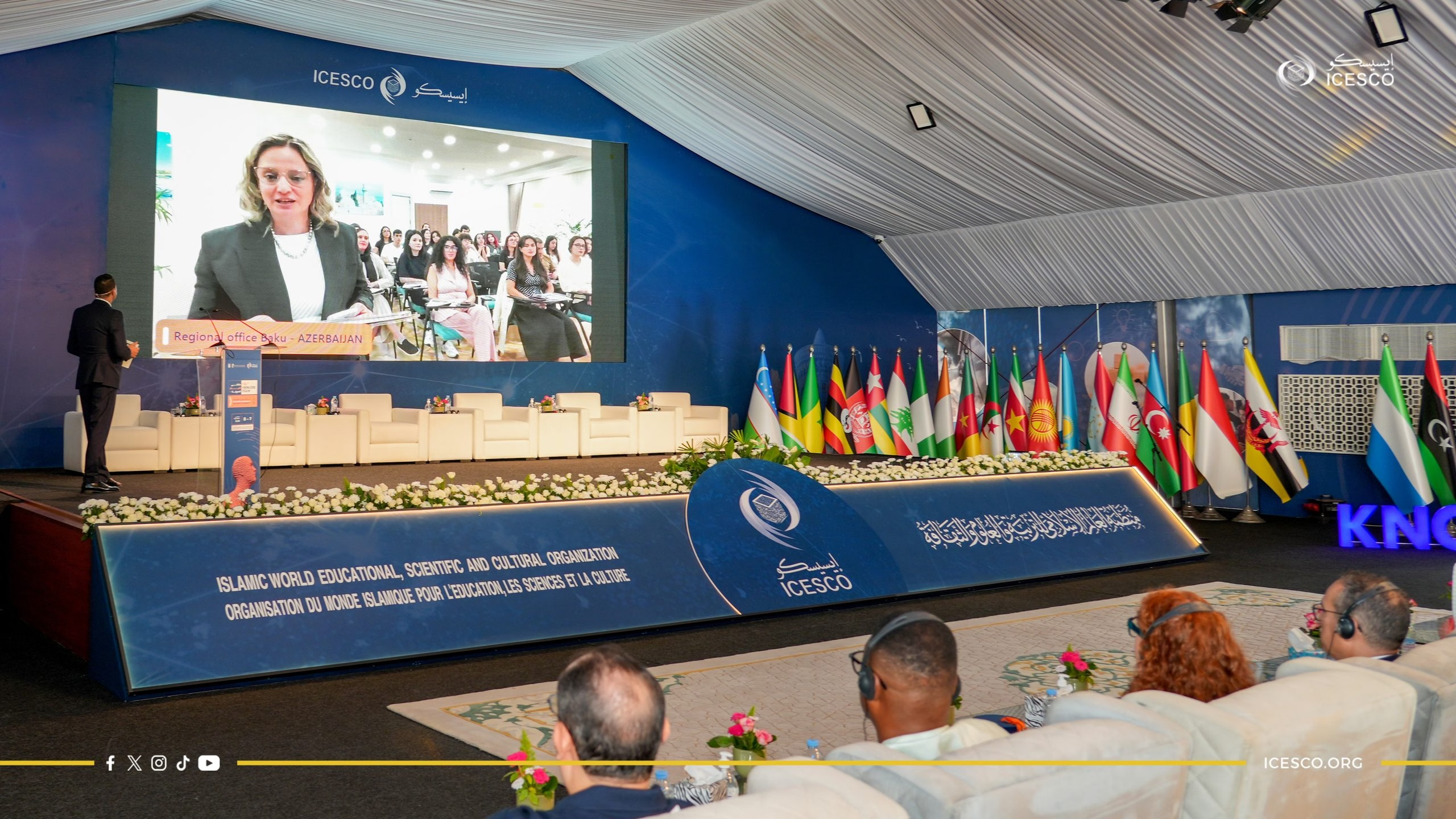
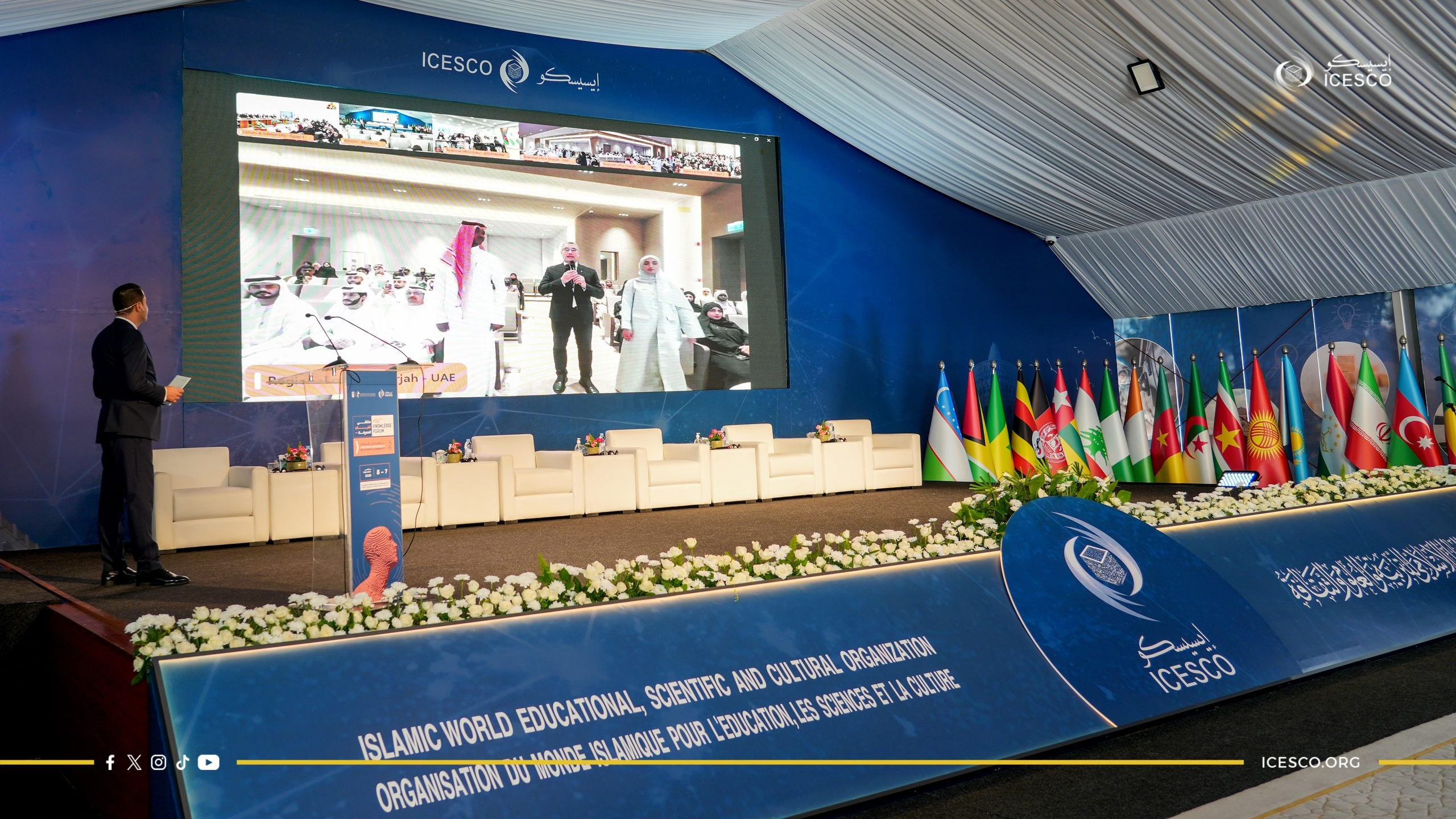
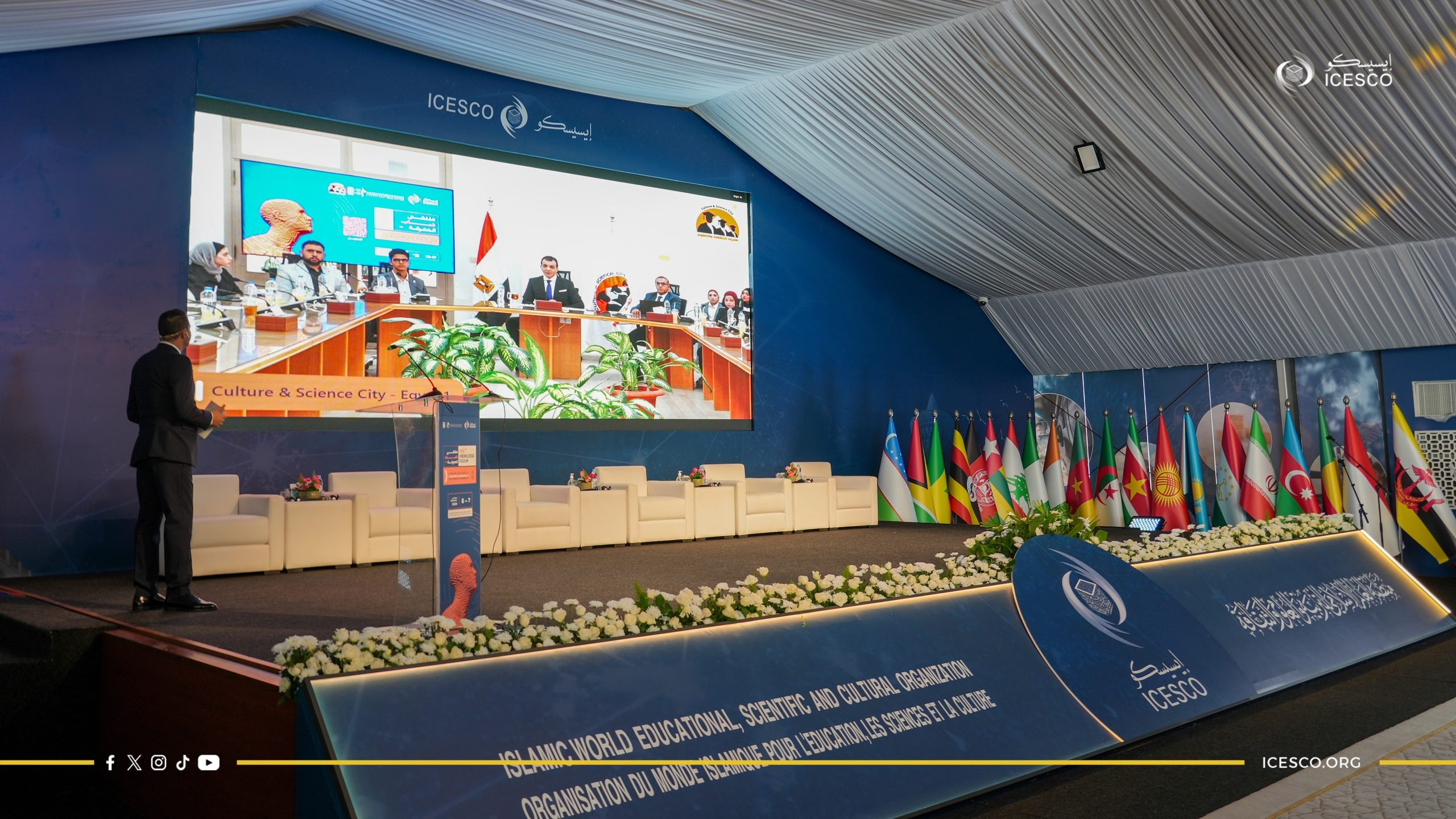
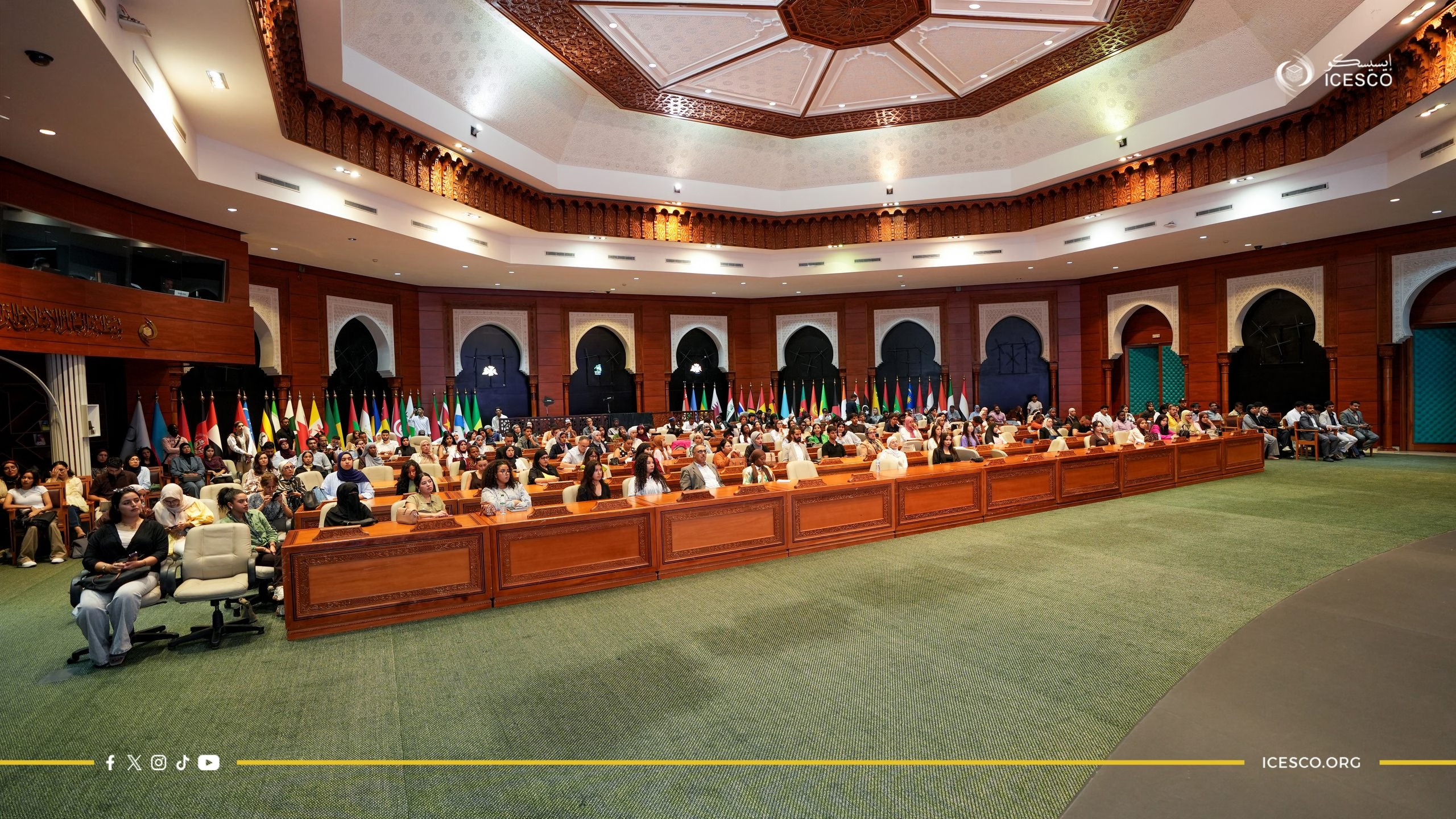
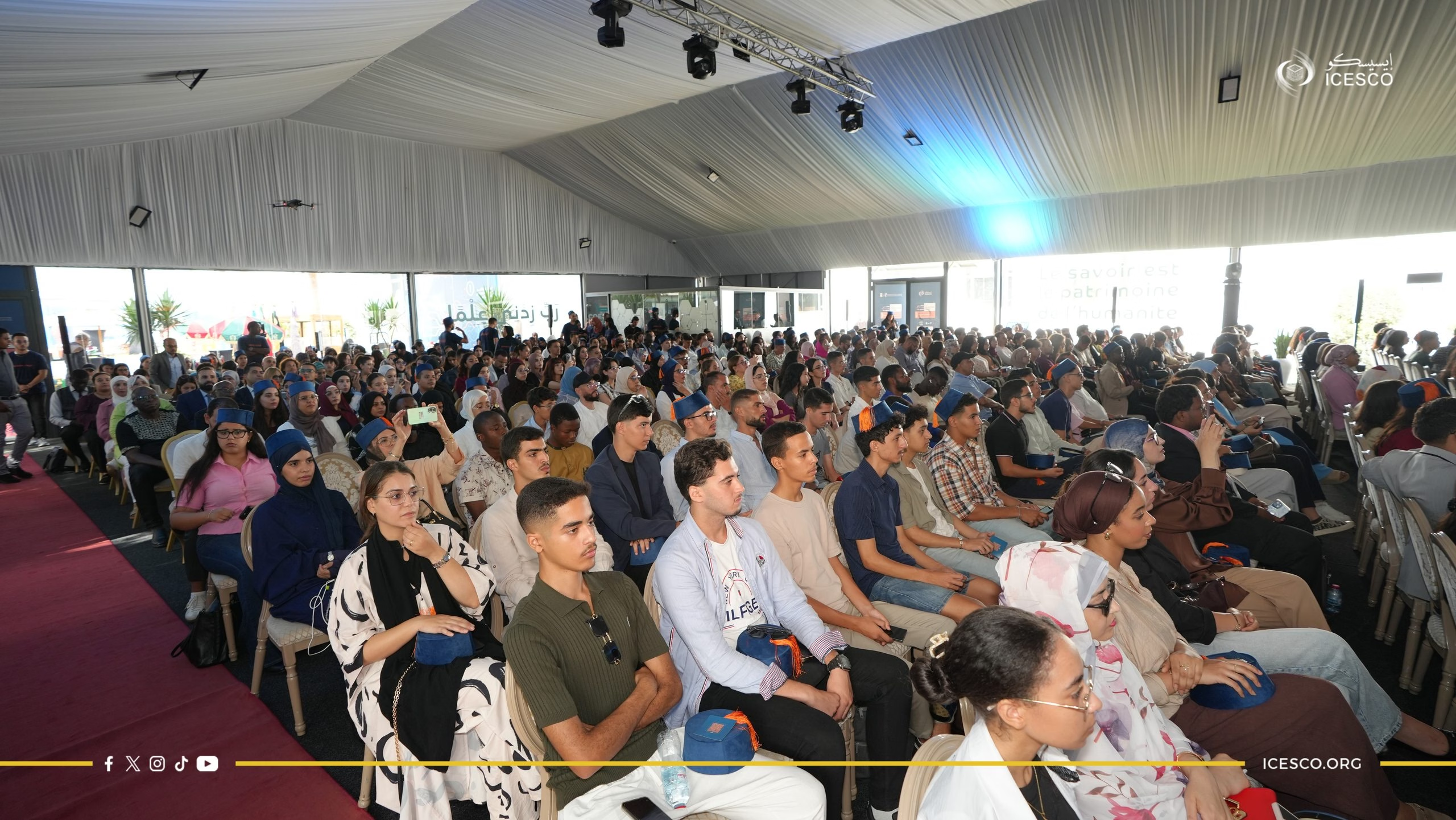
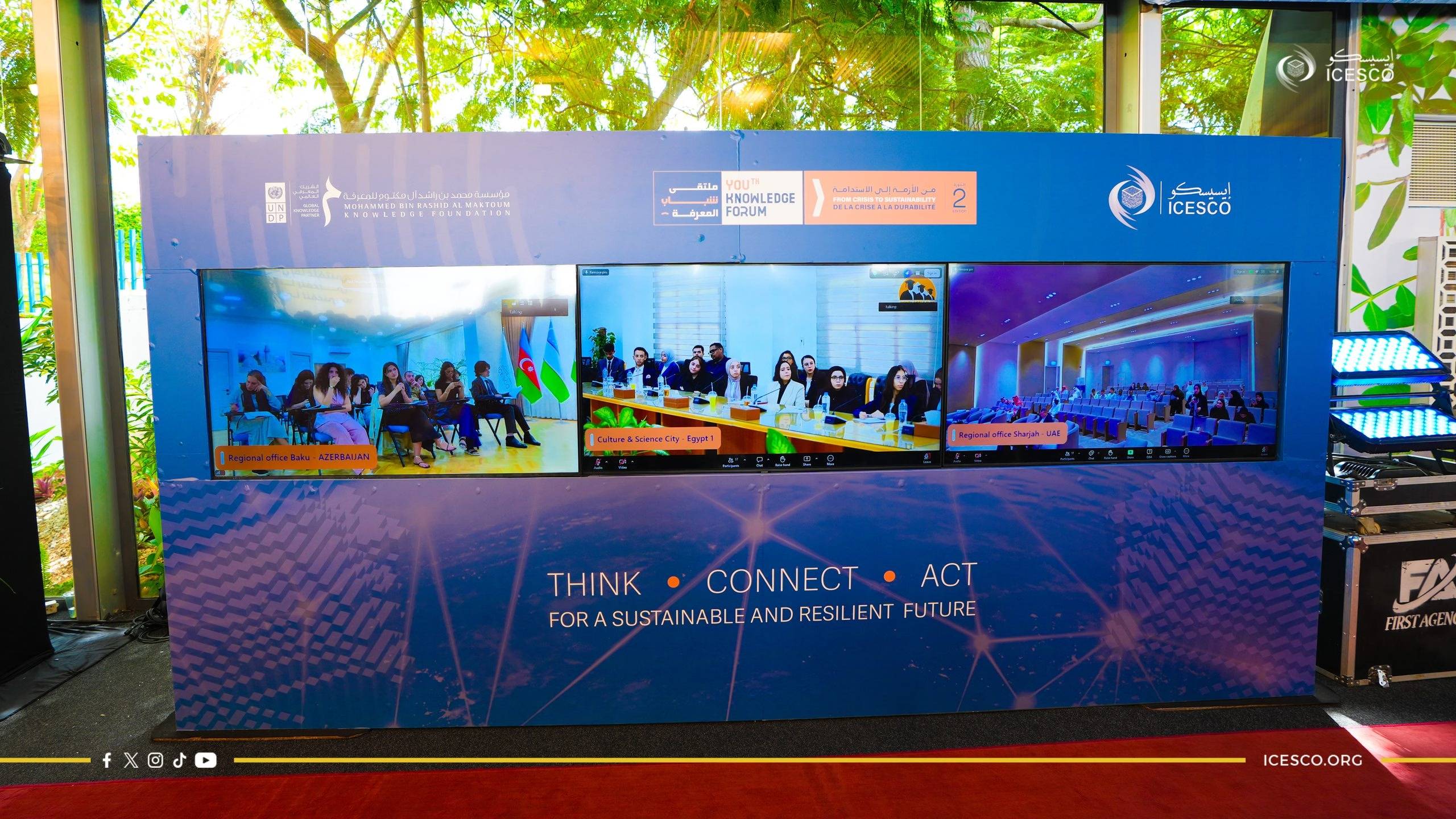
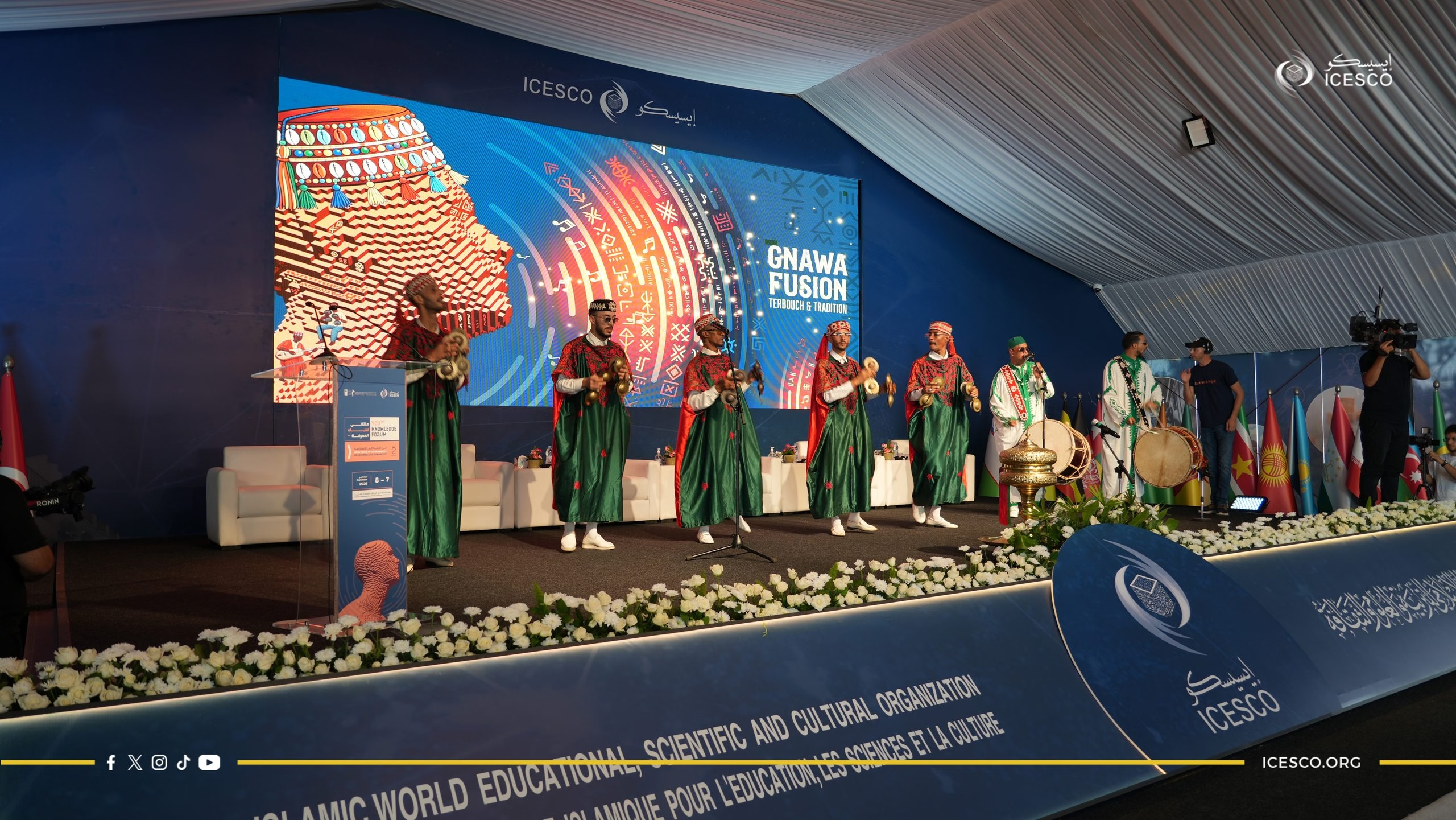
    The fifth Youth Knowledge Forum kicked off on Monday, 7 September 2026, at the headquarters of the Islamic World Educational, Scientific and Cultural Organization (ICESCO) in Rabat. Organized in partnership between ICESCO, Mohammed bin Rashid Al Maktoum Knowledge Foundation, and the United Nations Development Programme (UNDP), the Forum is held under the theme “From Crisis to Sustainability,” with nearly 3,000 young women and men participating from Rabat, Sharjah, Cairo, and Kazan via digital-twin technology.

    The two-day event features the use of digital-twin technology for the first time across the Islamic world, with Morocco serving as the main host hub and the Forum’s sessions and workshops linked to centers in the United Arab Emirates, Egypt, Azerbaijan, and the Republic of Tatarstan in the Russian Federation, enabling real-time interaction among participants.

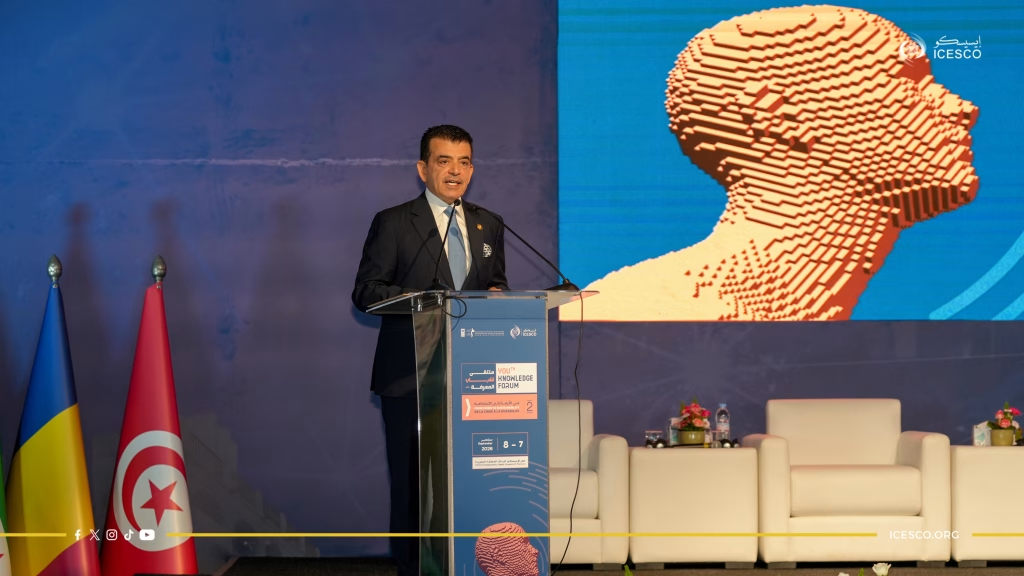
    In his opening remarks, Dr. Salim M. AlMalik, ICESCO Director-General, stated that young people face rapid transformations that are reshaping jobs and widening the gap between those equipped with the tools needed for the future and those lacking them. He explained that societies’ capacity for progress depends on their ability to learn from crises and address the vulnerabilities.

    Dr. AlMalik stressed that the transition to sustainability begins with an accurate understanding of current realities and decisions that translate ideas into action. He affirmed that ICESCO regards Member States’ youth as key partners in shaping the future and that the Forum seeks to transform their knowledge into practical capabilities and their ideas into actionable partnerships and initiatives.

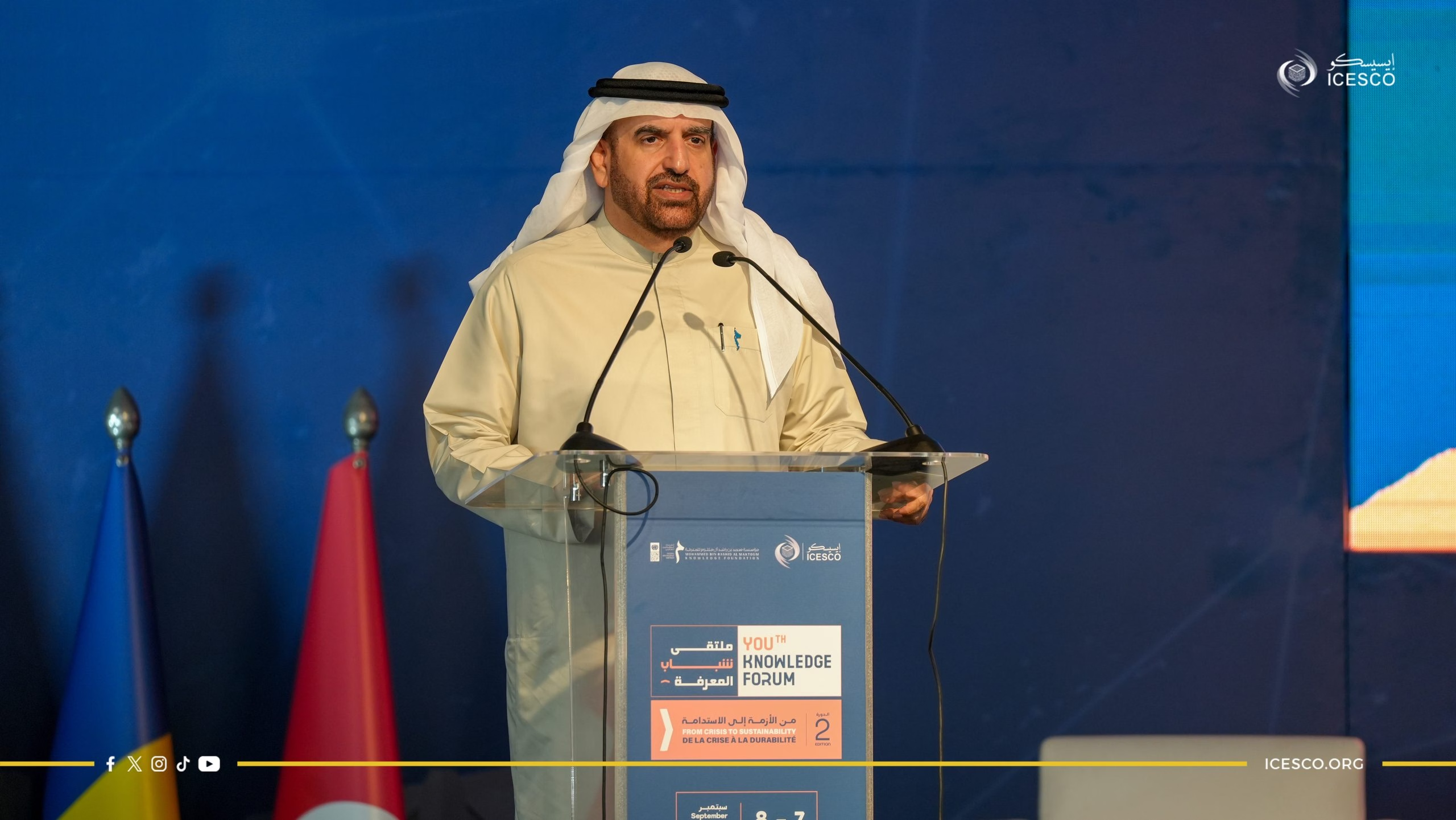
    For his part, Mr. Jamal bin Huwaireb, CEO of Mohammed bin Rashid Al Maktoum Knowledge Foundation, stated that interconnected global crises require new ideas, more effective partnerships, and solutions grounded in knowledge and innovation.

    He emphasized that the Forum seeks to move beyond discussion toward measurable and actionable plans and initiatives, noting that its true value lies in the ideas and partnerships led by young people as partners in developing solutions and leaders of the future.

    In remarks delivered on her behalf by Mr. Adel Ghamart, Secretary-General of the Ministry, Ms. Naïma Ben Yahya, Morocco’s Minister of Solidarity, Social Integration and Family, affirmed that addressing the challenges facing young people begins with crisis prevention and the provision of clear pathways toward social and economic empowerment.

    Ms. Leyla Fazleeva, Deputy Prime Minister of the Republic of Tatarstan, explained that shared values strengthen the resilience of individuals and countries while fostering trust, mutual respect, and sustainable development. Ms. Ilaria Carnevali, UNDP Resident Representative in Morocco, noted that young people seek not only to navigate uncertainty but also to shape the systems that will define their future.

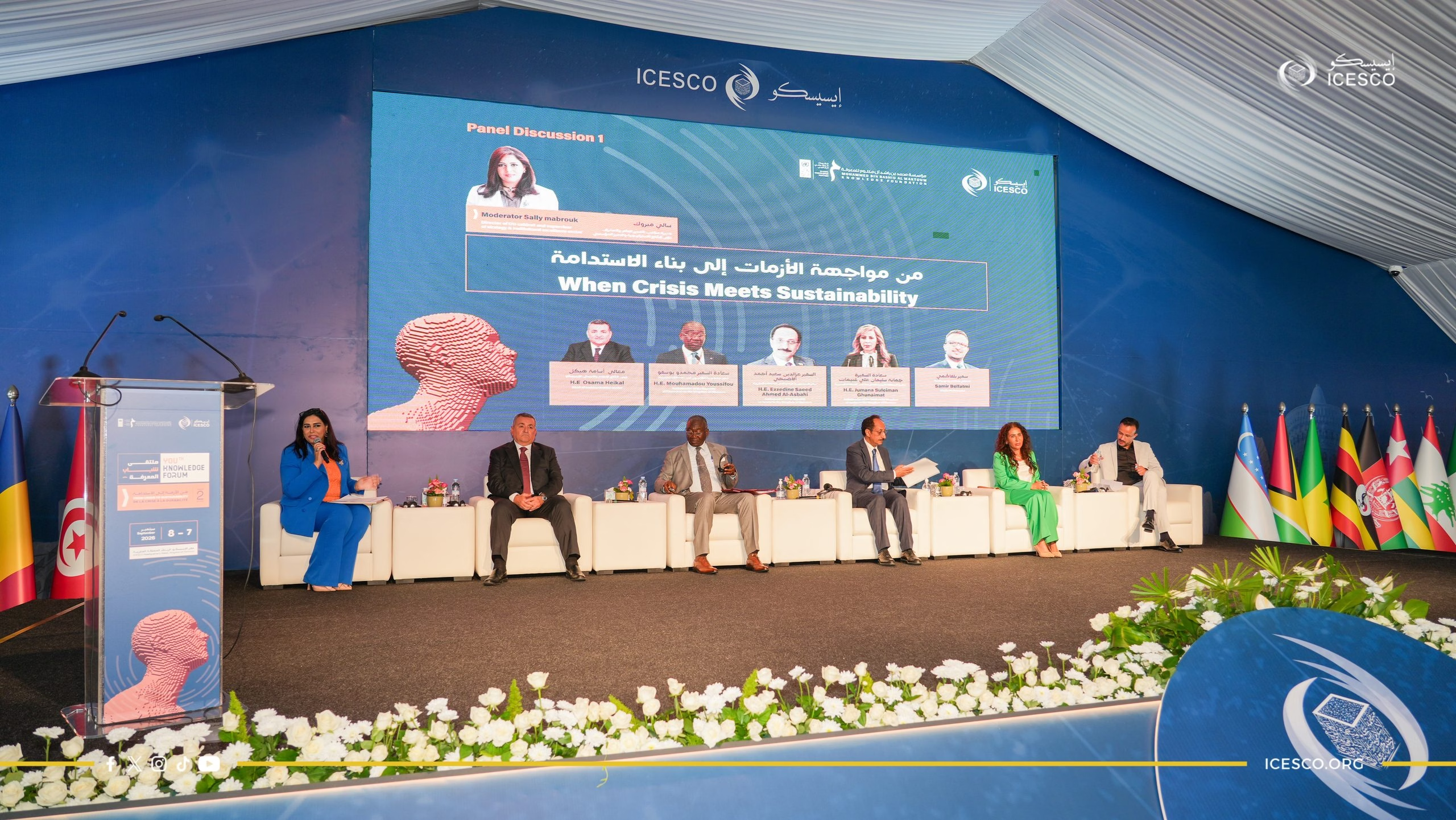
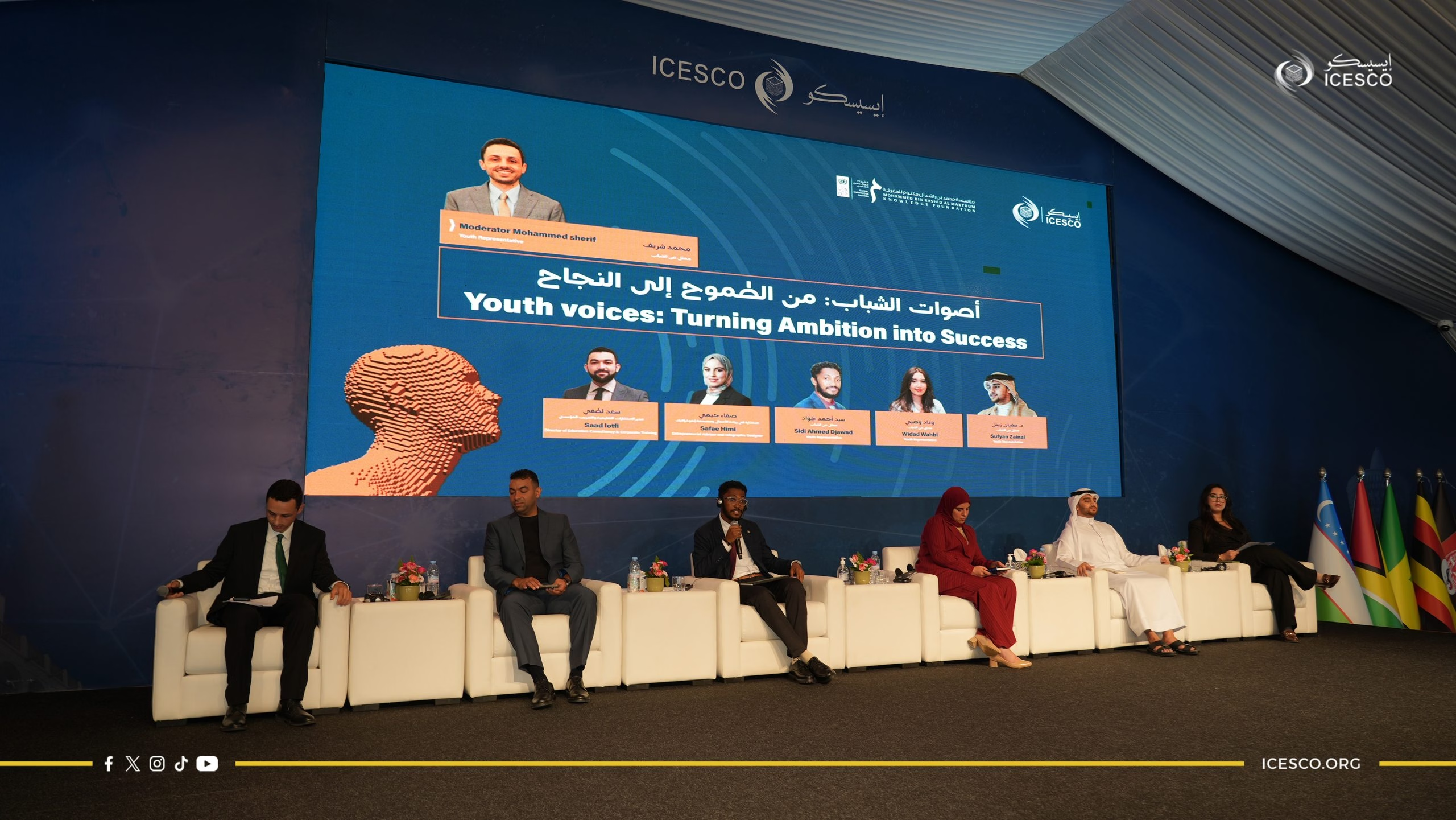
    The first day featured three main sessions titled “When crises meets sustainability,” “Youth voices: Turning Ambition into Success,” and “Your Career in a Changing World.” Former ministers, ambassadors, experts, and young participants discussed ways to address crises and transform them into opportunities for development. The day also featured youth activities, folklore performances, and theatrical presentations that drew strong engagement from participants.

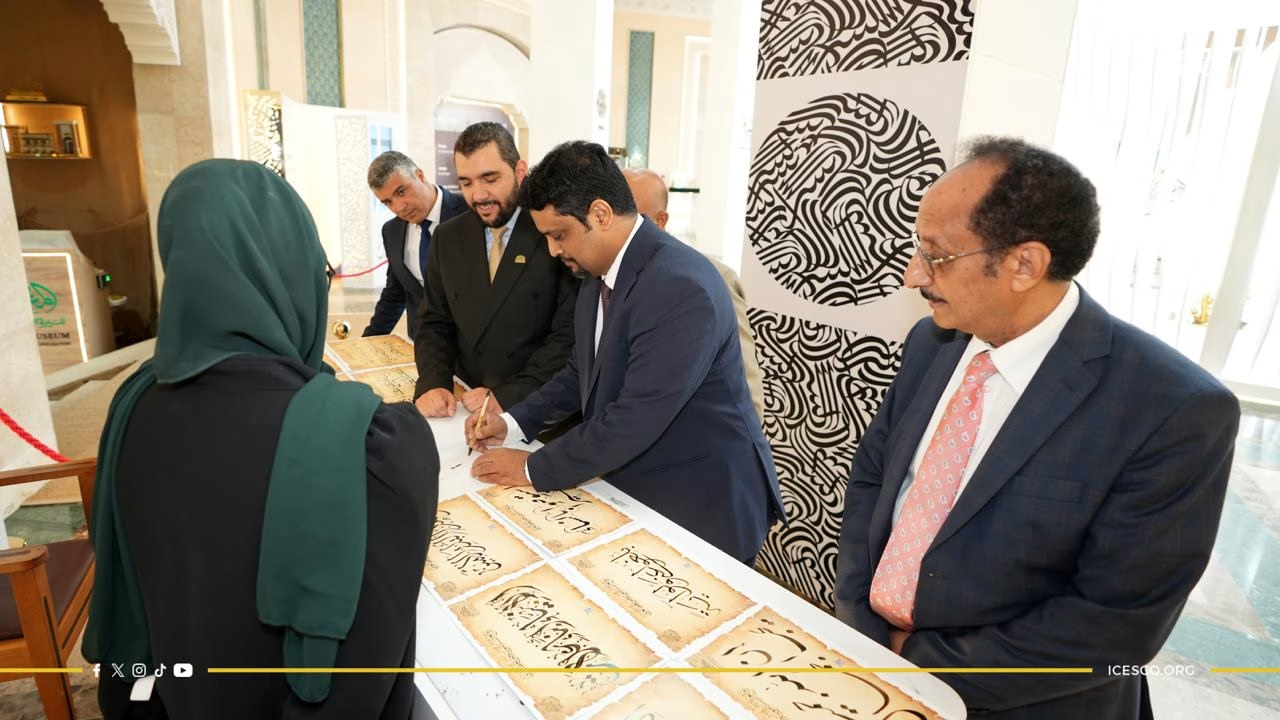
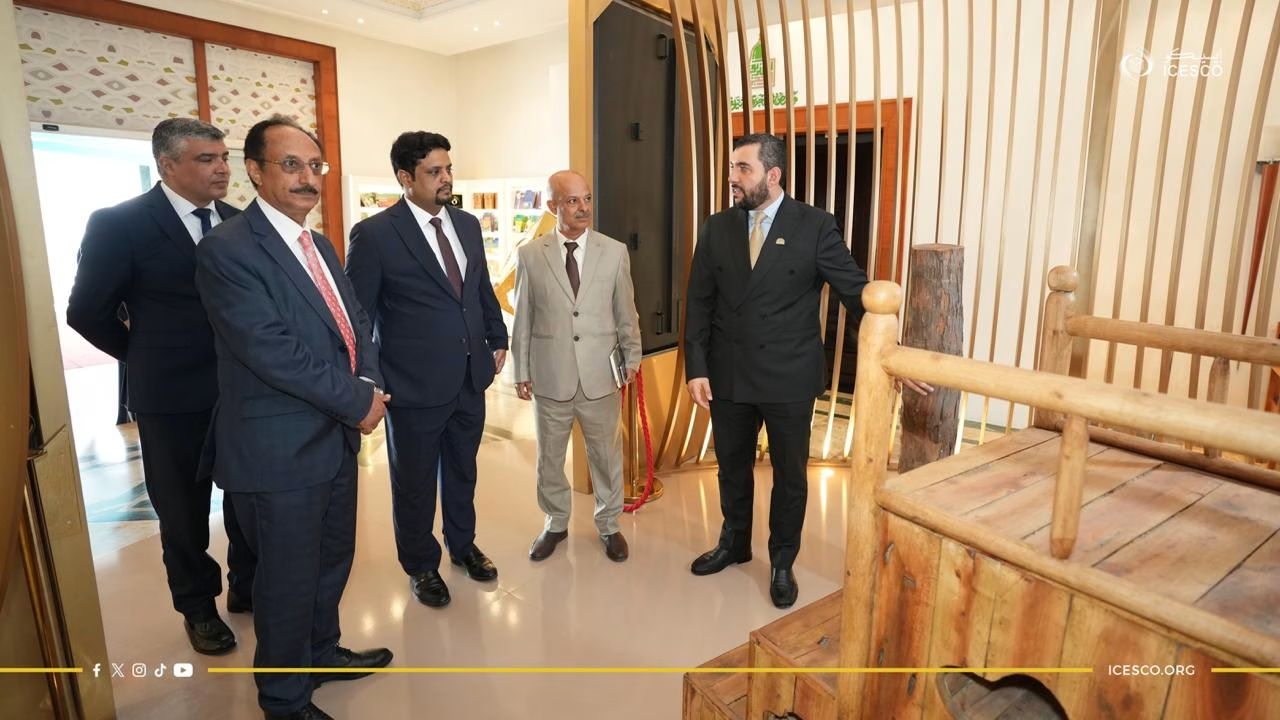
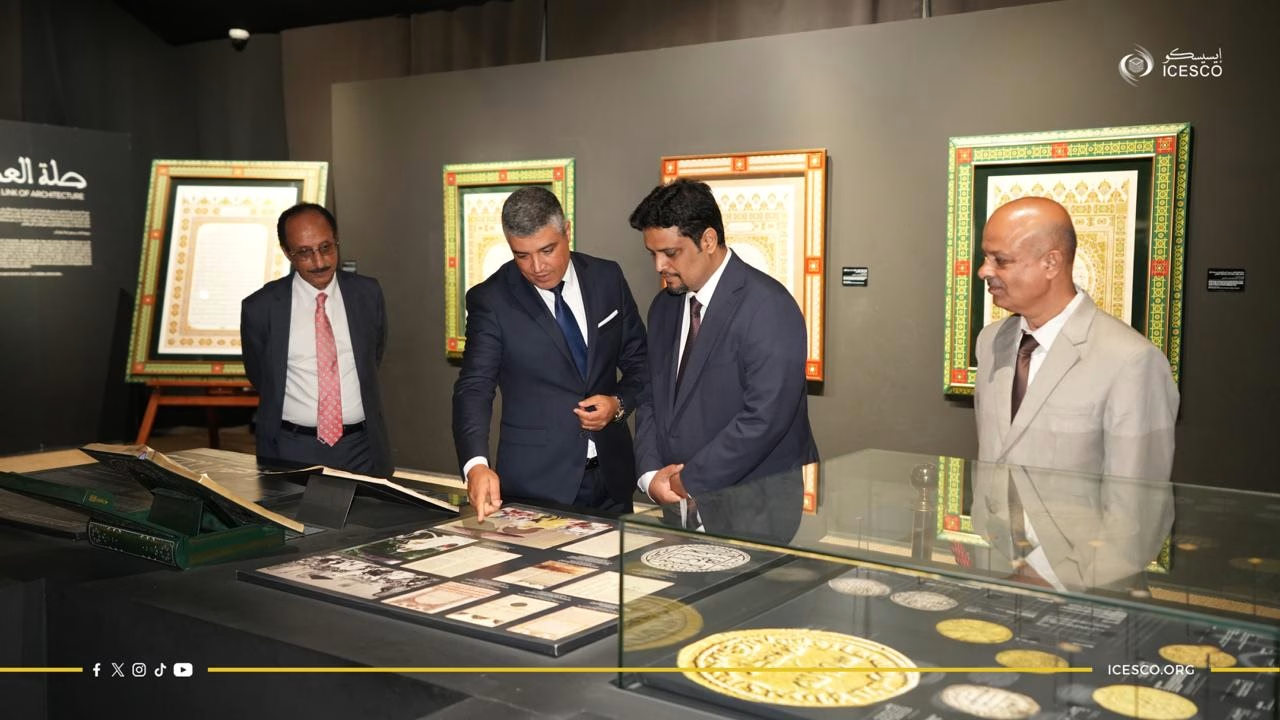
    Exploring Ways to Enhance Cooperation Between ICESCO and Yemen in Innovation, Entrepreneurship, and Vocational Training

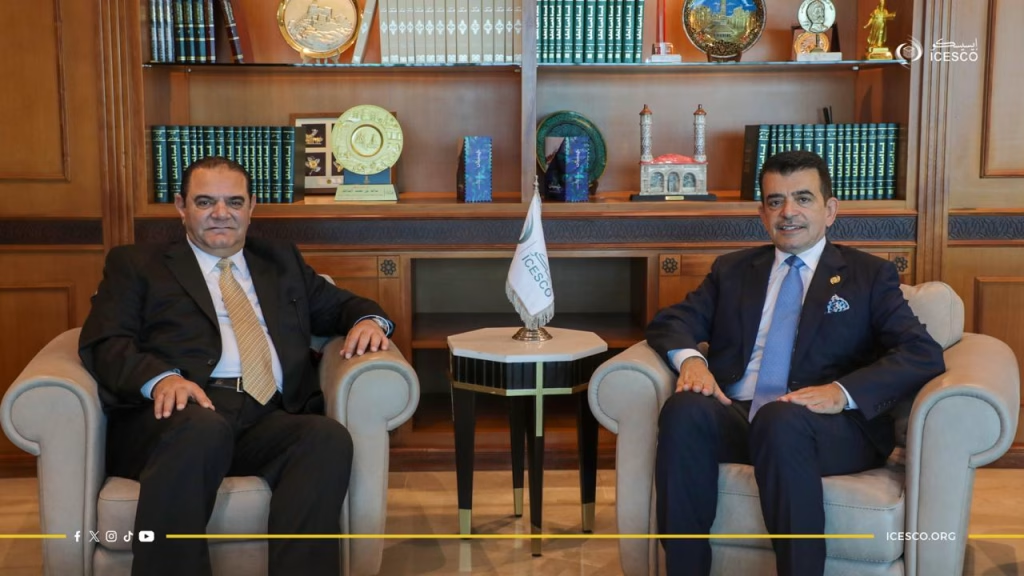
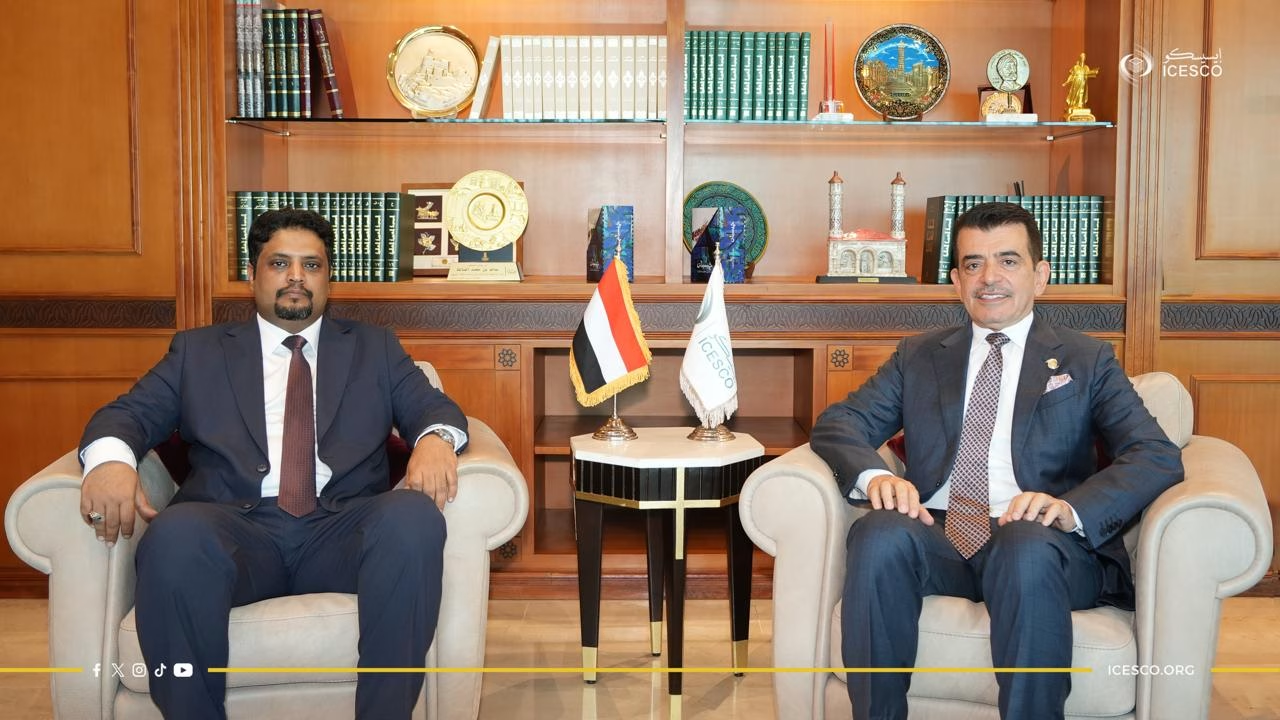
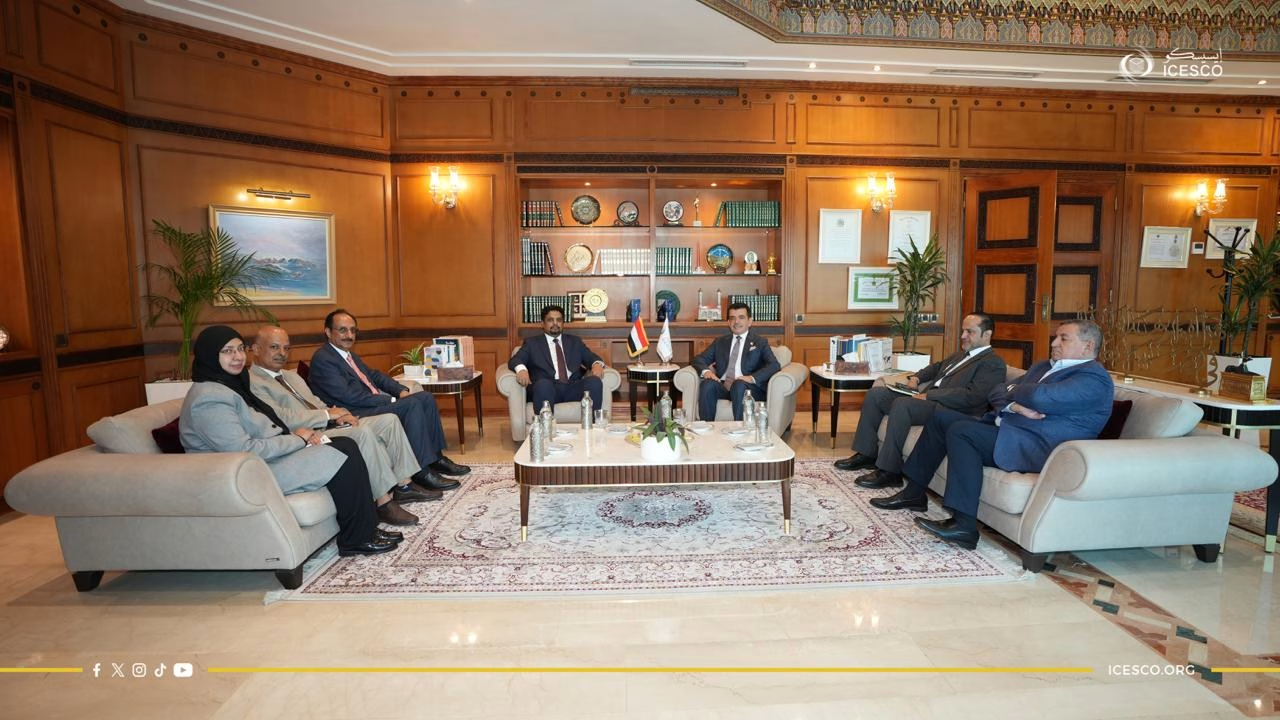
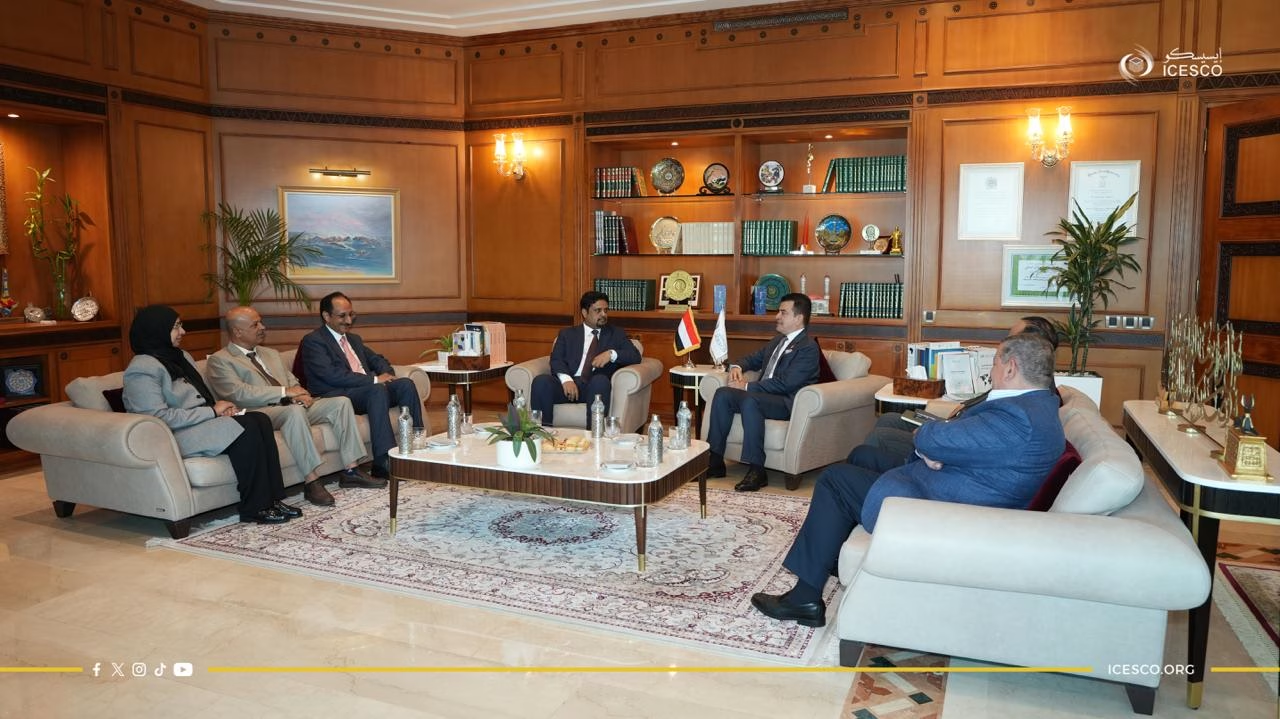
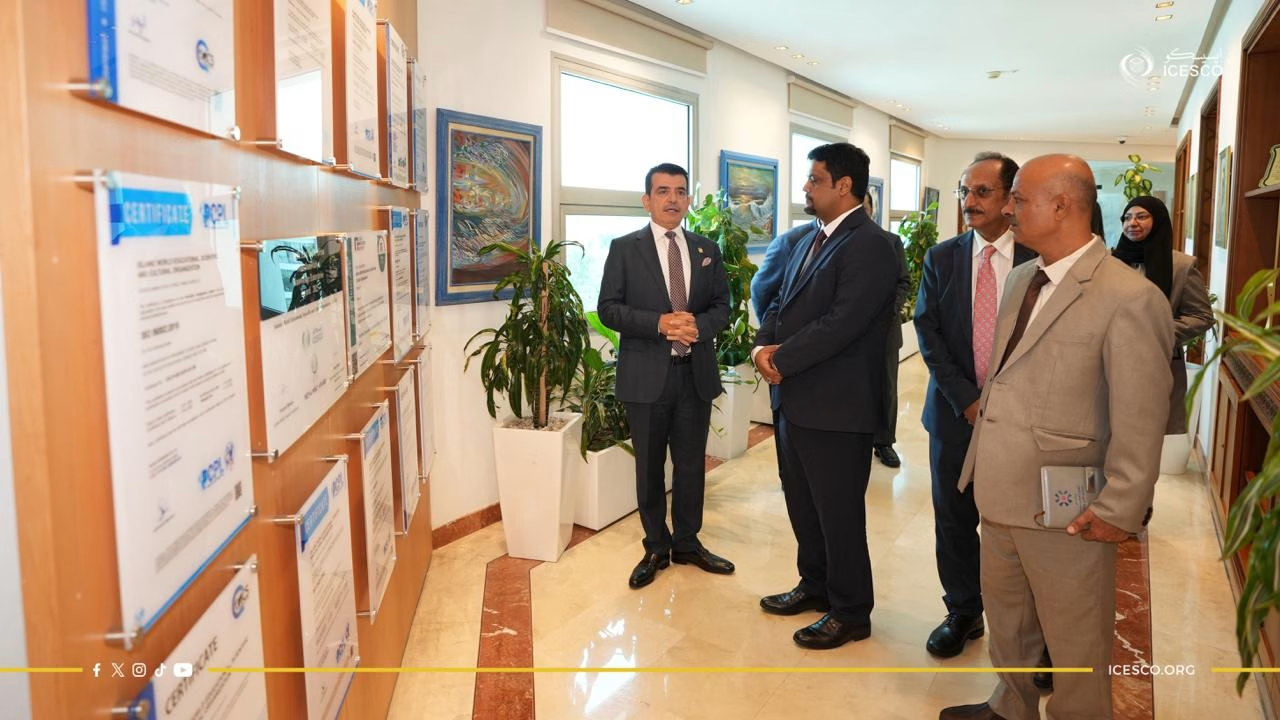
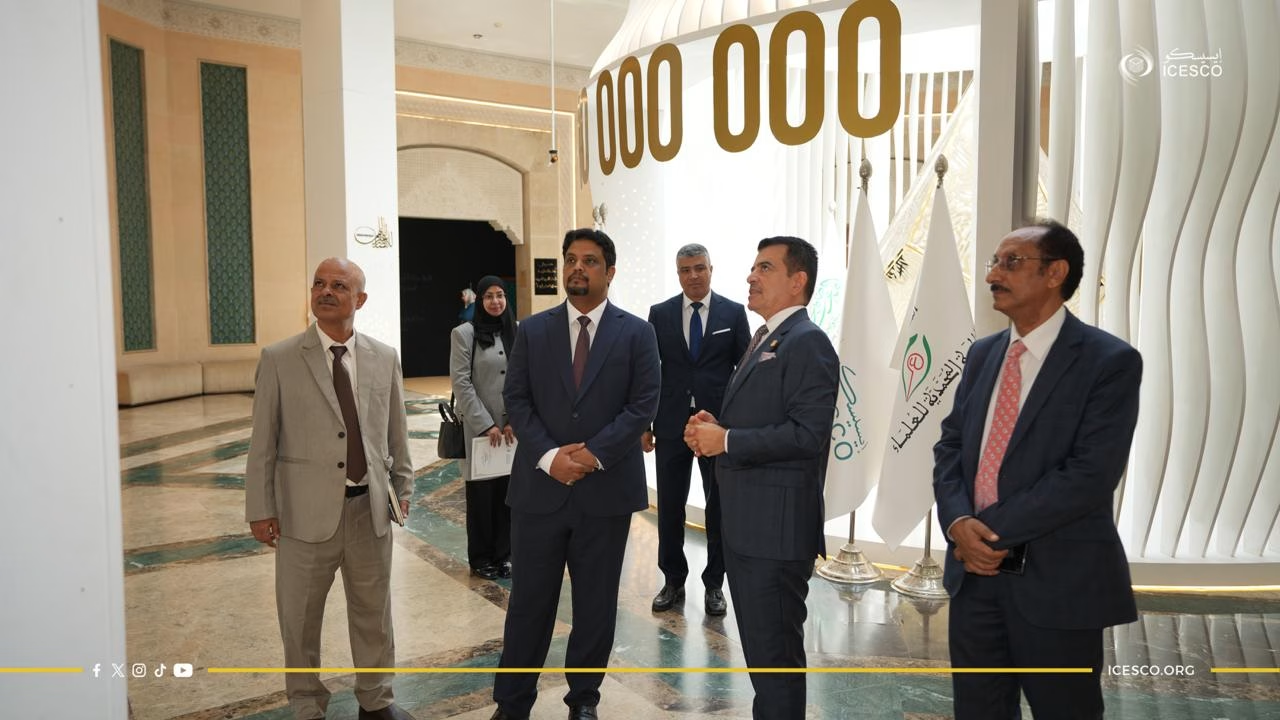
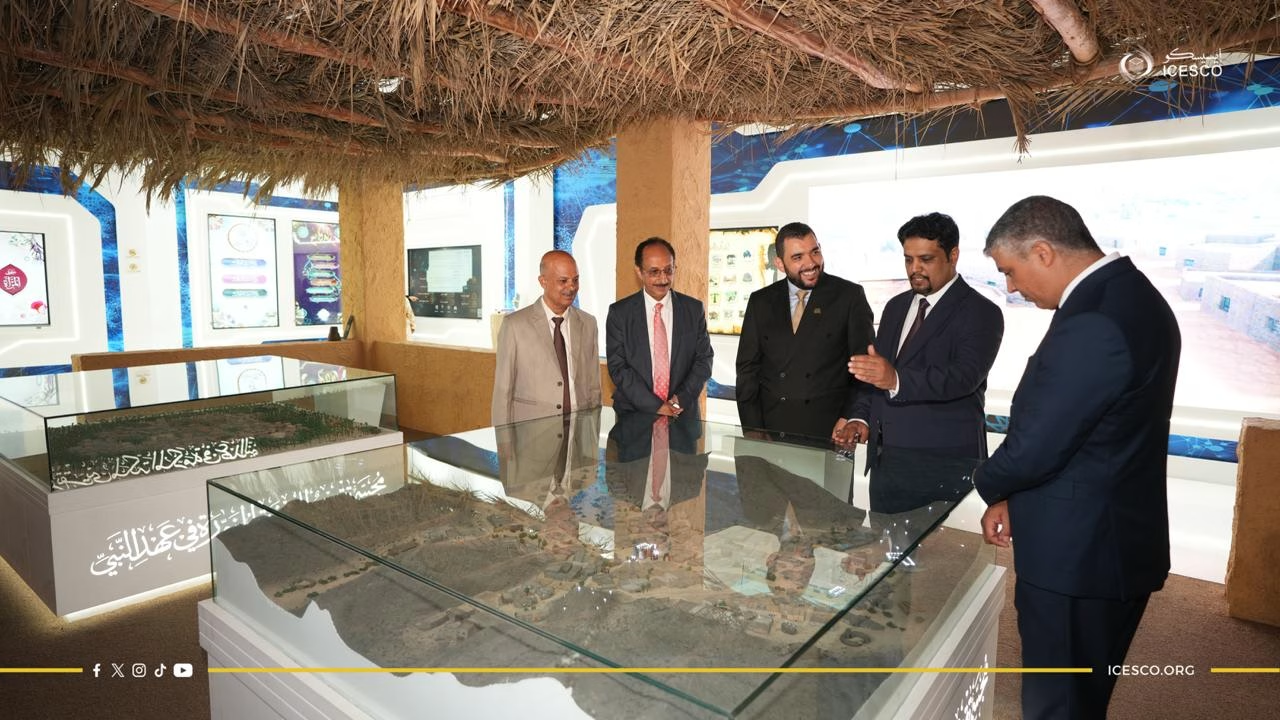
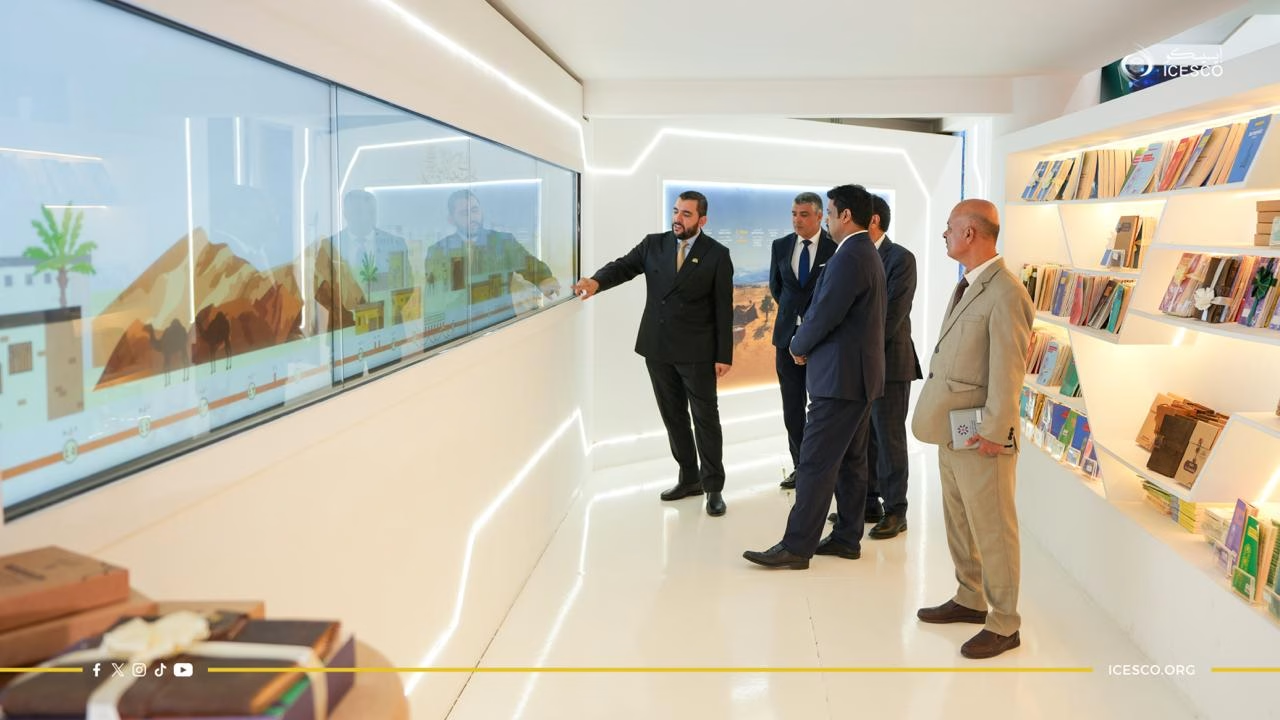
    Dr. Salim M. AlMalik, Director-General of the Islamic World Educational, Scientific and Cultural Organization (ICESCO), received Dr. Anwar Kalshat Al Mahri, Minister of Technical Education and Vocational Training of the Republic of Yemen, to discuss ways and mechanisms for cooperation in developing programs and projects aimed at protecting local languages from extinction, enhancing young people’s technical and vocational skills, promoting entrepreneurship, and advancing institutional development.

    During the meeting, held on Friday, 4 September 2026, at ICESCO Headquarters in Rabat and attended by Ambassador Ezzedine Al Asbahi, Ambassador of Yemen to Morocco, Dr. AlMalik stressed that ICESCO seeks to develop initiatives and activities that respond to the needs of its Member States in the fields of education, youth capacity building, and heritage preservation for future generations. He also reviewed the Organization’s efforts to attract talented young professionals from across the Islamic world.

    The Director-General highlighted the importance of international organizations investing in the development of education and vocational training in Yemen as a cornerstone for preparing generations capable of building a better future within their communities. He described vocational training as an important step toward advancing sustainable development and strengthening the labor market.

    For his part, Dr. Al Mahri outlined the Ministry’s efforts to address challenges in the education sector by creating an enabling environment for innovation, creativity, and knowledge dissemination. He emphasized the importance of strengthening partnerships with international organizations, foremost among them ICESCO, as a center of expertise.

    He also expressed the Ministry’s interest in cooperating with ICESCO on a project that explores the use of Arabic script in protecting endangered spoken local languages.
    The two parties agreed to develop an action plan during the coming period to establish innovation units and a local platform for technical and vocational training, as well as to strengthen the scientific and technical skills of the Ministry’s personnel and staff.

    The meeting was also attended by Osama Heikal, Head of the Media and Communication Sector, and Dr. Ahmed Albanyan, Head of the Education Sector, Director of the Translation and Publishing Center.

    ICESCO and Hamad Bin Khalifa University Explore Ways to Enhance Cooperation in Education, Artificial Intelligence and the Arabic Language

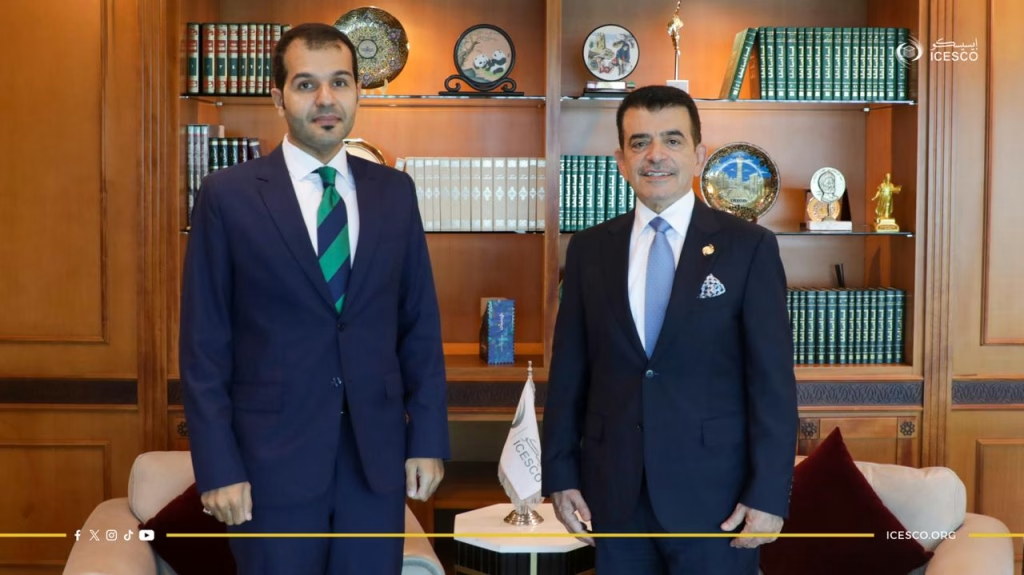
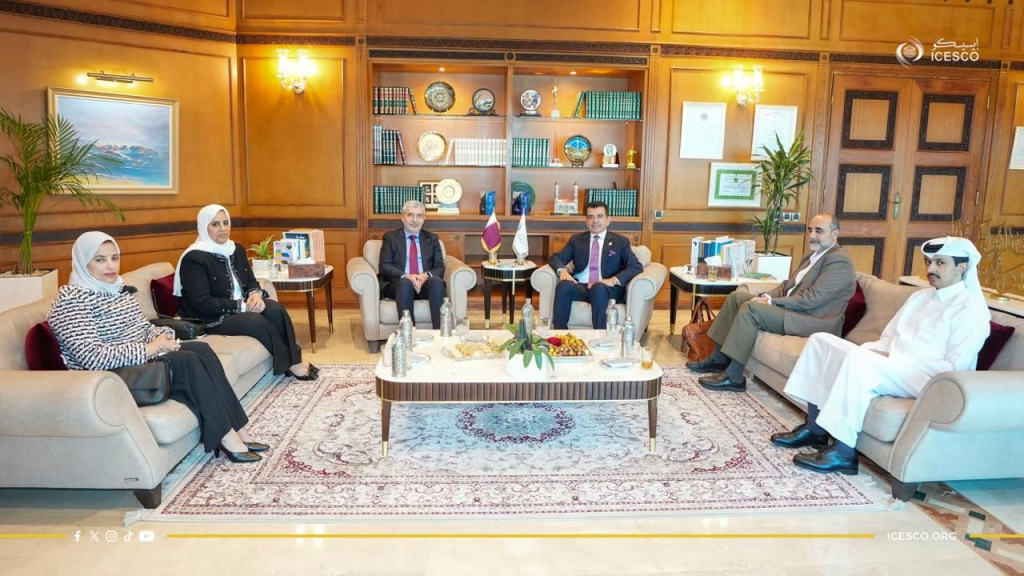
    Dr. Salim M. AlMalik, Director-General of the Islamic World Educational, Scientific and Cultural Organization (ICESCO), received Dr. Ahmad M. Hasnah, President of Hamad Bin Khalifa University (HBKU), and the accompanying delegation on Thursday, 3 September 2026, at ICESCO Headquarters in Rabat. The meeting explored prospects for cooperation between ICESCO and HBKU, which is a member of Qatar Foundation for Education, Science and Community Development, in the areas of youth capacity building, education development, leveraging artificial intelligence, and enhancing the global presence of the Arabic language.

    During the meeting, Dr. AlMalik commended the close partnership between ICESCO and the State of Qatar, as well as its various institutions and bodies. This partnership has resulted in the development and implementation of several pioneering initiatives and programs, foremost among them the ICESCO Regional Educational Center in Chad, which works to promote the Arabic language.

    The ICESCO Director-General also praised the contributions of Qatar Foundation, noting that, under the wise leadership of Her Highness Sheikha Moza bint Nasser, Chairperson of the Foundation, it has become one of the international institutions of which the Islamic world is proud, owing to its pioneering roles in the fields of education, research, innovation, community development, and human capital development.

    Dr. AlMalik highlighted the Organization’s investment, as part of its vision and strategic orientations, in women’s capacity building by developing women’s skills and educating girls, in addition to its commitment to attracting qualified women to assume leadership positions within the Organization. He also reviewed ICESCO’s efforts to promote foresight and scientific research, as well as cooperation with universities and research institutions.

    Dr. AlMalik reaffirmed the paramount importance that ICESCO attaches to heritage protection by inscribing cultural elements and historical sites on its Islamic World Heritage List and assisting its Member States in inscribing their archaeological sites on the World Heritage List.

    For his part, Dr. Hasnah commended the qualitative transformation ICESCO has undergone in recent years. He noted that today’s meeting was held at the direction of Her Highness Sheikha Moza bint Nasser and comes as part of HBKU’s commitment to cooperation with ICESCO, particularly in developing a program to promote artificial intelligence ethics in line with Arab and Islamic values and culture, as well as in building youth capacities.

    The President of HBKU also stressed that the reluctance of Arab and Islamic societies to engage with Arabic-language content calls for the joint development and implementation of activities and projects aimed at encouraging writing, publishing and reading in Arabic, as well as establishing local knowledge banks.

    Following the meeting, the University delegation held separate meetings with several heads of Sectors, Departments, and Centers at ICESCO, during which the Organization’s initiatives and activities were presented, and a number of programs proposed for implementation in the coming period were discussed.

    The delegation included Ms. Abeer Al Khalifa, President of Pre-University Education; Sheikha Noof Al Thani, Vice President of Strategic Educational Initiatives at Pre-University Education; Dr. Mohammed Ghaly, Head of the Research Center for Islamic Legislation & Ethics (CILE); Mr. Yousuf AlKhulaifi, Manager of PUE President’s Office; and Ms. Lilit Ohennisian, Projects Lead at HBKU.

    ICESCO Director-General Congratulates Dr. Ahmed Said Ould Bah on His Appointment as Director General of OIC Secretary-General’s Cabinet
    Dr. Salim M. AlMalik, Director-General of the Islamic World Educational, Scientific and Cultural Organization (ICESCO), congratulated Dr. Ahmed Said Ould Bah on his appointment as Director General of OIC Secretary-General’s Cabinet, wishing him every success in his new position and continued fulfillment in his distinguished professional career, marked by dedication and achievement in service of the causes of the Islamic world, during his tenure in numerous leadership positions within ICESCO over nearly three decades.
    Dr. AlMalik expressed his high appreciation for Dr. Ahmed Said’s professional record, affirming that he had been one of the Organization’s outstanding professionals and distinguished leaders, renowned for his knowledge, experience, integrity, and sound judgment, leaving a positive impact in every position he held.

    Furthermore, ICESCO Director-General stated that the Organization would miss a valued colleague and dedicated leader, but would continue to regard him with pride as its ambassador to the OIC, carrying its spirit and mission in his new position. Dr. AlMalik noted that his presence in this position would open broader horizons for partnership between the OIC and ICESCO and give it renewed momentum grounded in trust, shared knowledge, and a shared commitment to their common mission.

    It is worth noting that Dr. Ahmed Said Ould Bah has had an extensive career within ICESCO, which began in the mid-1990s, during which he headed and supervised several sectors and departments of the Organization. He most recently served as an Advisor to ICESCO’s General Directorate and has become a role model for enlightened leadership and dedicated, diligent work.

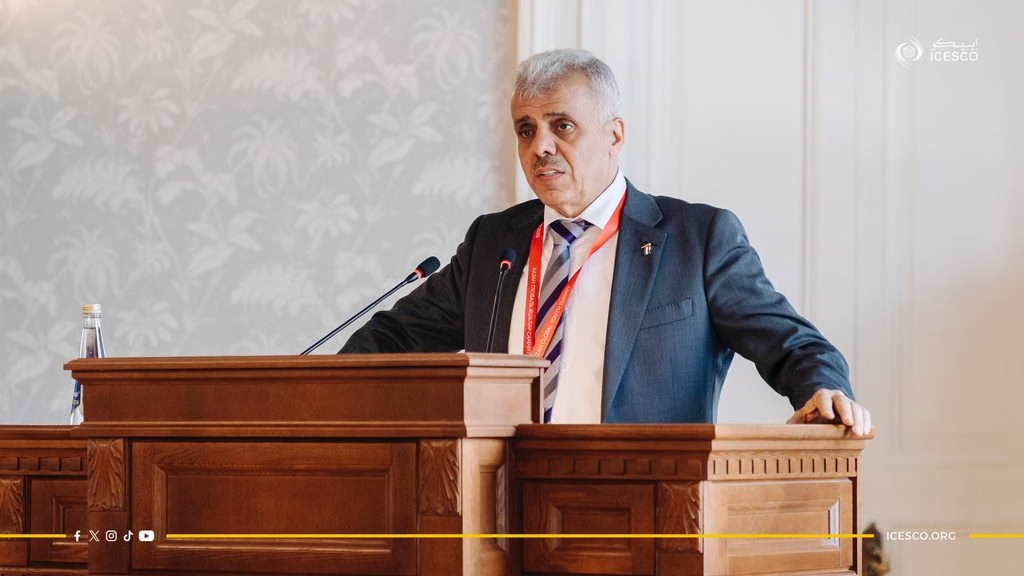
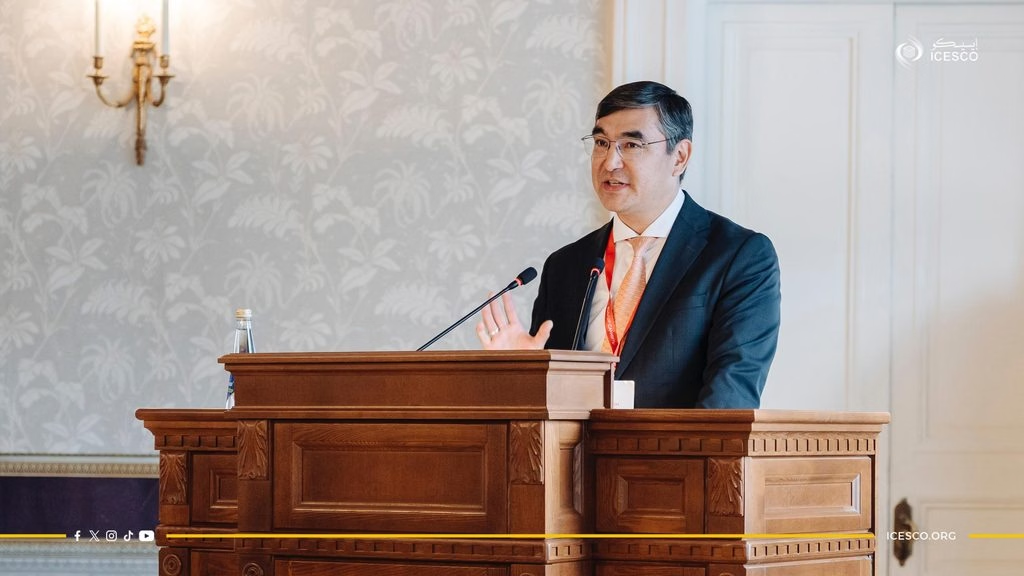
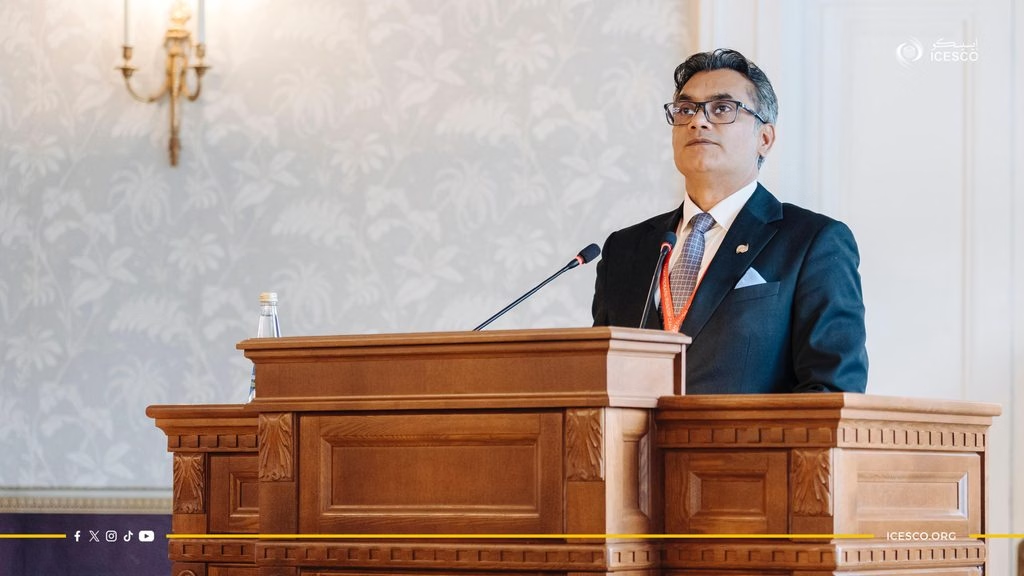
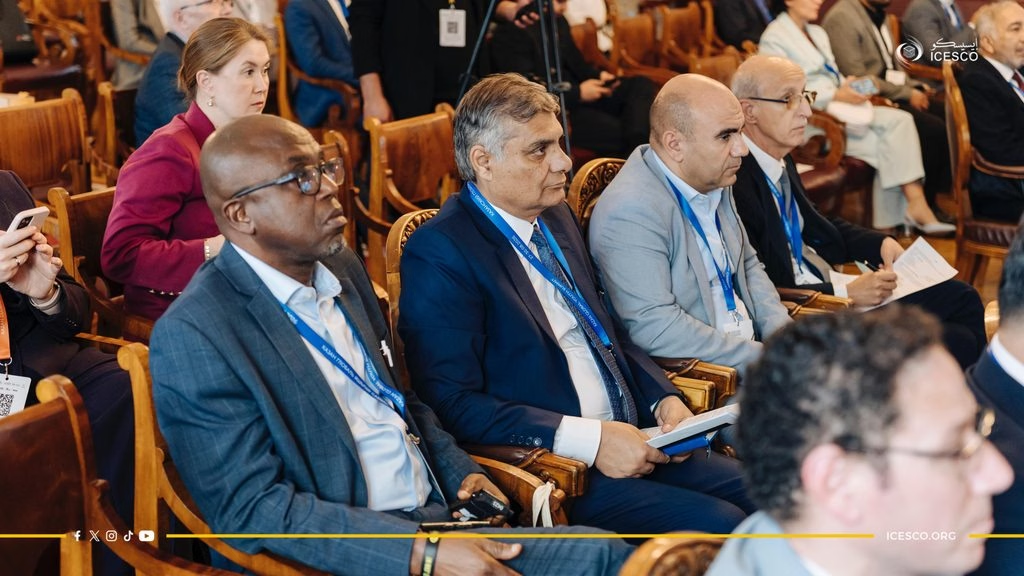
    ICESCO Director-General Reviews Priorities for Transforming Universities into Engines of Innovation at ICESCO Forum of Rectors in Kazan

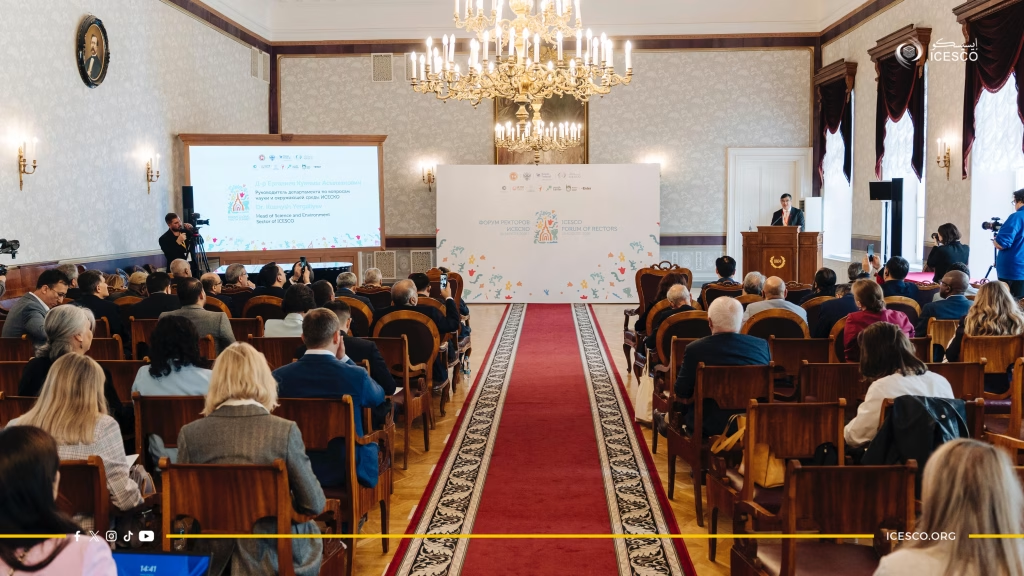
    The Islamic World Educational, Scientific and Cultural Organization (ICESCO) held the ICESCO Forum of Rectors, under the Federation of the Universities of the Islamic World (FUIW), on Friday, 28 August 2026, in Kazan, Republic of Tatarstan, Russian Federation, under the theme “Reimagining Higher Education in the Islamic World: Partnerships, Innovation, and International Competitiveness.” The Forum brought together ministers, senior officials, and university vice chancellors from across and beyond the Islamic world.

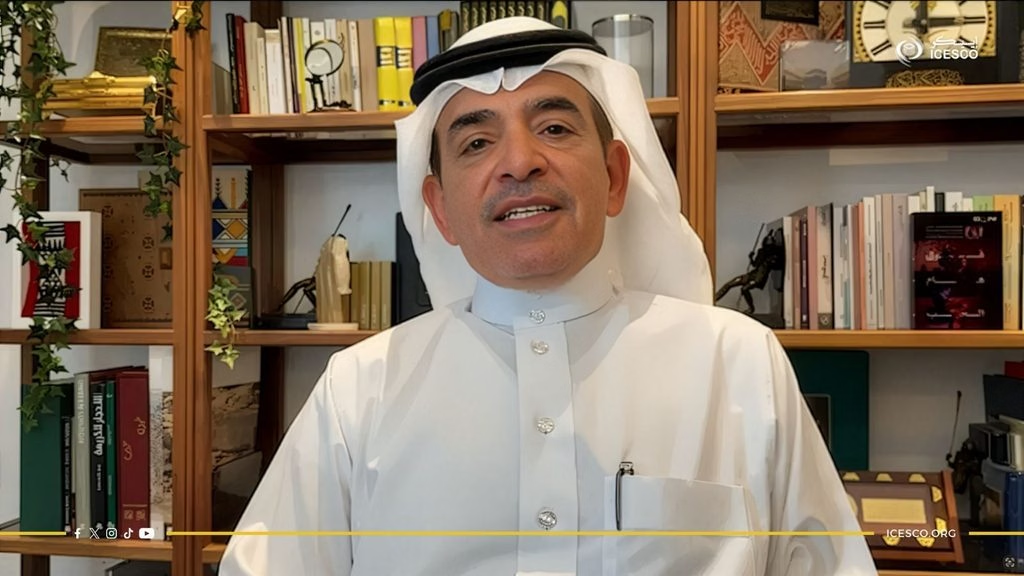
    During the Forum’s plenary session, Dr. Salim M. AlMalik, Director-General of ICESCO, delivered a recorded address in which he noted that the history of Kazan bears witness to the progress generated by cultural and intellectual exchange among peoples. He highlighted that the Forum, held in parallel with the Kazan Global Youth Summit, forms part of a forward-looking vision that positions higher education as a space for preparing the youth to build the future. He further expressed his appreciation to H.E. Rustam Minnikhanov, Rais of the Republic of Tatarstan, and the

    Organization’s partners in the Russian Federation for their continued commitment to supporting ICESCO’s activities and initiatives.

    Dr. AlMalik affirmed that the Forum constitutes an important platform for discussing the transformations taking place in universities and contributing to guiding their implementation and shaping curricula, with a view to providing inclusive higher education that responds to the aspirations of societies, particularly at a time when education and the labor market are being reshaped by the artificial intelligence revolution.

    Dr. AlMalik also outlined several priorities for ICESCO and its affiliated Federation over the next three years, aimed at turning universities in the Islamic world into engines of innovation and gateways to opportunities. These include an academic mobility action plan for students, faculty members, and researchers, involving 50 universities and benefiting 1,000 students and 200 academics; the development of a framework to strengthen the mutual recognition of qualifications and academic units, with the participation of 15 countries; the development of 20 programs and 10 joint digital or laboratory facilities; and enhanced cooperation between universities and research centers to author joint publications.

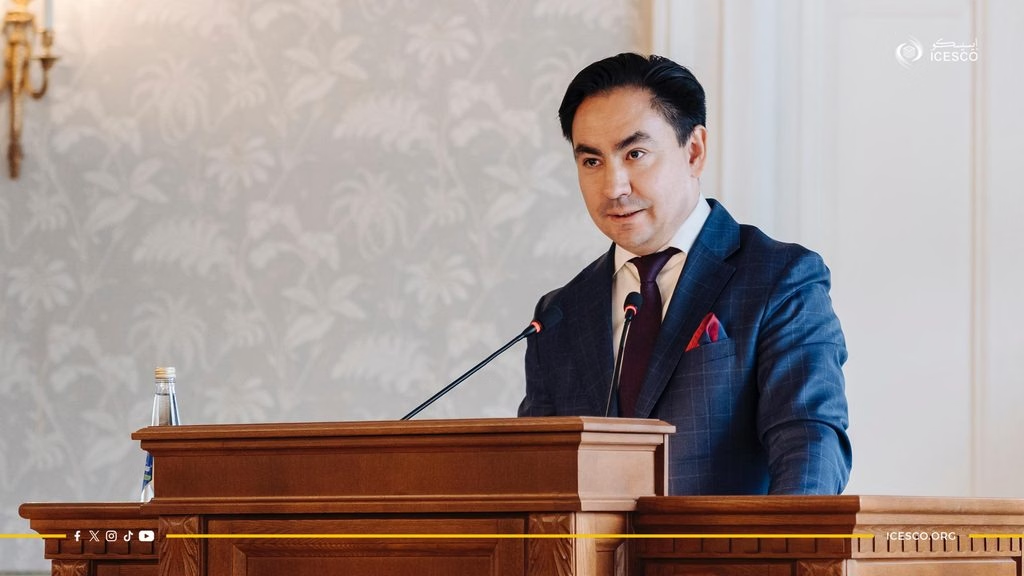
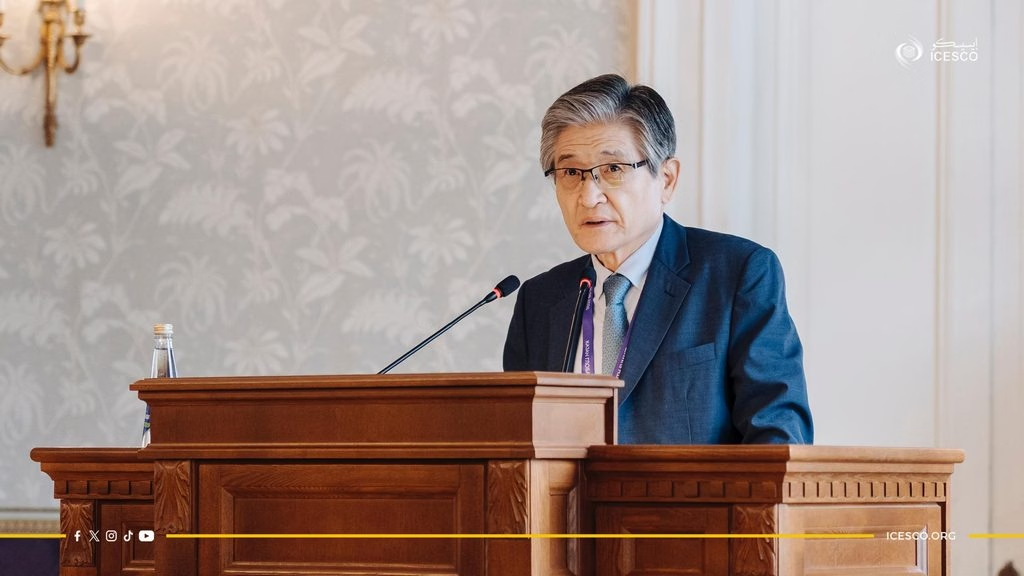
    The first session featured Dr. Riyaz Minzaripov, President of Kazan Federal University; Dr. Rae Kwon Chung, Nobel Peace Prize laureate; Dr. M. Iqbal Choudhary, Coordinator General of COMSTECH; Dr. Amjad Barham Dabab, Minister of Education and Higher Education of the State of Palestine; Mr. Bakary Y. Badjie, Minister of Youth and Sports of the Republic of The Gambia; and Dr. Modesto Ricardo Gómez Crespo, First Deputy Minister of Higher Education of the Republic of Cuba.

    The Forum also featured a session titled “Education in an Era of Global Change: Human Capital for Sustainable Development,” which discussed young people’s perspectives and pathways for education and professional development. Another session, titled “The Role of University Federations and Global Partnerships in Advancing Higher Education in the Islamic World,” focused on the importance of providing strategic leadership and fostering joint cooperation among universities and organizations.

    The Forum concluded with the roundtable “Universities of the Future: From Leadership to Innovation,” during which participants highlighted ways for universities to respond to technological, economic, and social transformations. The event also witnessed the signing of nine memoranda of understanding between the participating entities.

    Dr. AlMalik to Oman TV: “Bridges of Civilization” Program Offers First-Hand Insight into the Cultural and Civilizational Assets of Member StatesDhofar, 28/8/ 2026

    The official national television broadcaster for the Sultanate of Oman hosted Dr. Salim M. AlMalik, Director-General of the Islamic World Educational, Scientific and Cultural Organization (ICESCO), for an interview addressing cultural and civilizational issues and highlighting the Organization’s key programs and initiatives to strengthen communication and rapprochement among the countries of the Islamic world.

    During the live interview, broadcast on Thursday, 27 August 2026, as part of the program ” The People and the Autumn,” Dr. AlMalik presented ICESCO’s new “Bridges of Civilization” program, launched by the General Secretariat of National Commissions and Conferences. He explained that the program forms part of ICESCO’s efforts to advance civilizational diplomacy and expand opportunities for dialogue and exchange among Member States. He noted that it enables participants to gain first-hand insight into the distinctive national characteristics and cultural and civilizational assets of each Member State.

    The Director-General also highlighted the rich heritage and cultural and tourism attractions of Dhofar Governorate, expressing his appreciation for its natural diversity and civilizational richness, where history, environment, and culture converge. He noted that several heritage sites in the governorate are included on ICESCO’s Heritage List in the Islamic World.

    Dr. AlMalik stressed that heritage is not merely an extension of the past, but a living component of identity and a resource for shaping the future. He emphasized that safeguarding cultural heritage must go hand in hand with investment in knowledge and creativity and with empowering future generations.

    Dr. AlMalik also recited a poem entitled “Salalah and the Beauty of Its Panorama,” celebrating Dhofar Governorate and evoking its landscapes, natural beauty, and deep historical and civilizational heritage.
    The interview concluded with a message from the Director-General to the youth of the Islamic world, encouraging them to take pride in their heritage, recognize its value, contribute to its preservation, and volunteer to protect heritage sites and landmarks.

    The interview took place on the sidelines of the visit of ICESCO delegation, headed by Dr. AlMalik, to Dhofar Governorate under the “Bridges of Civilization” program, currently hosted by the Sultanate of Oman.

    ICESCO Director-General Congratulates Ismail Ould Cheikh Ahmed on His Election as OIC Secretary-General

    H.E. Dr. Salim M. AlMalik, Director-General of the Islamic World Educational, Scientific and Cultural Organization (ICESCO), extended his sincere congratulations to H.E. Ismail Ould Cheikh Ahmed on his unanimous election as Secretary-General of the Organization of Islamic Cooperation (OIC) at the Extraordinary Session of the OIC Council of Foreign Ministers, held at the OIC General Secretariat headquarters in Jeddah.

    He also congratulated H.E. Mohamed Ould Cheikh El Ghazouani, President of the Islamic Republic of Mauritania, as well as the Mauritanian government and people. He noted that this well-deserved election is a source of pride for Mauritania and reflects its distinguished standing and influential role in the Islamic world and the international community.

    Dr. AlMalik stated that the unanimous election reflects the high level of confidence placed in H.E. Mr. Ismail Ould Cheikh Ahmed, in recognition of his distinguished diplomatic career, extensive international experience, and contributions to advancing peace and development.

    He further expressed confidence that the OIC will enter a new phase of greater prominence and influence under his leadership, strengthening its role as the overarching organization of the Islamic world, the voice of its peoples’ aspirations, and an international platform for advancing their causes and interests.

    Dr. AlMalik underscored the longstanding institutional ties between ICESCO and the OIC and reaffirmed his commitment to working closely with the Secretary-General-elect to broaden cooperation and develop innovative initiatives that serve Member States and advance joint Islamic action.

    He concluded by wishing H.E. Mr. Ismail Ould Cheikh Ahmed every success in fulfilling his responsibilities and praying that Allah bless his efforts with success for the benefit of the Islamic world and the prosperity of its peoples.

    Director-General of ICESCO Visits Heritage and Cultural Sites in Oman’s Dhofar Governorate as Part of “Civilization Bridges” Program


    A delegation from the Islamic World Educational, Scientific and Cultural Organization (ICESCO), led by Dr. Salim M. AlMalik, Director-General of the Organization, visited a number of heritage, cultural, and tourist sites in Oman’s Dhofar Governorate, at the invitation of Mr. Sayyid Ibrahim bin Saeed ALBusaidi, Minister of Heritage and Tourism of the Sultanate of Oman.

    The visit forms part of ICESCO’s “Civilization Bridges” program, which the Sultanate of Oman is hosting in Dhofar from 25 to 28 August 2026. The initiative aims to highlight the governorate’s civilizational, cultural, heritage, and tourism assets, while providing an opportunity to learn about national experiences in heritage preservation and its sustainable use for tourism development.

    Dr. Salim M. AlMalik, Director-General of ICESCO, emphasized that holding this stage of the program in Dhofar reflects the distinguished strategic partnership between the Organization and the Sultanate of Oman, which has given rise to numerous pioneering programs and initiatives serving the Islamic world. He also commended Oman’s continued support for ICESCO’s efforts across its fields of competence.

    Dr. AlMalik highlighted the rich cultural assets of Dhofar, where heritage and natural sites combine to create a distinctive tourist destination that showcases Oman’s civilizational heritage and strengthens its position on the global tourism map.

    For his part, Dr. Salim Al Habsi, Head of the General Secretariat of National Commissions and Conferences at ICESCO, stated that the “Civilization Bridges” program reflects the Organization’s commitment to strengthening civilizational diplomacy. It provides an opportunity to gain first-hand insight into the distinctive characteristics of Member States, their national experiences, and their cultural and civilizational assets, while identifying opportunities for joint cooperation.

    Mr. Talal bin Humaid al Khusaibi, Director-General of the General Directorate of Heritage and Tourism in Dhofar Governorate, said that the visit forms part of efforts to strengthen cooperation and communication with international organizations and institutions, while promoting the Sultanate of Oman’s heritage, cultural, and tourism assets. He underlined the importance of such visits in showcasing Oman’s civilizational heritage and national experience in developing tourism assets, preserving heritage, and enhancing its value.

    He further noted that the Ministry of Heritage and Tourism attaches particular importance to strengthening its partnership with ICESCO, adding that the “Civilization Bridges” program represents an important model of institutional and civilizational engagement. Beyond introducing participants to sites and landmarks, the program enables the delegation to gain insight into national experiences.

    The visit program includes tours of a number of heritage, tourist, and natural sites and landmarks, providing an overview of the diversity of tourism patterns and products. It also features meetings with officials and relevant stakeholders, supporting national efforts to preserve cultural and natural heritage and leverage it for tourism and development.

    The visit of the ICESCO delegation to Dhofar Governorate highlights the role of heritage and natural sites in shaping cultural and tourism identity. Archaeological sites associated with the Land of Frankincense complement forts, traditional houses, and traditional markets, alongside valleys, springs, mountains, beaches, and rural landscapes.

    ICESCO Director-General Holds Expanded Meeting with Ambassadors of African Member States to Discuss Future Cooperation Prospects

    Dr. Salim M. AlMalik, Director-General of the Islamic World Educational, Scientific and Cultural Organization (ICESCO), held an expanded meeting with Ambassadors of African ICESCO Member States accredited to the Kingdom of Morocco. The meeting took place on Tuesday, 18 August 2026, at ICESCO Headquarters in Rabat, and focused on prospects for strengthening strategic cooperation.

    The meeting was attended by Mr. Mouhamadou Youssifou, Ambassador of Cameroon to Morocco, Dean of the African Diplomatic Corps in Rabat; Mr. Hassan Adoum Bakhit Haggar, Ambassador of the Republic of Chad; Mr. Joseph Ahanhanzo, Ambassador of the Republic of Benin; Mr. Foday Malang, Ambassador of the Republic of The Gambia; Mr. Adam Umar Bako, Ambassador of the Federal Republic of Nigeria; Mr. Alhaji Momodu Koroma, Ambassador of the Republic of Sierra Leone; and Mr. Messan Amakoé Klutse, Chargé d’Affaires a.i. of the Embassy of the Republic of Togo, in addition to representatives of the Ambassadors of Niger, Guinea, Burkina Faso, and Côte d’Ivoire.

    Dr. AlMalik emphasized that the first such meeting reflects ICESCO’s commitment to strengthening cooperation with its African Member States, which the Organization considers a priority. He noted that African countries account for 16 of ICESCO’s Member States and highlighted the many pioneering programs and activities implemented across these countries in education, science, the environment, culture, heritage preservation, Arabic-language teaching for non-Arabic speakers, the promotion of peace values, capacity building for youth and women, and investment in space sciences and their applications.

    Dr. AlMalik further explained that, in line with its strategy, ICESCO has adopted an approach centered on engaging with National Commissions to develop programs and initiatives that respond to the aspirations and needs of its Member States. He added that the Organization takes pride in the presence of African professionals among its staff and looks forward to attracting more African talent in the future.

    The Director-General also underscored the importance of Member States fulfilling their annual financial contributions to ICESCO’s budget to ensure the Organization’s sustained ability to implement its programs and initiatives across the Islamic world.

    For their part, the Ambassadors commended ICESCO’s contributions to developing and implementing initiatives and programs tailored to the specific needs of its Member States, as well as the modernization efforts undertaken by the Organization in recent years. They reaffirmed their countries’ full engagement in ICESCO’s activities and readiness to support its efforts.

    The meeting also featured presentations by several Heads of Sectors and Centers on key milestones in ICESCO-Africa cooperation in recent years, as well as initiatives and programs proposed for implementation in the coming period.

    ICESCO Director-General, Moroccan Higher Education Minister Discuss Cooperation on Integrating Artificial Intelligence into University Education

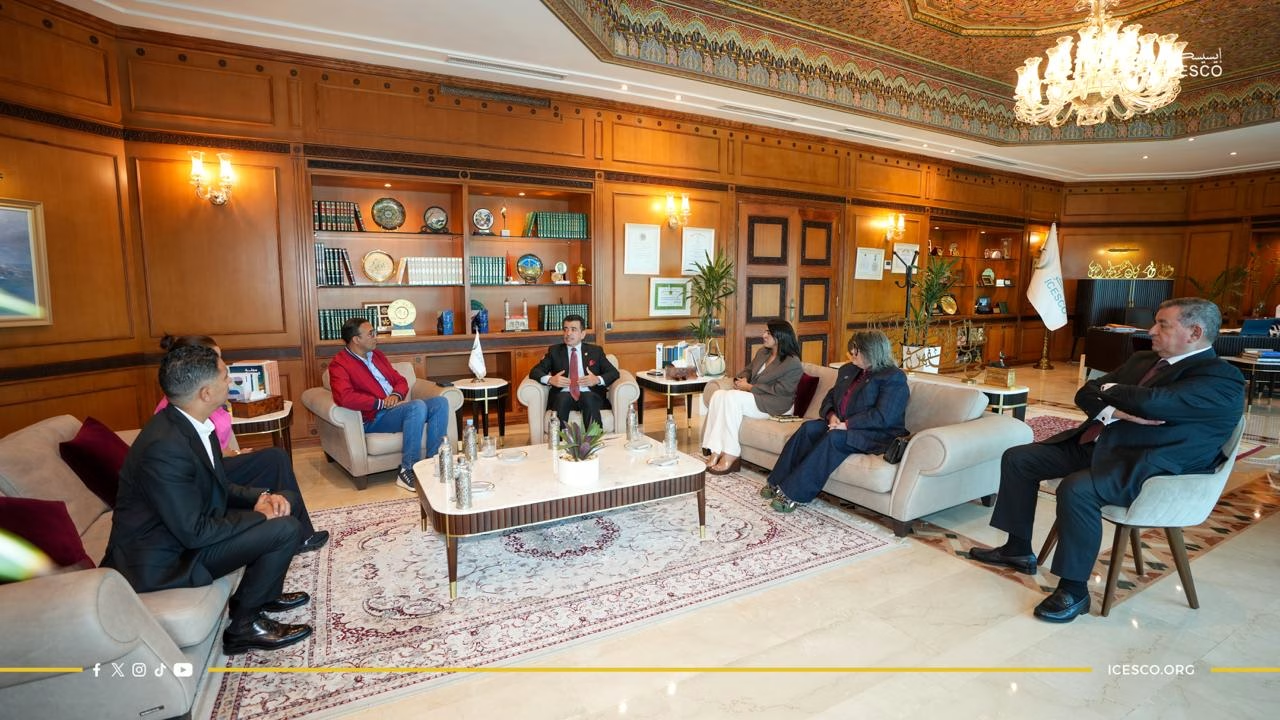
    Dr. Salim M. AlMalik, Director-General of the Islamic World Educational, Scientific and Cultural Organization (ICESCO), received Dr. Azzedine El Midaoui, Minister of Higher Education, Scientific Research and Innovation in Morocco, on Thursday, 13 August 2026, to discuss ways to strengthen cooperation between the Organization and the Ministry in youth capacity building, education system development, and the integration and use of artificial intelligence technologies in Moroccan universities.

    During the meeting, held at ICESCO headquarters in Rabat, Dr. AlMalik reaffirmed the Organization’s commitment to empowering youth and women and strengthening their leadership and creative capacities by attracting outstanding talent and developing a range of programs and projects to enhance their skills in education, science, and culture across its Member States. He also highlighted the far-reaching transformations the Organization has undergone in recent years, positioning it as an innovative institution recognized by one of the world’s leading international organizations in the field of innovation.

    Dr. AlMalik commended the Ministry’s efforts to modernize the way universities and educational institutions operate in Morocco, stressing ICESCO’s readiness to work together on initiatives in higher education and scientific research.

    For his part, Dr. El Midaoui underscored the importance of cooperation between government institutions and international organizations in promoting the use of modern technologies in higher education. He also emphasized the need to involve universities in modernizing education systems to keep pace with technological developments.

    He further commended ICESCO’s efforts to support countries across the Islamic world in advancing their goals in science and innovation.

    The meeting was attended by Dr. Sally Mabrouk, Head of the Director-General’s Office and Supervisor of the Strategy and Institutional Excellence Sector; Dr. Yergaliyev Kuanysh, Head of the Science and Environment Sector; and Dr. Issam Karimi, Expert in the same Sector.