Disclaimer: You are using Google Translate. The ICESCO is not responsible for the accuracy of the information in the translated language .

your opinion

User Feedback

Overall, how satisfied are you about the website?

    Extremely Dissatisfied Extremely Satisfied

    Dr. AlMalik Visits Islamic Civilization Center in Tashkent, Affirms It as a Civilizational Destination That Draws Inspiration from the Past and Shapes the Future

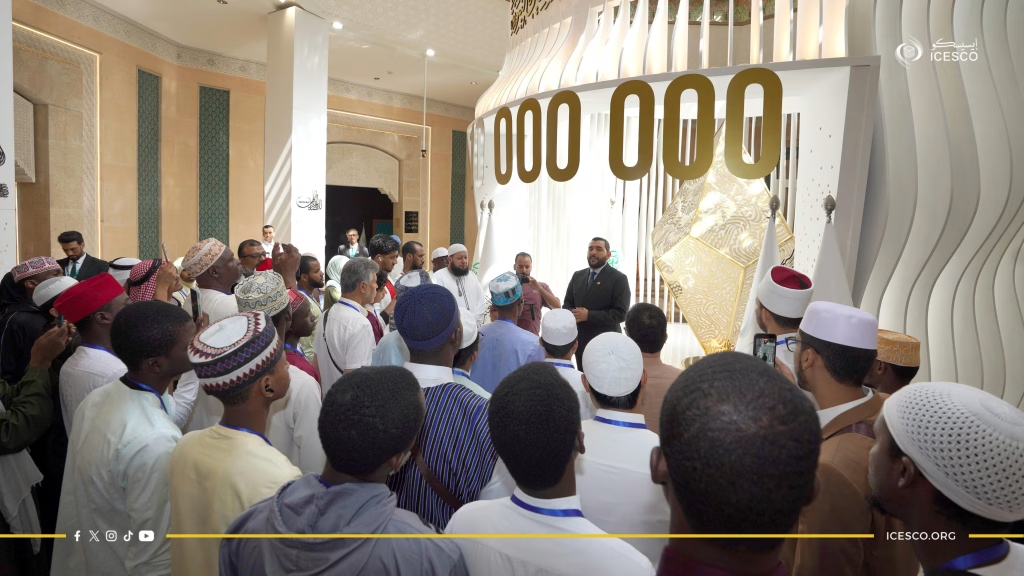
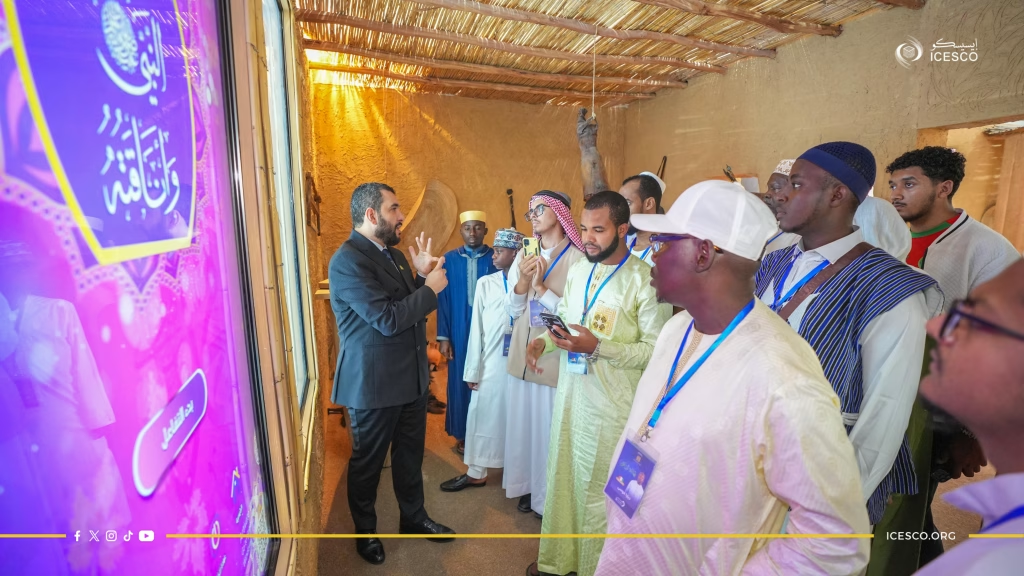
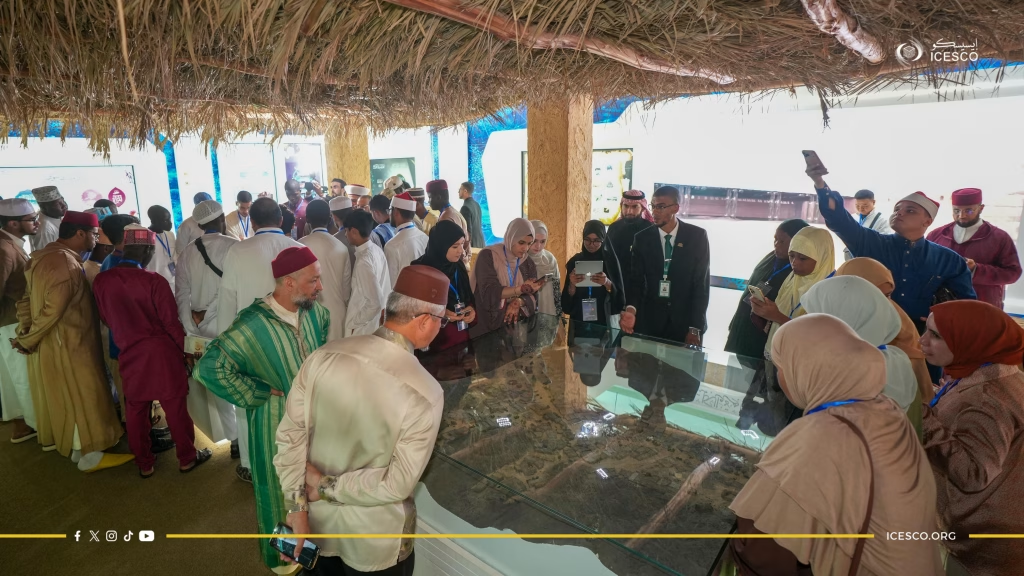
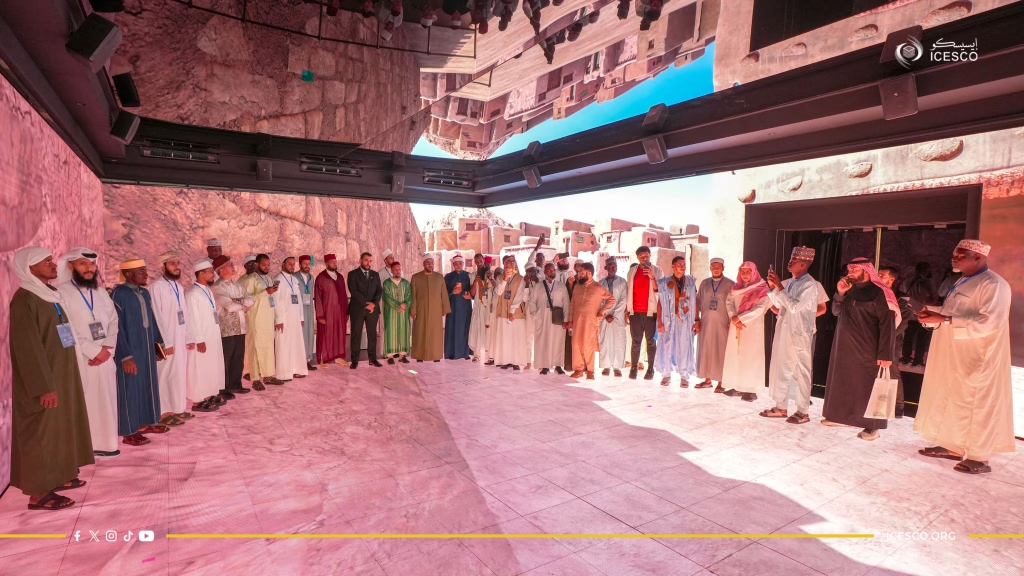
    On the sidelines of his participation in the International Maqam Music Festival, set in the presence of His Excellency President Shavkat Mirziyoyev, President of the Republic of Uzbekistan, Dr. Salim M. AlMalik, Director-General of the Islamic World Educational, Scientific, and Cultural Organization (ICESCO), paid a visit to the Islamic Civilization Center in Tashkent, inaugurated this year as one of the most prominent civilizational and cultural landmarks in the Islamic world.

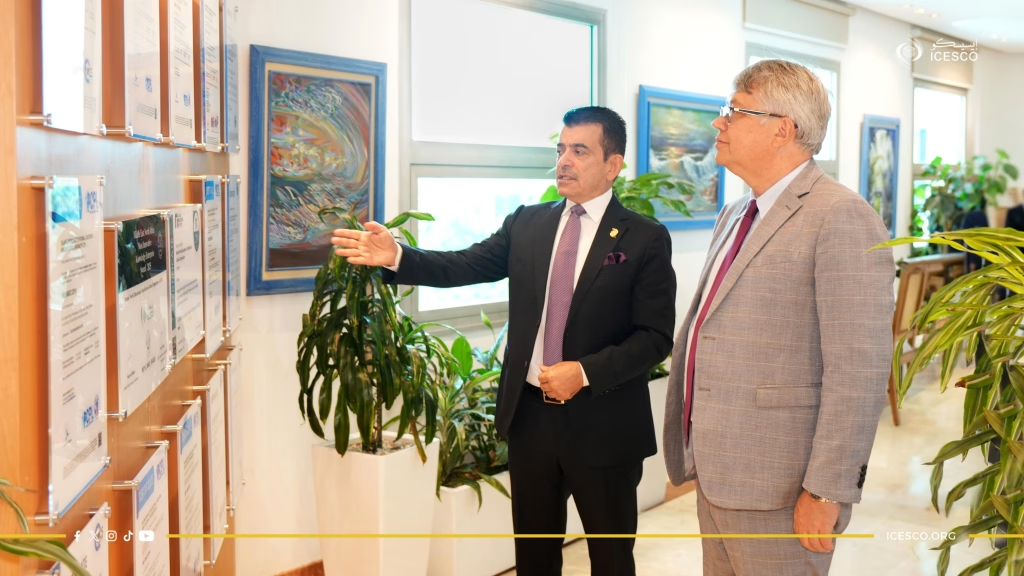
    Dr. AlMalik was received by the Center’s Director, Dr. Firdavs Abdukhalikov, who accompanied him on a tour during which he was briefed on the Center’s various sections and galleries, as well as its rare manuscripts, collections, and historical documents. He also explored its innovative architectural design and advanced exhibition technologies, which present the Islamic civilization through a blend of authenticity and modernity.

    During the tour, Dr. Abdukhalikov reviewed the stages of the Center’s establishment, its vision and objectives, and the role it plays in preserving, safeguarding, and restoring manuscripts, protecting Islamic heritage, and showcasing it for future generations. He further emphasized how these efforts reflect the scholarly and civilizational contributions made by Muslim scholars to the advancement of human knowledge.

    Following the tour, the two sides discussed prospects for cooperation between the Center and ICESCO, and agreed to establish a joint committee tasked with developing implementation pathways for future cooperation and preparing joint programs, initiatives, and projects that serve the objectives of both institutions and contribute to strengthening the preservation and promotion of Islamic heritage and highlighting its civilizational values.

    Dr. AlMalik also stressed the importance of signing a cooperation agreement to define the general framework of the strategic partnership and open new horizons for collaboration in the fields of culture, heritage, manuscripts, scientific research, and capacity building.

    The meeting also addressed the international scientific conferences that the Republic of Uzbekistan will host from 7 to 10 July 2026, foremost among them the International Conference on Imam Maturidi and the International Conference on Imam Al-Tirmidhi, in addition to the International Conference on Imam Al-Bukhari, which will be held in Samarkand near the Imam Bukhari International Scientific Research Center, with the participation of a distinguished group of scholars, researchers, and specialists from around the world.

    Dr. AlMalik commended the great attention that the Republic of Uzbekistan devotes to Islamic heritage and the preservation of the legacy of Muslim scholars, affirming that the Islamic Civilization Center represents a pioneering civilizational project that contributes to preserving the historical memory of the nation and presents new generations with a bright image of its scientific, intellectual, and cultural contributions.

    At the conclusion of the visit, Dr. AlMalik wrote a message in the Center’s Golden Book, expressing his deep admiration for this distinguished civilizational edifice. He praised the beauty of its architecture, the richness of its content, and the meticulous presentation of the history of Islamic civilization and the contributions of its scholars throughout the ages. He noted that the Center represents a pioneering model for preserving the civilizational memory of our nation and a bridge of knowledge connecting new generations with their rich scientific and cultural heritage. He also commended the efforts of the Republic of Uzbekistan to realize this inspiring civilizational project, which harmoniously combines the authenticity of history with the horizons of the future.

    ICESCO Director-General Meets with Uzbekistan’s Deputy Minister of Foreign Affairs to Discuss expanding Cooperation and Promoting Cultural and Civilizational Initiatives

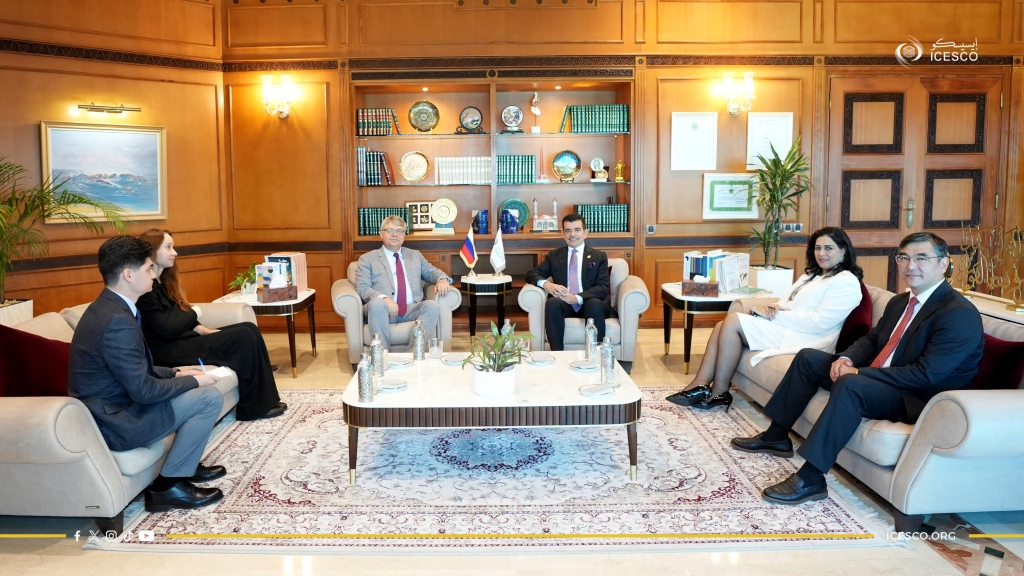
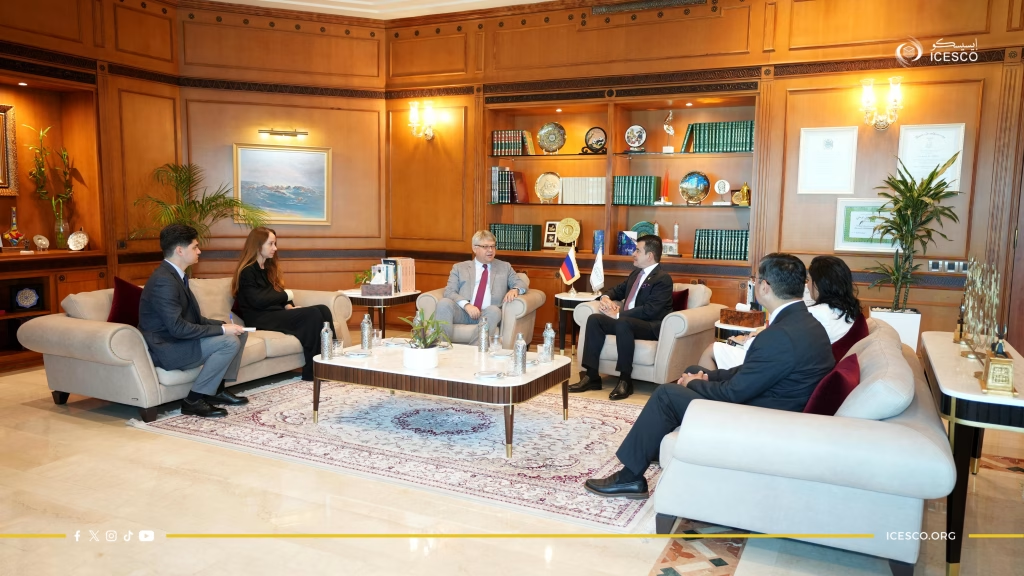
    Dr. Salim M. AlMalik, Director-General of the Islamic World Educational, Scientific and Cultural Organization (ICESCO), met with Mr. Bahram Jan Aliyev, Deputy Minister of Foreign Affairs of the Republic of Uzbekistan. The meeting reviewed areas of joint cooperation and followed up on the implementation of the roadmap adopted two years ago, including the programs, initiatives, and qualitative projects delivered within its framework.

    During the meeting, held on Monday, 22 June 2026, in Tashkent, the Uzbek Deputy Foreign Minister commended ICESCO’s role and the level of fruitful cooperation with Uzbekistan. He highlighted the success achieved under the Samarkand as Culture Capital in the Islamic World for 2025 programme, along with the distinguished cultural, intellectual, and scientific activities organized. He also praised the efforts of ICESCO’s Islamic World Heritage Committee, which led to the inscription and recognition of several archaeological sites and tangible and intangible heritage elements, in addition to organizing specialized conferences and programs that showcase the civilizational and cultural heritage of the Islamic world.

    Mr. Aliyev stressed the importance of continuing and expanding this cooperation to include new areas that serve shared cultural and developmental priorities, expressing Uzbekistan’s readiness to strengthen its partnership with ICESCO across fields of mutual interest.

    For his part, Dr. AlMalik expressed appreciation for the support and attention extended to ICESCO by the leadership of the Republic of Uzbekistan, reaffirming the Organization’s commitment to implementing all components of the agreed roadmap and advancing toward broader cooperation in education, science, culture, heritage, and capacity building.

    He also noted that his current visit is to participate in the International Maqam Art Festival, which will be held in Namangan, in the presence of the President of the Republic of Uzbekistan. He added that ICESCO will present a number of flagship initiatives during the forum that align with its objectives, supporting its areas of work and contributing to enhanced international cooperation and sustainable development.

    At the conclusion of the meeting, Dr. AlMalik expressed his sincere thanks to Mr. Bahram Aliyev for the warm welcome and hospitality, and for his commitment to advancing cooperation between the two sides in a manner that serves shared interests and strengthens cultural and civilizational action in the Islamic world.

    ICESCO Holds International Conference on Families and Public Policies in the Islamic World

    The Islamic World Educational, Scientific and Cultural Organization (ICESCO) held the International Conference on Families and Public Policies on Tuesday, 9 June 2026, at its headquarters in Rabat, under the theme “Supporting Social Transformations in the Islamic World,” in partnership with the United Nations Population Fund (UNFPA) in Rabat. The conference brought together a distinguished group of international experts, researchers, and specialists to examine contemporary transformations affecting the family and to explore ways to develop more effective and context-appropriate family public policies, within an approach that takes into account the cultural and social specificities of countries of the Islamic world.

    In his opening address, Dr. Salim M. AlMalik, Director-General of ICESCO, stressed that investment in families should not be viewed solely as a social commitment, but as a fundamental prerequisite for achieving sustainable development, strengthening social cohesion, and enhancing economic resilience. He underlined that ICESCO attaches particular importance to family-related issues as part of its mission to advance development across its Member States.

    In a recorded address, Mrs. Marielle Sander, Representative of the United Nations Population Fund (UNFPA) in Rabat, explained that the family remains at the heart of every society as a space for protection, solidarity, and human development. She noted that progress toward achieving the Sustainable Development Goals requires family-centered policies that are closely aligned with inclusion, equality, and inclusive opportunities for youth.

    For his part, Mr. Ahmadou Moustapha Ndiaye, World Bank Country Director for the Maghreb and Malta, highlighted that the family constitutes the foundation for building nations’ human capital. He presented selected statistics related to the conference theme in the Middle East and North Africa region, noting that 70 percent of children aged ten are unable to read, representing the highest learning poverty rate globally. He also pointed out that more than 30 percent of youth are NEET, while 40 percent of women face exclusion, a situation that casts negative repercussions on family well-being.

    Dr. Falilat Ajoke, Director of the Social Affairs and Family Affairs Department at the Organization of Islamic Cooperation, emphasized the need to exchange expertise and strengthen coordination among Member States to address the shared challenges facing families in the Islamic world.

    Mrs. Kawtar Manssouri, Director of Childhood and Women’s Affairs, Department of Youth, Ministry of Youth, Culture and Communication, Kingdom of Morocco, considered that the challenges confronting families in the Islamic world call for enhanced coordination and the exchange of successful experiences among countries, contributing to the formulation of more sustainable family policies.

    Subsequently, Mr. Salim Omar Salim, Director of the ICESCO Regional Office in Sharjah, affirmed that the Islamic world is witnessing profound demographic, economic, social, and digital transformations that raise fundamental questions regarding privacy and family security. He then announced the launch of the Regional Family Forum in Sharjah by the end of the current year.

    In the closing session, Dr. Yousra Bint Hussain AlJazairy, Chair of the Cultural Committee of The Group of Spouses of Arab Ambassadors and Heads of International Organizations accredited to the Kingdom of Morocco, affirmed that the family is both the source and the producer of human capital capable of contributing to community building. She stressed the necessity of involving families in the formulation of public policies, as they are the primary stakeholders affected by the outcomes and impacts of these policies.

    The conference featured two panel discussions on “Families in the Islamic World through the Lens of Policymakers and Researchers” and “Families in the Age of Digital Transformation: Artificial Intelligence, Economic Globalization, and Demographic Changes,” with the participation of leading experts and researchers. This initiative aims to contribute to the development of practical recommendations supporting the advancement of family public policies in countries of the Islamic world.

    Azerbaijani President Congratulates Dr. Salim M. AlMalik on His Re-Election as ICESCO Director-General

    His Excellency Ilham Aliyev, President of the Republic of Azerbaijan, extended his sincere congratulations to Dr. Salim M. AlMalik on the occasion of his re-election as Director-General of the Islamic World Educational, Scientific and Cultural Organization (ICESCO) for a new term, by unanimous decision of the Organization’s Member States, following his nomination by the Kingdom of Saudi Arabia, during the proceedings of the 15th session of the ICESCO General Conference, held in Kazan, Republic of Tatarstan, Russian Federation.

    President Aliyev commended the roles undertaken by ICESCO under the sound leadership of its Director-General, which have resulted in a renewed vision and innovative strategic orientations. He noted that the Organization’s work has positioned it among international organizations with a tangible impact in the fields of education, science, and culture.

    The Azerbaijani President also highlighted the significant achievements and qualitative initiatives resulting from the distinguished partnership between ICESCO and the Republic of Azerbaijan, through cooperation with relevant Azerbaijani institutions and entities. He praised Dr. AlMalik’s efforts in advancing joint action to broader horizons for the benefit of the Islamic world.

    UNESCO Director-General Congratulates Dr. Salim M. AlMalik on His Re-election as ICESCO Director-General

    Dr. Khaled El-Enany, Director-General of the United Nations Educational, Scientific and Cultural Organization (UNESCO), extended his sincere congratulations to Dr. Salim M. AlMalik on the occasion of his re-election as Director-General of the Islamic World Educational, Scientific and Cultural Organization (ICESCO) for a second term. the re-election was unanimously approved by the Organization’s General Conference following his nomination by the Kingdom of Saudi Arabia, during the 15th session of the General Conference held in Kazan, in the Republic of Tatarstan of the Russian Federation.

    Dr. El-Enany praised this distinguished choice as a clear and significant recognition of Dr. AlMalik’s outstanding career and extensive experience in multilateral diplomacy and international cooperation. He described the renewed confidence placed in him by the Member States as a strong testament to his leadership, commitment, and strategic vision, as well as to his efforts in advancing ICESCO’s values and mission across the Islamic world and among the Organization’s international partners.

    He affirmed that UNESCO highly values its cooperation with ICESCO, which is grounded in shared objectives aimed at improving the quality of education for all, achieving gender equality, promoting cultural diversity, protecting the environment, and advancing sustainable development for individuals. He noted that this cooperation will soon culminate in the signing of a new cooperation agreement to help build peaceful and resilient societies.

    The UNESCO Director-General reaffirmed the Organization’s commitment to working with ICESCO to address the challenges of a rapidly changing world, and to mobilizing its expertise, experience, and networks in support of joint efforts to promote a culture of peace and achieve sustainable development.

    ICESCO Explores Theory of Medina Calligraphy in Its Series of Conferences on Calligraphy and Manuscripts

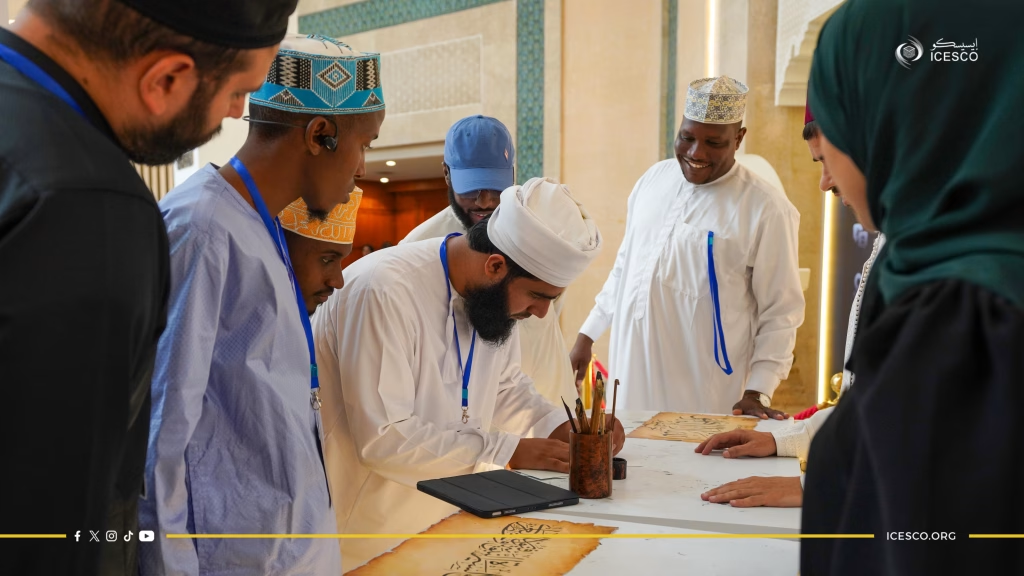
    The Islamic World Educational, Scientific and Cultural Organization (ICESCO) held the second conference in its “Conferences on Calligraphy and Manuscripts in the Islamic World” series. The conference was held in person and via videoconference at the initiative of the Center for Calligraphy and Manuscripts under the theme: “The Theory of Calligraphy in Medina: A Study on the Origins of Arabic Calligraphy,” presented by Dr. Idham Hanash, Director of the Center.

    The conference was held on Wednesday, 20 May 2026, at the Organization’s headquarters in Rabat. Dr. Abdelilah Benarafa, ICESCO’s Deputy Director-General, who delivered a welcome speech, emphasized the importance of this scientific series for advancing research on Arabic calligraphy and manuscripts and strengthening academic discourse on their position in Islamic civilization.

    In his lecture, Dr. Hanash presented “Medinan Calligraphy” as a decisive moment in the development of Arabic calligraphy, as reflected in the Uthmanic Codex (Mushaf of Uthman). He noted that Medinan calligraphy did not derive from or draw inspiration from earlier calligraphic styles such as Musnad, Nabataean, or Syriac. Dr. Hanash explained that this theory identifies Medina as the true cradle of Islamic Arabic calligraphy and is based on a purely aesthetic and artistic approach, as opposed to other theories.

    Dr. Hanash also reviewed issues related to the evolution of Arabic calligraphy and its aesthetic characteristics. He emphasized its deep connection to the Quranic text and Islamic cultural identity. He also noted the artistic and scientific dimensions that calligraphy has acquired over time, making it one of the most striking expressions of creativity in Islamic culture.

    Dr. Ahmed Abdelbaset, expert at the Center for Calligraphy and Manuscripts, moderated the conference, which addressed themes related to Arabic calligraphy as a representation of writing and language, an art form, and a science with its own body of knowledge, principles, and theories. The conference also reviewed various theories on the origins of Arabic calligraphy and the transformations it has undergone in terms of form and structure throughout the ages.

    ICESCO, China Discuss Cooperation in Civilizational Dialogue and Cultural Exchange

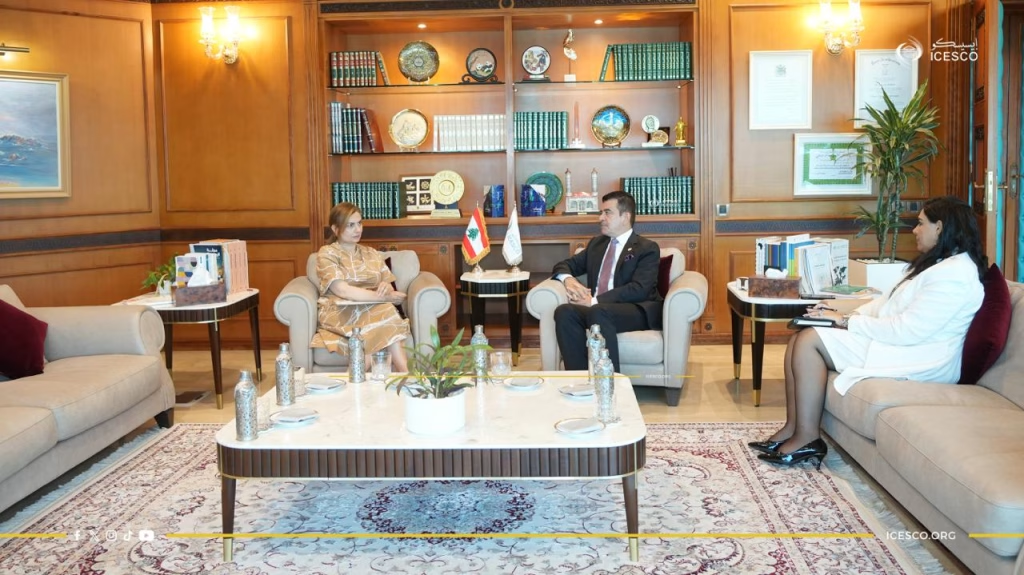
    Dr. Salim M. AlMalik, Director-General of the Islamic World Educational, Scientific and Cultural Organization (ICESCO), received Ambassador Chao Weiding, Director-General of the West Asia and North Africa Bureau of the International Department of the Central Committee of the Communist Party of China (CCP), on Wednesday, 20 May 2026, at ICESCO headquarters in Rabat, to discuss avenues and mechanisms for cooperation in promoting civilizational dialogue and cultural exchange between China and the Arab and Islamic world.

    During the meeting, Dr. AlMalik expressed ICESCO’s willingness to collaborate with Chinese institutions and organizations, highlighting the cultural similarities between the Islamic world and China. He also expressed the Organization’s desire to collaborate with the Chinese side to organize conferences and seminars on civilizational dialogue and coexistence, in line with ICESCO’s approach of openness.

    Dr. AlMalik considered strengthening partnership with the People’s Republic of China an important step toward building youth capacities, fostering peace, protecting heritage, promoting student and academic exchange, and restoring cultural sites through the development of joint initiatives and projects.

    For his part, Ambassador Chao Weiding commended ICESCO’s efforts in the fields of education, science, and culture, as well as in promoting civilizational exchange and the values of tolerance. He affirmed the willingness of the West Asia and North Africa Department of the International Department of the Central Committee of the Communist Party of China to cooperate with ICESCO in raising awareness of Arab and Islamic culture and enhancing cultural dialogue with China. He also invited Dr. AlMalik to visit China to participate in a number of activities to be organized by the Department in the coming period.

    At the close of the meeting, the two sides discussed joint arrangements for organizing the International Forum on Civilizational Dialogue in China, in addition to holding activities in the fields of digitization, technology, innovation, and linguistic exchange. The meeting concluded with an exchange of commemorative shields and gifts.

    The meeting was attended by Dr. Mohamed Zinelabidine, Head of ICESCO’s Culture Sector; Dr. Sally Mabrouk, Director of ICESCO Director-General’s Office and Supervisor of the Strategy and Institutional Excellence Sector; Dr. Kuanysh Yergaliyev, Head of ICESCO’s Science and Environment Sector; Dr. Webber Ndoro, Director of ICESCO’s Islamic World Heritage Center; Mr. Smail Ajbaili, Head of the Translation Division; and Dr. Yusuf Muhammed, expert at the Partnerships and International Cooperation Sector.

    ICESCO Director-General Receives Omani Undersecretary of Culture to Discuss Expanding Cultural Partnership

    Dr. Salim M. AlMalik, Director-General of the Islamic World Educational, Scientific and Cultural Organization (ICESCO), received on Tuesday, 19 May 2026, at the Organization’s headquarters in Rabat, Mr. Saeed bin Sultan Al Busaidi, Undersecretary of the Ministry of Culture, Sports and Youth for Culture of the Sultanate of Oman. The meeting reviewed ways to strengthen joint cooperation in the fields of culture, heritage, and creative industries.
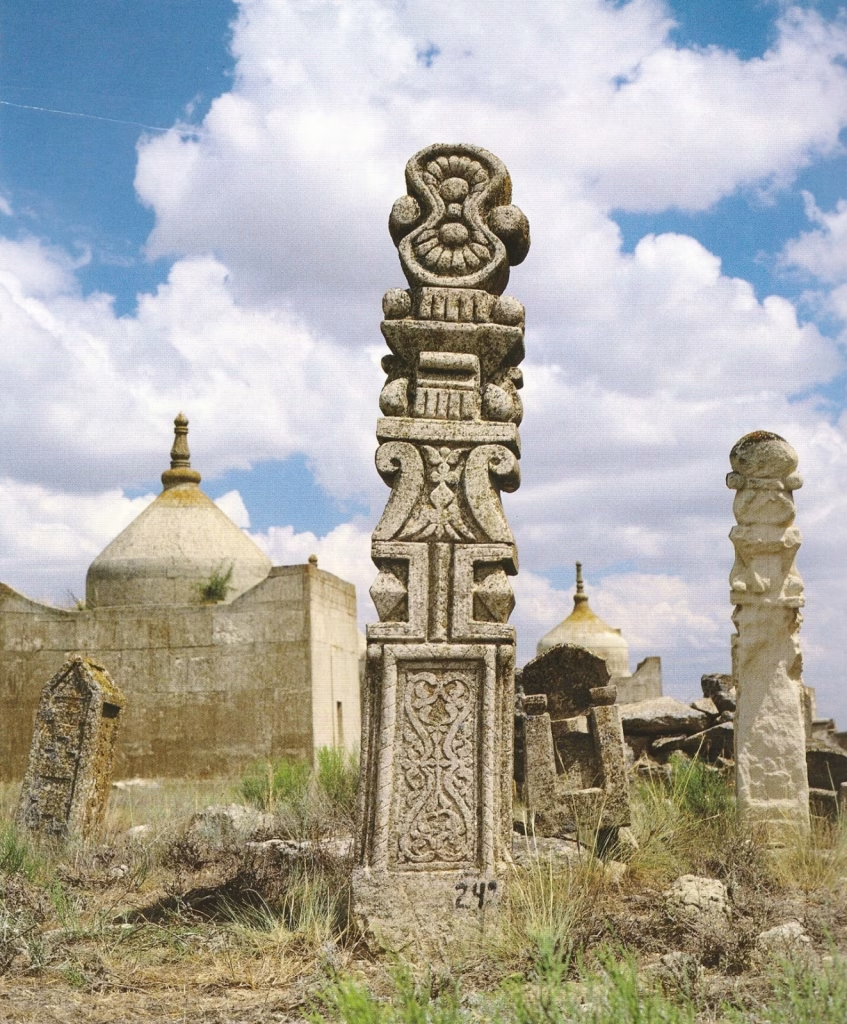
    At the outset of the meeting, Mr. Al Busaidi congratulated Dr. AlMalik on his unanimous re-election as Director-General of ICESCO for a second term, commending his leadership of the Organization and the distinction achieved by its programs and projects, which have positioned ICESCO as a centre of expertise in the fields of culture, science, education, and communication.
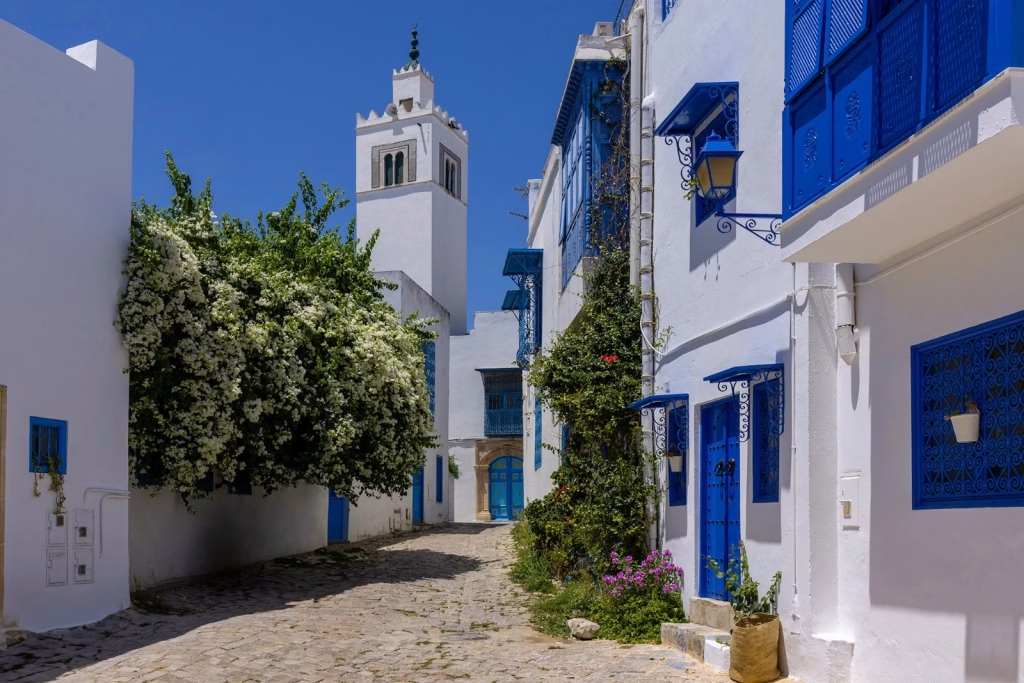
    Dr. AlMalik then affirmed that, over recent years, ICESCO has continued to consolidate its standing as a reference organization and a centre of expertise in its fields of competence, thanks to the launch of high-quality projects and practical initiatives with tangible impact in the Member States. He stressed that the Organization views cooperation with the Sultanate of Oman as an important driver for strengthening joint cultural action, particularly in the areas of heritage preservation, valorization of civilizational heritage, and support for intellectual and literary initiatives in the Islamic world.
    Dr. AlMalik renewed the call to inscribe elements and sites from Oman’s rich and diverse heritage on ICESCO’s Heritage Lists in the Islamic World, affirming the Organization’s readiness to provide technical support through its Heritage Center. He also proposed holding one of the meetings of the Heritage Committee in the Islamic World in the Sultanate of Oman, selecting one of the Omani cities as a Capital of Culture in the Islamic World, and strengthening cooperation within the ICESCO Forum of Women Poets, thereby consolidating the Organization’s role as a unifying space for cultural creativity.

    For his part, Mr. Saeed bin Sultan Al Busaidi affirmed the Sultanate of Oman’s commitment to strengthening cooperation with ICESCO and regarding it as a strategic partner in the fields of culture and heritage. In this context, he donated three historical manuscripts to the Sultan Qaboos Library, hosted at ICESCO headquarters in Rabat: a complete Qur’an whose pages are framed with gilding and whose opening page is adorned with gold decorations; a copy of Al-Burda Poem transcribed in 1271 AH; and a manuscript on Hajj, the copying of which dates back to before the sixteenth century CE, for inclusion among the library’s rare books and manuscripts.

    The meeting was attended on the Omani side by Mr. Khalid Al Harthy, Director-General of Museums and Exhibitions at the Ministry of Culture, and Mr. Khalid Al Busaidi, Director of the Undersecretary’s Office. On the ICESCO side, the meeting was attended by Dr. Abdelilah Benarafa, Deputy Director-General; Dr. Mohamed Zine El Abidine, Head of the Culture Sector; Dr. Salim Al Habsi, Head of the General Secretariat of National Committees and Conferences; and Dr. Rawda Al-Hajj, Head of the Literature and Poetry Center.

    ICESCO, Afro-Arab Cultural Institute Explore Cooperation Prospects in Manuscript Restoration and Arabic Language Promotion

    Dr. Salim M. AlMalik, Director-General of the Islamic World Educational, Scientific and Cultural Organization (ICESCO), received Ambassador Mohamed Ben Youssef, Director-General of the Afro-Arab Cultural Institute, on Tuesday, 19 May 2026, at ICESCO Headquarters in Rabat. The meeting explored cooperation prospects in manuscript restoration, heritage protection, and strengthening the international presence of the Arabic language.

    During the meeting, Dr. AlMalik reviewed the Organization’s contributions to heritage preservation, including the inscription of heritage sites and cultural elements, the safeguarding of tangible and intangible heritage, and initiatives to transcribe African languages using the Arabic script.

    Dr. AlMalik affirmed ICESCO’s willingness to develop a joint program with the Afro-Arab Cultural Institute to restore the historic Timbuktu manuscripts in Mali and implement activities aimed at raising awareness of shared figures and symbols between the Arab and African worlds.

    For his part, Ambassador Ben Youssef commended the Organization’s efforts in recent years to advance initiatives and programs within its areas of competence. He underscored the Institute’s commitment to developing joint activities in teaching Arabic to non-Arabic speakers and promoting civilizational exchange among Arab and African cultures to disseminate the values of coexistence, tolerance, and peace among peoples.

    The meeting was attended by Dr. Abdelillah Benarafa, Deputy Director-General of ICESCO; Dr. Mohamed Zine El Abidine, Head of the Culture Sector; Mr. Osama Heikal, Head of the Media and Communication Sector; and Dr. Anas Husam Al-Nuaimi, expert at ICESCO’s Center of Arabic for Non-Arabic Speakers.

    ICESCO Director-General Receives Mauritanian Minister of Culture to Discuss Cooperation in Media and Civilizational Upbringing

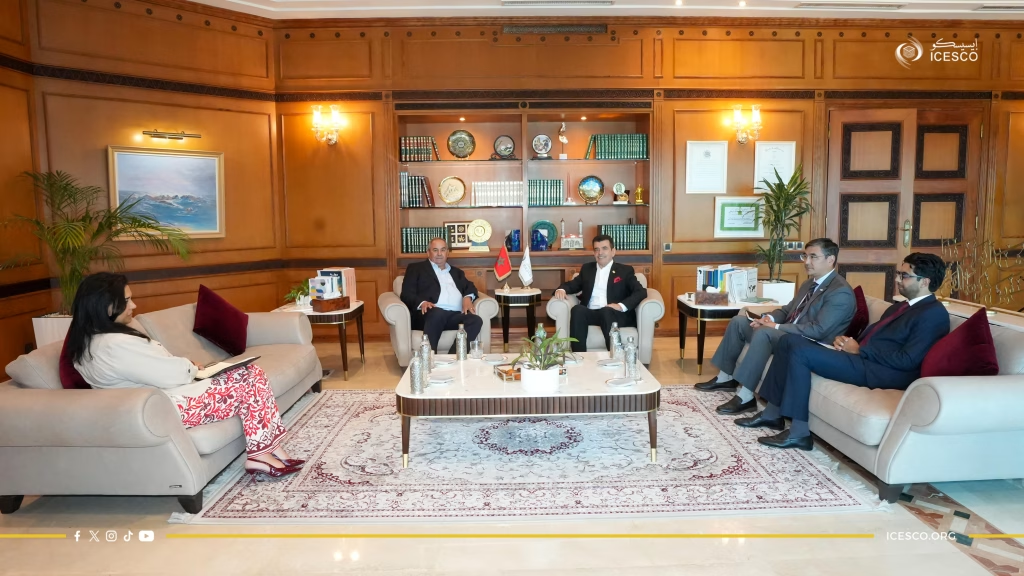
    Dr. Salim M. AlMalik, Director-General of the Islamic World Educational, Scientific and Cultural Organization (ICESCO), received Mr. El Houssein Ould Meddou, Minister of Culture, Arts, Communication, and Relations with Parliament of the Islamic Republic of Mauritania, to discuss ways of strengthening cooperation between the two sides in the fields of media, civilizational dialogue, and the preservation and safeguarding of heritage. The meeting was attended by Mr. Ahmed Ould Bahiya, Ambassador of Mauritania to the Kingdom of Morocco, and Mr. Mohamed Ould Sidi Abdallah, Secretary-General of the Mauritanian National Commission for Education, Culture, and Science.

    During the meeting, held on Monday, 18 May 2026, at the Organization’s headquarters in Rabat, Dr. AlMalik stressed that ICESCO attaches the utmost importance to cooperation with Mauritania in the areas of media literacy, civilizational upbringing, and the use of artificial intelligence and digital technologies in the protection of manuscripts and the promotion of the civilizational heritage of the Organization’s Member States, particularly as ICESCO’s vision for the coming period will focus on new horizons of development and innovation.

    Dr. AlMalik also underscored the importance of investing in the young men and women of the Islamic world as a creative human capital, which requires equipping them with skills that keep pace with rapid technological developments, within the framework of an innovative action plan aimed at building a prosperous Islamic world.

    For his part, Mr. Ould Meddou congratulated Dr. AlMalik on his unanimous re-election by the Organization’s Member States for a new term, noting that this would open new horizons for strengthening the strong partnership between ICESCO and Nouakchott. He also praised the Organization’s sustained efforts in recent years, under the leadership of Dr. AlMalik, in educating younger generations and building youth capacities through initiatives and projects in the fields of education, science, and culture.

    The Minister further expressed his Ministry’s readiness to cooperate in disseminating knowledge and raising awareness about prominent figures of the Islamic world, in addition to collaborating on the development of a joint international platform dedicated to promoting Islamic civilizational identity, its values, and its distinctive characteristics.

    During the meeting, ICESCO was represented by Dr. Abdelilah Benarafa, Deputy Director-General; Mr. Osama Heikal, Head of the Media and Communication Sector; and Dr. Salim Al-Habsi, Director of the General Secretariat of National Commissions and Conferences.