ICESCO Director-General Calls for Stronger Cooperation on AI Governance at International Forum in RiyadhDr. AlMalik Reviews ICESCO’s AI Efforts, Stresses Legislation that alone is not Enough for Governance

15 September 2026
Dr. Salim M. AlMalik, Director-General of the Islamic World Educational, Scientific and Cultural Organization (ICESCO), called for stronger regional cooperation in education, science, and culture to establish artificial intelligence governance that safeguards human dignity and promotes inclusion and diversity, stressing that legislation alone is not enough to achieve this goal.
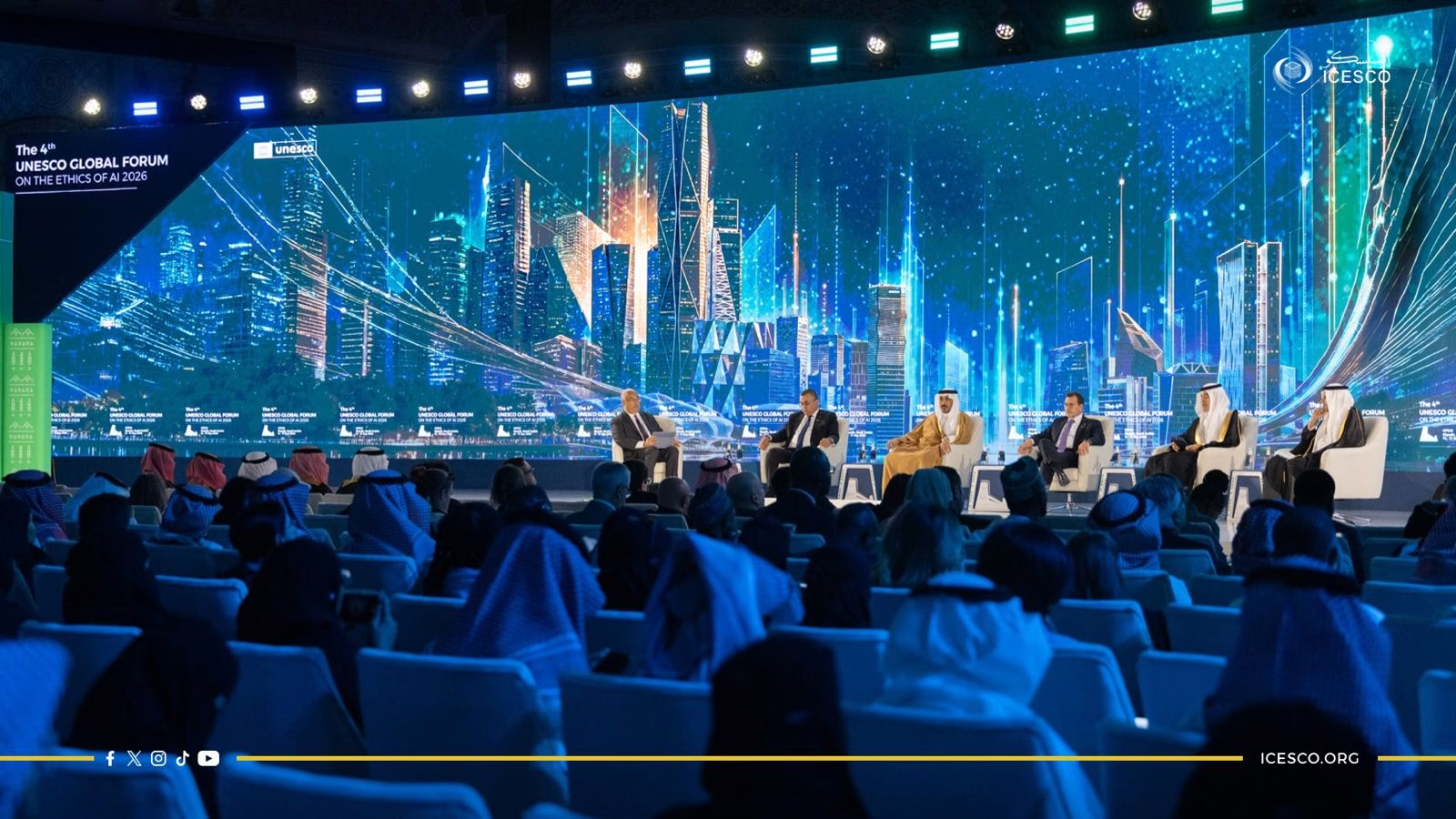
His remarks came during his participation on Tuesday, 15 September 2026, in the high-level ministerial dialogue on “Artificial Intelligence, Multilateralism, and Diplomacy,” held as part of the fourth UNESCO Global Forum on the Ethics of Artificial Intelligence in Riyadh, Saudi Arabia. The Forum is jointly organized by the Saudi Data and Artificial Intelligence Authority (SDAIA) and UNESCO, in cooperation with the International Center for AI Research and Ethics (ICAIRE), with the participation of ministers, experts, representatives of specialized international institutions, and more than 100 speakers.
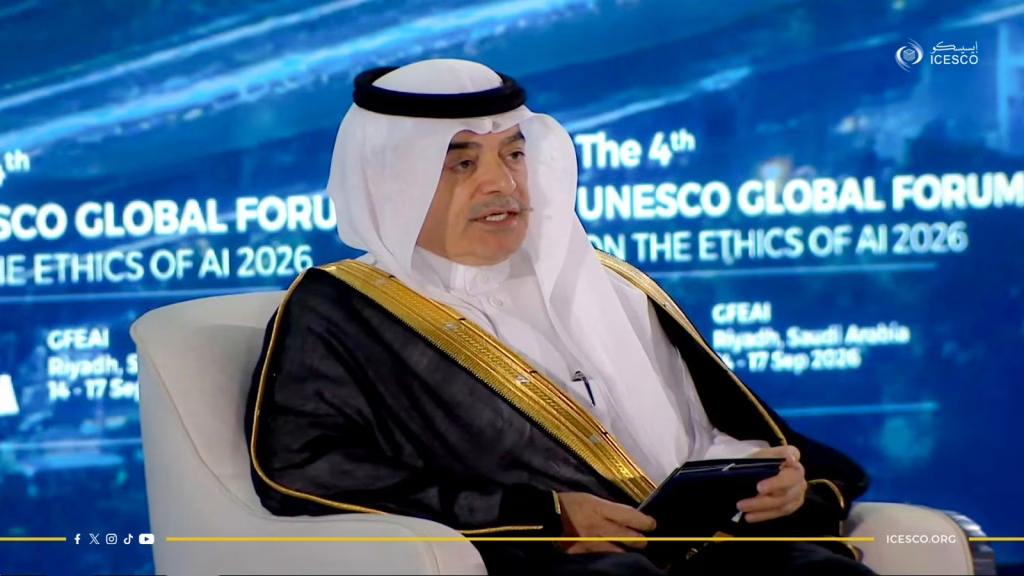
Dr. AlMalik stated that cooperation in these three fields is a cornerstone of joint action among ICESCO Member States. He underscored the need to develop shared curricula on artificial intelligence and its ethics, train teachers, and adopt unified standards for the knowledge and skills required to address the impact of this technology on learning and assessment.
Moreover, Dr. AlMalik highlighted the “10K Leaders Training Program” initiative, implemented by ICESCO in cooperation with ICAIRE, which aims to train professionals in the field using shared training materials and standards that promote responsible use.
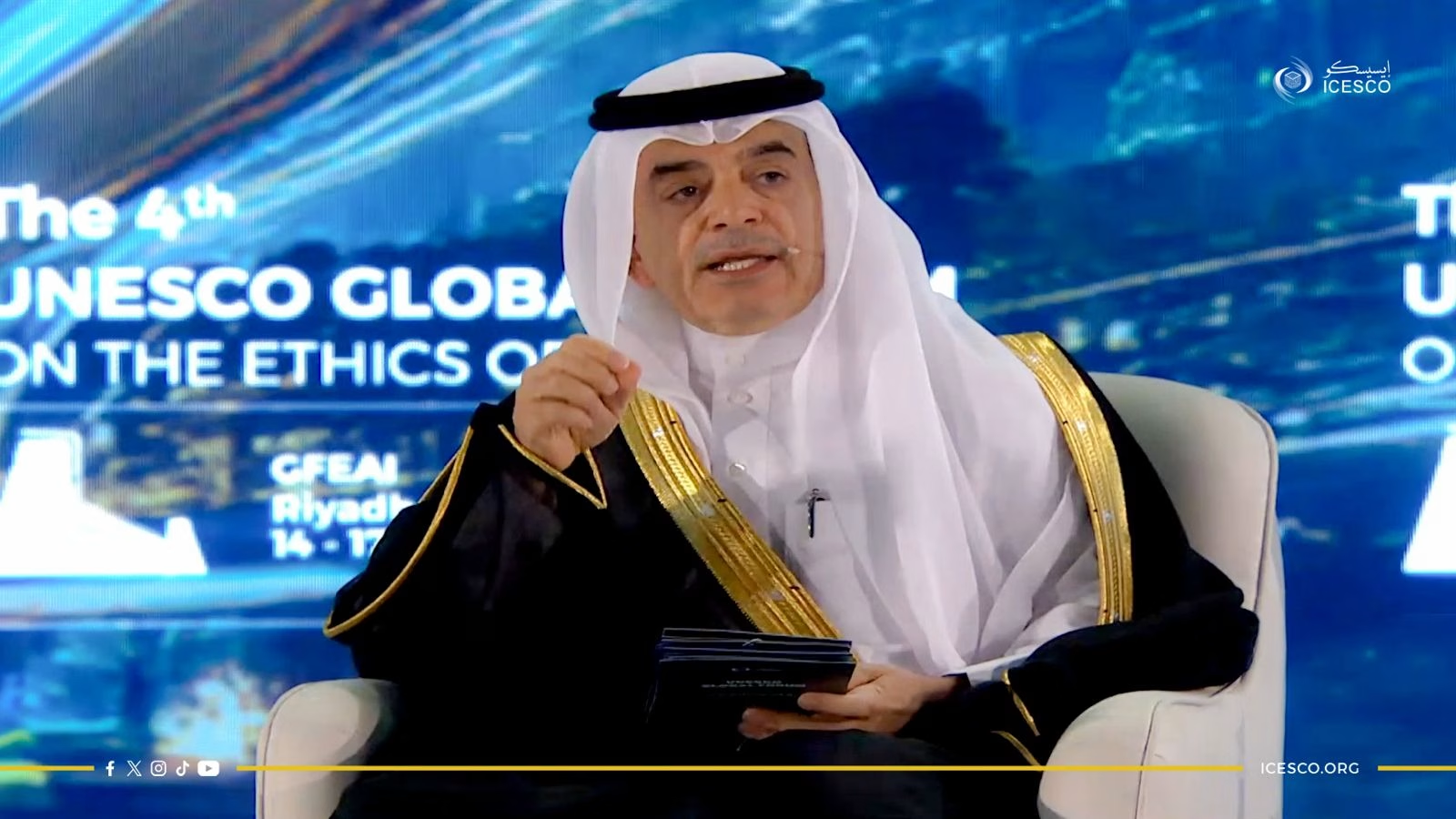
The ICESCO Director-General emphasized the importance of enabling researchers to evaluate AI systems and their linguistic performance within local contexts, while facilitating the exchange of research findings. He also highlighted the role of the “ICESCO AI Index for the Islamic World” in measuring Member States’ progress against a unified regional benchmark and enabling them to benefit from one another’s experiences.
Dr. AlMalik also referred to the “Riyadh Charter on Artificial Intelligence for the Islamic World,” launched by ICESCO in cooperation with SDAIA, emphasizing its contribution to establishing ethical principles that respect the cultural specificities of Member States and align with relevant international recommendations.
The session also featured Dr. Sid Ali Zerrouki, Algeria’s Minister of Post and Telecommunications; Shaikh Abdulla bin Ahmed Al Khalifa, Bahrain’s Minister of Transportation and Telecommunications; Mr. Kamal Shehadi, Lebanon’s Minister of the Displaced, Minister of State for Technology and Artificial Intelligence; and Mr. Esam Alwagait, Director of the National Information Center at SDAIA.