With ICESCO Director-General in Attendance…Russian President Highlights Culture’s Role in Fostering Communication and Dialogue at St Petersburg International United Cultures Forum

26 September 2026
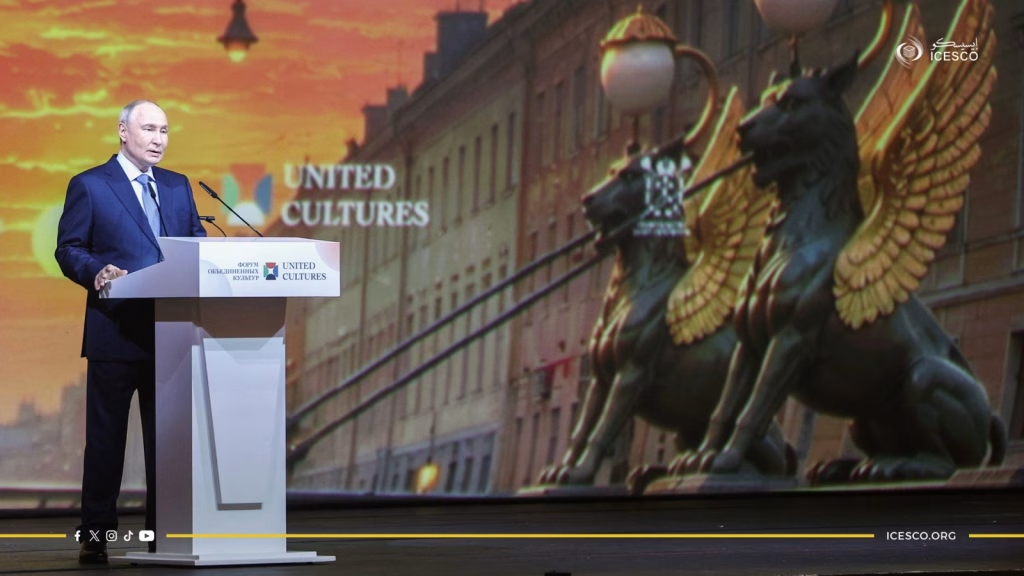
In the presence of Dr. Salim M. AlMalik, Director-General of the Islamic World Educational, Scientific and Cultural Organization (ICESCO), H.E. Vladimir Putin, President of the Russian Federation, delivered an address during the main session of the 12th St Petersburg International United Cultures Forum. He highlighted culture’s role in Fostering communication and dialogue among peoples and overcoming political and economic challenges.
In his address, delivered on Friday, 25 September 2026, and attended by a number of senior officials, ministers, and heads of international organizations, President Putin highlighted Russia’s cultural and linguistic diversity throughout history as a space for civilizational exchange. He affirmed that the unity of peoples is founded on the cohesion of societies in their distinctiveness, and that shared values lie in respect for dignity, historical memory, creativity, constructive work, and diversity of perspectives.
President Putin also highlighted Russia’s international standing in academic and cultural education, reviewing his country’s efforts to integrate classical education with modern technologies.
It is worth noting that the St Petersburg International United Cultures Forum, held this year under the theme “United Cultures, Common Values,” brings together representatives of 70 countries. It seeks to provide a platform for dialogue, promote cultural diversity, preserve heritage, and foster cooperation in the fields of culture and the arts. The Forum also discusses issues relating to the contemporary cultural landscape across countries, nationalities, and disciplines, while facilitating the exchange of views and knowledge on achieving a balance between cultural identity and modern technologies, strengthening cultural sovereignty amid contemporary challenges, and developing educational curricula in creative fields.