
With the Participation of Kazakhstan’s Vice-President, ICESCO DG Takes Part in International Symposium on Al-Farabi in Kazakhstan
6 November 2026
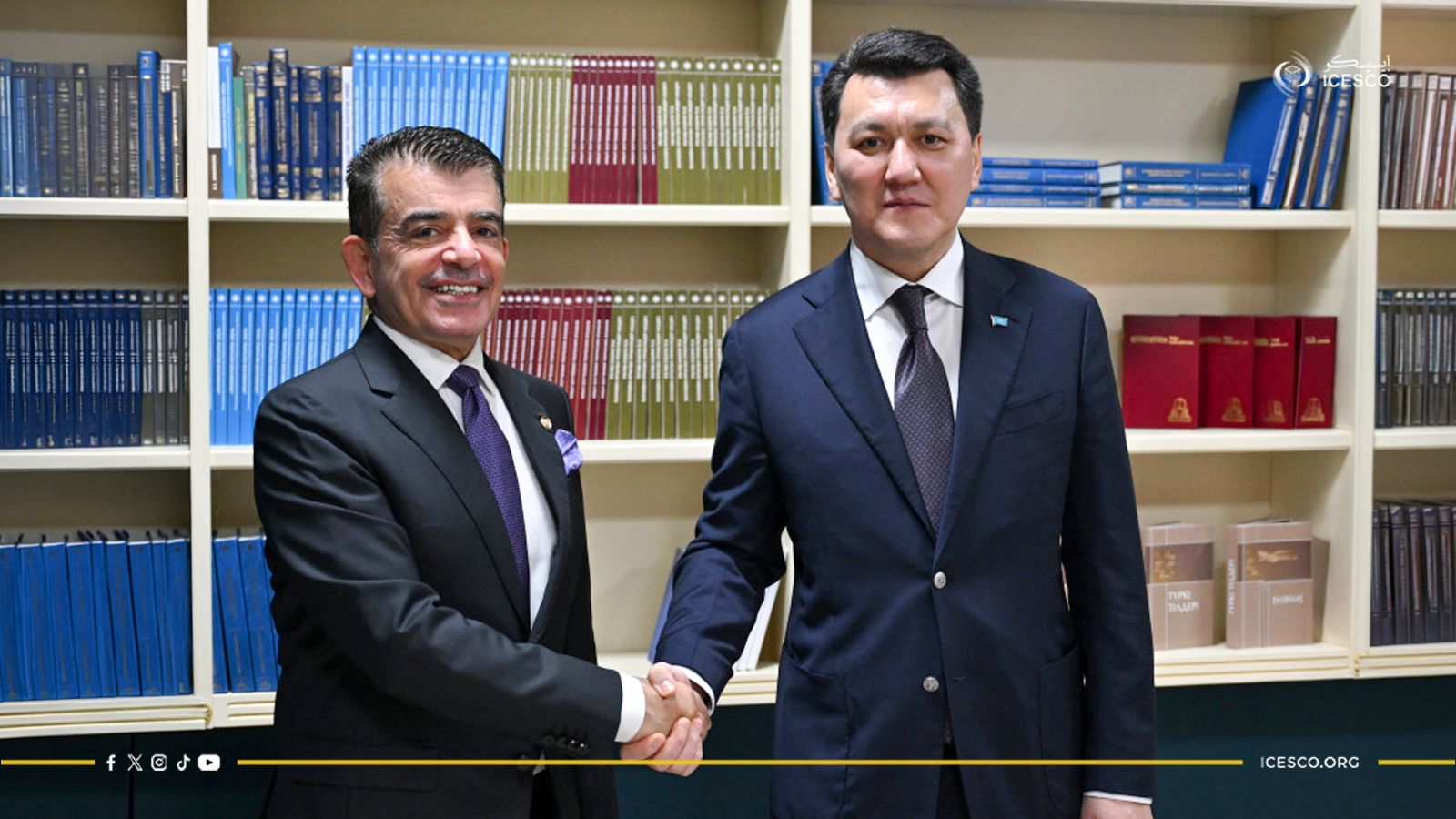
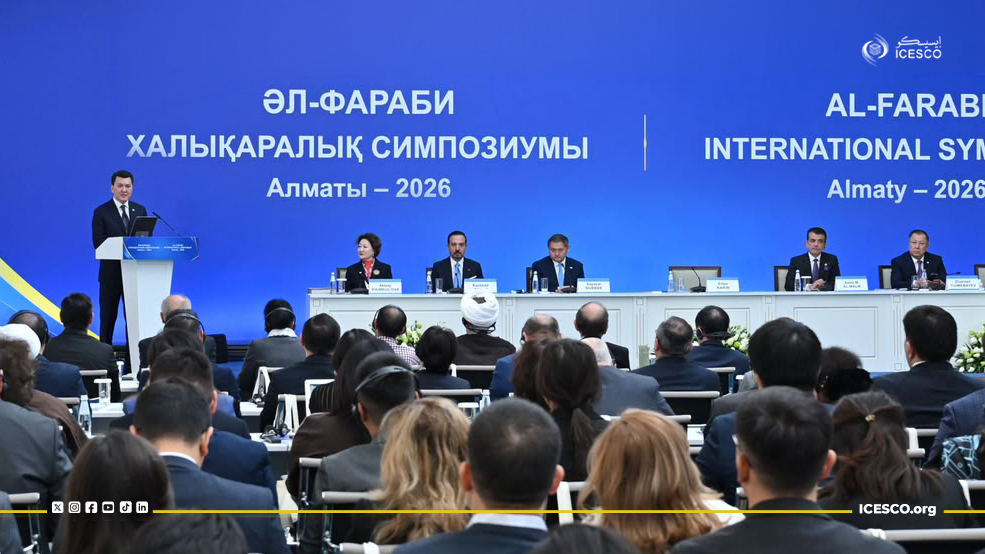
On Friday, 6 November 2026, Dr. Salim M. AlMalik, Director-General of ICESCO, participated in the International Symposium on Al-Farabi and His Contributions Throughout Human History in Almaty, Kazakhstan, which was held by the Ministry of Science and Higher Education of Kazakhstan. the Symposium brought together H.E. Mr. Erlan Karin, Vice-President of Kazakhstan, and along with around 150 participants, including officials from government entities and international institutions, university representatives, experts, specialists, and researchers in history, heritage, and the sciences.
The opening ceremony began with a welcoming address from H.E. President Kassym-Jomart Tokayev, delivered by Mr. Karin. In his address, the President underscored the importance of delving deeper into the progressive ideas of great thinkers and sharing them with young people, noting that Al-Farabi’s ideas have particular relevance in an era marked by globalization and technological progress.
Mr. Karin stated that the President had directed that the Symposium be transformed into an international academic forum held biennially in Turkistan and Almaty. He affirmed that Kazakhstan had embarked on a comprehensive effort to explore and promote its historical and spiritual heritage, as part of its qualitative initiatives in education and enlightenment.
In his address, Dr. AlMalik expressed his appreciation to H.E. the President of the Republic of Kazakhstan, as well as to the country’s leadership and people. He commended Kazakhstan and Al-Farabi Kazakh National University for their commitment to advancing scientific research and its contributions.
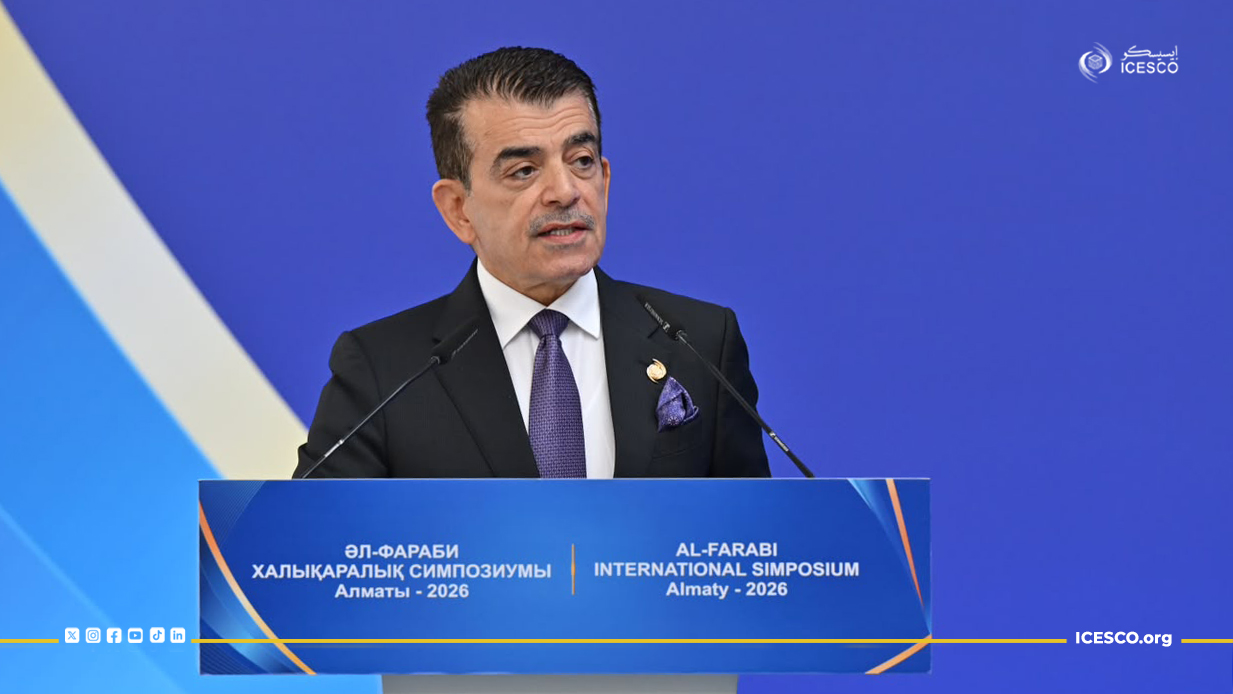
He also affirmed that civilizations achieve progress and attainments when knowledge serves human dignity and power is guided by wisdom, particularly amid the transformations brought about by artificial intelligence, which can be harnessed for noble purposes within an ethical framework governing its technologies.
The ICESCO Director-General noted that the Conference brings together the intellectual depth of the Islamic world’s heritage and the choices available to humanity today. He explained that Al-Farabi’s thought invites reflection on how knowledge can be harnessed to shape a shared future, while underscoring the prominent place accorded to knowledge in Islam.
Dr. AlMalik spoke about Al-Farabi’s early life, research, and journey from Central Asia to the major centers of knowledge, where he had opportunities for intellectual exchange that enabled him to develop a philosophical vision whose influence endured for centuries, earning him the title of the Second Teacher.
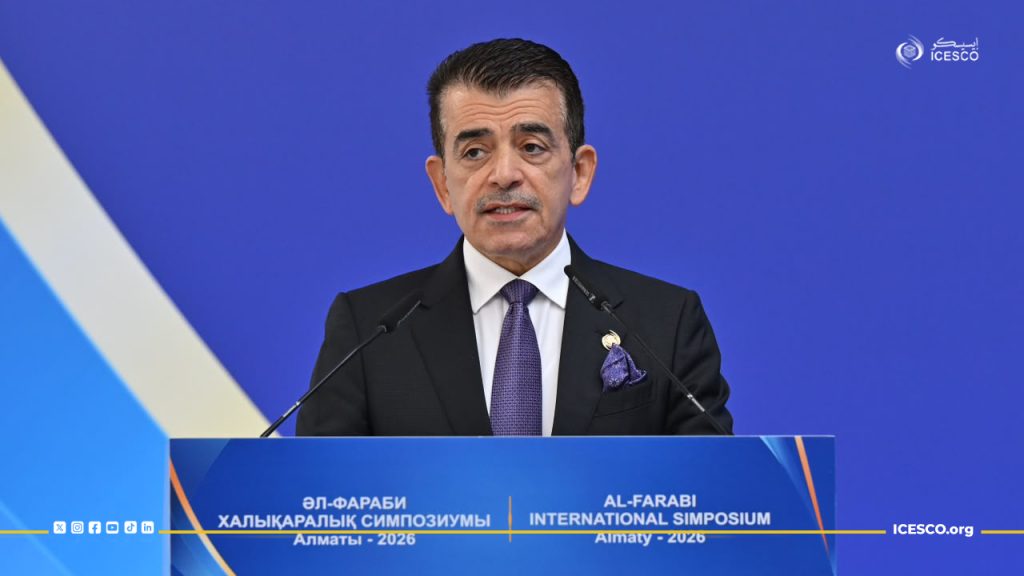
Dr. AlMalik also highlighted the rich history of Kazakhstan and the Central Asian region, and its wealth of wisdom and scientific heritage. In this regard, he noted that ICESCO had designated the Turkistan as the Capital of Culture in the Islamic World 2027, with the aim of promoting Kazakhstan’s national intellectual heritage internationally.
He further underscored the importance of understanding artificial intelligence and the need to strengthen the ethics governing the use of its technologies to advance education and provide students with opportunities for creativity and the pursuit of knowledge, in addition to enriching digital memory with manuscripts and the heritage of the Islamic world.
He affirmed that the relationship between knowledge and human flourishing lies at the heart of ICESCO’s mission, noting that the Organization’s work in education, science, and culture contributes to capacity-building, the advancement of scientific research, and mutual understanding among peoples. He also reviewed ICESCO’s efforts to introduce Al-Farabi’s thought, foremost among which was the organization of the first International Conference on Islamic Scholars, titled “Al-Farabi and His Contributions throughout Human History”, in October 2023.
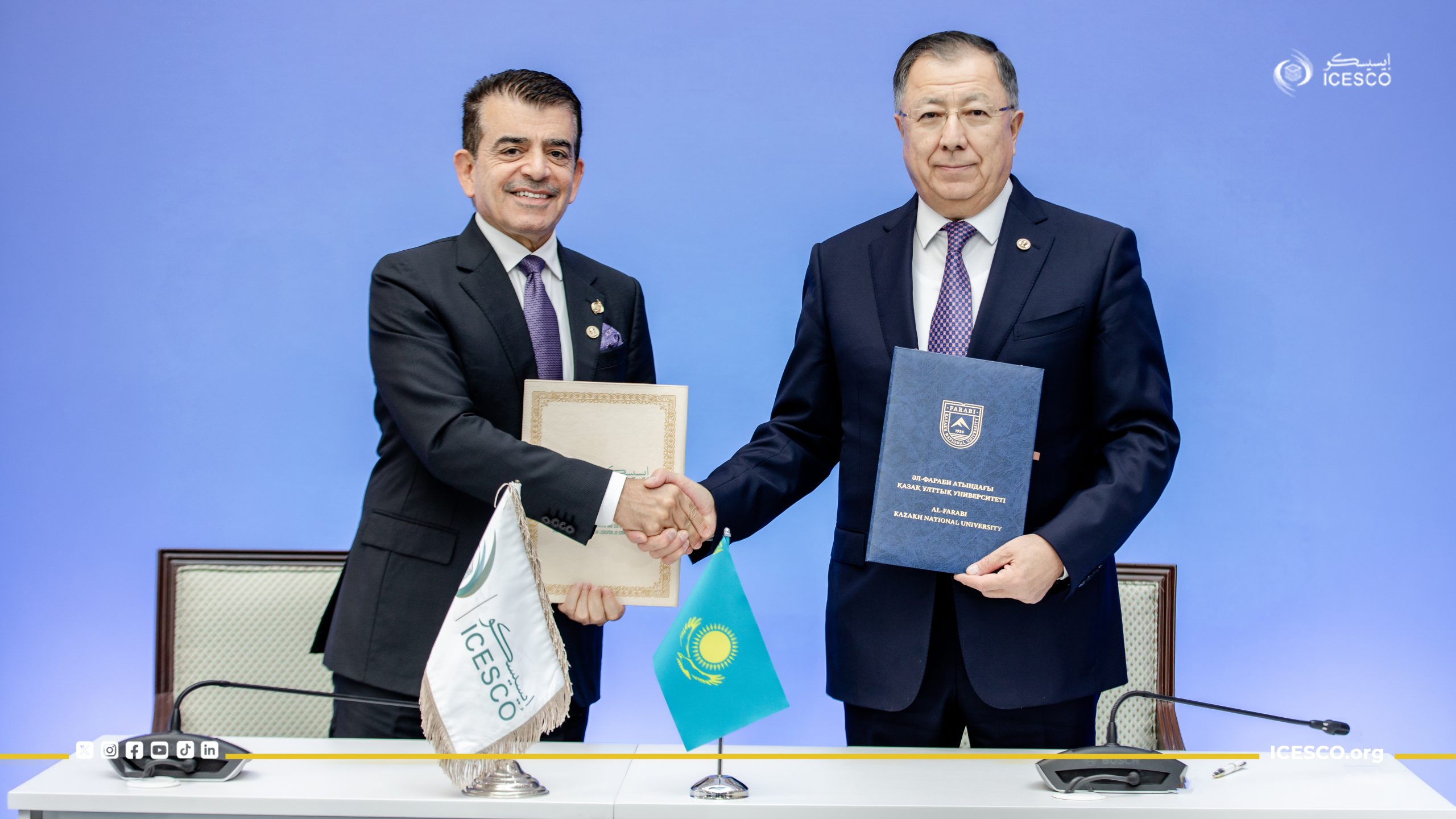
Dr. AlMalik noted that cooperation to establish the ICESCO Chair at Al-Farabi Kazakh National University would help promote Al-Farabi’s thought. He also referred to the Organization’s efforts to support Kazakhstan in maintaining and preserving the Al-Farabi Historical and Cultural Center in Damascus as a shared heritage.
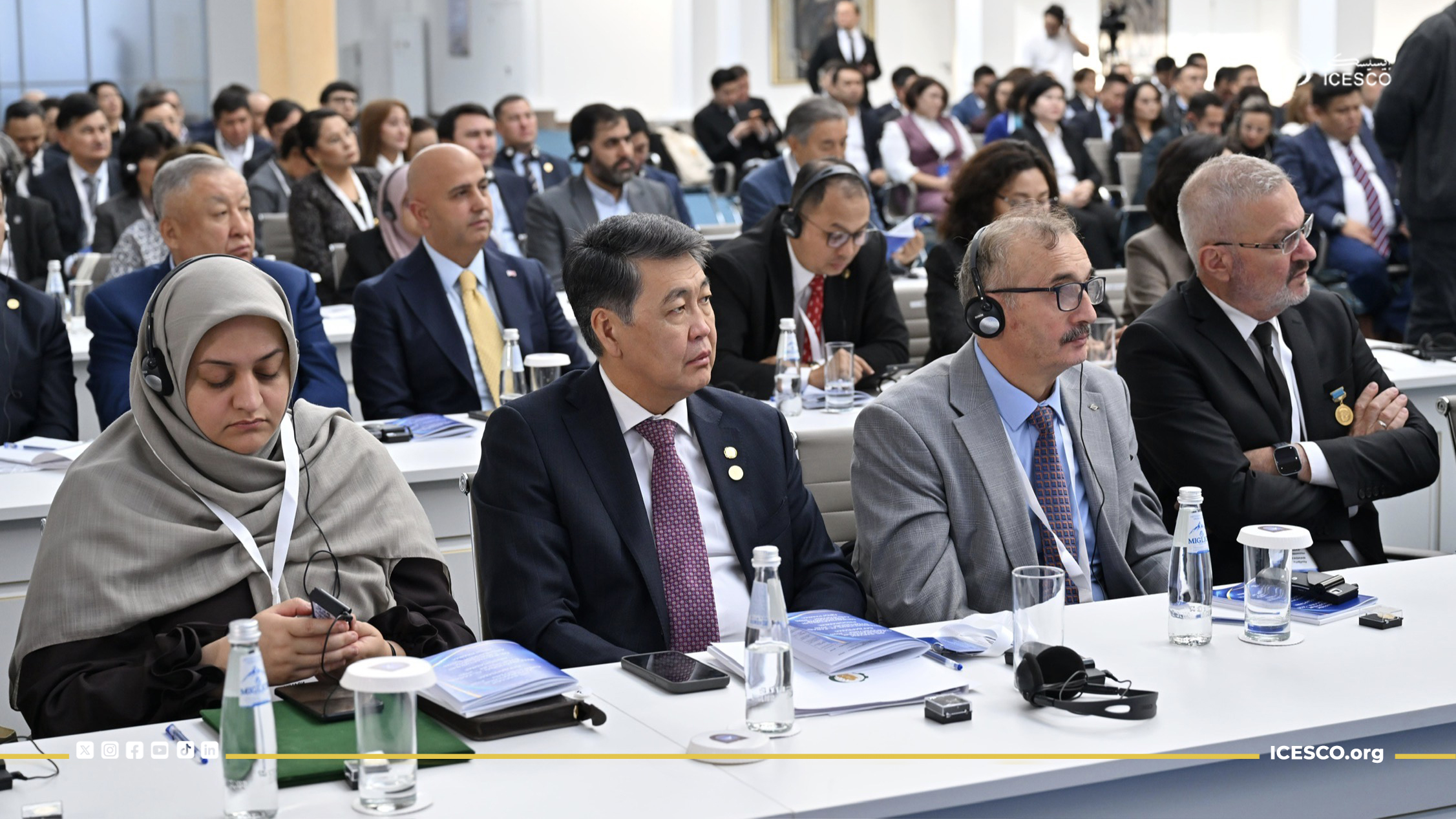
The opening session also featured addresses by Dr. Zhanseit Tuimebayev, Chairman of the Board of Al-Farabi Kazakh National University; Dr. Osman Bakar, Rector of the International Islamic University Malaysia; Ms. Aktoty Raimkulova, President of the Turkic Culture and Heritage Foundation in Azerbaijan; Dr. Kürşad Zorlu, Deputy Chairman of Türkiye’s Justice and Development Party and Head of the Committee on Relations with Turkic States; and Dr. Damir Mukhetdinov, Rector of the Moscow Islamic Institute and Head of the Center for Islamic Studies at Saint Petersburg State University in the Russian Federation.