Disclaimer: You are using Google Translate. The ICESCO is not responsible for the accuracy of the information in the translated language .

your opinion

User Feedback

Overall, how satisfied are you about the website?

    [uacf7_star_rating* rating class:rating_stars icon:star1 "default"]

    Extremely Dissatisfied
    Extremely Satisfied


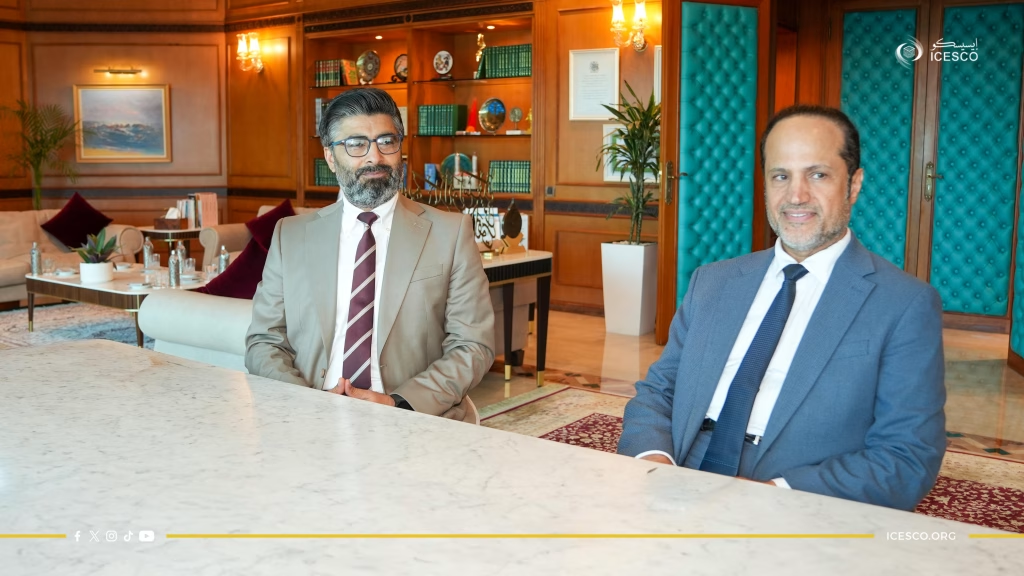
    ICESCO Director-General Receives President of the Australian National Imams Council

    Dr. Salim M. AlMalik, Director-General of the Islamic World Educational, Scientific and Cultural Organization (ICESCO), met with His Eminence Sheikh Shadi Alsuleiman, President of the Australian National Imams Council, on Wednesday, 29 April 2026, to explore prospects for joint cooperation between the Organization and the Council in the fields of civilizational dialogue, youth capacity-building, and civilizational upbringing.

    During the meeting, held at ICESCO headquarters in Rabat, Dr. AlMalik underscored the importance of cooperation among organizations and institutions from within and beyond the Islamic world to promote the values of respect and coexistence. He highlighted the roles of religious leaders in bringing communities closer together as civilizational intermediaries.

    Dr. AlMalik also reviewed the Organization’s key initiatives, programs, and activities in education, science, and the protection of culture and heritage in the Islamic world, as well as its efforts to promote civilizational dialogue. He further pointed out the Organization’s policy of openness aimed at exchanging expertise and advancing peace.
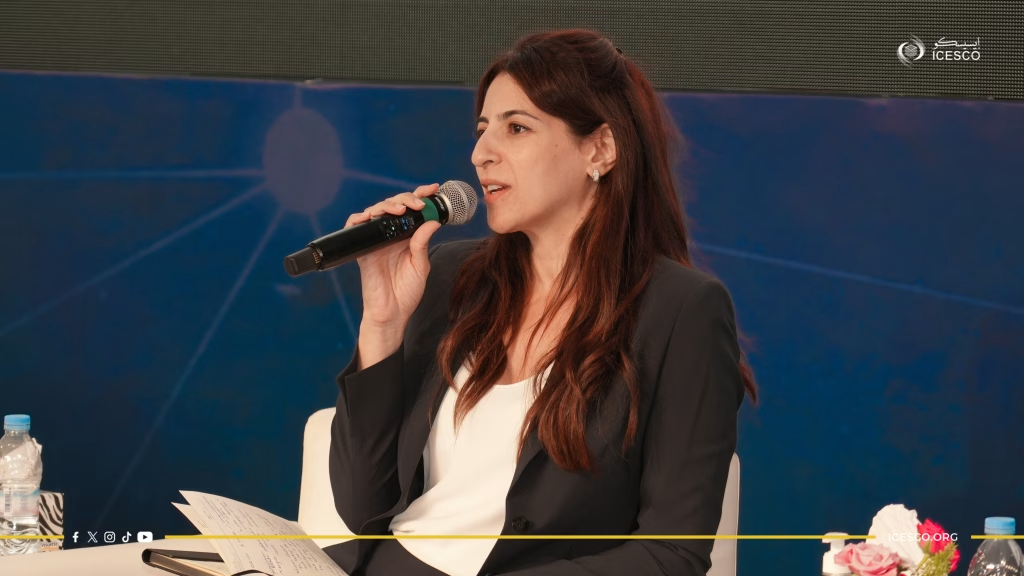
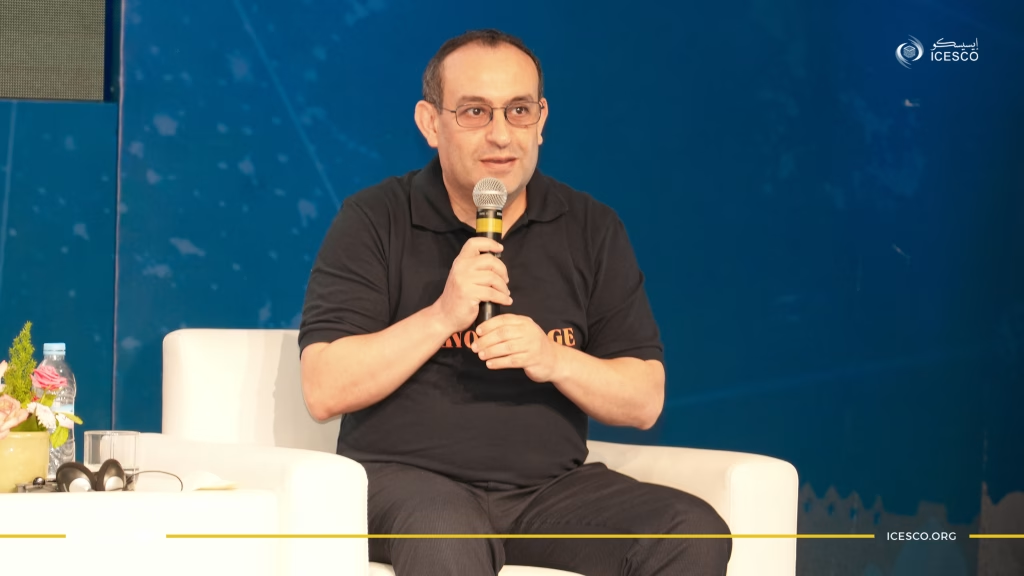
    For his part, Sheikh Alsuleiman commended ICESCO’s contributions to building bridges of cultural exchange, stressing the importance of integrating Muslim youth into their societies so that they may become productive members. He added that the Australian National Imams Council stands ready to cooperate with ICESCO in promoting the history and civilization of the Islamic world.
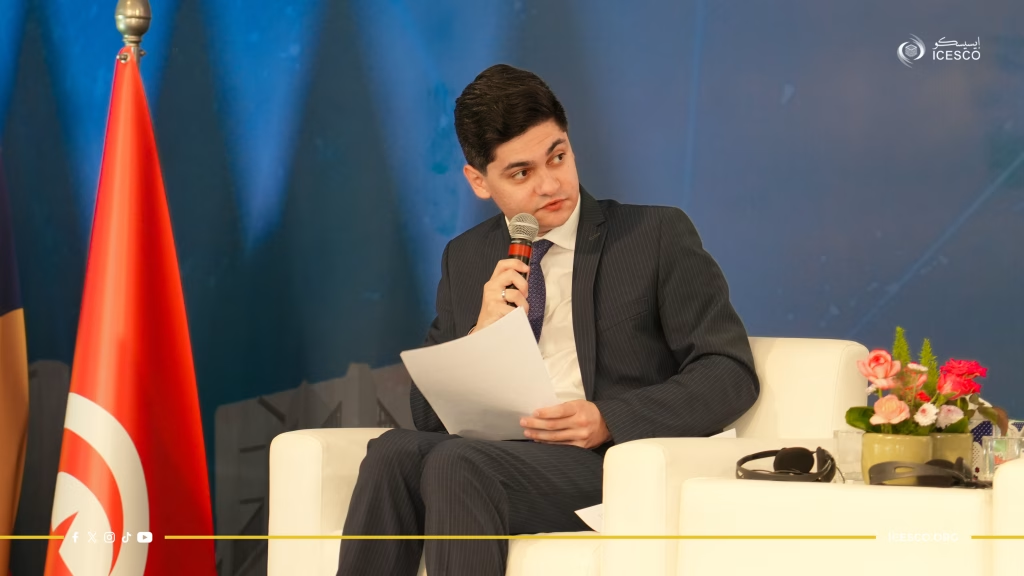
    The two sides agreed to establish a joint framework to implement programs in the fields of civilizational upbringing, youth leadership skills development, and the promotion of the tolerant image of Islam.

    The meeting was attended on behalf of ICESCO by Dr. Abdelilah Benarafa, Deputy Director-General; Mr. Anar Karimov, Head of the Partnerships and International Cooperation Sector; Ambassador Khalid Fathalrahman, Director of the Center for Civilizational Dialogue; Dr. Nidal Abuzuhri, Director of the Administrative Operations Department; and Dr. Hani Al Balawi, Expert at the Center for Civilizational Dialogue.

    ICESCO Symposium on Publishing and Security Concludes With 13 Recommendations to Keep Pace with Digital Transformations and Promote Societal Awareness

    The International Symposium “Publishing and Security: The Role of the Publishing Industry in Promoting Societal Awareness and Intellectual Security,” organized by the Islamic World Educational, Scientific and Cultural Organization (ICESCO) in partnership with Naif Arab University for Security Sciences (NAUSS), concluded on 27 and 28 April 2026 at ICESCO headquarters in Rabat with the adoption of 13 final recommendations aimed at strengthening the role of the publishing industry in safeguarding the knowledge space, building more aware and stable societies, and keeping pace with rapid transformations in the digital environment.

    The recommendations were drafted by 24 researchers from 14 countries, who called for the establishment of the Islamic World Publishers Union under the auspices of ICESCO to coordinate efforts, develop the publishing industry, enhance integration among knowledge markets, support digital transformation, and protect intellectual property, thereby contributing to the production of reliable content that promotes societal awareness and intellectual security.

    The recommendations underlined the importance of launching an annual index to measure intellectual security in published content across Member States, based on digital content analysis, alongside integrating critical thinking and media literacy programs into university curricula and establishing a unified regional platform for news verification linked to publishing houses and universities, operating with artificial intelligence technologies.

    They also called for requiring publishing houses and digital platforms to adopt an accredited labeling system distinguishing between human-produced content and content generated by artificial intelligence, applying a “safe publishing” protocol as an operational framework encompassing multi-phase verification, incorporating a digital security compliance indicator into the performance evaluation of academic institutions and publishing houses, and developing a proactive response model for information crises with a response time not exceeding 24 hours.

    On the legislative front, participants recommended the issuance of specialized legislation on advanced digital content, including deepfakes and generative artificial intelligence, and the establishment of a regional legal network for cooperation on digital crimes to ensure the rapid exchange of judicial data among Member States. They also stressed the importance of transforming libraries into community knowledge security centers that provide regular awareness and training programs.

    ICESCO, BLCU Partner up to Support Scientific and Cultural Exchange Between the Islamic World and China

    Dr. Salim M. AlMalik, Director-General of the Islamic World Educational, Scientific and Cultural Organization (ICESCO), received Dr. Duan Peng, President of Beijing Language and Culture University (BLCU) of the People’s Republic of China, on Tuesday, 28 April 2026. The meeting aimed to explore potential avenues of joint cooperation through the development and implementation of programs and projects in the fields of scholarships, youth vocational training, and the establishment of academic chairs and centers dedicated to promoting the heritage and civilization of the Islamic world and Chinese culture.

    During the Meeting, held at ICESCO headquarters in Rabat, Dr. AlMalik emphasized that building a partnership between ICESCO and the University would serve as a bridge to enhance cultural exchange between China and the Islamic world, particularly within the framework of their recent civilizational rapprochement and their historical scientific contributions. He also reviewed ICESCO’s key initiatives and programs aimed at fostering youth entrepreneurship and supporting innovation and creativity in the fields of education, scientific research, space sciences, artificial intelligence, and culture.

    Dr. AlMalik further highlighted the importance of joint cooperation in developing a summer camp at BLCU for the benefit of young men and women from ICESCO Member States, with a view to introducing them to Chinese culture and its rich heritage.

    For his part, Dr. Duan Peng expressed the University’s readiness to develop training programs for students from the Islamic world and to establish an ICESCO Center for Arab Culture at the University to promote Arab civilization and its contributions across the ages. Furthermore, the President conveyed his University’s preparedness to develop a joint program for translating cultural and scientific books and publications from Arabic into Chinese, and to establish a joint academic chair aimed at promoting and safeguarding cultural wealth in China and the Islamic world.

    During the Meeting, Dr. Duan Peng also revealed the University’s intention to award the Director-General of ICESCO an honorary doctorate in recognition of his efforts in advancing education, science, and culture, an initiative welcomed by Dr. AlMalik.

    Following that, the two sides held an expanded meeting attended by a number of sector heads, as well as department and center directors at ICESCO, during which they agreed to establish a technical team to examine mechanisms for implementing these activities in the coming period. Discussions also covered programs for translating an Arabic medical dictionary into Chinese, developing ICESCO’s multilingual Artificial Intelligence Dictionary, digitizing libraries, and establishing a training hub at the University for teaching Arabic to non-Arabic speakers.

    Arabic for Non-Arabic Speakers Curriculum Support Project Concludes in Mauritius

    The Arabic for Non-Arabic Speakers Curriculum Support Project concluded its activities in the Republic of Mauritius. The project was launched by the Islamic World Educational, Scientific and Cultural Organization (ICESCO) in partnership with the Sultan Bin Abdulaziz Al Saud Foundation, and in cooperation with the Blue Crescent Society of Mauritius. A total of 375 male and female primary school students benefited from the project.

    Launched in January of last year and concluded on Saturday, 25 April 2026, the project targeted 15 educational institutions across various regions of Mauritius. It provided these institutions with an integrated curriculum for teaching Arabic to non-Arabic speakers and equipped them with modern educational tools, including computers, projectors, and printers. ICESCO also delivered intensive training to 30 male and female teachers on effectively implementing the curriculum and using the educational tools in instruction.

    The closing ceremony was attended by high-level dignitaries, led by His Excellency, former President of the Republic of Mauritius, Mr. Abdool Raouf Bundhun; Mr. Fayez Meshel Altemyat, Ambassador of the Custodian of the Two Holy Mosques to Mauritius; and Mr. Abdulaziz Al Maqoushi, Assistant to the Director-General of the Sultan Bin Abdulaziz Al Saud Foundation.

    During the closing session, Dr. Majdi Hajj Ibrahim, Head of the Arabic Language Center for Non-Arabic Speakers, stated in a speech delivered via videoconference that the project reflects ICESCO’s firm commitment to supporting educational initiatives with sustainable impact and strengthening the presence of the Arabic language in multilingual environments. He affirmed that the project’s outcomes crowned an integrated educational process implemented over several phases and constituted a successful model of international cooperation.

    For his part, Dr. Youssef Ismaili, Head of the Language Training Division at ICESCO’s Center of Arabic for Non-Arabic Speakers, delivered a presentation on the statistical indicators reflecting the scale of the achievements attained.

    At the conclusion of the ceremony, training and qualification certificates were awarded to the participating teachers, along with participation certificates for the learners, in recognition of their commitment and perseverance throughout the project’s implementation phases.

    Launch of the International Symposium on “Publishing and Security” at ICESCO Headquarters in Rabat

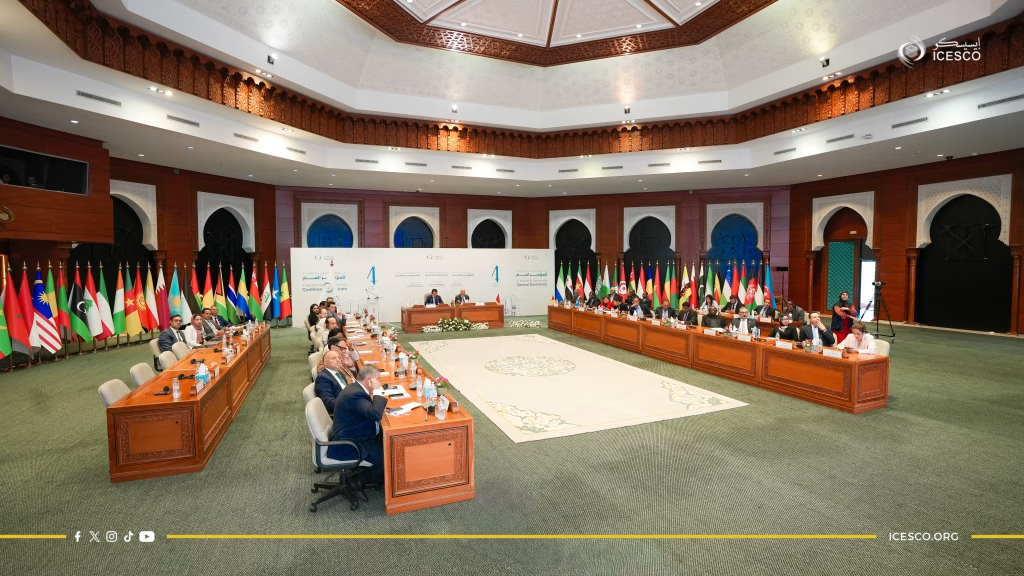
    The International Symposium “Publishing and Security: The Role of the Publishing Industry in Promoting Societal Awareness and Intellectual Security” was launched on Monday, 27 April 2026, at the headquarters of the Islamic World Educational, Scientific and Cultural Organization (ICESCO) in Rabat. The Symposium is organized by ICESCO in partnership with Naif Arab University for Security Sciences (NAUSS), with the participation of government officials and a distinguished group of experts and specialists. It aims to explore ways to develop responsible publishing policies that protect societies from extremist discourse, hate speech, misinformation, and fake news.

    In his opening remarks at the two-day symposium, Dr. Salim M. AlMalik, Director-General of ICESCO, affirmed that the Organization continues its efforts to support scientific and cultural publishing, promote a culture of verification, and expand access to reliable knowledge through scientific partnerships that contribute to the development of policies related to publishing and security.

    As part of celebrating Rabat as a World Book Capital, Dr. AlMalik called for the establishment of a joint action framework between ICESCO, the Moroccan Ministry of Youth, Culture and Communication, and NAUSS to launch an ethical charter for responsible publishing, a knowledge awareness program targeting youth, and a digital platform for scientific publishing, thus opening broader horizons for strengthening the quality and ethics of publishing.

    For his part, Dr. Khalid bin Abdulaziz Alharfash, Secretary of the NAUSS Supreme Council and Vice President for External Relations, stated that the rationale for the organization of the symposium stems from a deep awareness of the pivotal role played by the publishing industry in building a cross-border knowledge society. He added that publishing serves as a bridge for the exchange of ideas and the transfer of knowledge across cultures, and as a lever for enhancing societal awareness and consolidating the values of moderation and balance.

    In an intervention during the opening session, Dr. Ahmed AlBanyan, Head of the Translation and Publishing Center at ICESCO, considered that intellectual security is no longer solely an educational or cultural issue, as it has become a multidimensional intersection of policy, technology, legislation, and institutions. Meanwhile, Mr. Hicham Mallati, Director of Criminal Affairs, Pardons, and Crime Monitoring at the Moroccan Ministry of Justice, emphasized that justice is not an enemy to publishing, but rather a guardian of the boundary delineating the lawful use of expression from the unlawful.

    Dr. Ghizlane Drous, Director of Books, Libraries, and Archives at the Moroccan Ministry of Youth, Culture and Communication, subsequently explained that intellectual security is fundamentally linked to the “shaping of awareness,” noting that the book constitutes the first line of defense against extremist and misleading ideas, specifically among youth.

    The opening session also featured an exchange of commemorative shields between the organizing parties. The Symposium continues through six panel sessions and a workshop entitled “Publishing and Intellectual Security,” moderated by Dr. Khaled Azab, an expert in Islamic heritage and urbanism from the Arab Republic of Egypt.

    MWL Secretary-General Visits ICESCO-Sultan Qaboos Library in Rabat


    Dr. Salim M. AlMalik, Director-General of the Islamic World Educational, Scientific and Cultural Organization (ICESCO), accompanied Dr. Mohammed Al-Issa, Secretary-General of the Muslim World League (MWL), Chairman of the Organization of Muslim Scholars, on a tour of ICESCO-Sultan Qaboos Library, at ICESCO headquarters, on Sunday, 26 April 2026. The visit took place on the sidelines of the celebration, hosted at ICESCO headquarters, marking10 million visitors to the International Exhibition and Museum of the Prophet’s Seerah and Islamic Civilization.

    During the visit, attended by Mr. Khalid AlMalik, Editor-in-Chief of the Saudi newspaper Al Jazirah, and Ambassador Sami bin Abdullah Al-Saleh, Ambassador of the Custodian of the Two Holy Mosques to the Kingdom of Morocco, the delegation was guided through the library’s facilities, its specialized knowledge collections, and the advanced digital services it offers. Chief among these is the ICESCO Digital Library platform, a flagship strategic initiative of the Organization aimed at promoting knowledge availability and enhancing open access to scientific and cultural content across the Islamic world.

    Dr. Ahmed Albanyan, Director of the Translation and Publishing Center at ICESCO, outlined the library’s vision and mission in supporting scientific research, fostering a culture of reading, and building a knowledge-based society. He also highlighted its role as a cultural hub that strengthens civilizational dialogue among Member States.

    Dr. Al-Issa commended ICESCO’s qualitative efforts to develop its knowledge infrastructure, underscoring that investing in knowledge and ensuring its widespread dissemination are fundamental pillars for strengthening societal awareness and reinforcing the values of moderation and coexistence.

    Grand Celebration Marks 10 Millionth Visitor to the International Fair and Museum of the Prophet’s Biography at ICESCO

    The headquarters of the Islamic World Educational, Scientific and Cultural Organization (ICESCO) hosted a grand celebration attended by several public figures and Islamic scholars to mark the International Fair and Museum of the Prophet’s Biography and Islamic Civilization reaching 10 million visitors since its inauguration in November 2022. The fair, currently hosted at ICESCO headquarters, is the result of a tripartite collaboration among ICESCO, the Muslim World League, and the Mohammadia League of Scholars in the Kingdom of Morocco.

    The celebration, held on Sunday, 26 April 2026, commenced with the recitation of verses from the Holy Qur’an, followed by an introductory address by Ambassador Khaled Fatahalrahman, Head of the Center for Civilizational Dialogue at ICESCO, in which he highlighted the fair’s role in fostering civilizational and scientific awareness among its visitors.

    In his address, Dr. Salim M. AlMalik, ICESCO Director-General, lauded the Muslim World League and the Mohammadia League of Scholars for their pivotal role, reflected in the remarkable number of visitors. He underscored ICESCO’s stewardship of the fair, noting its alignment with the commemoration of the 1500th anniversary of Prophet Muhammad’s birth, peace be upon him, as proclaimed this year by His Majesty King Mohammed VI of Morocco, may Allah assist him.

    Dr. AlMalik affirmed that visitors from all age groups were drawn not only by the fair’s creative displays but also by the highest human values and reliable scientific content, leaving a profound emotional impact on visitors. He concluded by commending the flourishing partnership between the Kingdom of Saudi Arabia and the Kingdom of Morocco, crowned by the royal directive to maintain and establish the fair and museum at ICESCO headquarters in Rabat.

    In his address, Dr. Mohammad bin Abdulkarim Al-Issa, Secretary-General of the Muslim World League, Chairman of the Organization of Muslim Scholars, emphasized the museum’s use of interactive modalities to visualize the Prophetic narrative, employing the latest technological innovations to immerse visitors in a virtual environment close to reality.

    Following this, Dr. Ahmed Toufiq, Minister of Endowments and Islamic Affairs of Morocco, praised the efforts of those overseeing the fair and museum and the strong public turnout, describing it as a civilizational landmark. He also reviewed historical milestones reflecting the Moroccan people’s steadfast adherence to Islamic values and the teachings of the noble Prophetic biography.

    Dr. Ahmed Abbadi, Secretary-General of the Mohammadia League of Scholars, stated that the fair aims to introduce people to the pure Prophetic biography and the illuminating Sunnah, united by love for Allah and His Messenger, peace be upon him. He added that reaching 10 million visitors affirms the enduring resonance of this spiritual heritage.

    The ceremony unveiled expanded wings and the addition of scientific encyclopedias to the fair, most notably the AI-powered Maeen Portal, as well as dedicated wings featuring unique, detailed presentations on the Prophet’s daily life, his furniture and personal belongings, the route of the Hijrah, and selected moments from the noble biography presented in masterful calligraphy. Complementing these expansions is the creative scholarly work titled “Truth in a Minute: Milestones in the Life of the Prophet,” a detailed master plan wing of Madinah during the Prophet’s era, peace be upon him, and the “Messengers of Firm Resolve” wing.

    The ceremony included the presentation of an award to the 10 millionth visitor, in addition to the exchange of commemorative shields between Dr. AlMalik, Dr. Al-Issa, and Dr. Abbadi.

    The event culminated in a scholarly panel moderated by Dr. Abdelilah Benarafa, ICESCO Deputy Director-General, with the participation of Dr. Mohamed Mokhtar Gomaa, former Minister of Endowments of Egypt; Dr. Ismail bin Nasser Al Aoufi, Scientific Advisor at the Office of the Omani Minister of Endowments and Religious Affairs; Dr. Abdelhamid Achak, Director of Dar Al Hadith Al Hassania in Morocco; and Dr. Mohammed Essarar, Director of the Ibn Al-Qattan Center for Studies and Research in Hadith and the Noble Prophetic Biography.

    Next Monday: ICESCO, NAUSS to Hold International Symposium on Publishing Industry’s Role in Promoting Societal Awareness

    The Islamic World Educational, Scientific and Cultural Organization (ICESCO), in partnership with Naif Arab University for Security Sciences, will hold an international symposium titled “The Role of Publishing Industry in Promoting Societal Awareness and Intellectual Security” on 27–28 April 2026, with the participation of a select group of officials, experts, and researchers from within and beyond the Islamic world.

    The symposium aims to raise awareness of the growing roles of the publishing industry in addressing contemporary intellectual and cultural challenges and in strengthening intellectual and societal security, through the development of responsible content that helps consolidate the values of tolerance and openness, counter hate speech and extremism, and combat misinformation in both traditional and digital spaces.

    The opening session will feature addresses by ministers and senior officials highlighting the importance of integration among cultural, academic, and security institutions. The programme will also include six sessions on “Publishing and Intellectual Security,” “Publishing and Disinformation,” “Digital Publishing and Information Security,” “Institutional Publishing in the Context of Security,” “The Role of Security Services in Combating Disinformation and Fake News,” and “The Role of Libraries in Cognitive Security.”

    The sessions will be followed by a specialized training workshop on “Publishing and Intellectual Security: From Content Protection to Building Societal Awareness,” aiming to develop practical skills in content management.

    Those wishing to attend the symposium and the training workshop may register by scanning the QR codes below for each activity:

    • QR code for the symposium:
    • QR code for the workshop:

    ICESCO Highlights Key Pillars for the Success of Smart Government at International Seminar in Rabat

    The Islamic World Educational, Scientific and Cultural Organization (ICESCO) took part in the scientific seminar titled “Morocco in the Era of Digital Platforms and Prospects for Smart Government,” organized by the Faculty of Juridical, Economic and Social Sciences, Souissi, in Rabat, on Friday, 24 April 2026. The seminar brought together a select group of international experts and specialists to anticipate Morocco’s digital transformation pathway and explore prospects for building a smart government capable of keeping pace with rapid change.

    ICESCO was represented by Dr. Sally Mabrouk, Head of the Director-General’s Office and Supervisor of the Strategy and Institutional Excellence Sector, who delivered a presentation illustrating how the acceleration of digital transformation has made it common to measure progress by the number of digital platforms and the speed of service delivery. However, international experience has shown that these indicators alone are insufficient to assess the success of digital transformation.

    Dr. Mabrouk explained that governments today possess unprecedented volumes of data, along with advanced analytical capabilities and large-scale digital systems, yet many digital transformation projects fail to achieve their intended impact. She attributed this to deeper shortcomings related to decision-making frameworks.

    In this respect, Dr. Mabrouk proposed adopting a smart government model founded on an integrated decision cycle, beginning with data monitoring and intelligent analysis, followed by risk assessment and human review, then decision-making and digital implementation, and culminating in impact measurement and lessons learned. She noted that this model ensures technology is directed to serve public decision-making, rather than becoming an end in itself or a substitute for sound institutional vision.

    ICESCO, AOAD Sign Cooperation Agreement to Strengthen Food Security and Support Smart Agriculture

    The Islamic World Educational, Scientific and Cultural Organization (ICESCO) and the Arab Organization for Agricultural Development (AOAD) signed a memorandum of understanding (MoU) aimed at strengthening efforts to achieve food security, adapt to climate change, and harness space sciences, technology, and innovation for agricultural development.

    The MoU was signed on Friday, 24 April 2026, at ICESCO headquarters by Dr. Salim M. AlMalik, Director-General of ICESCO, and Dr. Ibrahim Adam El-Dukheri, Director-General of AOAD.

    Ahead of the signing ceremony, Dr. AlMalik stressed that the accelerating pace of climate change worldwide necessitates concerted efforts and the development of strategic partnerships to mitigate its economic and social repercussions on the countries of the Islamic world. He noted that the memorandum represents a step toward developing activities with tangible impact in improving the management of water and natural resources.

    He added that climate change poses a persistent threat to cultural sites and elements, which requires the use of artificial intelligence applications to develop sustainable solutions for protecting heritage and civilizational legacy.

    For his part, Dr. El-Dukheri commended ICESCO’s contributions to environmental protection and the development of smart agriculture, affirming AOAD’s readiness to exchange expertise and best practices to employ modern technologies in climate change adaptation and the rational management of natural resources in the countries of the Islamic world.

    The MoU provides for the implementation of joint activities in the fields of science, technology, and innovation; the application of space sciences for agricultural development; improving food security; climate change adaptation; smart agriculture; natural resource management; water management; the use of Earth observation technologies and artificial intelligence; and capacity building for professionals in agricultural development.

    The signing ceremony was attended on behalf of ICESCO by Mr. Anar Karimov, Head of the Partnerships and International Cooperation Sector; Ambassador Khaled Fatahalrahman, Head of the Civilizational Dialogue Centre; Dr. Adel Smeda, Supervisor of the Science and Environment Sector; Dr. Issam Krimi, expert in the same sector; and Mr. Omer Hamid, expert in the Partnerships and International Cooperation Sector.