Disclaimer: You are using Google Translate. The ICESCO is not responsible for the accuracy of the information in the translated language .

your opinion

User Feedback

Overall, how satisfied are you about the website?

    [uacf7_star_rating* rating class:rating_stars icon:star1 "default"]

    Extremely Dissatisfied
    Extremely Satisfied


    International Conference on Heritage Management in the Islamic World Launches as ICESCO Marks its 44th Anniversary

    The Islamic World Educational, Scientific and Cultural Organization (ICESCO) launched the International Conference on Managing Heritage in Conflict and Post-Conflict Situations in the Islamic World on 4 May 2026, at its headquarters in Rabat. Held under the gracious patronage of Ms. Leyla Aliyeva, Vice-President of the Heydar Aliyev Foundation of Azerbaijan, the conference witnessed the official announcement of the winners of the ICESCO–Azerbaijan Natavan Heritage Excellence Award.

    The opening session of the two-day conference began with the recitation of verses from the Holy Quran, followed by a speech by Ms. Leyla Aliyeva, Vice-President of the Heydar Aliyev Foundation, delivered on her behalf by Mr. Anar Alakbarov, Assistant to the President of the Republic of Azerbaijan and Executive Director of the Foundation. In her address, she stressed that the restoration projects implemented by the Foundation reflect Azerbaijan’s firm commitment to civilizational dialogue and the protection of universal values, underlining that the partnership between the Foundation and ICESCO lies at the heart of a shared vision for safeguarding cultural heritage.

    Her Royal Highness Princess Dana Firas, President of the Petra National Trust and Vice-President of ICOMOS, highlighted that heritage preservation is, at its core, an ethical commitment to humanity and its history, emphasizing that heritage constitutes a vital force in enhancing communities’ resilience, adaptability, and capacity to shape narratives.

    In his opening remarks, Dr. Salim M. AlMalik, Director-General of ICESCO, marked the 44th anniversary of the Organization’s establishment, recalling a journey of dedicated efforts that plans for the future while offering a legacy that endures through time. He stressed that heritage is not merely a narrative of the past, but a living record of the present and the future.

    Dr. AlMalik noted that amid conflicts, heritage suffers as an extended memory preserving the history of nations, a challenge faced by more than 19 countries affected by conflict in the Islamic world. This has resulted in the inclusion of over 27 World Heritage sites on the List of World Heritage in Danger.

    He outlined ICESCO’s efforts to revitalize heritage as a means of opening new horizons for development, restoring social cohesion, and supporting stability, through field missions and the development of an integrated plan to safeguard and rehabilitate more than 120 heritage sites in the city of Shusha and the Karabakh region in Azerbaijan, as well as by advancing recovery programs in the Syrian Arab Republic and a number of Member States. He concluded by expressing his appreciation to His Excellency President Ilham Aliyev and to the Heydar Aliyev Foundation for assuming responsibility for advancing culture.

    For his part, Mr. Hani Al Hayek, Minister of Tourism and Antiquities of the State of Palestine, reviewed his country’s experience in heritage preservation, affirming that discussing cultural heritage is not a luxury, but a discussion of identity, memory, and existence. He emphasized that heritage is not merely stones or landmarks, but a living record of history and a fundamental tool for resilience.

    In his address, Mr. Charaf Ahmimed, Director of the UNESCO Regional Office for the Maghreb and Representative to Maghreb Countries, stated that when heritage sites are destroyed, collections are looted, and traditions are disrupted, it is not only monuments that are at risk; it is the very fabric of society.

    The session concluded with the announcement of the winners of the ICESCO–Azerbaijan Natavan Heritage Excellence Award. Participants then toured a photographic exhibition entitled “Reimagining: Best Practices in Post-Conflict Recovery,” followed by the launch of the conference’s discussion sessions.

    ICESCO Presented Its Digital Library Project at the Rabat International Book Fair

    The Islamic World Educational, Scientific and Cultural Organization (ICESCO) presented its Digital Library project on 3 May 2026, during an event held at its pavilion as part of the 31st Rabat International Book and Publishing Fair.

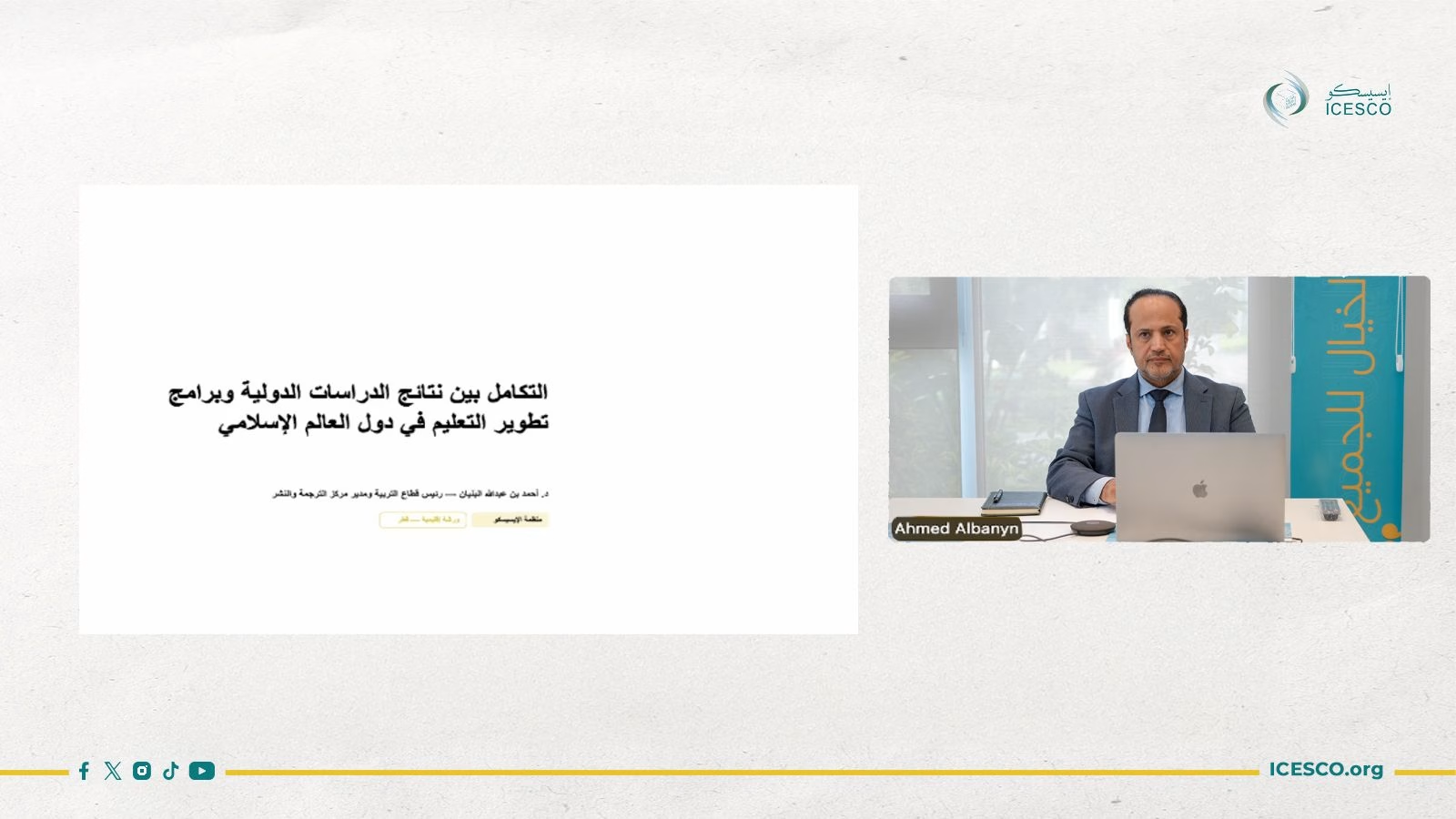
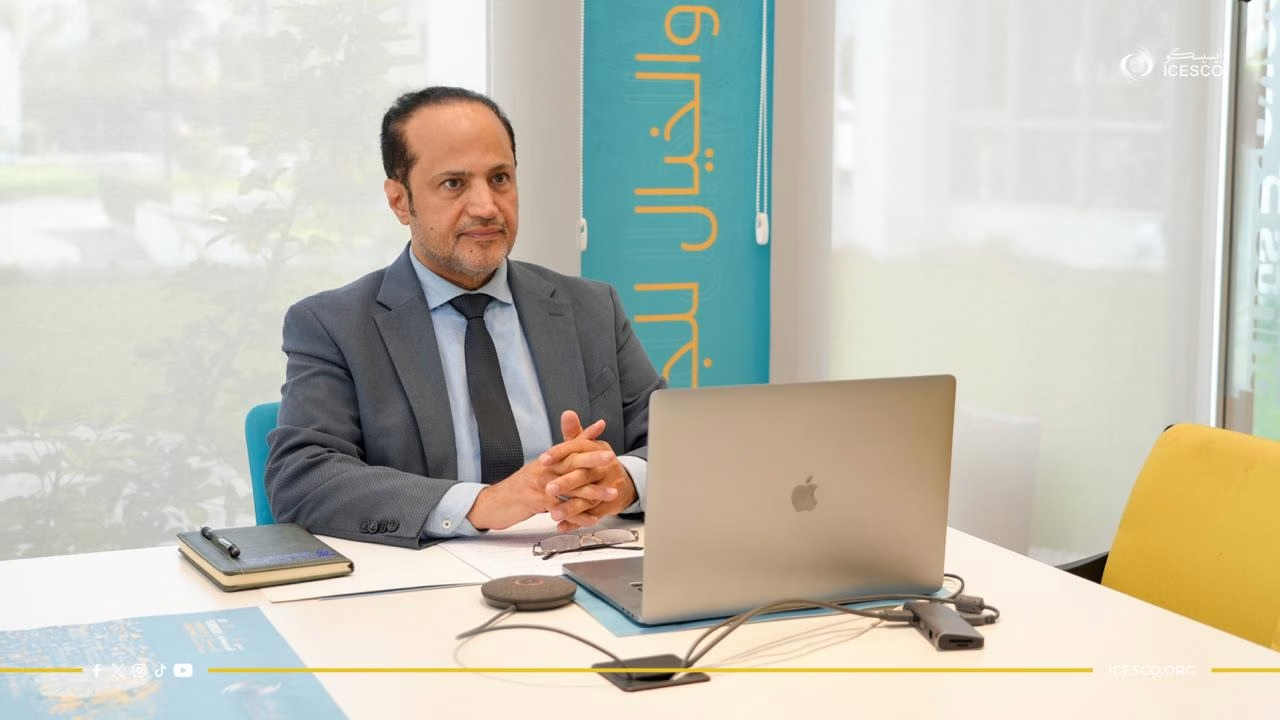
    The presentation was delivered by Dr. Ahmed Albanyan, Director of the Translation and Publishing Centre, and Dr. Mohammad Alanazi, Head of the Publishing and Library Division, in the presence of Mohamed Rashad, President of the Arab Publishers’ Association, along with members of the Association’s Board of Directors and representatives of publishing houses from Arab countries.

    The presentation addressed the project’s objectives and components, as well as its role in enhancing access to multilingual knowledge content and enabling publishers to expand the reach of their publications through an advanced digital platform aligned with the digital transformation of the publishing sector.

    The event featured fruitful discussions between the two sides on opportunities for cooperation and mechanisms for Arab publishing houses to join the platform, contributing to the enrichment of digital content and the expansion of its beneficiary base across the Islamic world.

    Members of the Arab Publishers’ Association’s Board of Directors expressed interest in activating the preliminary agreement between the two sides to make a selection of publications by Arab publishing houses operating under the Association available through the ICESCO Digital Library over a 12-month period, thereby strengthening the presence of the Arabic book and increasing its reach to a wider audience.

    ICESCO Holds Regional Workshop on Employing AI in Teaching Arabic Language

    The Islamic World Educational, Scientific and Cultural Organization (ICESCO) held a regional workshop on the use of technology and artificial intelligence systems in teaching the Arabic language, in cooperation with the Hamdan Bin Rashid Al Maktoum Foundation for Medical and Educational Sciences. The workshop brought together 200 male and female trainees, both in person and via videoconferencing, from among education professionals working in the field of teaching Arabic to non-Arabic speakers in 15 countries across Africa, Central Asia, and Southeast Asia.

    The workshop was held on 29 and 30 April 2026, at the Mishkat Hall at ICESCO Headquarters in Rabat. It formed part of a programme aimed at developing the competencies of professionals engaged in teaching Arabic to non-Arabic speakers and enhancing the use of modern technological tools and artificial intelligence to advance educational practice.

    During the workshop, Dr. Mustafa Jaghboub, an expert in educational technology, analyzed and assessed the gap between linguistic accuracy and pedagogical suitability in the outputs of Large Language Models based on artificial intelligence. He presented approaches to bridging this gap through the adoption of precise prompt engineering, ensuring more effective and efficient use of technology in the service of language education.

    The expert also supervised practical sessions that enabled participants to train on transforming raw, preliminary artificial intelligence outputs into educational resources suited to different learner levels, using the “Mubeen” platform.

    It is worth noting that this workshop is part of the eighth edition of the “Mishkat Educational Leadership” programme for the 2025–2026 academic year, implemented by ICESCO in partnership with the Hamdan Bin Rashid Al Maktoum Foundation, with academic cooperation from Sultan Moulay Slimane University in Beni Mellal.

    ICESCO Youth Peace Ambassadors Launch Social Media Campaign to Promote the Values of Peace

    As part of its ongoing efforts to promote the values of peace, dialogue, and mutual understanding, the Islamic World Educational, Scientific and Cultural Organization (ICESCO) has launched a digital media campaign on social media platforms titled “ICESCO Youth 4 Peace.” The campaign brings together 227 ICESCO Youth Peace Ambassadors representing 81 countries from within and beyond the Islamic world.

    Supervised by ICESCO’s Social and Human Sciences Sector, the campaign aims to promote young people’s voices and strengthen their efforts to advance peace and peaceful coexistence, particularly amid escalating conflicts in several regions of the world. It leverages digital technologies as effective platforms for disseminating the values of peace across societies and cultures.

    The campaign includes the production of a series of videos by ICESCO Youth Peace Ambassadors, in cooperation with ICESCO’s Media and Communication Sector, calling for the promotion of peace and dialogue. The videos focus on shared values that unite humanity and underscore that the path to prosperity and well-being lies in fostering dialogue, coexistence, and tolerance within societies.

    The campaign can be followed on the Organization’s official social media pages through: #ICESCOYouth4Peace

    This campaign builds on the “Call for Peace” launched by ICESCO Youth Peace Ambassadors, whose voices emphasized the need for collective commitment to the values of peace through constructive dialogue and diplomacy in order to develop sustainable solutions based on respect for diversity.

    ICESCO Organizes 57 Activities at Its Pavilion During the 31st Rabat International Book and Publishing Fair

    The Islamic World Educational, Scientific and Cultural Organization (ICESCO) is participating with a dedicated pavilion in the 31st edition of the International Book and Publishing Fair (SIEL), organized by the Ministry of Youth, Culture and Communication of the Kingdom of Morocco in Rabat, under the High Patronage of His Majesty King Mohammed VI, may God assist him. The Fair was inaugurated on Thursday, 30 April 2026, by His Royal Highness Crown Prince Moulay El Hassan.

    Running until 10 May, this edition features broad international cultural participation, with 61 countries and 891 exhibitors, France as guest of honor, and a celebration of the traveller Ibn Battuta, coinciding with the designation of Rabat as World Book Capital for 2026.

    ICESCO’s pavilion will serve as an open space for cultural dialogue and intellectual exchange through the organization of more than 57 activities and events in Arabic, French and English throughout the Fair. These activities include intellectual seminars, literary encounters and poetry readings, with the participation of a distinguished group of intellectuals, thinkers and writers from the Organization’s Member States and beyond.

    The pavilion also hosts a diverse exhibition of ICESCO publications, including books and studies in the fields of education, science, culture, media and the humanities, in addition to informational materials highlighting its flagship programmes and initiatives.

    The pavilion has been equipped with modern display screens broadcasting audiovisual content that documents ICESCO’s activities and showcases its areas of work and projects in support of intellectual and cultural development in the Islamic world.

    The pavilion will witness broad participation by ICESCO staff, including heads of sectors, divisions and specialized centres, alongside a number of academics and supervisors of ICESCO chairs, who will enrich the pavilion’s through specialized presentations and meetings reflecting the diversity of the Organization’s fields of action.

    ICESCO will accompany its participation with media coverage through its official platforms, reinforcing its cultural presence and making its pavilion a prominent destination within the Fair’s activities and a showcase for its mission to support knowledge, dialogue and cultural exchange.

    ICESCO Holds the Second International Conference on Teaching Arabic to Non-Arabic Speakers in Türkiye

    The Islamic World Educational, Scientific and Cultural Organization (ICESCO) held the Second International Conference entitled “Modern Approaches and Smart Applications in Teaching Arabic Grammar and Morphology to Non-Arabic Speakers”, in cooperation with Bursa Uludağ University (Türkiye), its Faculty of Theology, and the Faculty of Theology Foundation, from April 28 to 30, 2026, in the city of Bursa, Republic of Türkiye, with the participation of 68 researchers from 21 countries.

    The conference aimed to explore ways to develop the teaching of grammar and to review modern experiences in enabling learners to build their linguistic competencies on solid scientific and applied foundations. Its sessions addressed several themes, including challenges in teaching Arabic grammar and morphology; modern strategies in grammar instruction, from rote learning to empowerment; and artificial intelligence and contemporary applications in grammar teaching.

    The opening session featured remarks by Dr. Ferudun Yılmaz, Rector of Bursa Uludağ University; Dr. Nasseria Al-Araja, Deputy Permanent Representative of the League of Arab States to the United Nations in New York; and Dr. Adem Apak, Dean of the Faculty of Theology at Bursa Uludağ University. They commended the scientific and academic cooperation with ICESCO in organizing the conference to support the Arabic language in Türkiye and to promote specialized research in this field.

    In his address, Dr. Magdi Haji Ibrahim, Head of the ICESCO Center of Arabic for Non-Arabic Speakers, emphasized that facilitating the teaching of Arabic grammar requires a well-balanced approach between theoretical foundations and practical application. This, he noted, can be achieved through a logical progression from simple sentences to contextualized textual examples rooted in real-life situations, moving away from rote memorization and rules detached from lived linguistic reality.

    Dr. Anas Hossam Al-Nuaimi, Head of the International Leadership Support Section for the Arabic Language at the Center, chaired the second session of the conference, which focused on curricula for teaching Arabic to non-Arabic speakers, methods of presenting and teaching grammar and morphology, and ways to further develop these materials.

    On the sidelines of the conference, a cooperation agreement was signed between the Center and Bursa Uludağ University to implement a set of activities, programs, and research projects related to teaching Arabic to non-Arabic speakers.

    ICESCO, IIFA Sign MoU to Promote Dialogue Values and Combat Hate Speech

    The Islamic World Educational, Scientific and Cultural Organization (ICESCO) and the International Islamic Fiqh Academy (IIFA), an organ of the Organization of Islamic Cooperation (OIC), signed a Memorandum of Understanding (MoU) aimed at strengthening scientific and intellectual cooperation between the two parties in the areas of civilizational dialogue, coexistence, and combating hate speech and extremism.

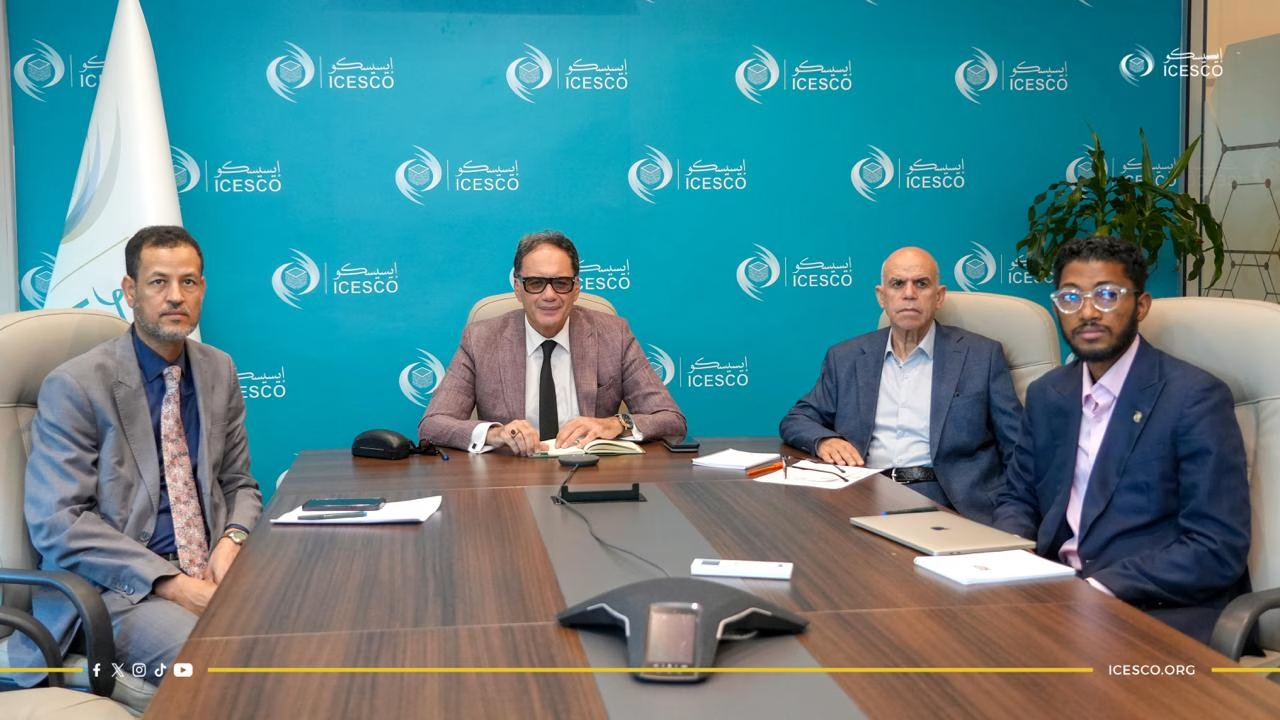
    The signing ceremony took place on Thursday, 30 April 2026, at ICESCO headquarters in Rabat. The MoU was signed by Dr. Salim M. AlMalik, Director-General of ICESCO, and Dr. Koutoub Moustapha Sano, Secretary-General of the IIFA, in the presence of a number of ICESCO officials and members of the Academy’s delegation.

    During the ceremony, Dr. AlMalik underscored the importance of this MoU in broadening the horizons of institutional cooperation between the two parties and strengthening joint efforts to advance the values of dialogue, mutual understanding, and openness. For his part, Dr. Sano commended ICESCO’s roles and efforts in supporting its Member States within its areas of competence, and extended an invitation to Dr. AlMalik to attend the 27th session of the Academy’s Council Conference, scheduled to be held in Malaysia later this year.

    The MoU provides for the exchange of knowledge resources, educational materials, and scientific publications, as well as the organization of specialized conferences and seminars on the foundations of constructive dialogue, the principles of coexistence, and the critique of the premises of the “clash of civilizations” and cultural conflict. It also includes exploring ways to address sectarian intolerance and religious extremism.

    The Memorandum further covers cooperation in the publishing and translation of contemporary books and research related to the values of tolerance, moderation, openness, and acceptance of others, in addition to reviving and disseminating classical works that highlight the contribution of Islamic law to the consolidation of coexistence principles.

    Prior to the signing, the two sides held a meeting to discuss ways to further develop their partnership within the framework of the MoU and expand coordination on intellectual and scientific issues of mutual interest.

    During the meeting, the two parties also discussed ICESCO’s participation in a symposium that the Academy plans to organize in Jeddah, Saudi Arabia, next month on the role of religious leaders in combating violence against women, as well as the organization of joint scientific seminars and the exploration of cooperation prospects in a number of upcoming intellectual initiatives and programs.

    The meeting and signing ceremony were attended by Dr. Abdelilah Benarafa, Deputy Director-General of ICESCO; Mr. Osama Heikal, Head of the Media and Communication Sector; and Ambassador Khalid Fathalrahman, Director of the Center for Civilizational Dialogue.

    ICESCO Launches Lecture Series on Calligraphy and Manuscripts in the Islamic World

    The Center for Calligraphy and Manuscripts at the Islamic World Educational, Scientific and Cultural Organization (ICESCO) held, on Wednesday, 29 April 2026, the first session of its regular lecture series on calligraphy and manuscripts. The inaugural lecture, titled “Cookery Manuscripts in Islamic Civilization,” was delivered by Dr. Khaled Azab, Expert in Islamic heritage and urbanism.

    The lecture, held both in person and via videoconference, opened with a keynote address by Dr. Abdelilah Benarafa, Deputy ICESCO Director-General. He highlighted the richness and authenticity of culinary heritage in Islamic civilization, stressing the need to bring this great heritage, in which earlier generations excelled, into contemporary culture. He further underscored the importance of producing critical editions that do not merely convey ancient texts to modern readers, but rather examine their sources, study them, and trace the evolution of their content across subsequent texts.

    In his lecture, Dr. Khaled Azab then addressed the dialectic between text and content in the culinary heritage of Islamic civilization, and the necessity to integrate the study of the text and its various contexts with archaeology, which contributes to reconstructing the past as it was in order to better understand and interpret it.

    He further noted that culinary heritage is the product of a comprehensive process that begins with agriculture, followed by the transportation of agricultural goods, the manufacture of cooking and dining utensils, the act of cooking itself, and finally the methods of presentation and the etiquette of consumption. Accordingly, he stressed the importance of developing an Arab theory of food grounded in the perspective of the science of urbanism within Islamic civilization.

    At the conclusion of the lecture, Dr. Azab presented a curated list of both specialized and general cookery manuscripts, along with the miniatures, tools, and illustrated materials associated with them.

    The lecture attracted a distinguished audience both in the hall and online. The lecturer engaged in an open discussion with experts and participants, responding to their questions on the topic of the lecture.

    ICESCO Holds Scientific Symposium on Cultural Rights, Contemporary Transformations

    The Islamic World Educational, Scientific and Cultural Organization (ICESCO), as part of the International Forum “Culture for Rethinking the World,” held a scientific symposium titled “Cultural Rights in the Face of Contemporary Transformations: Stocktaking and Assessment,” in partnership with the European Center for Cultural Accessibility and the National Resource Center for Accessibility to Leisure and Culture (CEMAFORRE). The symposium was organized in the context of preparations for the launch of the “Draft Charter of Cultural Rights in the Islamic World,” being developed by ICESCO in cooperation with the European Center for Cultural Accessibility.

    At the opening of the symposium, held via videoconference on Tuesday, 28 April 2026, Dr. Mohamed Zinelabidine, Head of the Culture Sector at ICESCO, explained that the Draft Charter forms part of a vision aimed at strengthening the recognition of cultural rights, which remain absent or limited in implementation in a number of Member States. He added that translating these rights into reality is contingent upon a series of commitments involving various officials and other stakeholders.

    For his part, Mr. André Fertier, Director of CEMAFORRE, stressed that the effectiveness of rights is not achieved solely through legal texts and standards, but also through their capacity to safeguard shared human dignity. He noted that, despite the growing recognition of these rights, forms of cultural discrimination persist in a number of societies.

    In turn, Dr. Édith Lecourt, Professor of Clinical Psychology at Paris Descartes University, stated that music therapy can constitute an effective tool for alleviating psychological suffering and addressing certain forms of human vulnerability. She pointed out that cultural accessibility is a decisive factor in expanding this field and integrating it into structured initiatives for treatment and training.

    Dr. Bouazza Benachir, a member of the Institute of African Studies in Rabat, affirmed that activating cultural rights requires their mainstreaming through an approach grounded in dignity, diversity, and respect for others, alongside the development of cooperation through cross-border projects.

    At the conclusion of the symposium, participants agreed that the rapid transformations the world is witnessing today call for a rethinking of a global framework that ensures the consolidation of cultural rights as one of the pillars of sustainable human development.

    Saudi Newspapers Celebrate 10 Millionth Visitor to the Prophet’s Biography Museum at ICESCO Headquarters

    The celebration organized by the Islamic World Educational, Scientific and Cultural Organization (ICESCO), in partnership with the Muslim World League and the Mohammedia League of Scholars of the Kingdom of Morocco, on Sunday, 26 April 2026, marking the milestone of 10 million visitors to the International Fair and Museum of the Prophet’s Biography and Islamic Civilization at ICESCO headquarters in Rabat, received extensive media coverage in the Kingdom of Saudi Arabia, reflecting the symbolic and cultural significance of the event.

    This coverage highlighted the level of attention devoted by leading Saudi media institutions, both print and digital, to this achievement, underscoring the civilizational and cultural dimensions of the celebration and the status of the fair and museum as one of the landmark initiatives dedicated to serving the Prophet’s biography and promoting its noble human values.

    In this context, the prominent Al-Jazirah newspaper published a report on its website titled “10 Million Visitors on a Spiritual Journey Through Time: A Record for the Prophet’s Biography Fair at ICESCO Headquarters in Rabat,” and carried a second article in its print edition titled “Dr. Al-Issa Attends the Celebration Marking 10 Million Visitors to the Prophet’s Biography Museum Branch in Rabat,” reflecting the newspaper’s particular interest in the event.

    The Saudi Press Agency (SPA) also published a report titled “Secretary-General of the Muslim World League Participates in the Celebration Marking 10 Million Visitors to the Prophet’s Biography Museum Branch in Rabat,” while Okaz newspaper covered the occasion with a news item titled “Secretary-General of the Muslim World League Attends the Celebration Marking 10 Million Visitors to the Prophet’s Biography Museum Branch in Rabat.” Al-Madina newspaper likewise devoted coverage to the celebration, in addition to a second article titled “Al-Issa Participates in the Celebration Marking 10 Million Visitors to the Prophet’s Biography Museum Branch in Rabat.”

    Saudi media attention was not limited to these outlets, as the Sabq electronic newspaper also published an article titled “Secretary-General of the Muslim World League Attends the Celebration Marking 10 Million Visitors to the Prophet’s Biography Museum Branch in Rabat.”

    This extensive coverage reflects the growing presence of the International Fair and Museum of the Prophet’s Biography and Islamic Civilization in the Arab media landscape and confirms its success in consolidating its position as a prominent civilizational and knowledge platform.