Disclaimer: You are using Google Translate. The ICESCO is not responsible for the accuracy of the information in the translated language .

your opinion

User Feedback

Overall, how satisfied are you about the website?

    [uacf7_star_rating* rating class:rating_stars icon:star1 "default"]

    Extremely Dissatisfied
    Extremely Satisfied


    In the Presence of the President of Senegal… ICESCO Director-General Takes Part in Celebrating Senegal’s National Daara Day

    Dr. AlMalik: The Organization Places Qur’anic Education and Its Institutions at the Forefront of Its Priorities

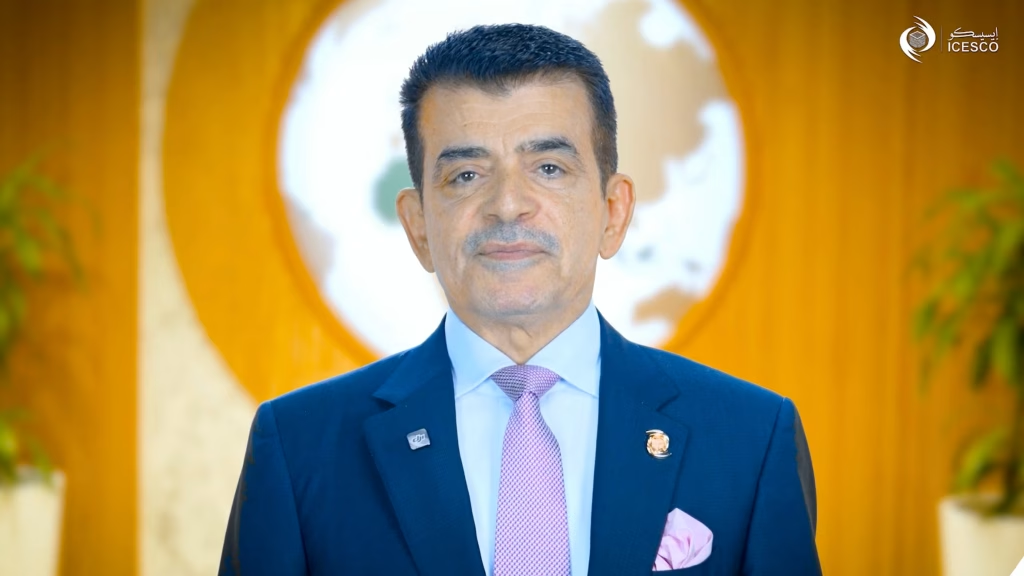
    Dr. Salim M. AlMalik, Director-General of the Islamic World Educational, Scientific and Cultural Organization (ICESCO), affirmed that the Organization places Quranic education and its institutions at the forefront of its priorities and areas of focus, underscoring the depth and historical dimension of the partnership between ICESCO and the Republic of Senegal and its multiple strategic dimensions, which have encompassed all fields of the Organization’s work and areas of competence. He described Senegal as a model to be followed in view of its seriousness, rigor, and effectiveness.
    AlMalik made these statements during his address as guest of honor at the celebration of the National Day of Qur’anic Schools (Daaras) in the Republic of Senegal, held on Tuesday, 31 March 2026, in Dakar, under the chairmanship of His Excellency President Bassirou Diomaye Faye, and attended by Mr. Malick Ndiaye, President of the National Assembly of Senegal, Mr. Moustapha Mamba Guirassy, Minister of National Education, as well as a number of Islamic scholars and senior officials.

    Dr. AlMalik began his address by expressing his appreciation for the gracious invitation extended by His Excellency the President of Senegal for ICESCO to take part in the celebration, recalling the civilizational history of the Republic of Senegal throughout the ages and its eminent standing in Africa and the Islamic world. He noted that Senegal has written illustrious chapters in the preservation, teaching, dissemination, interpretation, and translation of the Holy Qur’an through the legacy of its leading scholars who established a towering base of knowledge.

    Moreover, Dr. AlMalik commended Senegal’s pioneering initiatives, under the leadership of H.E. President Bassirou Diomaye Faye, to strengthen the role of the Arabic language and develop Quranic institutions. He highlighted the decision to integrate graduates of traditional education into the labor market and affirmed the Organization’s full readiness to support Senegal’s efforts in implementing its national project by providing technical and knowledge-based expertise to advance Qur’anic schools and by cooperating with the competent authorities to implement the recommendations of national conferences on the “Daaras,” particularly in light of the challenges posed by artificial intelligence and misleading digital content targeting the identity, culture, and religious values of youth.

    In closing, Dr. AlMalik affirmed that the partnership between the two parties is witnessing a new launch through a number of educational initiatives, foremost among them the professional training program in Arab-Islamic education implemented by ICESCO in cooperation with Cheikh Anta Diop University in Dakar. He invited Senegalese experts and researchers to visit the Organization’s headquarters in Rabat and gain first-hand insight into ICESCO’s activities, initiatives, and programs.

    The President of Senegal Receives Director-General of ICESCO at the Palace of the Republic in Dakar

    His Excellency Bassirou Diomaye Faye, President of the Republic of Senegal, received Dr. Salim M. AlMalik, Director-General of the Islamic World Educational, Scientific and Cultural Organization (ICESCO), on Tuesday, March 31, 2026, at the Palace of the Republic in Dakar, in his capacity as guest of honor at the celebration of the National Daara Day (Qur’anic Schools).

    This meeting provided an opportunity to reaffirm the shared commitment to establishing a strong strategic partnership to support Senegal’s national efforts in the fields of education, science, and culture, with a particular focus on the development of Koranic schools in Senegal and their adaptation to technological advancements.

    During this meeting, both parties reaffirmed their shared commitment to promoting an educational model based on the consolidation of the values of the Islamic world and the preservation of its identity and cultural distinctiveness—a model centered on knowledge and oriented toward a better future.

    ICESCO was represented at this meeting by Ms. Ramata Almamy Mbaye, Head of the Social and Human Sciences Sector, and by Dr. Ahmed Said Ould Bah, Advisor to the ICESCO Director-General.

    ICESCO Director-General Meets with Senegalese Prime Minister

    Dr. Salim AlMalik, Director-General of the Islamic World Educational, Scientific and Cultural Organization (ICESCO), began his visit to Senegal with a meeting with Prime Minister Ousmane Sonko. During his visit, Dr. AlMalik participated in the closing ceremony of the Fourth Session of the Quranic Schools.

    During the meeting held on Monday, March 30, 2026, in Dakar, the two sides discussed areas of mutual cooperation and ways to strengthen the partnership between ICESCO and Senegal in education, culture, and science.

    Mr. Sonko commended ICESCO’s programs and projects that benefit Senegal, emphasizing the importance of developing this cooperation and building a distinguished strategic partnership that serves national priorities in these fields.

    For his part, Dr. AlMalik affirmed that Senegal is one of ICESCO’s distinguished Member States and praised the level of existing cooperation between the two sides.

    Mr. Sonko also reaffirmed his country’s commitment to settling its arrears, thereby enabling it to benefit more fully from ICESCO’s programs and opportunities.

    At the conclusion of the meeting, Dr. AlMalik reaffirmed ICESCO’s commitment to supporting joint programs and ICESCO’s interest in strengthening the role of Quranic Schools and implementing the recommendations issued by the Fourth Session of the Quranic Schools.

    Senegal’s Minister of National Education, Mr. Moustapha Mamba Guirassy, attended the meeting.

    ICESCO Director-General Takes Part in Closing Session of National Conference on Qur’anic Schools in Senegal

    Dr. AlMalik: We Strive to Build an Islamic World that Addresses Contemporary Challenges while Upholding the Principles of Peace and Coexistence

    Dr. Salim M. AlMalik, Director-General of the Islamic World Educational, Scientific and Cultural Organization (ICESCO), took part in the closing session of the National Conference on Qur’anic Schools (Daara) in the Republic of Senegal, held on Monday, 30 March 2026, in Dakar. The session was chaired by Mr. Ousmane Sonko, Prime Minister of Senegal, and attended by Mr. Moustapha Mamba Guirassy, Minister of National Education, members of the technical committee overseeing the national forums, and a large gathering of founders and officials of Qur’anic schools, as well as academic, cultural, religious, and spiritual leaders.

    In his address, Dr. AlMalik commended the ambitious vision underpinning the development and implementation of “Senegal Vision 2050,” which reflects a clear commitment to shaping a future marked by justice, prosperity, and sovereignty, guided by values that place education, equity, and human development at the core of national progress.

    Moreover, Dr. AlMalik highlighted Senegal’s efforts to strengthen an inclusive educational system in which the Qur’anic school (Daara) occupies a vital position as a bridge connecting spiritual foundations with modern competencies, contributing to the development of responsible and enlightened citizens.

    Dr. AlMalik reaffirmed ICESCO’s commitment to building an Islamic world capable of responding to contemporary challenges while upholding the principles of peace, coexistence, and mutual understanding.

    He concluded by emphasizing the Organization’s aspiration to enhance its partnership with Senegal and work toward building a future grounded in knowledge and shared human values.

    Second International Conference on Cancer Research 2026 Kicks off at ICESCO Headquarters

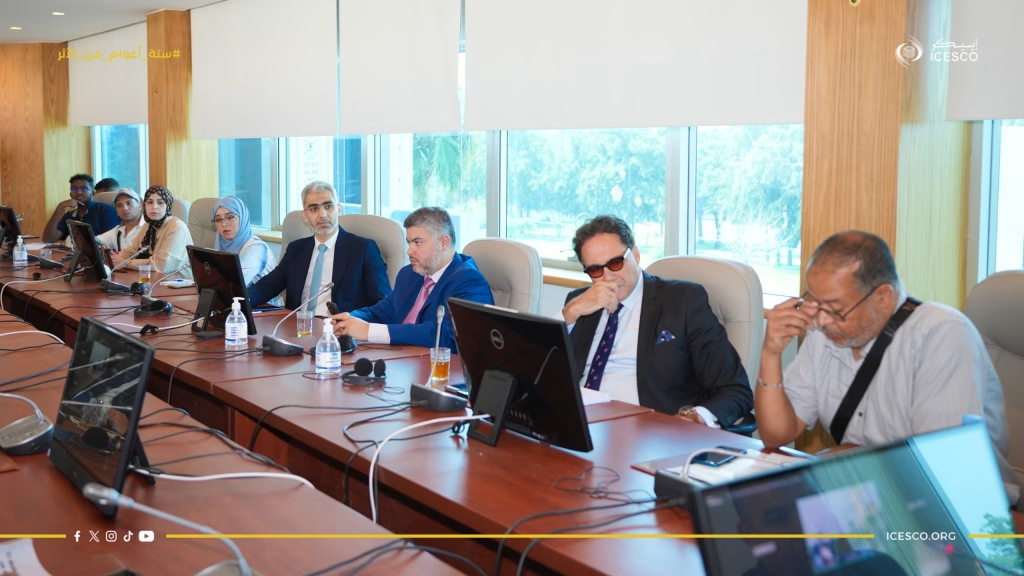
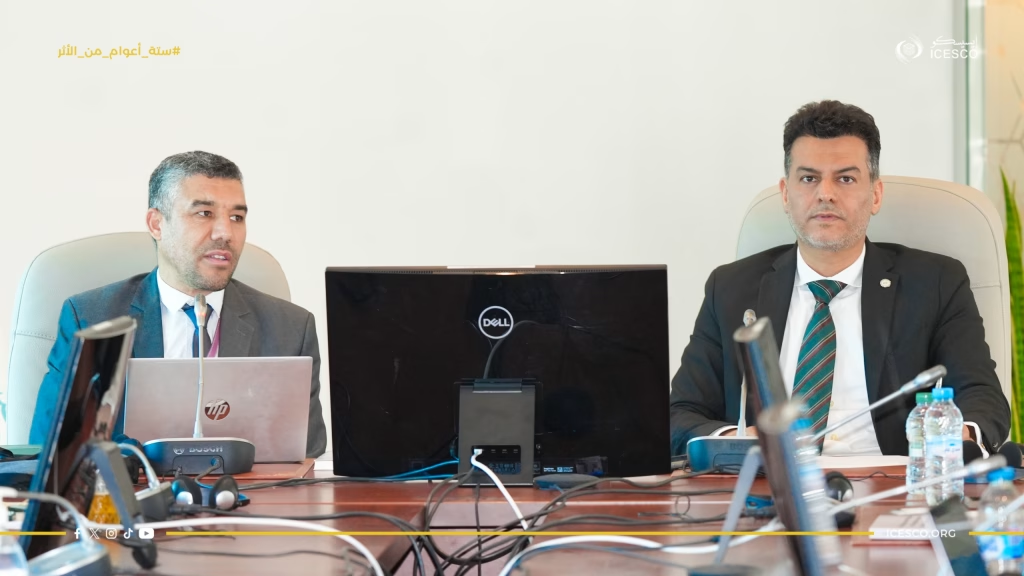
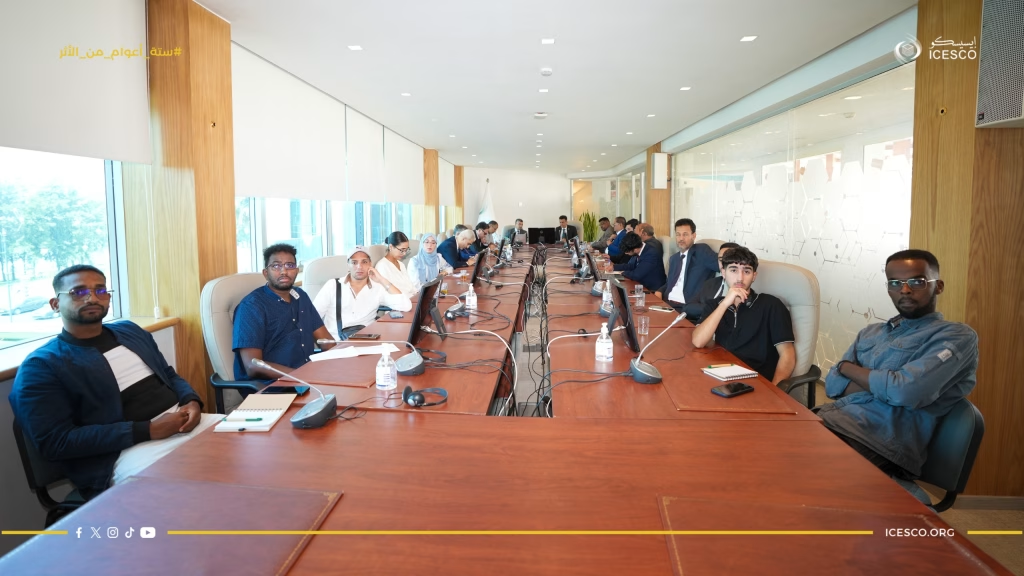
    Under the High Patronage of His Majesty King Mohammed VI, may Allah assist him, the Second International Conference on Cancer Research (MCRS 2026) opened on Monday, 30 March 2026, at the headquarters of the Islamic World Educational, Scientific and Cultural Organization (ICESCO) in Rabat. The event is organized in partnership with Moulay Ismail University in Morocco and the Moroccan Association for Cancer Research, under the theme “Translational Research in Support of Clinical Advances,” with the participation of 180 researchers and specialists from 10 countries. It aims to highlight the crucial role of translational science in transforming laboratory findings into practical clinical applications.

    During the opening session of the three-day conference, Dr. Salim M. AlMalik, ICESCO Director-General, affirmed in a speech delivered on his behalf by Dr. Abdelillah Benarafa, Deputy Director-General, that the Organization is guided by the principle of making science serve humanity and accessible to all. He stressed that ICESCO builds bridges of communication and cooperation between the global North and South to enhance the exchange of expertise and accelerate health solutions.

    Dr. AlMalik noted that ICESCO has accumulated significant experience in supporting scientific research, particularly in health sciences. He emphasized that the Organization’s work goes beyond research funding to investing in people and building capacities, including support for training programs in human genome analysis, based on the conviction that prevention begins with knowledge.

    For his part, Dr. Aboubakr Bouyaad, President of Moulay Ismail University, stated that hosting this event reflects growing recognition of the importance of translational research as a cornerstone of medical progress. He reaffirmed the University’s commitment to fostering an academic environment grounded in openness and innovation.

    Dr. Lhoussain Hajji, Professor at the Faculty of Medicine of Moulay Ismail University, underlined that the conference seeks to promote scientific exchange and develop new strategies to improve patient recovery prospects. Dr. Mouad Edderkaoui, Adjunct Professor at the University of California, highlighted that scientific research and collaboration among researchers constitute two fundamental pillars for transforming the challenge of combating cancer into a pathway for progress.

    Dr. Saber Boutayeb, Director of the Mohammed VI Center for Research and Innovation, warned against delays in translating scientific findings related to cancer research into practical applications. Dr. Taoufiq Fechtali, Dean of the Faculty of Sciences at Moulay Ismail University, stressed that strengthening cooperation among researchers helps accelerate the transformation of scientific knowledge into solutions that improve treatment outcomes.

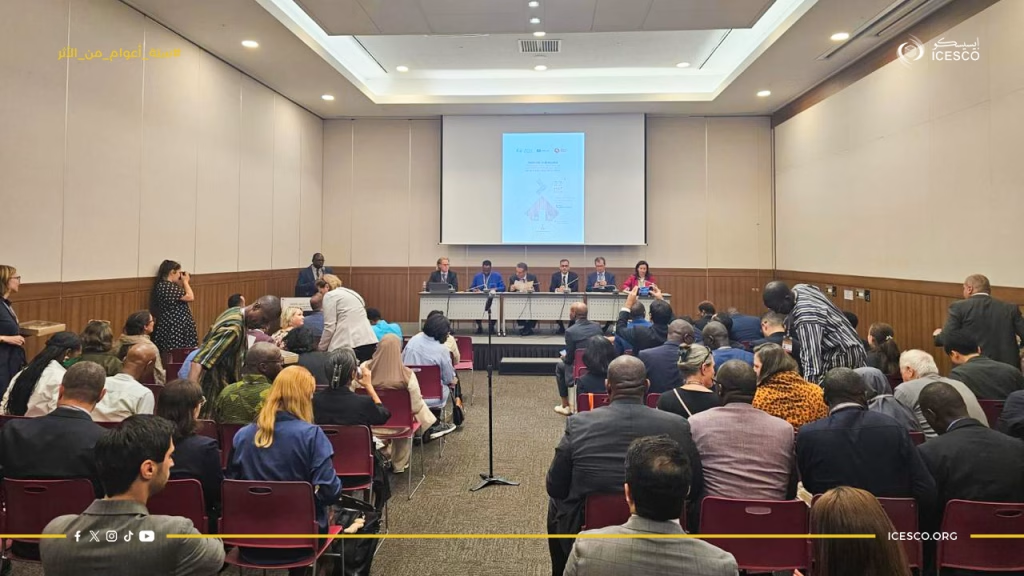
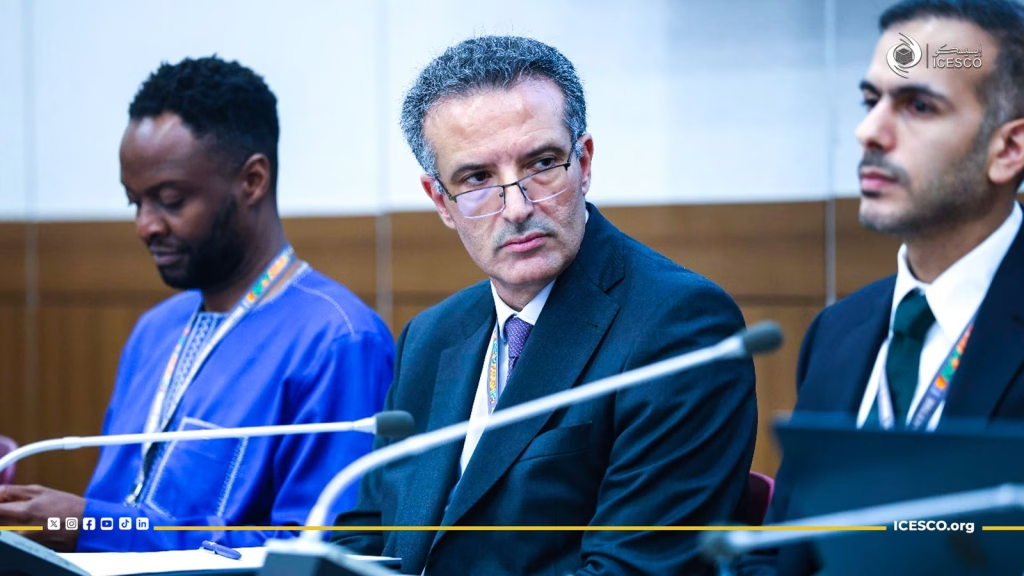
    The first session of the conference was moderated by Dr. Adel Smeda, Supervisor of ICESCO’s Science and Environment Sector, with the participation of four international experts in the medical and oncology fields. The session featured specialized presentations and interactive discussions on the latest developments in translational research and clinical innovation in cancer treatment.

    The first day also featured a presentation by Dr. Stephen Pandol, Professor of Medicine at the University of California, on modern approaches to cancer prediction and treatment outcome assessment. He highlighted the role of predictive models and clinical data in improving early diagnosis accuracy and guiding therapeutic decisions toward the most suitable options for each case, drawing strong engagement from attending experts and physicians.

    The conference program includes a series of scientific and discussion sessions addressing key topics such as immunotherapy in cancer recovery, evolving cancer control models in Morocco, targeted radiotherapy biology, and prospects for developing clinical research.

    ICESCO and Uzbekistan Launch Scholarship Programme for Outstanding Students in the Islamic World

    The Islamic World Educational, Scientific and Cultural Organization (ICESCO) is pleased to announce the launch of the ICESCO-Uzbekistan Scholarship Programme, in partnership with the Ministry of Higher Education, Science and Innovation of the Republic of Uzbekistan. The Programme will enable outstanding students from ICESCO Member States to pursue their academic studies at a number of prestigious Uzbek universities.

    In its first phase, the Programme offers five fully funded scholarships at two universities in Uzbekistan. Tashkent State Medical University will provide three scholarships for applicants to the bachelor’s program in General Medicine.

    Central Asian University of Environmental and Climate Change Studies will offer two bachelor’s scholarships in Environmental and Sustainable Management, Environment and Economics, and Environmental Science and Public Administration.

    Each scholarship covers tuition fees, student housing, a monthly stipend, and access to health coverage through public healthcare institutions.

    Interested candidates may review the requirements and submit their applications through the following link: https://icesco.org/en/international-scholarships/. The deadline for applications is Wednesday, 15 May 2026.

    This initiative is part of the Joint Action Plan signed between ICESCO and the Uzbek Ministry of Foreign Affairs in May 2025 in Tashkent.

    ICESCO and National Autonomous University of Mexico Explore Prospects for Cooperation in Education, Environment, and AI

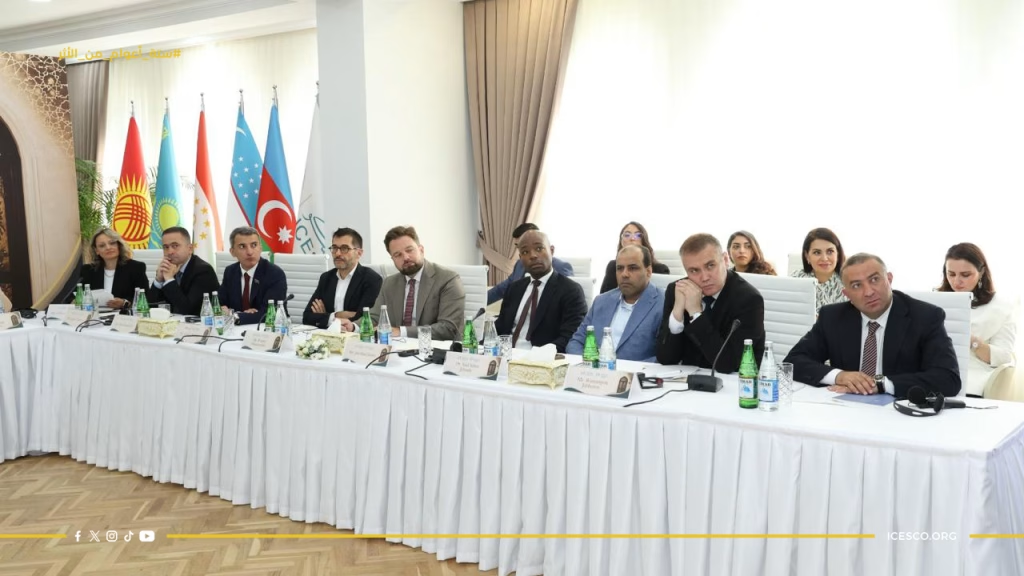
    The Islamic World Educational, Scientific and Cultural Organization (ICESCO) held a meeting with the National Autonomous University of Mexico on Wednesday, March 25, 2026, at the Organization’s headquarters in Rabat during which both parties explored ways to strengthen South-South cooperation in the fields of education, space science, environmental studies, artificial intelligence, youth capacity building, and the provision of scholarships.

    ICESCO was represented by Mr. Anar Karimov, Head of the Partnerships and International Cooperation Sector, Dr. Adel Smida, Supervisor of the Science and Environment Sector, and a group of advisors and experts, while the Mexican side was represented by Ms. Mabel Gómez Oliver, Mexico’s Ambassador to Rabat, and Dr. Ciro Murayama, professor at the National Autonomous University of Mexico.

    In line with its open-door policy, Mr. Karimov emphasized ICESCO’s commitment to developing cooperation mechanisms with organizations, institutions, and universities both within the Islamic world and beyond. For her part, Ms. Oliver commended ICESCO’s efforts to build bridges of cultural dialogue and scientific and knowledge exchange between the Islamic world and the rest of the world, while Dr. Muriyama highlighted the University’s role in promoting scientific research and innovation in Latin America.

    On World Poetry Day… Dr. AlMalik Highlights Poetry’s Role as a Major Human Art Form

    The twenty-first of March marks the annual celebration of World Poetry Day. On this occasion, Dr. Salim M. AlMalik, Director-General of the Islamic World Educational, Scientific and Cultural Organization (ICESCO), extended his congratulations to poets across the Islamic world, praising their generous contributions and noble creativity that have enriched life, preserved values, and reinforced the meanings of love, goodness, and beauty. He reaffirmed the Organization’s commitment to maintaining continuous engagement with poets and ensuring that poetry receives the distinguished standing it merits as a great human art.

    ICESCO recently established a dedicated Centre for Poetry and Literature, which is set to significantly contribute to advancing poetic and literary activity in the Islamic world. The Centre is implementing several projects, including “20 Moons in the Poetry Sky,” which focuses on publishing twenty collections by twenty female poets participating in the ICESCO Women Poets Forum, comprising more than two hundred poets. Other initiatives include the “Cities of Poems” contest, the quarterly ICESCO Cultural Magazine, and the ICESCO Youth Creators Camp.

    Royal Directive to Maintain and Establish the Museum of the Prophet’s Biography at ICESCO

    In these blessed days marking Eid al-Fitr celebrations across the Muslim world, the Islamic World Educational, Scientific and Cultural Organization (ICESCO) announced that it had received a gracious royal directive from the esteemed Moroccan Royal Office to maintain the International Fair and Museum of the Prophet’s Biography and Islamic Civilization in Rabat, and to establish it permanently at ICESCO headquarters. This decision reflects the recognition of the Fair’s remarkable cultural impact, as it has welcomed more than ten million visitors since its launch in November 2022, representing diverse groups of citizens, tourists, and guests of the Organization.

    The project is the outcome of a strategic partnership bringing together the Muslim World League, ICESCO, and the Mohammadia League of Scholars in the Kingdom of Morocco, within joint efforts to promote the Prophet’s seerah and highlight the richness and humanistic values of Islamic civilization.

    Dr. Salim M. AlMalik, ICESCO Director-General, stated that this royal directive is a badge of honor for all those contributing to this partnership. Dr. AlMalik stressed that it also serves as a distinguished incentive to intensify efforts to safeguard the landmarks of Islamic civilization, especially as the year 2026, according to a royal directive in the Kingdom of Morocco, marks the celebration of the 1500th anniversary of Prophet Muhammad’s birth.

    ICESCO Concludes Third Ramadan Gathering “Excellence in Vicegerency” with Lecture on Human Values

    The Islamic World Educational, Scientific and Cultural Organization (ICESCO) concluded the activities of its Ramadan Gathering, “Excellence in Vicegerency (Istikhlaf),” on Tuesday, 17 March 2026, held at its headquarters in Rabat throughout the holy month of Ramadan in cooperation with the Group of Spouses of Arab Ambassadors and Heads of International Organizations accredited to the Kingdom of Morocco. The session featured a lecture by Dr. Khadija Abouzid, Professor of Higher Education at the Faculty of Letters and Human Sciences, Mohammed V University in Rabat, titled “When the Balance of Values Is Disrupted.”

    The closing session was attended by Dr. Salim M. AlMalik, ICESCO Director-General, a number of ambassadors accredited to Morocco, members of the Group of Spouses of Arab Ambassadors and Heads of International Organizations accredited to the Kingdom of Morocco, as well as intellectuals and specialists in spiritual and educational affairs.

    The session opened with the recitation of verses from the Holy Qur’an by young reciter Zayd El Bakkali, winner of the “Child Hafiz” Award in Morocco, followed by a poem recited by young reciter “munshida” Abeer Al Mahboubi. Dr. AlMalik then presented both children with honorary awards in recognition of their excellence in Qur’an memorization and recitation.

    Dr. Yousra Bint Hussain AlJazairy, Chair of the Cultural Committee of the Group, delivered an introductory address in which she emphasized that history demonstrates that the fall of civilizations stems from losing the compass of values that governs human behavior, noting that sound reason and moral integrity are the true measures of individual worth and the foundation of thriving societies, which calls for reflection on how to elevate human values so they move from theoretical knowledge to tangible behavior and impact.

    She added that the lecture would focus on Qur’anic principles guiding human conduct, the Qur’anic perspective on Vicegerency values, ways to translate theoretical principles into practical behavior, and the role of role models in instilling Vicegerency values among youth.

    Dr. Abouzid began her lecture by highlighting the foundations of responsible human existence from an Islamic perspective: faith in God, ethical conduct, and responsibility toward society. Through these pillars, she explained, individuals become capable of fulfilling their life mission and serving as catalysts for positive change in their societies.

    She added that human behavior in Islam is guided by a holistic system of values that shapes a balanced character in one’s relationship with God, the self, and the community. Acts of worship that cultivate inner discipline help anchor these values until they become daily practice, especially when youth and society at large can look to exemplary figures who embody these principles.

    The session included a rich discussion among participants. Dr. AlMalik commended Dr. Abouzid for her contributions throughout the gathering’s sessions, noting that her insights had enriched the theme of “Excellence in Vicegerency (Istikhlaf)” and opened new horizons that illuminated previously overlooked dimensions.

    The event concluded with Dr. AlMalik and Ms. Rania Shobaki, Chairwoman of the Group, presenting honorary shields to Dr. Abouzid, Dr. Sally Mabrouk, Director of the Office of the ICESCO Director-General and Supervisor of the Strategy and Institutional Excellence Sector at ICESCO, Qur’an reciter Hassnae Khoulali, and Mr. Ala Mula Al-Dwailah from the Office of the Director-General, in addition to several ICESCO sectors, divisions, and departments for their contributions to the Gathering’s success.