
ICESCO Holds International Dialogue on Foresight and Intergenerational Fairness

22 September 2026
The Islamic World Educational, Scientific and Cultural Organization (ICESCO), through its Center for Foresight and Artificial Intelligence, in partnership with the European Commission’s Joint Research Centre (JRC), held an international dialogue via videoconference on Monday, 21 September 2026, titled “Shaping the Futures through Intergenerational Fairness.” The dialogue explored ways to take the interests of future generations into account in current policies and decision-making, as part of the activities of the Prince Mohammad bin Fahd–ICESCO Chair for Intergenerational Humanitarian Leadership for Future Societies.
Dr. Salim M. AlMalik, Director-General of ICESCO, opened the dialogue with a recorded address, emphasizing the need to embed intergenerational fairness in institutional practice. He noted that decisions taken today on education, water, energy and artificial intelligence will shape the choices available to generations that have not yet had a say in making those decisions.
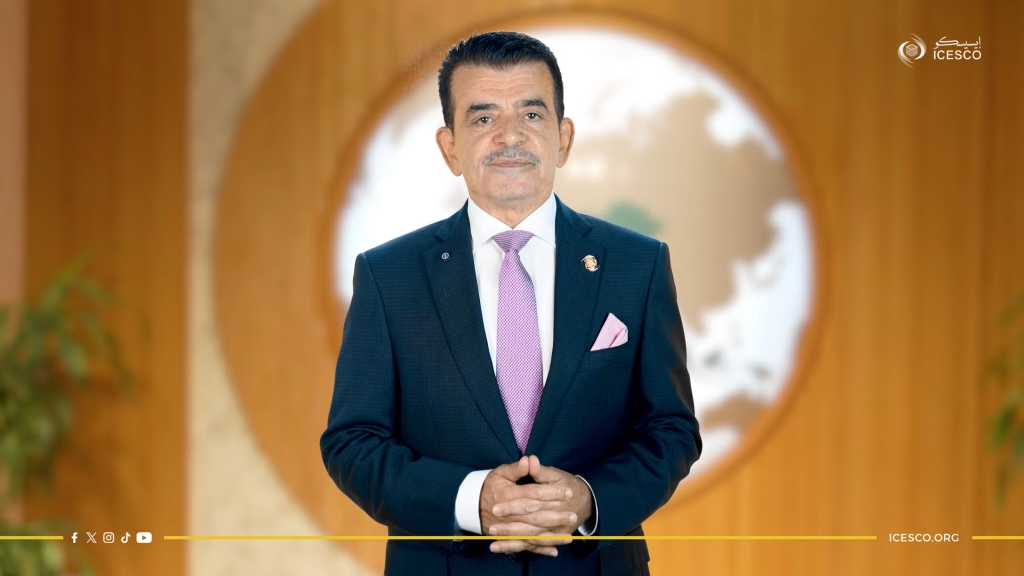
Dr. AlMalik also reviewed ICESCO’s efforts in this area, including training over 5,000 people in foresight, launching the Riyadh Charter on Artificial Intelligence, and supporting youth-led initiatives. He stressed the importance of ensuring that decisions made today leave future generations with a broader range of choices.
The opening session also featured addresses by Ms. Jolita Butkevičienė, Director for Innovation in Science and Policymaking at JRC, and Dr. Ghadeer Kayal, Assistant Vice President for Academic Affairs at Prince Mohammad Bin Fahd University (PMU).
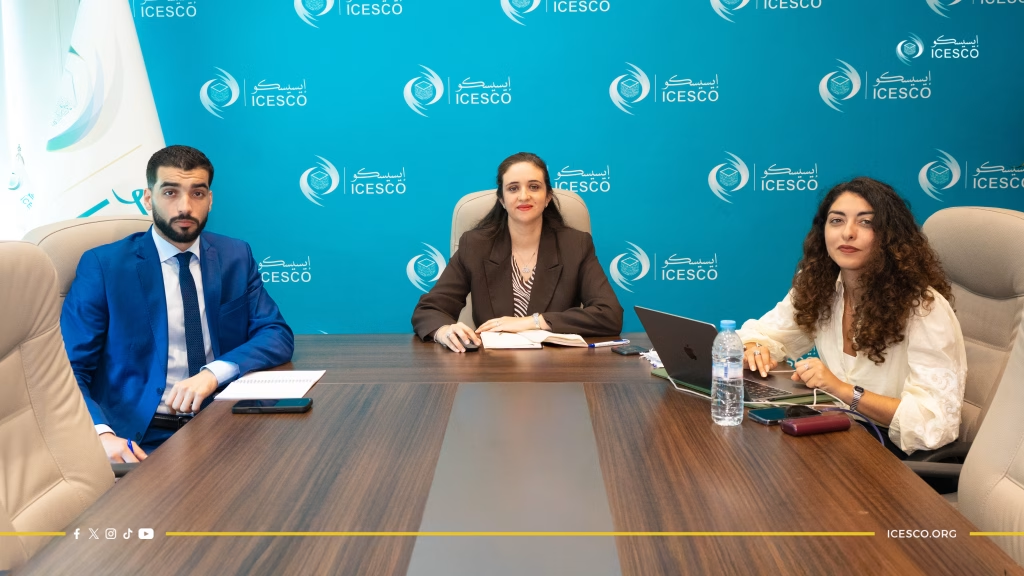
During the first plenary session, moderated by Dr. Rabaa Alabdulrahman from PMU, Dr. Kais Hammami, Director of ICESCO’s Center for Foresight and Artificial Intelligence, outlined the Organisation’s approach to foresight. He cautioned against planning based on a single future scenario, examining developments in isolation from one another, conflating immediate performance with sustainable success, and producing analyses that do not translate into practical actions.
Dr. Hammami proposed a practical framework for cooperation with JRC, based on testing an actual decision against multiple future scenarios and assessing how its benefits and risks would be distributed across generations over the short and long term. The framework would also identify those responsible for its implementation and set a date for its review, thereby ensuring that intergenerational fairness is taken into account in decision-making.