

ICESCO Holds Workshop in Jordan on the Role of Municipalities in Promoting Education for Sustainable Development

17 September 2026
The Islamic World Educational, Scientific and Cultural Organization (ICESCO), in partnership with the Jordanian National Commission for Education, Culture and Science, held a national workshop to strengthen the capacities of Jordanian municipal employees in the field of education for sustainable development, on 16 September 2026. The workshop was conducted in person in the Jordanian capital, Amman, and via videoconference, with the aim of exchanging expertise and best practices among Jordanian municipalities.
In his address during the opening session, Dr. Ahmed Albanyan, Head of the Education Sector, Supervisor of the Translation and Publishing Center, stressed that achieving the Sustainable Development Goals requires transforming national policies into tangible local practices whose impact citizens can feel in their cities, municipalities, and daily surroundings. He highlighted the pivotal role of municipalities in raising community awareness and implementing the SDGs, particularly Goal 4 on ensuring inclusive, equitable, and quality education and promoting lifelong learning opportunities for all.
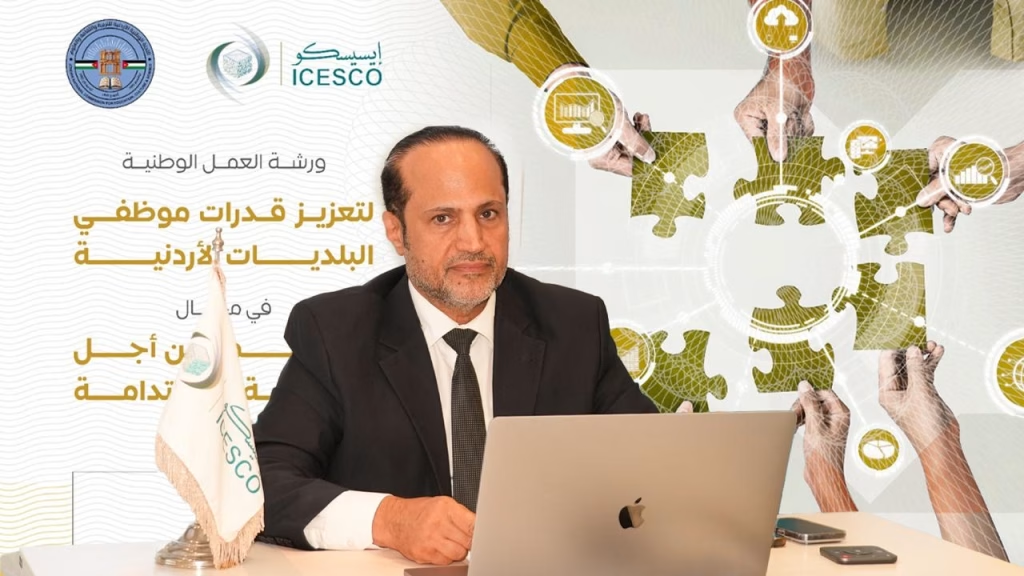
Furthermore, Dr. Albanyan outlined a number of practical approaches that municipalities can adopt, including integrating sustainable development concepts into municipal plans, strengthening cooperation with schools, universities, and civil society institutions, and transforming municipal facilities, libraries, parks, and community centers into learning spaces. He also emphasized the importance of using local data and indicators to measure the impact of programs and enhance their effectiveness.
Dr. Albanyan noted that climate change has become a reality affecting water resources, food security, public health, infrastructure, and lifestyles. He reviewed ICESCO’s efforts through its educational programs and initiatives, foremost among them the Global Dashboard for Monitoring Progress in Green Education, to support its Member States in developing policies and programs that strengthen the capacity of educational systems and communities to address environmental and climate challenges.


