
Third Edition of Data and Artificial Intelligence Glossary Launched at International Forum in Riyadh

17 September 2026
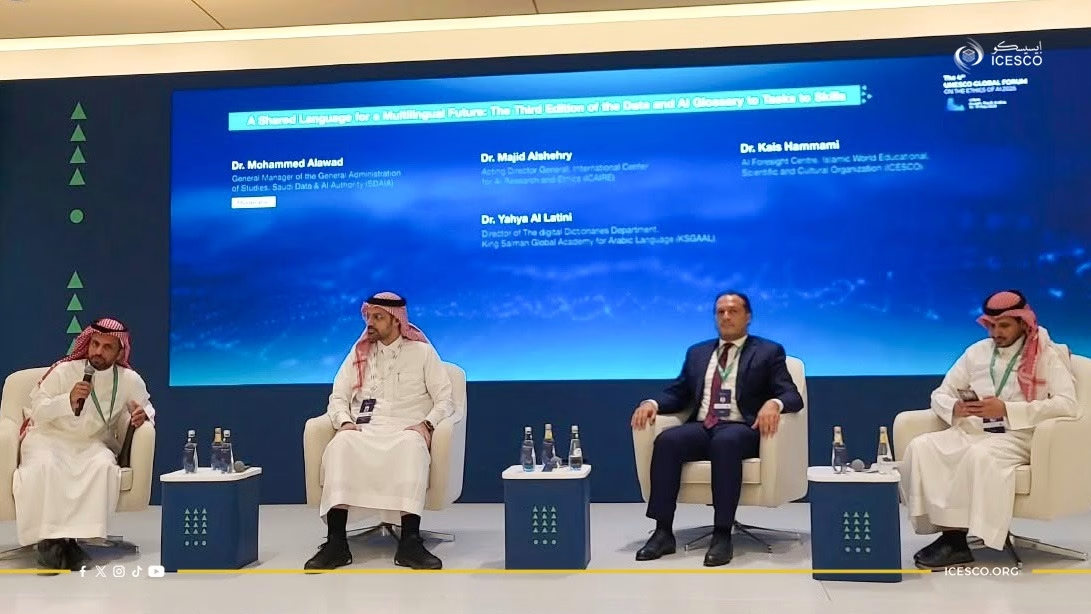
The Islamic World Educational, Scientific and Cultural Organization (ICESCO), in partnership with the International Centre for Artificial Intelligence Research and Ethics (ICAIRE), the King Salman Global Academy for Arabic Language, and the Saudi Data and AI Authority (SDAIA), launched the third, enhanced edition of the multilingual “Data and Artificial Intelligence Glossary” on Thursday, 17 September 2026, during the fourth UNESCO Global Forum on the Ethics of Artificial Intelligence in Riyadh.
The new edition aims to update definitions, incorporate emerging terms in data and artificial intelligence, and enhance consistency among Arabic, English, and French equivalents. It thus keeps pace with the rapid development of these fields and facilitates the use of their concepts in scientific, educational, and professional settings.
During the launch session, Dr. Kaïs Hammami, Director of ICESCO’s Center for Foresight and Artificial Intelligence, highlighted the Organization’s contribution to strengthening the initiative’s international and multilingual dimensions. He explained that ICESCO’s participation is guided by three objectives: enriching reliable digital content, establishing a common technical language among Member States, and contributing to the production and dissemination of knowledge.
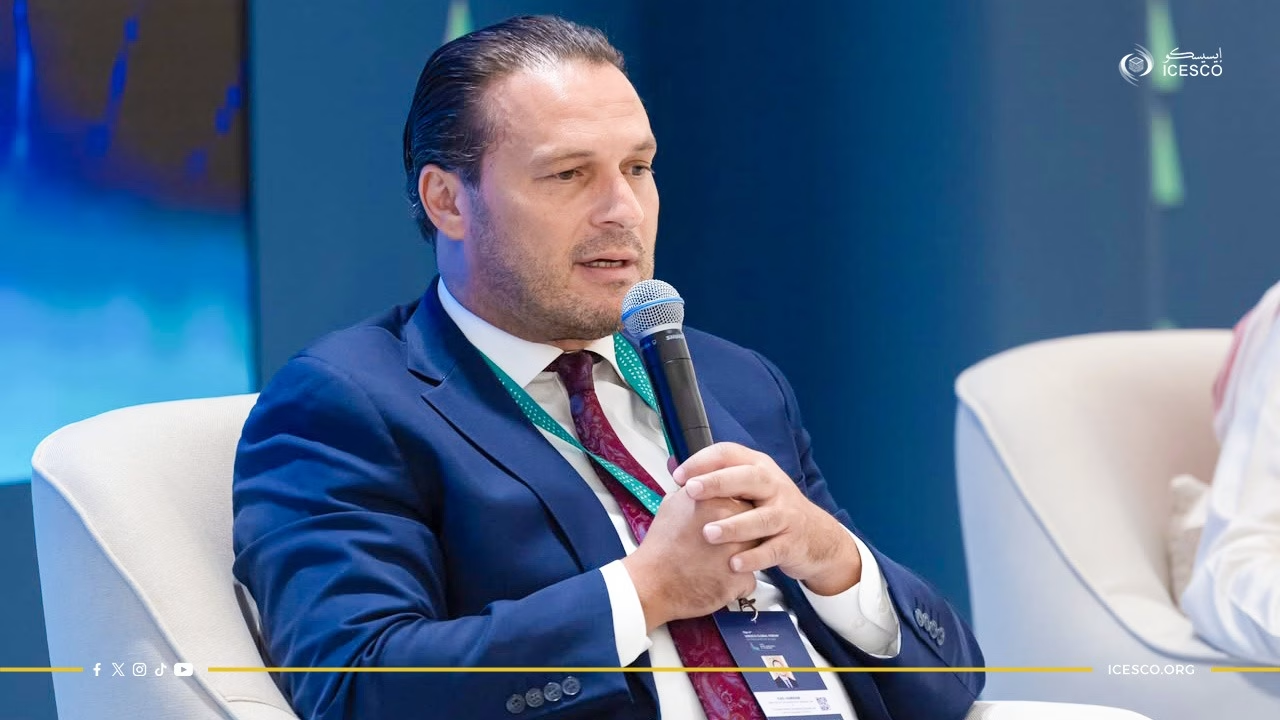
He stressed that the glossary can support education and capacity building through its use in teaching, teacher training, curriculum development, policy documents, and media content, making artificial intelligence concepts more accessible to users in different languages.
Regarding future editions, Dr. Hammami proposed adopting knowledge needs, expected impact, and the availability of a trusted institutional partner as criteria for adding new languages. He noted that Russian, Chinese, and Portuguese are being considered, while emphasizing the need to safeguard scientific and linguistic accuracy and ensure conceptual equivalence across languages.
The launch of the third edition builds on efforts to strengthen specialized knowledge content and make it available in multiple languages. This supports broader participation by countries and regions in discussions on artificial intelligence and helps clarify and standardize concepts as a prerequisite for any effective global dialogue on the governance and ethics of this technology.