Disclaimer: You are using Google Translate. The ICESCO is not responsible for the accuracy of the information in the translated language .

your opinion

User Feedback

Overall, how satisfied are you about the website?

    [uacf7_star_rating* rating class:rating_stars icon:star1 "default"]

    Extremely Dissatisfied
    Extremely Satisfied


    ICESCO Congratulates Moroccan Ministry of Culture on Success of 31st Rabat International Book Fair

    Dr. Salim M. AlMalik, Director General of the Islamic World Educational, Scientific and Cultural Organization (ICESCO), extends his warmest congratulations to the Ministry of Youth, Culture and Communication of the Kingdom of Morocco on the remarkable success of the 31st Rabat International Book Fair, held on 1-10 May 2026, under the high patronage of His Majesty King Mohammed VI, may Allah assist him, concurrently with the celebration of Rabat as the World Book Capital for 2026.

    Dr. AlMalik commended the distinctive qualities of this edition, including a balanced, high-quality participation and a broad cultural presence, with a record participation of 61 countries and 891 exhibitors, as well as more than 130,000 titles and over 3 million copies on display across various fields of creativity and knowledge, reinforcing the fair’s standing as a prominent international event dedicated to reading and publishing.

    ICESCO Director-General also lauded the cultural program of this edition, which celebrated the legacy of the traveler Ibn Battuta and featured more than 204 events with the participation of over 720 speakers, including intellectuals and creators, who discussed issues related to books and reading as well as developments in the cultural and creative industries.

    Dr. AlMalik stressed that ICESCO’s pavilion marked a significant participation in this edition, hosting more than 60 activities organized under the supervision of the Organization’s Culture Sector, with the participation of a group of ICESCO’s intellects, writers, poets, and experts. He noted the Organization’s commitment to continuing its support for major cultural initiatives and strengthening partnerships that promote cultural influence in the Islamic world.

    ICESCO Obtains Two ISO Quality Certifications in Design and Printing

    The Islamic World Educational, Scientific and Cultural Organization (ICESCO), represented by its Translation and Publishing Center, has obtained two internationally recognized ISO quality certifications: ISO 12647-1 and ISO 15930-7 in the fields of design and printing, reaffirming the Organization’s commitment to international standards and further consolidating its quality management system across its technical, editorial, and production processes.

    ICESCO obtained the two prestigious certifications following a comprehensive, intensive, and detailed external audit conducted by the International Organization for Standardization (ISO) of the administrative and technical system implemented by the Organization’s Translation and Publishing Center to enhance institutional performance in the publishing and printing industry.

    On this occasion, Dr. Salim M. AlMalik, Director-General of ICESCO, stated that obtaining ISO certification represents a qualitative leap that strengthens the quality of outputs and enhances performance efficiency. He added that this achievement supports ICESCO’s orientations under its 2026–2029 Strategy toward institutional excellence, innovation, and sustainability, thereby reinforcing the Organization’s position as a leading professional and knowledge reference. Dr. AlMalik further emphasized that this international accreditation reflects the Organization’s continuous commitment to providing distinguished and innovative services to its Member States.

    The two certifications enrich ICESCO’s distinguished record of international accreditations, reflecting its foresighted vision and its commitment to fostering creativity, institutional excellence, and continuous improvement of work mechanisms.

    Women’s Poetry Evening at ICESCO Pavilion during 31st Rabat International Book and Publishing Fair

    The pavilion of the Islamic World Educational, Scientific and Cultural Organization (ICESCO) at the 31st Rabat International Book and Publishing Fair hosted a poetry evening as part of the CESCO Women Poets Forum, organized by the Organization’s Center for Poetry and Literature. The event was attended by poets, researchers, and cultural stakeholders, reflecting the growing presence of women’s poetic voices on the Arab and Islamic cultural scene.

    The evening, held on Sunday, May 10, 2026, featured Moroccan poets Khadija Ayach, Dr. Khadija Al Saidi, Nabila Hamani, and Aicha Idkir, who delivered readings ranging from emotional and humanistic to national themes, in an atmosphere celebrating the power of the word and poetry’s ability to build bridges between cultures and safeguard human memory.

    The event also included a tribute to Tunisian poet Jamila Al Majri, Director of the House of Poetry in Kairouan, who recited selected poems and praised the CESCO Women Poets Forum, and the cultural role played by the Organization in supporting creative women and strengthening their presence in cultural and creative spaces across the Islamic world.

    The evening further featured the presentation of poetry collections published in cooperation with the ICESCO Center for Civilizational Dialogue, as part of the project “20 Moons in the Poetry Sky”, which aims to publish 20 poetry collections by 20 women poets, as an initiative to highlight women’s poetic experience and document its creative output.

    Saudi Delegation Participating in the Rabat International Book Fair Visits ICESCO Headquarters

    The Islamic World Educational, Scientific and Cultural Organization (ICESCO) received on Friday, 8 May 2026, the delegation of the Kingdom of Saudi Arabia participating in the 2026 International Publishing and Book Fair in Rabat. During the visit, the delegation was briefed on the Organization’s key achievements and programs through a tour of its various sectors and centers.

    The delegation, which included representatives of the Literature, Publishing and Translation Commission and various other entities, also visited the International Exhibition and Museum of the Prophet’s Seerah and Islamic Civilization, and toured the halls of the Sultan Qaboos Library at ICESCO, where they explored its diverse collection of publications and cultural and knowledge references.

    Dr. Salim M. AlMalik, Director-General of ICESCO, received the Saudi delegation in his office, welcoming them and reviewing the outcomes of the strategic partnership between ICESCO and the Kingdom of Saudi Arabia in a number of cultural, educational, and scientific fields.

    Dr. AlMalik also expressed ICESCO’s aspiration to participate in the Riyadh International Book Fair, commending its distinguished cultural presence and its active role in supporting the book and publishing industry.

    He further praised the initiative of the Saudi delegation to donate a collection of books and publications displayed at the Kingdom’s pavilion to the Sultan Qaboos Library at ICESCO, noting that this contribution would enrich the Library’s holdings and strengthen cultural and knowledge cooperation.

    ICESCO Condemns the Attack on the City of Es-Semara and Reaffirms Its Solidarity with the Kingdom of Morocco

    The Islamic World Educational, Scientific and Cultural Organization (ICESCO) strongly condemns the attack targeting the city of Es-Semara in the Kingdom of Morocco, the Organization’s host country.
    ICESCO reaffirms its full solidarity with the Kingdom of Morocco and its support for the unity and territorial integrity of the Kingdom, as well as for all efforts aimed at preserving its sovereignty, security, and stability.

    In this regard, ICESCO reiterates its categorical rejection of all forms of violence and terrorism and calls for upholding the values of peace, dialogue, and fraternity, which constitute the essence of our true Islamic religion.

    ICESCO Launches “Artificial Intelligence for All” Initiative

    The Islamic World Educational, Scientific and Cultural Organization (ICESCO) launched the “Artificial Intelligence for All” initiative during a symposium organized by the Organization’s Science and Environment Sector under the title “Artificial Intelligence for All: Inclusive AI for Communities, Sectors, and Skills.” The initiative aims to strengthen the capacities of professionals in the field and develop solutions to the challenges posed by artificial intelligence. The symposium brought together 67 experts and specialists in modern technologies to discuss mechanisms for mainstreaming artificial intelligence applications across the Islamic world.

    The opening address of the symposium, held virtually on Thursday 7 May 2026, was delivered by Dr. Kuanysh Yergaliyev, Head of the Science and Environment Sector at ICESCO. In his remarks, he underscored the importance of ensuring equal opportunities in benefiting from artificial intelligence technologies, while reviewing the Organization’s efforts to promote digital inclusion, innovation, and youth capacity-building.

    The first session of the symposium, moderated by Dr. Adel Smeda, expert at the Science and Environment Sector, addressed the opportunities and challenges of inclusive artificial intelligence. The second session, moderated by Dr. Issam Karimi, Expert at the Sector, focused on the role of low-code platforms in democratizing access to artificial intelligence and empowering non-technical users.

    Cultural Activities and Intellectual Seminars at ICESCO’s Pavilion during Rabat’s International Book Fair

    The pavilion of the Islamic World Educational, Scientific and Cultural Organization (ICESCO) at the 2026 Rabat International Publishing and Book Fair hosted a series of scientific, cultural, and intellectual activities on Thursday, May 7, 2026. These activities addressed the role of media in enhancing societal awareness, the challenges facing creative work in the age of artificial intelligence, and the responsibility of international organizations in supporting cultural exchange among states and societies.

    Among activities held at the pavilion was an intellectual seminar titled “The Stake of Contemporary Media and Communication, and the Role of ICESCO,” during which Mr. Osama Heikal, Head of the Media and Communication Sector at ICESCO, highlighted the role of the Sector in developing a media discourse that’s aligned with the Organization’s aspirations and objectives through enhanced media coverage and the development and implementation of training programs and projects benefiting journalists, media professionals, and content creators across the Islamic world.

    Mr. Heikal also reviewed the history of media and its role in raising societal awareness and promoting ethical and human values, stressing the need to regularly update the legislation governing media work in order to keep pace with rapid technological developments. He further pointed to the interactive nature of modern media and its challenges, foremost among them media disinformation through the use of artificial intelligence technologies.

    In another seminar entitled “International Relations and the Position of ICESCO,” Mr. Anar Karimov, Head of the Partnerships and International Cooperation Sector at ICESCO, addressed the role of cultural diplomacy and soft power in strengthening ICESCO’s international presence. He emphasized the importance of building strategic partnerships founded on trust and transparency, and encouraged countries of the Islamic world to move from merely consuming cultural products to contributing to their production and shaping their own cultural narratives.

    The pavilion also hosted a panel discussion entitled “Challenges Facing Creators in the Age of Artificial Intelligence,” attended by Dr. Yussra Hussein AlJazairi, Chair of the Cultural Committee of the Group of Spouses of Arab Ambassadors and Heads of International Organizations Accredited in Morocco.

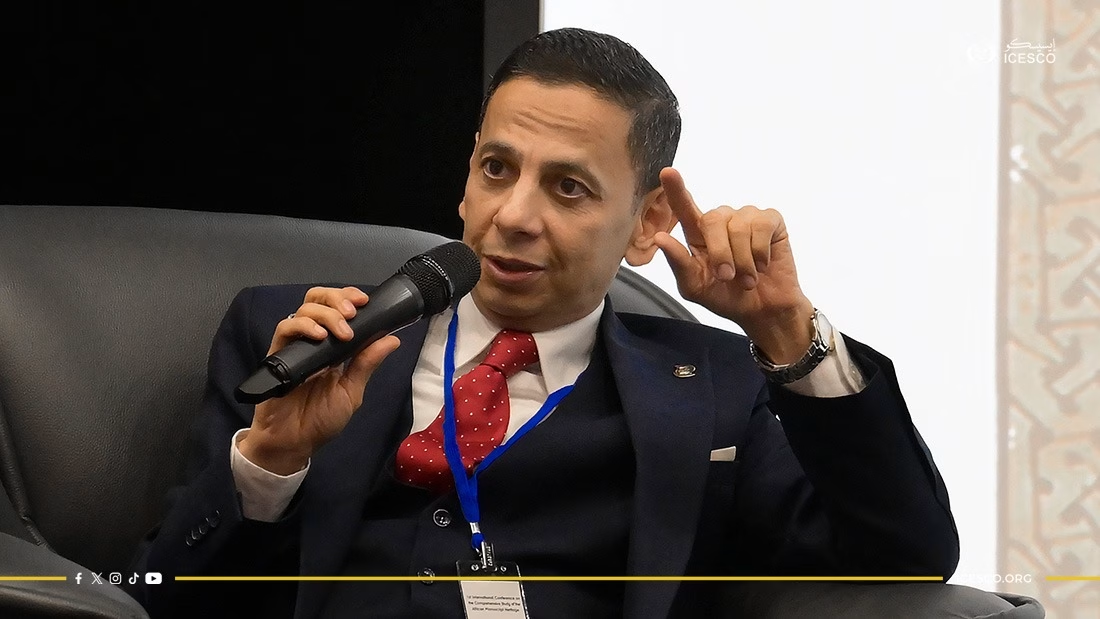
    During the session, moderated by Dr. Sally Mabrouk, Director of the Office of the Director-General of ICESCO and Supervisor of the Strategy and Institutional Excellence Sector, Dr. Mohamed Zinelabidine, Head of the Culture Sector at the Organization, and Dr. Nesma Youssef Idris, Assistant Professor at the American University in Cairo, highlighted the challenges facing creative industries in light of the growing dominance of artificial intelligence technologies, as well as the resulting cultural transformations, which call for a reimagining of creativity as a human, psychological, and civilizational experience.

    ICESCO Holds Panel Discussion on Islamic Manuscripts in Mali

    The Islamic World Educational, Scientific and Cultural Organization (ICESCO) held the second panel discussion as part of a series of panel discussions organized by the Center for Calligraphy and Manuscripts under the title “Islamic Manuscripts in the World”. This comes within the framework of a scientific initiative aimed at surveying the state of Islamic manuscripts worldwide, gaining precise knowledge of each country’s manuscript inventory, discussing ways of preserving, safeguarding, and promoting them.

    The second session of this series was held on Tuesday, May 5, 2026, at the Organization’s headquarters in Rabat, under the title “Islamic Manuscripts in Mali: Reality and Aspirations”. The session was attended by Mr. Fafré Camara, Ambassador of the Republic of Mali to the Kingdom of Morocco, alongside a number of researchers and specialists in manuscript heritage.

    In this context, Dr. Salim M. AlMalik, Director-General of ICESCO, affirmed in the opening address delivered on his behalf by Dr. Abdelilah Benarafa, Deputy Director-General, that Mali, with its hundreds of thousands of manuscripts, represents a rare intellectual and historical treasure documenting more than eight centuries of Islamic civilization and thought in West Africa.
    He explained that selecting Malian manuscripts as the focus of this panel reflects a high level of awareness of the importance of this manuscript heritage, which is spread across various regions of the country and embodies a civilizational and intellectual value bearing witness to the scholarly and cultural influence achieved by West Africa throughout history.


    For his part, Mr. Fafré Camara commended ICESCO’s role in serving Mali’s manuscript heritage, stressing the importance of preserving this valuable intellectual legacy and making use of it to support scientific research and raise awareness of its civilizational and cultural significance.

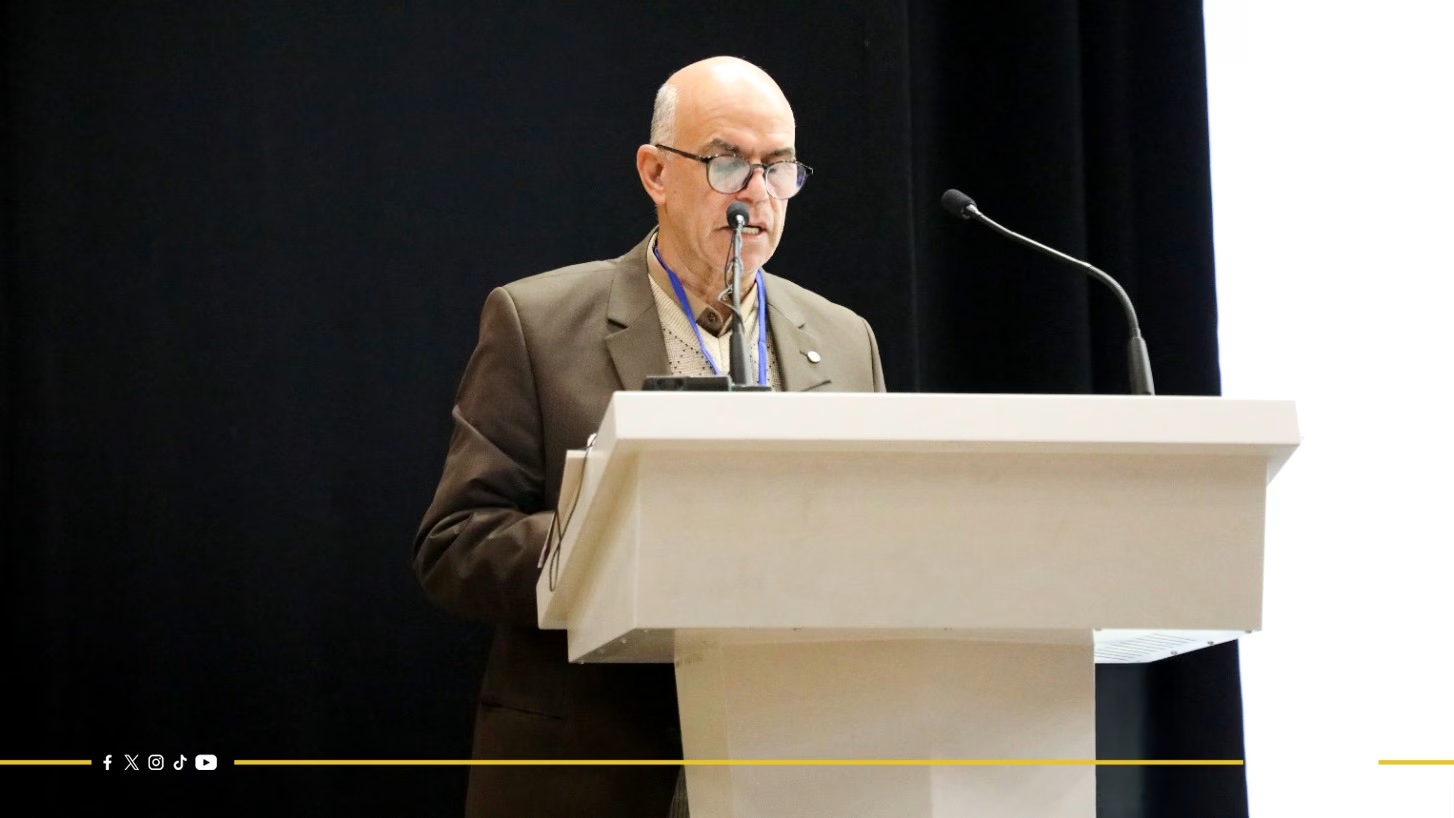
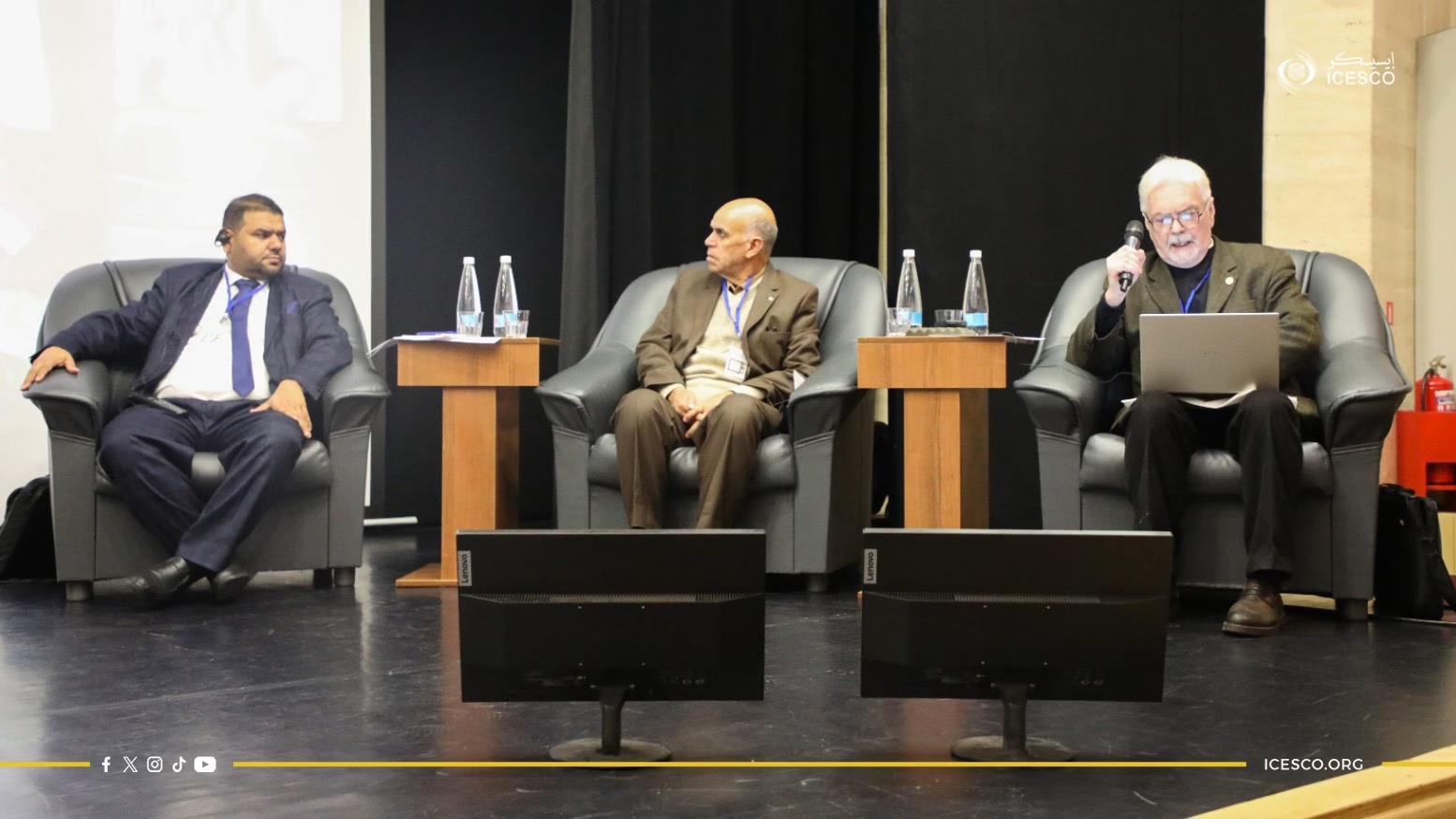
    The session was chaired by Dr. Idham Hanash, Director of ICESCO’s Center for Calligraphy and Manuscripts, who highlighted that Malian manuscripts have, over the centuries, constituted a source of scholarly and intellectual influence, and that public and private collections continue to preserve valuable holdings reflecting the depth of this legacy. The panel also featured scholarly presentations addressing the manuscript collections of Timbuktu, challenges facing private libraries and ways to preserve them, the critical editing and publication of manuscripts, as well as a presentation of the map of manuscript libraries across Mali’s regions.

    ICESCO Holds First Meeting of the International Network of Civil Society Communities for Culture and Development

    The Culture Sector of the Islamic World Educational, Scientific and Cultural Organization (ICESCO) held the first meeting of the International Network of Civil Society Communities for Culture and Development, as part of efforts to establish a structured framework for consultation and cooperation among civil society actors engaged in cultural and development work. The meeting brought together 70 associations and organizations active in the cultural and socio-development fields.

    In his opening address at the meeting, held at ICESCO headquarters in Rabat on Monday, 4 May 2026, Dr. Mohamed Zinelabidine, Head of the Culture Sector at ICESCO, underlined the pivotal role played by civil society communities in promoting cultural expressions, strengthening social cohesion, and advancing inclusion. He noted that the current challenges related to culture and development call for the creation of new spaces for consultation and coordination, enabling the formulation of more effective and impactful collective responses.

    The meeting sessions were chaired by Mr. Frédéric Jambu and Ms. Zineb Bougrine, experts at ICESCO’s Culture Sector, with the participation of Mr. Uli Glaess, Director of the International Munich Art Lab. These sessions provided participants with an opportunity to present their experiences and priorities, and to exchange perspectives on ways to enhance cooperation among civil society components and build bridges for coordination and joint action in the fields of culture and development. The discussions also highlighted support for youth-oriented initiatives and the strengthening of cultural projects with sustainable community impact.

    The launch of this network forms part of a broader orientation of ICESCO’s Culture Sector toward building structured and sustainable cooperation mechanisms, following initiatives including the international forum Culture for Rethinking the World, ICESCO International Chairs Network, and the International Thinkers Guests of ICESCO Program.

    ICESCO and UNICEF Hold Workshop as part of “AI Guide For Youth by Youth” Project

    The Islamic World Educational, Scientific and Cultural Organization (ICESCO) and the United Nations Children’s Fund (UNICEF) in Morocco held a workshop, on 7 May 2026 at ICESCO headquarters in Rabat, bringing together 20 young women and men, as part of the “AI Guide For Youth by Youth” project. The initiative aims to respond to the specific needs and aspirations of young people in the field of modern technology by developing a practical and comprehensive guide on artificial intelligence.

    At the outset of the workshop, Dr. Kaïs Hammami, Director of the ICESCO Center for Foresight and Artificial Intelligence, delivered a speech in which he emphasized the importance of building young people’s capacities in modern technologies and preparing them for the professions of the future, in order to keep pace with contemporary developments and achieve sustainable development in the Islamic world countries.

    During the workshop sessions, trainers, including experts and specialists in artificial intelligence and strategic foresight, delivered presentations on the challenges and key features of artificial intelligence, as well as ways to leverage its applications in education, creativity, and social interaction.

    The workshop also included a hands-on session on future foresight mechanisms, during which participants identified current challenges and articulated their vision for a better future. It concluded with an interactive discussion session in which the trainers answered students’ questions.