

ICESCO, Academy of Sciences of Tatarstan Sign MoU to Cooperate in Heritage Preservation and Scientific Research

16 May 2026
The Islamic World Educational, Scientific and Cultural Organization (ICESCO) and the Academy of Sciences of the Republic of Tatarstan in the Russian Federation signed a memorandum of understanding (MoU) to cooperate in heritage protection, promote scientific research, exchange expertise, and enhance the professional development of researchers and specialists through the joint organization of scientific programs, projects, and studies.
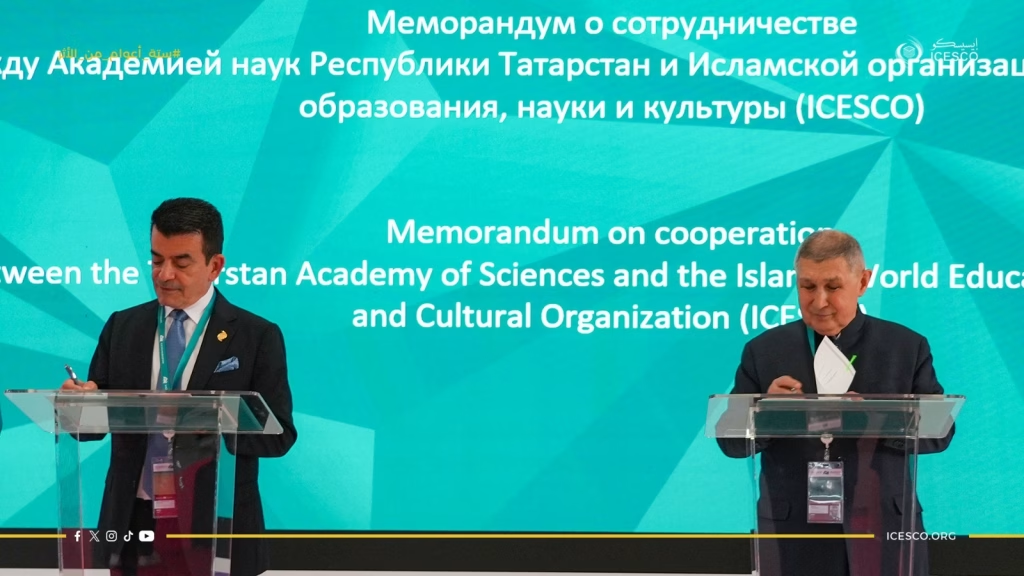
The MoU was signed on Friday, May 15, 2026, in the Tatar capital of Kazan, by Dr. Salim M. AlMalik, Director-General of ICESCO, and Dr. Rifkat Minnikhanov, President of the Academy of Sciences of Tatarstan.
Following the signing ceremony, Dr. AlMalik highlighted ICESCO’s commitment to adopting an open approach with organizations, institutions, and research centers, both within and outside the Islamic world, to promote scientific exchange, disseminate knowledge, and protect the cultural heritage that constitutes the collective memory of diverse cultures.
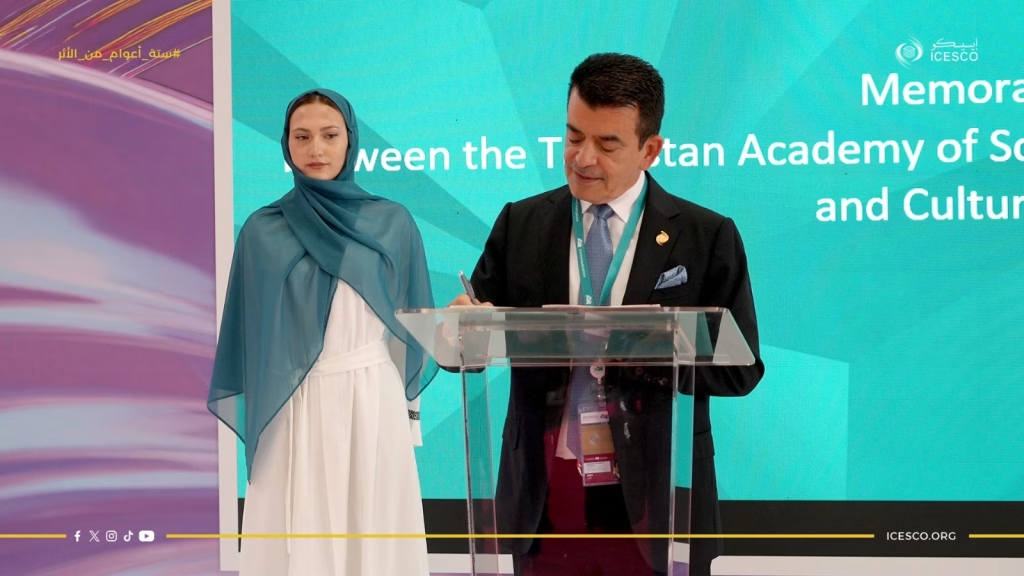
Dr. AlMalik affirmed that the partnership between ICESCO and the Academy would foster innovation in developing sustainable solutions for preserving and enriching cultural heritage.
For his part, Dr. Minnikhanov reviewed the Academy’s efforts to achieve sustainable development and cultivate innovative human capital in science. He praised ICESCO’s contributions in its areas of competence across the Islamic world.
The five-year MoU includes organizing joint programs to preserve, document, and promote tangible and intangible heritage; promote scientific research and innovation; and conduct applied studies in archaeology, heritage, and the management of museums and cultural resources. It also includes launching initiatives to build the capacities of researchers and specialists, as well as providing opportunities for professional training, academic exchange, and expertise sharing through the joint organization of training workshops, conferences, and seminars.


