Disclaimer: You are using Google Translate. The ICESCO is not responsible for the accuracy of the information in the translated language .
your opinion

User Feedback

Overall, how satisfied are you about the website?

    [uacf7_star_rating* rating class:rating_stars icon:star1 "default"]

    Extremely Dissatisfied
    Extremely Satisfied


    ICESCO Honors Winners of 200-Participant e-Health Innovation Hackathon

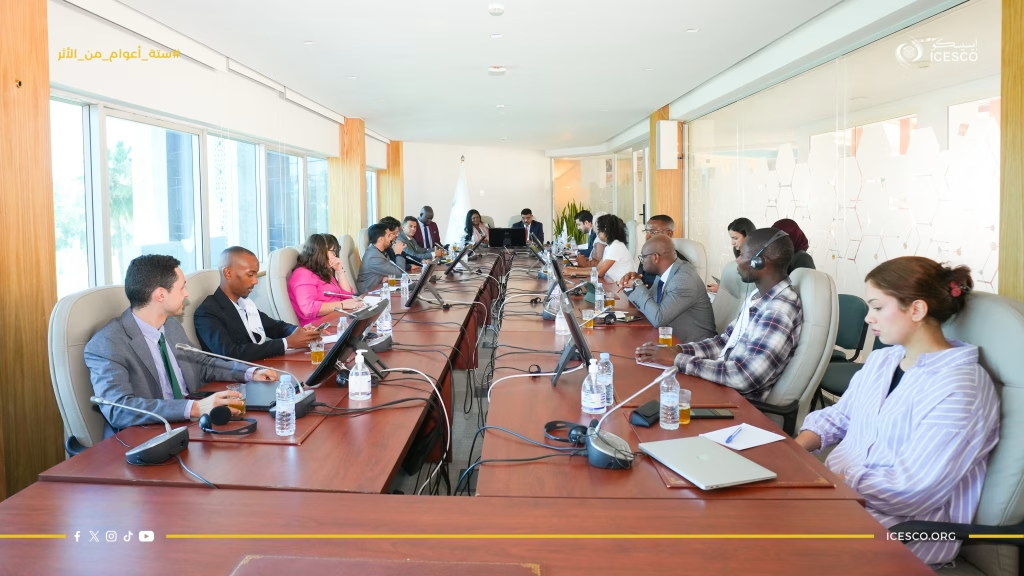
    The Islamic World Educational, Scientific and Cultural Organization (ICESCO) announced the winning teams of its initiative “App-a-Thon for Health,” held under the theme “Building Apps to Enhance Patient Care.” The hackathon saw the participation of more than 200 young innovators from countries across the Islamic world and concluded with a closing ceremony held on Wednesday, 26 November 2025, as part of the International eHealth Forum at Mohammed VI University of Health Sciences in the Kingdom of Morocco.

    Launched in April 2025, the initiative aimed to empower young innovators across ICESCO Member States to develop practical digital solutions to improve patient care, strengthen health systems, and enhance youth capacities in health technology.

    The jury, composed of international experts, recognized five projects for their innovation and impact. The results were as follows:

    • First place: Team NeuroSense, Abu Dhabi University, United Arab Emirates;
    • Second place: Team DermaScope AI, National Institute of Statistics and Applied Economics, Morocco;
    • Third place: Team CardioRisk AI, Heriot-Watt University Dubai, United Arab Emirates;
    • Fourth place: Team PharmaSim, International Islamic University Malaysia;
    • Fifth place: Team BabyHealth AI, Ibn Zohr University, Morocco.

    In his address during the ceremony, Dr. Raheel Qamar, Head of ICESCO’s Science and Environment Sector, emphasized that the initiative reinforces the Organization’s commitment to strengthening digital health capacities across its Member States. Dr. Anass Doukkali, Head of the e-Health Innovation Center at Mohammed V University, noted that collaboration with ICESCO reflects a shared belief in the power of youth-led innovation.

    Dr. Adel Smeda, expert at ICESCO’s Science and Environment Sector, noted that the e-Health Hackathon is part of the Organization’s efforts to advance digital transformation and foster youth empowerment across the Islamic world.

    ICESCO Director-General Receives UNESCO Regional Office Director for the Maghreb

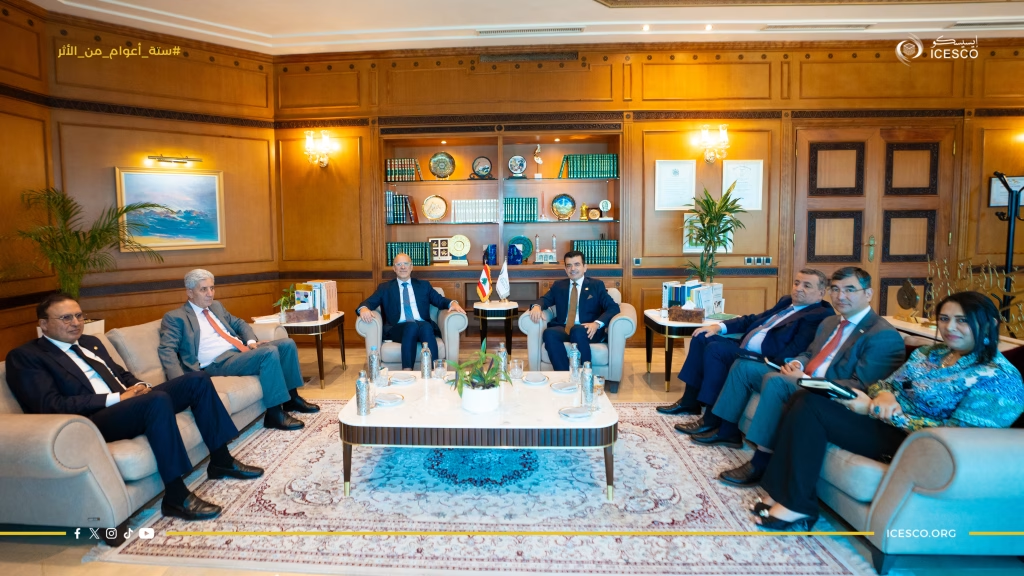
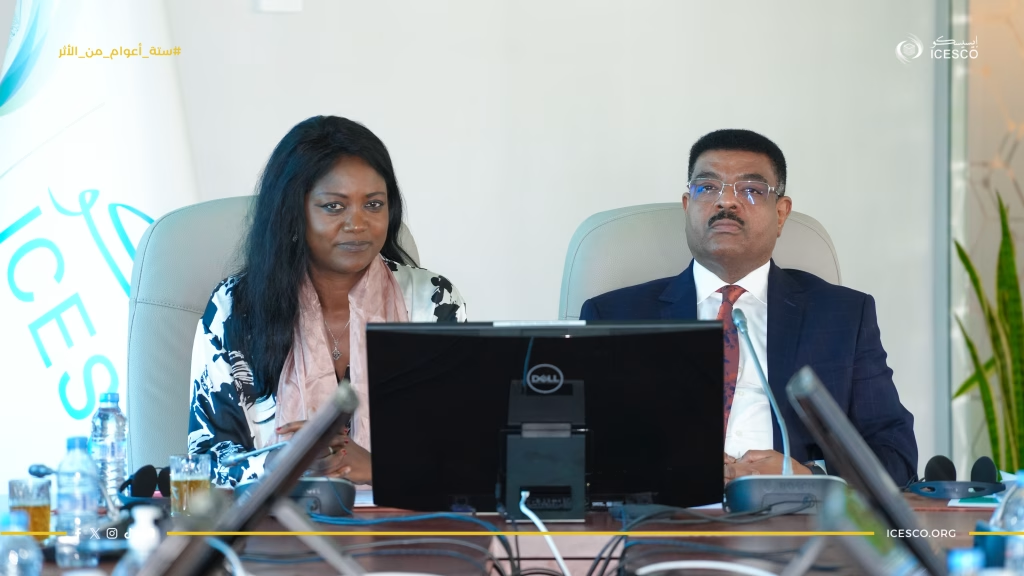
    Dr. Salim M. AlMalik, Director-General of the Islamic World Educational, Scientific and Cultural Organization (ICESCO), met with Mr. Charaf Ahmimed, Director of the UNESCO Regional Office for the Maghreb, to discuss ways of strengthening cooperation in areas of shared interest.

    At the outset of the meeting, held on Thursday, 27 November, at ICESCO headquarters in Rabat, Dr. AlMalik congratulated Mr. Ahmimed on his recent appointment as Director of the UNESCO Regional Office for the Maghreb, expressing his appreciation for the joint programs and initiatives implemented so far, including the launch of a global dashboard to monitor progress in advancing the greening education initiative, unveiled on the sidelines of COP30 in Brazil.

    The meeting also explored prospects for enhancing future collaboration in education, culture and science through programs, initiatives and activities aimed at building youth capacities in Maghreb countries and fostering creativity and innovation.

    Attending the meeting from ICESCO were Dr. Ahmed Albanyan, Head of the Translation and Publishing Centre, and Dr. Ahmed Said Ould Bah, Advisor to the ICESCO Director-General.

    ICESCO, Supreme Council for the Arabic Language in Africa Explore Prospects for Cooperation

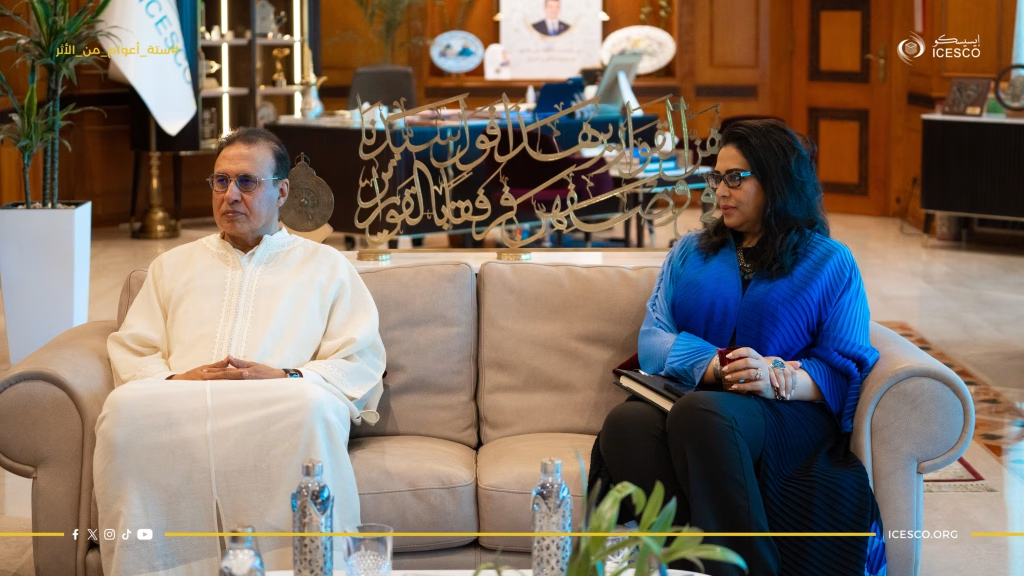
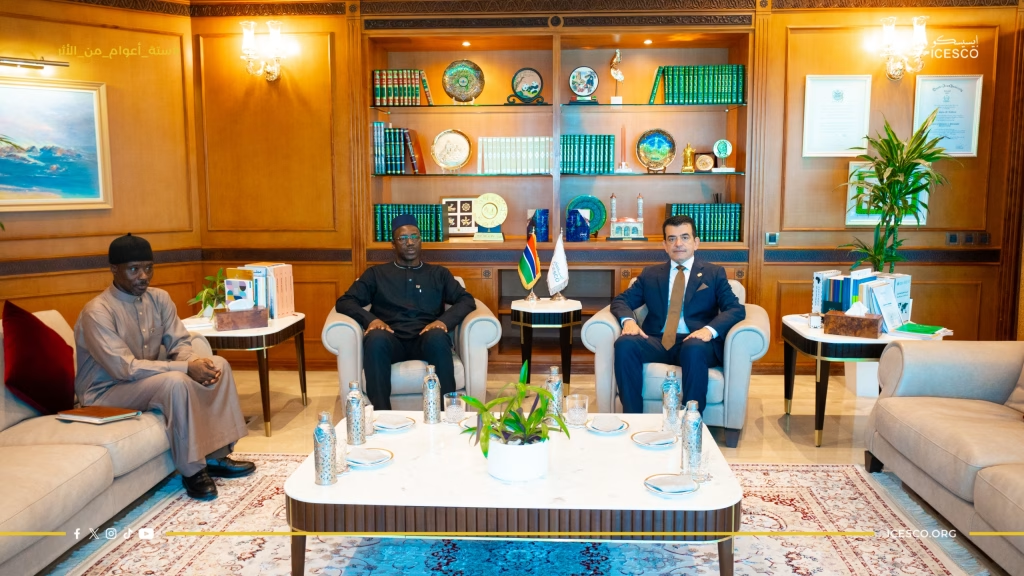
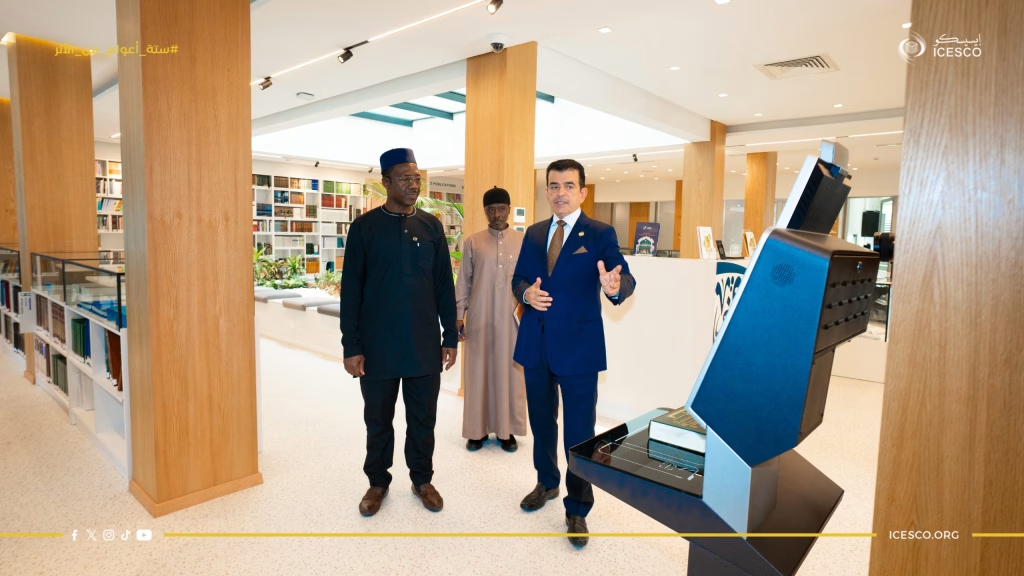
    Dr. Salim M. AlMalik, Director-General of the Islamic World Educational, Scientific and Cultural Organization (ICESCO), received Dr. Hassaballah Mahdi Fadla, President of the Supreme Council for the Arabic Language in Africa, and President of the General Union of Institutions for the Support of the Arabic Language in Chad. The two officials explored prospects for cooperation in promoting the Arabic language and consolidating its presence in Africa.

    At the outset of the meeting, held on Thursday, November 27, 2025, at the Organization’s headquarters in Rabat, Dr. AlMalik affirmed ICESCO’s keenness to strengthen partnerships with the institutions concerned with serving the Arabic language in Africa, noting that the Organization attaches special priority to teaching Arabic, promoting knowledge production in Arabic, and supporting its international presence through its various relevant programs. He also expressed ICESCO’s willingness to cooperate with various potential partners.

    For his part, Dr. Hassaballah Mahdi Fadla introduced the Council, highlighting the history of the Arabic language in Chad and the establishment of the General Union of Institutions for the Support of the Arabic Language. He also reviewed the proceedings and outcomes of the International Scientific Conference on Arabic in Sub-Saharan Africa, notably the establishment of the Supreme Council for the Arabic Language in Africa.

    The two parties also considered potential joint initiatives with African countries in the areas of teacher training, the development of Arabic teaching curricula, and the promotion of specialized scientific research on Arabic in the African context.

    The meeting was attended by Dr. Majdi Haji Ibrahim, Head of ICESCO’s Center of Arabic for Non-Arabic Speakers; Mr. Adel Bouraoui, Advisor to the ICESCO Director-General in charge of ICESCO’s External Bodies in the field of Arabic; and Mr. Fouad Bouali, President of the National Coalition for Arabic in Morocco, and Vice-President of the Supreme Council for the Arabic Language in Africa.

    Supporting Arabic and Anchoring Values of Coexistence the Focus of Discussions between ICESCO Director-General and CEO of Awqaf South Africa

    Dr. Salim M. AlMalik, Director-General of the Islamic World Educational, Scientific and Cultural Organization (ICESCO), received Mr. Zeinoul Abedien Cajee, CEO of the National Awqaf Foundation of South Africa (Awqaf SA), and together they discussed mechanisms for developing joint programs aimed at supporting Arabic language education and anchoring the values of peace, coexistence and civilizational dialogue.

    During the meeting, held on Thursday, November 27, 2025, at the Organization’s headquarters in Rabat, Dr. AlMalik highlighted ICESCO’s pioneering efforts in its areas of competence, casting light on its strategies to promote the Arabic language’s presence at the global level. He added that the Organization works toward developing methods for teaching Arabic to non-Arabic speakers through the work of its Center of Arabic for Non-Arabic Speakers as well as its regional educational centers.

    Likewise, Dr. AlMalik stressed the Organization’s keenness to build a fruitful partnership with the Foundation, with a view to consolidating the roles of Arabic as a bridge for cultural communication and a tool for spreading tolerance. He also expressed ICESCO’s readiness to dispatch specialized experts to train educational professionals in South Africa and contribute to the development of curricula and related skills.

    For his part, Mr. Zeinoul Abedien Cajee commended the key roles ICESCO plays within its areas of competence, and reviewed his Foundation’s efforts to promote Arabic learning in South Africa. The CEO also discussed Awqaf South Africa’s activities in the fields of Awqaf and investment for the advancement of communities.

    The meeting was attended by Dr. Abdelilah Benarafa, ICESCO Deputy Director-General, and Dr. Hani Al-Balawi, Expert at the Center for Civilizational Dialogue.

    ICESCO Signs MoU with Xi’an International Studies University to Promote Civilizational Dialogue and Arabic Language Teaching

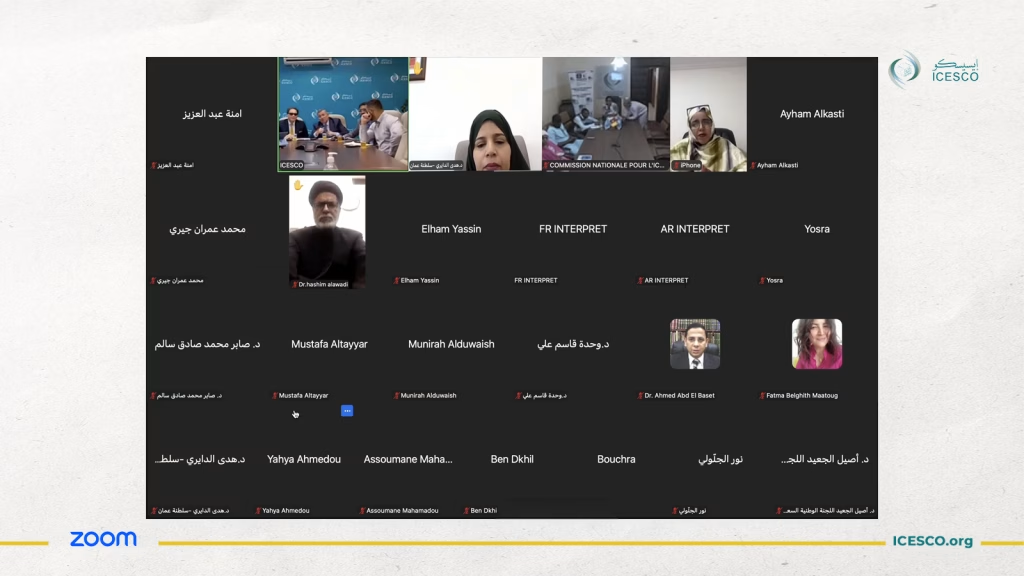
    The Islamic World Educational, Scientific and Cultural Organization (ICESCO) and Xi’an International Studies University, in the People’s Republic of China, signed a memorandum of understanding to establish joint cooperation in promoting civilizational and cultural dialogue, supporting Arabic language teaching in China and Chinese language teaching in Arab universities, fostering youth exchange and understanding, and preserving and valuing Islamic Arab heritage in China. The agreement was signed today, Thursday, 27 November 2025, via videoconference by Dr. Salim M. AlMalik, Director-General of ICESCO, and Dr. Wu Yao Wu, Rector of Xi’an University.

    Following the signing ceremony, Dr. AlMalik expressed his pleasure in cooperating with Xi’an University as a distinguished academic institution, noting that ICESCO attaches great importance to collaboration with leading universities within and beyond the Islamic world for its role in advancing knowledge, innovation, and creativity.

    Additionally, Dr. AlMalik praised the relations between the Islamic world and China, stressing that they represent a model for international relations and civilizational dialogue among diverse cultures. He commended the initiatives launched by His Excellency President Xi Jinping to strengthen cooperation and dialogue among civilizations.

    For his part, Dr. Wu Yao Wu highlighted ICESCO’s efforts in promoting mutual understanding among civilizations, supporting creativity and innovation, and safeguarding cultural heritage. He stated that cooperation between the Organization and the University will offer a new model of civilizational interaction and contribute to enhancing educational and cultural collaboration between the Islamic world and China.

    The signing ceremony was attended on behalf of ICESCO by Osama Heikal, Head of Media and Communication Sector; Dr. Raheel Qamar, Head of Science and Environment Sector; and Dr. Hani Albalawi, expert at the Center of Civilizational Dialogue, along with several academic leaders from Xi’an University.

    ICESCO Granted Observer Status in Arab Information Ministers CouncilRabat: 26 November 2025

    The Council of Arab Information Ministers decided to grant the Islamic World Educational, Scientific and Cultural Organization (ICESCO) observer status in the Council. The decision was adopted during the Council’s 55th session, held on Wednesday, 26 November 2025, at the headquarters of the League of Arab States in Cairo.

    Ambassador Ahmed Rashid Khattabi, Assistant Secretary-General and Head of the Media and Communication Sector at the League of Arab States, stated that the decision reflects the Council’s commitment to engaging with media stakeholders across the Arab and Islamic worlds and strengthening cooperation with organizations and bodies active in the media field. The aim is to exchange expertise and benefit from their expertise, plans, and programs in media and communication.

    He added that the Council now includes 20 organizations and unions operating in various areas related to news reporting, content production, program development, audiovisual broadcasting, and the training of media professionals.

    ICESCO Director-General Meets Qatari Minister of Education on Sidelines of WISE Summit in Doha

    Dr. Salim M. AlMalik, Director-General of the Islamic World Educational, Scientific and Cultural Organization (ICESCO), met with Ms. Lolwah bint Rashid AlKhater, Qatari Minister of Education and Higher Education, on the sidelines of the World Innovation Summit for Education (WISE), hosted in Doha. The meeting discussed ways to strengthen cooperation between ICESCO and the State of Qatar in education, higher education, and innovation.

    Dr. AlMalik opened the meeting, held on Tuesday, 25 November 2025, by expressing his deep appreciation for the outstanding organization of WISE, which featured enriching lectures and sessions, attracting over 4,500 participants from various countries. He stressed that the quality of content and organization reflects Qatar’s leadership in the educational field.

    The two sides explored areas of joint cooperation to support educational initiatives for poor and war-affected countries, enhancing quality educational programs, and developing higher education systems, in addition to capacity-building and knowledge exchange. Moreover, Dr. AlMalik presented several ICESCO programs, including greening education, support for Quranic schools in Africa, and initiatives for educational innovation and youth skills development.

    As part of strengthening future partnership, Dr. AlMalik proposed that Qatar host ICESCO’s Conference of Ministers of Education in the Islamic World, to be held concurrently with the next edition of the WISE Summit, thereby expanding international dialogue on education issues.

    Dr. AlMalik invited the Minister to attend the launch ceremony of the “Artificial Intelligence Readiness Index,” organized by ICESCO, in Baku on 8–9 December.

    In the context of cooperation on capacity-building, the two parties discussed the possibility of training a group of young professionals from Qatar within ICESCO’s sectors, enabling them to gain practical experience in international work, learn about the mechanisms of work at multilateral organizations, and enhance their participation in global development pathways.

    ICESCO Holds Scientific Seminar on Quran’s Integration into the Intellectual and Cultural History of Europe

    The Islamic World Educational, Scientific and Cultural Organization (ICESCO) held a new scientific seminar, on Tuesday, 25 November 2025, at its headquarters in Rabat, as part of its “Global Thinkers: Guests of ICESCO” program. During the seminar, Prof. Jan Loop, Professor of Early Modern History and Religious Cultures at the University of Copenhagen, presented the findings of his extensive research project on the integration of the Holy Quran into the intellectual, religious, and cultural history of Europe in the medieval and modern periods.

    Dr. Mohamed Zinelabidine, Director of the Culture Sector at ICESCO, opened the seminar with an overview of Professor Jan Loop’s academic career. He noted that the lecture aimed to highlight the influence of the Quran in Europe by presenting the findings of the professor’s research project on how the Quran has been integrated into European history, and how its translation and interpretation have contributed to transformations in religious thought and culture across the continent.

    In his lecture, Professor Jan Loop reviewed the main features of his research project, which he conducted over the past six years in collaboration with three scholars from Spain, France, and Italy, and with the support of a team of doctoral students and early-career researchers. He explained that the project was built around two central questions: How did the Quran reach Europe? And how did its presence and meanings change as it crossed religious, cultural, and linguistic boundaries? The project also documents the role the Quran has played in shaping European religious and cultural identity over the centuries.

    Professor Jan Loop pointed out that this research project has produced a number of scholarly outputs, including a database documenting the circulation of Quranic manuscripts in Europe, as well as detailed documentation of European editions and translations of the Quran into Greek, Latin, and various European languages. It has also generated a series of books bringing together individual studies and collective works stemming from relevant seminars and conferences, in addition to special editions and scholarly articles published in specialized journals.

    The seminar concluded with an interactive discussion with the audience, during which researchers and participants asked questions about the prospects for this kind of research and its role in fostering new approaches to dialogue between cultures and religion.

    ICESCO Director-General Affirms Support for Senegal’s Education Transformation Program

    Dr. Salim M. AlMalik, Director-General of the Islamic World Educational, Scientific and Cultural Organization (ICESCO), held a meeting on Tuesday, November 25, 2025, with Mr. Moustapha Mamba Guirassy, Minister of National Education of the Republic of Senegal, on the sidelines of the 12th edition of the World Innovation Summit for Education (WISE), convened in Doha. The meeting discussed ways to support Senegal’s education system and its development programs.

    Dr. AlMalik reaffirmed ICESCO’s commitment to assisting Senegal in achieving its objectives for transforming the education sector, in line with the Organization’s strategic goals. He stressed that ICESCO endorses initiatives aligned with education priorities and promotes the establishment of value-based educational systems that foster human character development, as a distinctive feature of the Organization.

    For his part, Mr. Guirassy highlighted that integrating Qur’anic schools into the formal education system is among Senegal’s urgent priorities, requiring ICESCO’s support, given that millions of children enrolled in these schools do not benefit from the national curriculum. He noted that Senegal has designed a national program to address this challenge, which calls for cooperation with various stakeholders and specialized international organizations to ensure its success.

    ICESCO Director-General, Sudanese Minister of Education Discuss Support for Education in Sudan

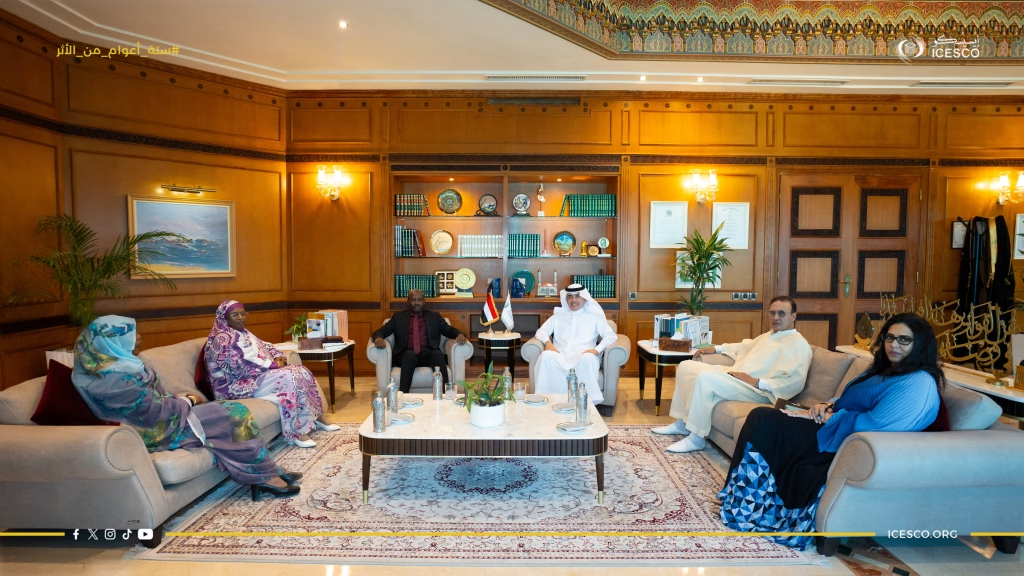
    Dr. Salim M. AlMalik, Director-General of the Islamic World Educational, Scientific and Cultural Organization (ICESCO), reaffirmed the Organization’s full commitment to supporting Sudan during this difficult period, noting that ICESCO will work to meet urgent educational needs, in addition to activating international partnerships to mobilize the necessary funding for educational projects in the country.

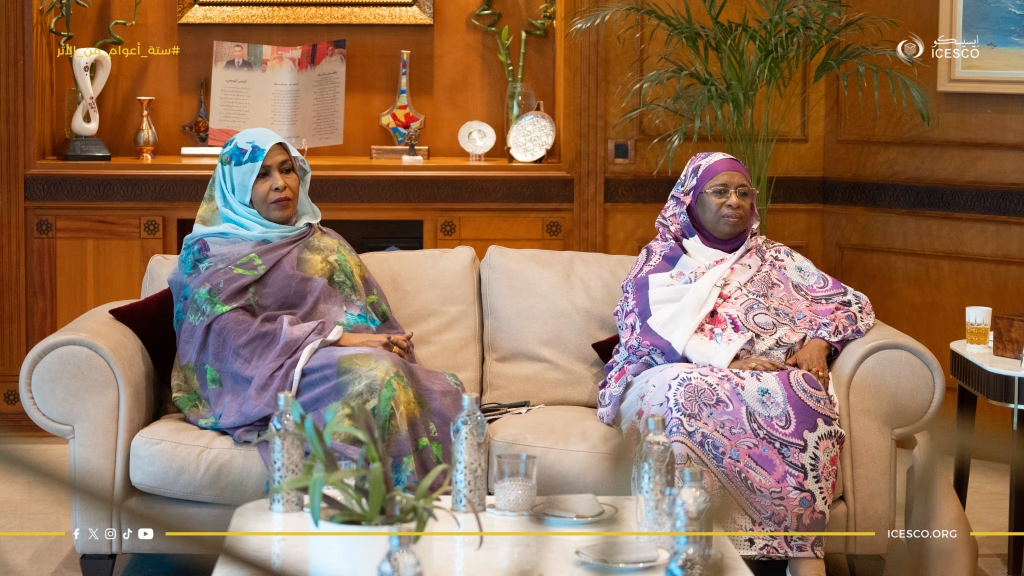
    This came during Dr. AlMalik’s meeting with Dr. Al-Tahami Al-Zain Hajar, Minister of Education of the Republic of the Sudan and President of the Sudanese National Commission for Education, Science and Culture, on Tuesday, November 25, 2025. The two parties met on the sidelines of the World Innovation Summit for Education (WISE) held in Doha and discussed areas of cooperation to support the education sector in Sudan.

    In this connection, the ICESCO Director-General promised to allocate a number of the scholarships ICESCO receives from Member States to Sudanese students, with the aim of enabling them to continue their education in these exceptional circumstances.

    For his part, the Sudanese Minister shed light on the significant challenges facing the education system in his country as a result of the ongoing crisis, pointing to the urgent need to prepare study facilities, print books, provide school desks, train teachers, and rebuild laboratories and schools that have been damaged or completely looted. The Minister noted that these needs are a top priority for maintaining the continuity of the educational process in various regions of Sudan.

    At the close of the meeting, the Sudanese Minister of Education extended an official invitation to Dr. AlMalik to visit Sudan to take stock of the current needs of the educational facilities in his country, commending ICESCO’s support and sustained efforts to promote the right to education for the children of Sudan.