ICESCO Holds Panel Discussion on Islamic Manuscripts in Mali

8 May 2026
The Islamic World Educational, Scientific and Cultural Organization (ICESCO) held the second panel discussion as part of a series of panel discussions organized by the Center for Calligraphy and Manuscripts under the title “Islamic Manuscripts in the World”. This comes within the framework of a scientific initiative aimed at surveying the state of Islamic manuscripts worldwide, gaining precise knowledge of each country’s manuscript inventory, discussing ways of preserving, safeguarding, and promoting them.
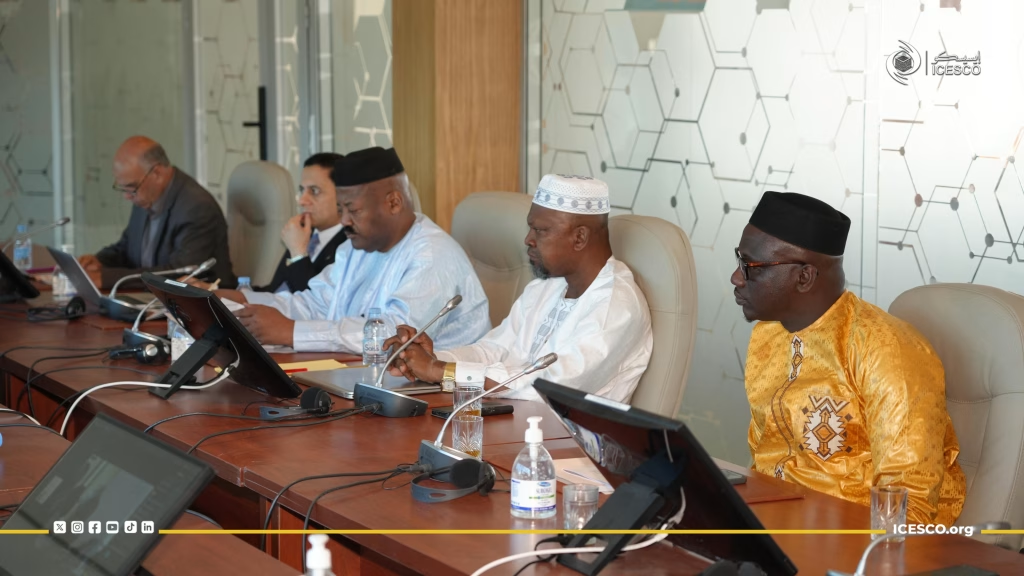
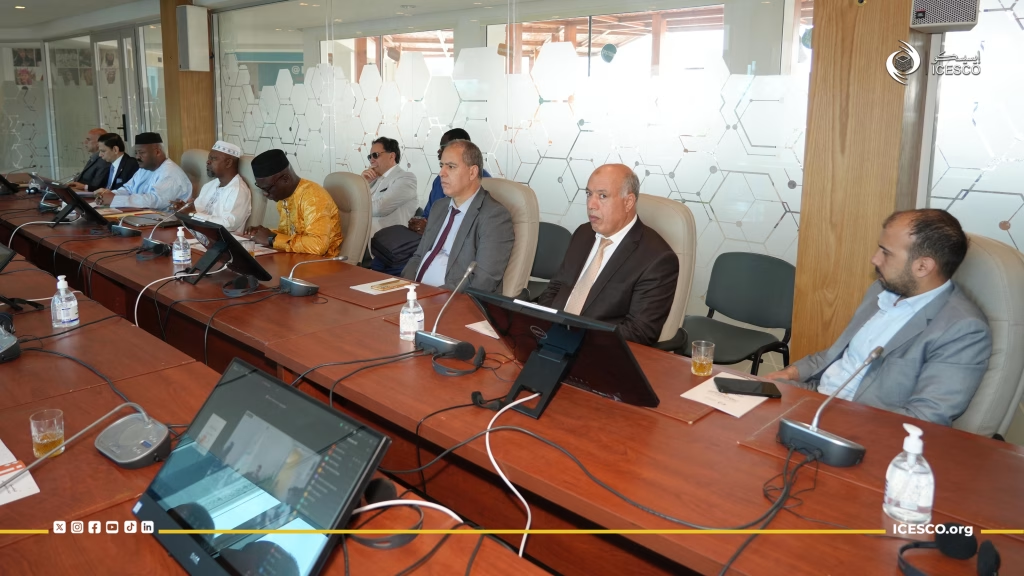
The second session of this series was held on Tuesday, May 5, 2026, at the Organization’s headquarters in Rabat, under the title “Islamic Manuscripts in Mali: Reality and Aspirations”. The session was attended by Mr. Fafré Camara, Ambassador of the Republic of Mali to the Kingdom of Morocco, alongside a number of researchers and specialists in manuscript heritage.
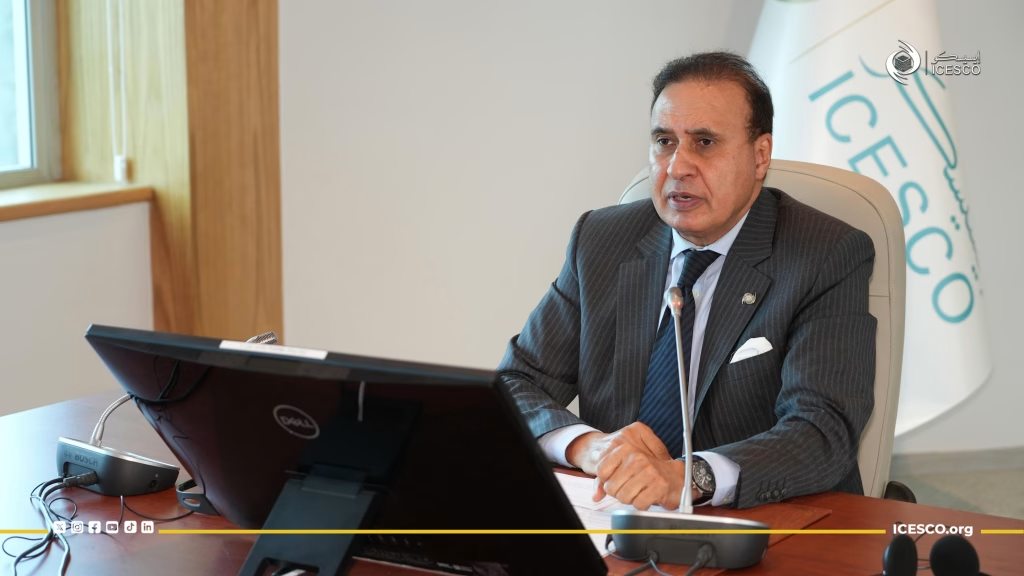
In this context, Dr. Salim M. AlMalik, Director-General of ICESCO, affirmed in the opening address delivered on his behalf by Dr. Abdelilah Benarafa, Deputy Director-General, that Mali, with its hundreds of thousands of manuscripts, represents a rare intellectual and historical treasure documenting more than eight centuries of Islamic civilization and thought in West Africa.
He explained that selecting Malian manuscripts as the focus of this panel reflects a high level of awareness of the importance of this manuscript heritage, which is spread across various regions of the country and embodies a civilizational and intellectual value bearing witness to the scholarly and cultural influence achieved by West Africa throughout history.
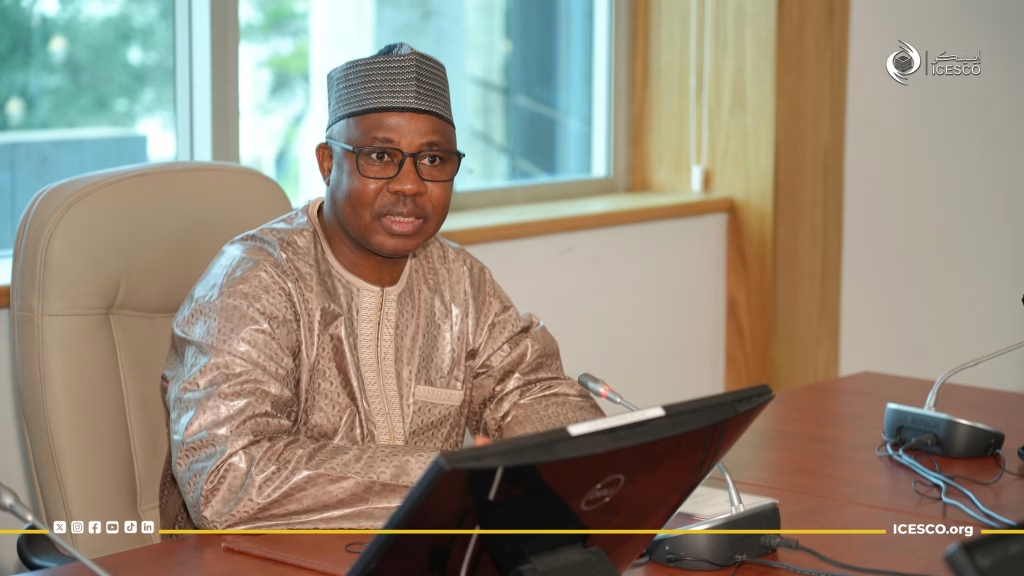
For his part, Mr. Fafré Camara commended ICESCO’s role in serving Mali’s manuscript heritage, stressing the importance of preserving this valuable intellectual legacy and making use of it to support scientific research and raise awareness of its civilizational and cultural significance.
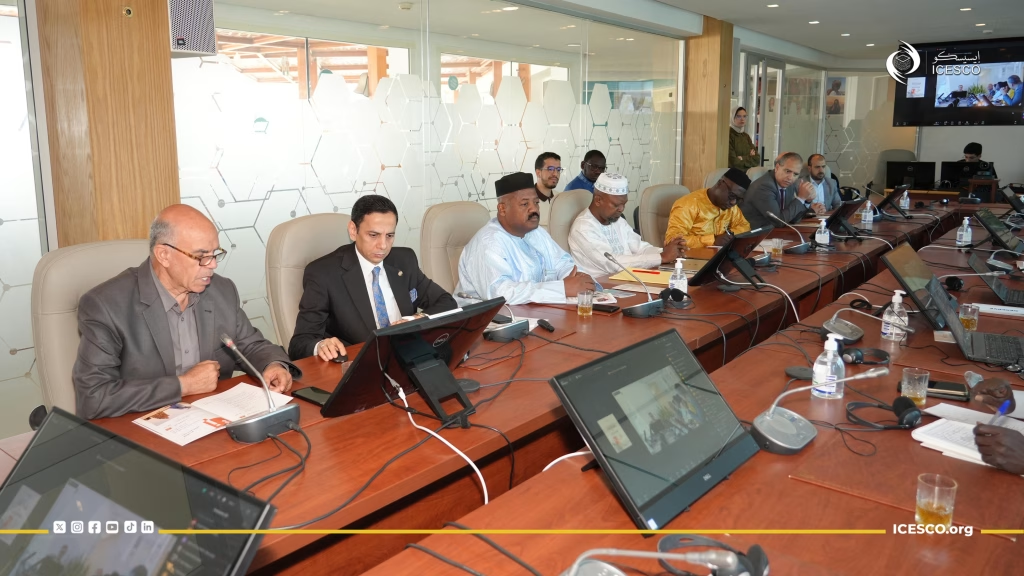
The session was chaired by Dr. Idham Hanash, Director of ICESCO’s Center for Calligraphy and Manuscripts, who highlighted that Malian manuscripts have, over the centuries, constituted a source of scholarly and intellectual influence, and that public and private collections continue to preserve valuable holdings reflecting the depth of this legacy. The panel also featured scholarly presentations addressing the manuscript collections of Timbuktu, challenges facing private libraries and ways to preserve them, the critical editing and publication of manuscripts, as well as a presentation of the map of manuscript libraries across Mali’s regions.