
The Islamic World Educational, Scientific and Cultural Organization (ICESCO) expresses its support for the initiative His Majesty Mohammed VI, King of Morocco, addressed to the heads of African states to create an operational framework to aid African countries in addressing Coronavirus (COVID-19) in order to allow for sharing expertise and best practices to handle the health, economic and social repercussions of the pandemic.
In this regard, ICESCO reaffirms its willingness to contribute to achieving the initiative’s objectives which are in line with its objectives and strategic vision and those of its cultural, scientific and educational initiatives launched since the beginning of the crisis. These initiatives consist of providing logistic support and technical advice and expertise in its fields of competence and action areas.
The Organization renews its support for all the calls likely to help its Member States, especially the African ones, in facing the present and future impacts of the pandemic and reaffirms that interstate solidarity and cooperation is the only way to overcome this crisis.
Category: Front Page
Front Page
Nomination details, jury composition and submission requirements of ICESCO Prize for Fighting Novel Coronavirus (Covid-19)
The Islamic World Educational, Scientific and Cultural Organization (ICESCO) has announced the nomination requirements, the Jury’s composition and evaluation of nomination files for 200,000 US dollar-worth ICESCO Prize for Fighting Novel Coronavirus (Covid-19). The Prize has been earmarked by ICESCO to reward anyone who has discovered an efficient cure or vaccine against Coronavirus. To this effect, the Organization invites independent researchers, group of researchers or research institutions to send their nominations as from 15 April 2020.
In its call for nominations, ICESCO stated that in the face of the international health crisis that affects humanity, the world is in dire need of more medical and scientific research to find effective and sustainable solutions to today’s challenges. In response to World Health Organization’s appeal to the international community to “seize every opportunity to halt, contain, combat and delay the spread of the virus, and mitigate its impact”, ICESCO launches its Prize for Fighting the Novel Coronavirus (COVID19).
It added that a jury will be set up and chaired by ICESCO Director General. It will comprise two representatives of specialized international organizations and four scientists to be selected from leading world universities and internationally recognized research centers. The Jury’s Secretariat will be seated at ICESCO headquarters in Rabat, Kingdom of Morocco.
To submit a nomination for the Prize, the independent researcher, group of researchers or research institutions having announced the discovery of an effective cure or a vaccine against the novel Coronavirus has to send a complete file to the Secretariat of the Jury, including:
• The Prize Nomination Form which is available on ICESCO’s website www.icesco.org;
• A detailed report on the discovery;
• CV of the independent researcher or group of researchers. In case of a research institution, the CV of the lead scientific expert;
• Patent registration with an official competent authority;
• All supporting technical documents likely to support the claim of the discovery (3 recommendation letters to support nomination).
As for the procedures and duties of the Jury, the Organization reaffirmed that upon receipt of the nomination files, the Jury will then convene to review the validity of the claimed discoveries, and may seek additional expert opinion and guidance from national health authorities, the World Health Organization or any entity it deems necessary. Based on the aforementioned, the jury will issue a decision to award the Prize to the independent researcher, group of researchers or research institution and will inform ICESCO Director General accordingly. The Director General of ICESCO will then inform the winner of the Prize Award.
The award ceremony will be held at ICESCO headquarters with the participation of the winner, who will receive ICESCO medal in addition to the Prize, the members of the jury, partner organizations and invited scientists and researchers.


“ICESCO Coalition for addressing Coronavirus Pandemic”…new initiative to help Islamic world overcome the crisis
The Islamic World Educational, Scientific and Cultural Organization (ICESCO) mobilizes considerable and extensive efforts to contribute to addressing the fallout of Coronavirus (COVID-19) pandemic. Since the onset of the outbreak worldwide, ICESCO has launched several practical yet effective initiatives within the realm of its competence. To top these continued efforts, ICESCO has formed a global coalition to fight coronavirus pandemic and stem its present and future adverse effects on the Islamic world.
The significance of this coalition has been hailed by prominent international organizations and institutions, reaffirming their willingness to join the coalition and take part in supporting its noble goals financially or in kind. It envisions to aid poor countries to address the outbreak of the virus, and stamp out its negative impact and overcome the current crisis.
The coalition covers and supplements field projects, executive programmes, foresight strategies for the Islamic world, and fund-raising campaigns to enable the Islamic world to face the challenges during and in the aftermath of the pandemic.
In this vein, ICESCO calls on Member States, their civil society institutions, regional and international organizations, development institutions and companies, donors, and banks to join the coalition to contribute to the achievement of its objectives and support a coalition that embodies solidarity and global unity in face of this severe crisis.
The initiative is part of a series of efforts and initiatives launched by the Organization to help its Member States to overcome the repercussions of coronavirus pandemic and stop the outbreak. These included US$200.000 ICESCO Prize Award for supporting scientific research to anyone who will discover an effective treatment or vaccine against Coronavirus (COVID-19), an initiative that was widely welcomed and lauded by the international community.
Subsequently, ICESCO launched “ICESCO Digital Home” with technological, educational and socio-cultural elements providing educational digital content, platforms for socio-cultural dialogue and family awareness-raising contents for all age groups. Moreover, ICESCO provided educational sectors in several Member States with technological devices and equipment to ensure the continuity of education during lockdowns, through the production of digital content on the internet.
For learners of non-speakers of the Arabic language, ICESCO launched an initiative to allow them the opportunity to remotely learn Arabic through video lessons, audiobooks, and interactive content. At the cultural level, the Organization, through its “Distance Culture” initiative, has developed programmes for developing talents and unleashing the potentials and artistic and creative capacities of the Islamic world’s youth and students. To this effect, ICESCO earmarked prizes to encourage creativity in the various creative fields.
Likewise, ICESCO supported the establishment of units for the production of low-cost sanitizers and their distribution to citizens in many Member States and the training of local communities’ groups to sustain this work. The prototype production has been recently started in the Republic of Mali.
These initiatives and programmes demonstrate that ICESCO is among the leading international organizations in addressing, under its fields of competence, the deleterious consequences of Coronavirus pandemic. ICESCO has been reaffirming that it will continue to monitor closely the effects of the outbreak of the Covid-19 on the educational, scientific and cultural levels in Member States. Accordingly, the Organization will provide them with the most effective means to bolster efforts as the situation evolves. The new coalition will be the epitome of such undertakings.

ICESCO lab begins hand sanitizer production at Science and Technology University in Mali
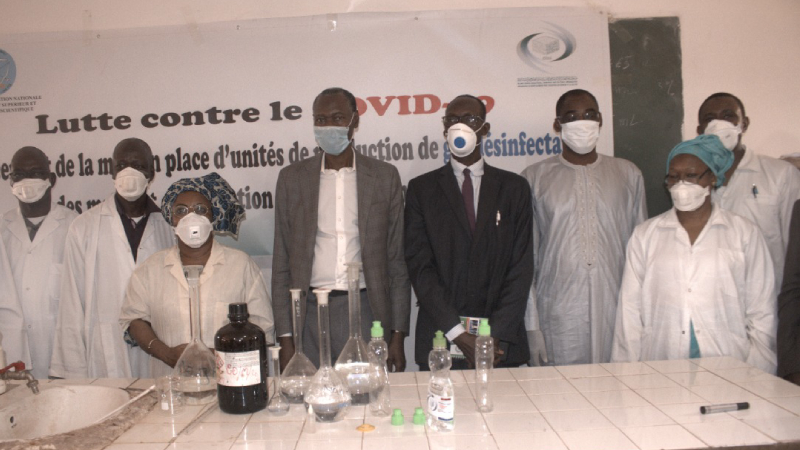
As part of the continued effort of the Islamic World Educational, Scientific and Cultural Organization (ICESCO) to support Member States in mitigating the impact of COVID-19 pandemic, and to bring about one of its several initiatives on the ground, a sanitizer production unit at the Science and Technology University in Bamako, Mali began producing hand sanitizers to distribute them to needy citizens.
This unit will produce 5,000 bottles of hand sanitizer and it is the first of the two units inaugurated with the support of ICESCO through the Malian National Commission for Education, Science, and Culture. This support is part of ICESCO’s project to provide technical and financial assistance to a number of some Islamic world countries to set up low-cost hand sanitizer production units and train locals in this field. The second unit will soon start its production activity at the University of Medicine in Mali.

The Minister of National Education, Higher Education and Scientific Research in the Republic of Mali, Dr. Mahamoudou Famanta, visited the production unit and expressed his satisfaction with the hand sanitizers produced, which will help curb the spread of COVID-19. The Minister also met with the working team (30 people) overseeing the production of sanitizers and training locals on this job.
It is noteworthy to mention that the cooperation between ICESCO and the Republic of Mali constitutes the first phase of this project, which will be replicated in the majority of the Member States and Muslim communities across the globe as per their needs. ICESCO is currently communicating with these countries to start implementation.
The Organization also reaffirms that it will continue to closely monitor the impact of COVID-19 spread on the educational, scientific, cultural and humanitarian situations in the Member States. The Organization will further provide its Member States with the most effective means to support their efforts vis-à-vis all developments, reaffirming its confidence in the ability of every nation to overcome this crisis.

ICESCO is considered one of the leading organizations at the international level in mitigating the impact of Coronavirus pandemic in its areas of competence. The Organization launched many practical initiatives to achieve such a goal, including “ICESCO Digital Home” on its website, www.icesco.org, which gives access to a remarkable list of digital contents in the fields of education, science, and culture.
Saudi Electronic University allows access to its Arabic Online Programme through “ICESCO Digital Home” platform
In line with “ICESCO Digital Home” initiative that includes free and open-source program for teaching Arabic to non-Arabic speakers that have been recently launched by the Islamic World Educational, Scientific and Cultural Organization (ICESCO), the Saudi Electronic University (SEU) provided the Organization with full licenses and authorizations allowing contents of the University’s “Arabic Online Programme” accessible to the visitors of “ICESCO Digital Home” on the Organization’s website (www.icesco.org). This is in support of the continued efforts of the international community in mitigating the effects of coronavirus pandemic on educational, scientific and cultural areas.
The SEU’s program, which is a non-conventional online-integrated program, allows an unlimited number of learners from all over the world at any given time to learn Arabic. Based on the latest international standards and best practices in learning and teaching languages, it provides quality education for non-native speakers of Arabic through a pioneering online approach that helps spread Arabic language and culture around the world.
Established by a Royal decree in 2011, SEU is a public educational institution that introduces a special pattern of higher education providing an environment based on ICT and online and integrated learning. It provides bachelor’s and postgraduate degree programs and offers courses in continuing education and lifelong learning. SEU has four colleges: College of Administrative and Financial Sciences; College of Computing and Informatics; College of Health Sciences; and the College of Science and Theoretical Studies.
Under its Digital Home initiative, ICESCO, in cooperation with Granada Editions and through its Center for Arabic to non-Arabic Speakers and the Center of Information, Documentation and Publishing, had introduced the free and open-source program “Learn Arabic, Master it at Home” accessible to all students of Arabic whose mother language is not Arabic. The program consists of broadcasting educational contents on ICESCO’s YouTube channel, organized in playlists of educational videos. It also includes audiobooks on teaching Arabic to non-Arabic speakers as free and open-source materials under license by Creative Commons on YouTube and OER-Commons platform for wider use by educational professionals across the globe. Additiooonnnally, other interactive contents are also made available through ICESCO’s website.
ICESCO launches project to help the Member States in low-cost sanitizer production
As part of its commitment to support the efforts exerted by the Members States to mitigate the effects of COVID-19 pandemic, the Islamic World Educational, Scientific and Cultural Organization (ICESCO) launched a project to provide technical and financial support to set up small units and train members of the local communities on the production of low-cost sanitizer.
The project aims at raising awareness of the importance of hygiene in reducing the risk of contracting the virus. It is also geared towards promoting the local cottage industry using new and advanced technologies, in return create job opportunities for several communities. This project falls within ICESCO’s efforts to consolidate local capacities to manufacture products proven to help curb the spread of the virus.
At the initial phase of the project, ICESCO works with the competent authorities and partner industry in the Republic of Mali. This will later be replicated in other member state countries to widen the reach and scope of the project based on the needs of the communities.
The Islamic World Educational, Scientific and Cultural Organization (ICESCO) will continue to closely monitor all developments related to COVID-19 spread in all Member States. The Organization will further provide the most effective means of support complementing each country’s requirements to overcome this crisis and alleviate its social and economic impact.
ICESCO earmarks nine individual prizes for creative students and provides training programs in “Distance Culture” initiative
The Islamic World Educational, Scientific and Cultural Organization (ICESCO) has launched the “Distance Culture” initiative as part of the “ICESCO Digital Home” program in support of the efforts of the Member States and the international community in mitigating the effect of Coronavirus (COVID-19). This initiative is aimed at finding alternative solutions to sustainable educational, scientific and cultural undertakings, that includes building capacities, encouraging creative and artistic talents, and allocating ICESCO Creativity Prizes.
This new initiative includes distance training and capacity building for the benefit of professionals working in heritage fields. Accordingly, the Organization will prepare several videos containing training programs in the fields of tangible and intangible heritage, which will be uploaded on its website, www.icesco.org, starting from 15 April 2020. The videos will cover the following themes:
1.Documentation of cultural heritage through AI applications;
2.Management of risks, crises, and disasters at heritage sites and museums;
3.Techniques of an inscription of heritage sites and landmarks on the Islamic World Heritage List and World Heritage List;
4.Rehabilitation of endangered handicrafts;
5.Promotion of the general principles of museum management in the Islamic world;
6.Knowledge of the general principles of the documentation of elements of intangible heritage and national inventories;
7.Protection of underwater cultural heritage.
Moreover, the “Distance Culture” initiative is an opportunity for students to enrich their cultural knowledge during the period of lockdown. It also includes awarding three prizes in the following cultural fields:
1.Short story writing (5 to 10 pages);
2.Making a painting;
3.Musical composition or creative work.
The value of the prizes stands at USD 6,000, USD 4,000, and USD 2,000, respectively. Winners will also be handed certificates of appreciation.
National Commissions and competent authorities in the Member States will be in charge of contacting educational institutions to invite students to participate in these contests. They will also be in charge of selecting three works from each category and sending them to ICESCO before the end of June 2020. ICESCO will set up an international jury to select the best three works from each category, out of the recommendations sent by the National Commissions and competent authorities.
Additionally, the initiative provides e-reading opportunities through digital libraries available on ICESCO’s website and other websites. It also invites publishers to adopt electronic publishing alongside paperback publishing and launch a web platform for publishing youth’s literary materials. It further enjoins Member States to exhibit their museum collections in virtual portals. Member States’ National Commissions and competent parties are encouraged to contact publishers and curators of libraries, museums, and exhibitions, urging them to engage in these initiatives for the greater student benefits.


“ICESCO Digital Home” allows access to all contents of Mohammadia League of Scholars’ Platform
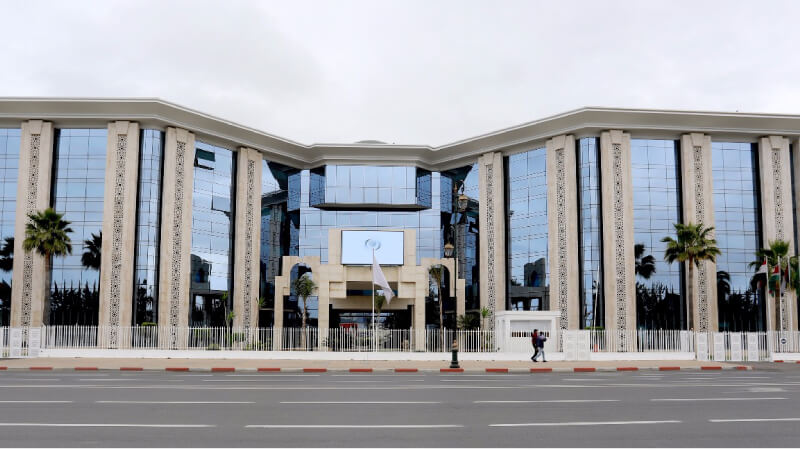
As part of its initiative, the “ICESCO Digital Home” supports the effort to address the repercussions of Coronavirus pandemic (Covid-19) on the educational, scientific and cultural fields. Furthermore, in anticipation of the future transformation in these given fields, the Islamic World Educational, Scientific and Cultural Organization (ICESCO) launched a digital interactive platform with diverse contents falling under its fields of competence.
Following the signing of Cooperation Agreement in February 2020 between ICESCO and the Mohammadia League of Scholars in the Kingdom of Morocco, ICESCO’s digital platform will allow, through the Organization’s website www.icesco.org, access to all the contents of the League, including:
1.Raed Platform for the dissemination of safe religious knowledge;
2.Books of the deconstruction of extremist discourse;
3.Museum of Science and Civilization;
4.Museum of Science History;
5.Portal of Mohammadia League of Scholars.
These contents provide digital scholarly discourses on Islamic sciences aimed at instilling the value of moderation in Islam among its readers. They also contain the books of the deconstruction of extremist materials on the Internet and provide an enlightened model using modern technologies and knowledge-based tools and concepts.
Moreover, the contents include the digital Museum of Science and Civilization which exhibits the cultural and civilization heritage sites in some Muslim countries; the Museum of Science History designed to showcase the contributions of Muslim scholars to exact sciences; and a hyperlink to the digital video libraries on the ways and means to fight Covid-19, including research papers, studies, journals, scholarly publications and video clips on various religious and linguistic sciences.
ICESCO calls on all Member States and institutions to propagate its platform with digital contents relevant to education, culture, science, and communication, showcasing their countries’ contributions along these fields of interests.

ICESCO launches open-source software on teaching Arabic to non-Arabic speakers
The Islamic World Educational, Scientific and Cultural Organization (ICESCO) has set out to implement a part of the “ICESCO Digital Home” initiative in support of the efforts of Member States and the international community in combating Coronavirus (COVID-19). In a bid to mitigate the effect of the crisis among the cadre of students, ICESCO, in cooperation with Granada Editions, launched an open-source educational software catering to non-Arabic speaking learners. Through the organization’s Center of Arabic for its Non-Speakers and Center of Information, Documentation and Publishing, the following digital materials are now made available under the title “Learn and master Arabic from your home”.
This digital open-source educational software was launched under the following mechanisms: 1.Uploading educational content on ICESCO’s YouTube channel, organized in playlists of educational videos. At the moment, videos for the pre-school level (28 videos) were uploaded, while videos for the rest of the educational levels (up to the sixth grade) will be uploaded shortly. The playlist of pre-school level videos can be accessed through the following link: https://www.youtube.com/playlist?list=PLJ_-Nqw-2qDA0fl24P8w_3kDiNt-kSRLP
2.Providing audiobooks, in FLAC, AAC, and Ogg formats, on teaching Arabic to non-Arabic speakers and uploading them as free and open-source materials under license by Creative Commons on YouTube and OER-Commons platform for wider use by educational professionals across the globe. Audio-textbooks are considered the most suitable educational formats for radio stations that broadcast educational contents as they allow for integrating teaching Arabic in the stations’ broadcasted shows within the framework of distance teaching and learning;
3.Providing a link on ICESCO’s website, www.icesco.org, for an open-source digital platform for teaching Arabic throughout the period of school suspension. Such a platform is likely to enable its users to benefit from diverse and interactive mediums.
This software, operating under the “ICESCO Digital Home” initiative, is likely to enrich national distance education contents; and enable Arabic language learners, be it in urban or rural areas, to learn Arabic from their homes. The software can be accessed from laptops, tablets, and smartphones; and can also be used in TV and radio programs in countries that intend to make use of it in their television and broadcasting institutions.
ICESCO’s Appeal To Telecom Companies and Internet Service Providers
The coronavirus pandemic is a global crisis limiting human activity and communal interactions within societies. As physical separation becomes a byword among people in countries severely affected by the virus, it is important, under these circumstances, to counteract the deleterious effect of social distancing through the realms of technology such as the internet and electronic communications.
The Islamic World Educational, Scientific and Cultural Organization (ICESCO) is intensifying its efforts to support the Islamic world countries struggling to find ways to stem the spread of the virus and overcome this pandemic. Along this line, considering partial and total lockdowns enforced in most of its Member States, ICESCO calls upon telecommunication companies and internet services providers in these countries to contribute to these efforts, as follows:
- Provide free internet services in Member States to allow access to the digital teaching platforms;
- Upgrade the digital infrastructure in rural and remote areas in the needy countries, ensuring accessibility of electronic services to its citizens.
- Provide free digital teaching services for the benefit of refugees and displaced migrants in cooperation with the local competent authorities.
ICESCO extends special thanks to all institutions that have readily responded to this call and were proactive in taking such measures, while urging other concerned parties to follow suit.