
ICESCO Participates in Two Meetings on Integration Among International Education Organizations and PISA 2025 Results

7 October 2026
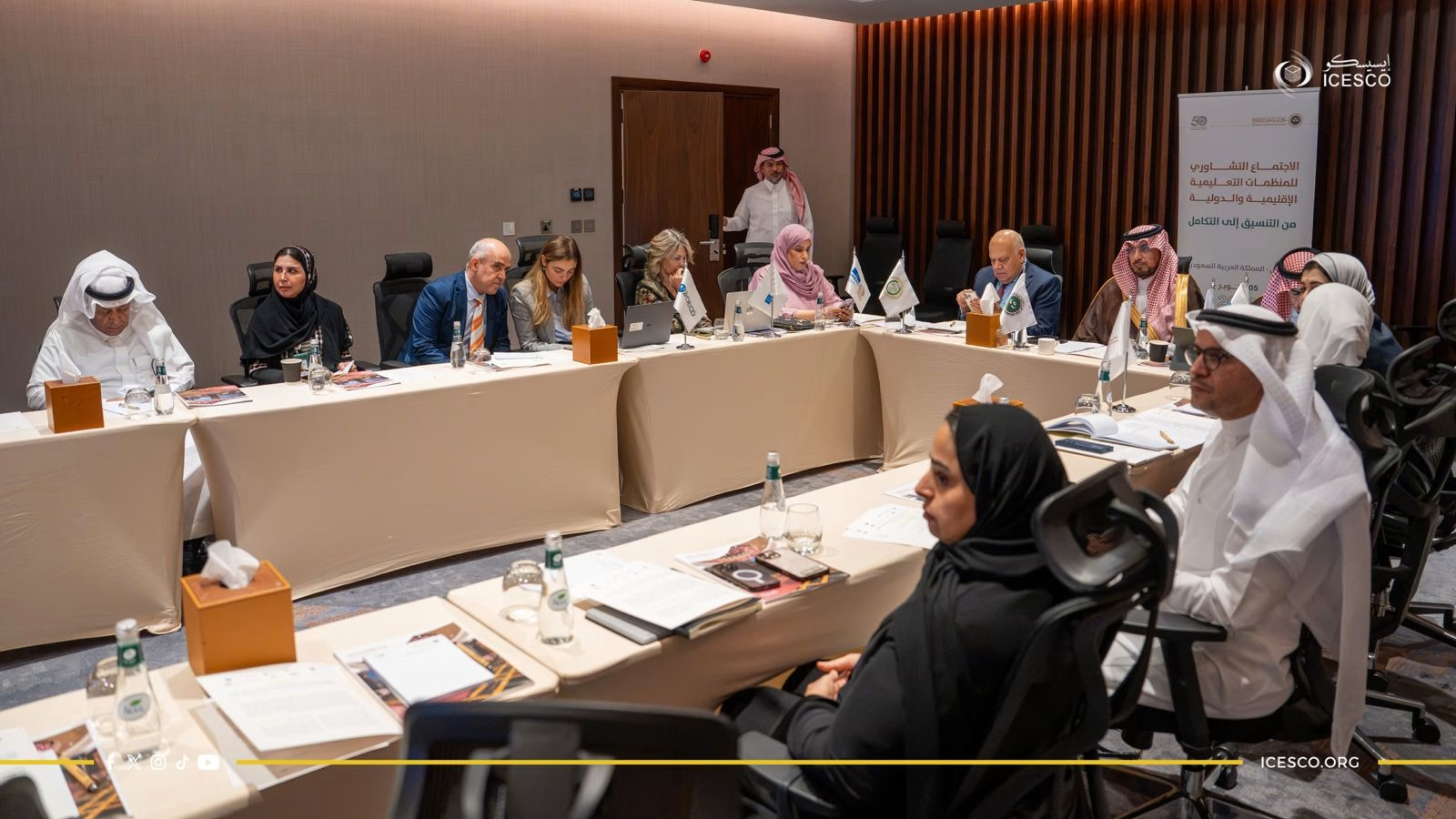
The Islamic World Educational, Scientific and Cultural Organization (ICESCO) participated in the “High-Level Regional Dialogue on Improving Student Outcomes in the Gulf and MENA Region” and the consultative meeting of regional and international education organizations, held under the theme “From Coordination to Integration.” The two meetings were held virtually and in person in Riyadh, Kingdom of Saudi Arabia, on 4 and 5 October 2026, respectively, and were organized by the Arab Bureau of Education for the Gulf States, with the participation of representatives of ministries of education and regional and international education organizations.
ICESCO was represented by Dr. Ahmed Albanyan, Head of the Education Sector, Supervisor of the Translation and Publishing Center, who delivered a presentation titled “From Assessment Results to Impact-Driven Policies: A Regional Vision for Improving Student Learning Outcomes in the Gulf and the MENA Region in Light of the PISA 2025 Results.” The presentation was delivered during the regional dialogue, co-organized by the Organisation for Economic Co-operation and Development (OECD), on Sunday, 4 October.
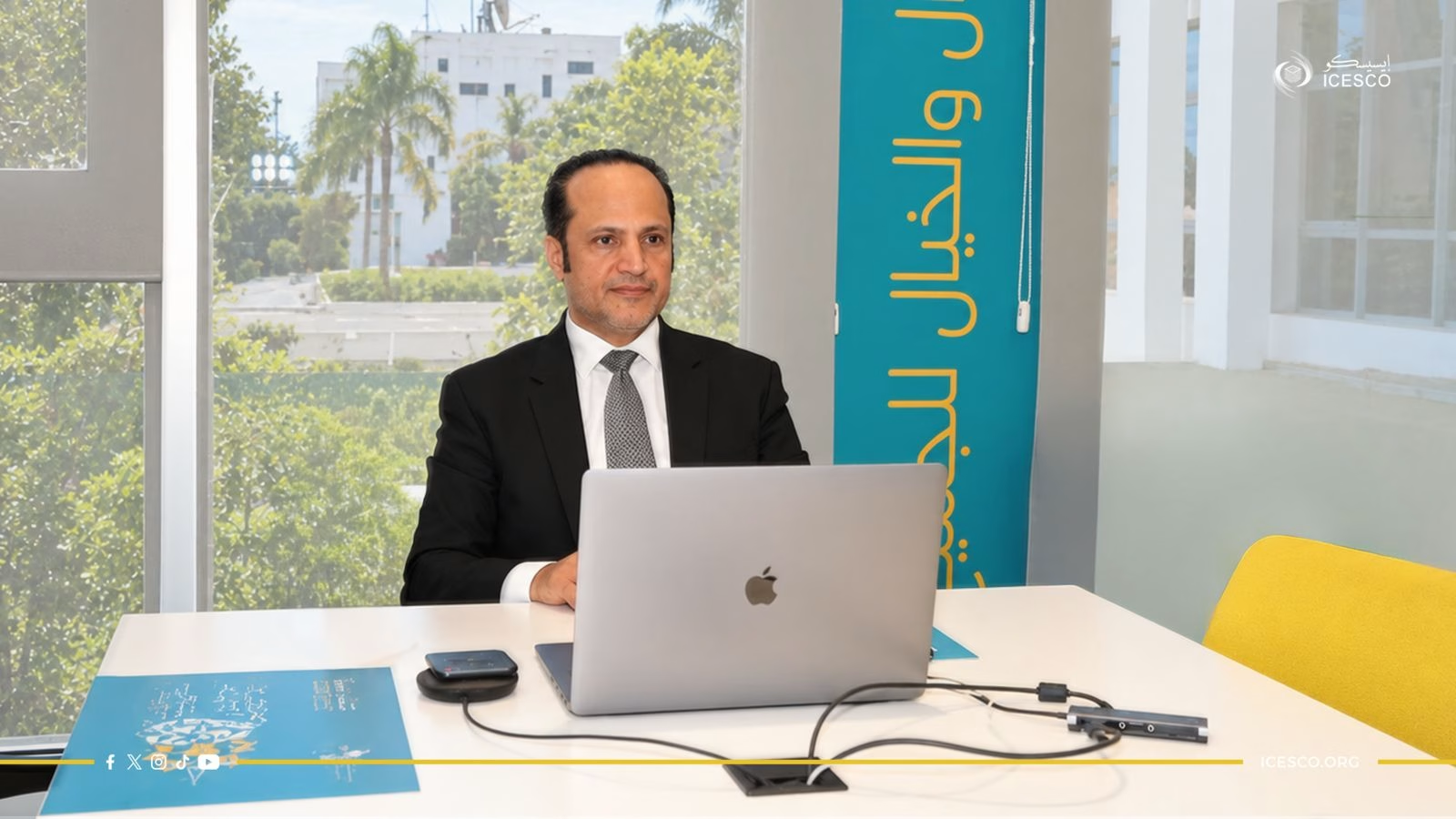
Dr. Albanyan began by emphasizing that the results of the international assessment should not be viewed as a ranking of countries, but rather as a reflection of the quality of the relationship among curricula, teachers, laboratories and the school environment. He explained that the results revealed a profound educational paradox and outlined the main regional challenges, including disparities in teaching quality among schools, the limited translation of curricula into cognitive tasks, and the growing digital presence without adequate pedagogical design.
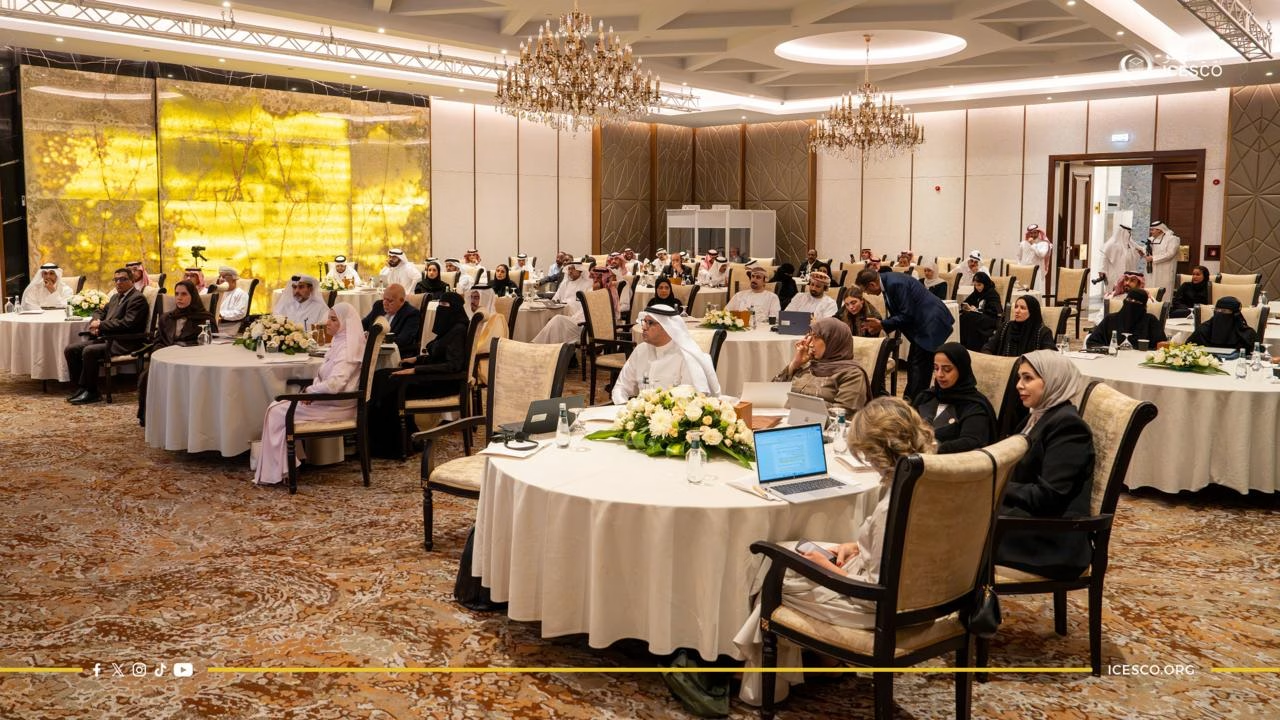
Concluding his remarks, Dr. Albanyan announced two ICESCO initiatives to address these challenges: developing a “Regional Scientific Thinking Toolkit” for curriculum developers, and launching a teacher training program on science diplomacy and critical inquiry in partnership with its Member States.
In his address at the consultative meeting on Monday, 5 October, Dr. Albanyan delivered a presentation on integration and coordination among regional and international educational organizations in support of ministries of education. He highlighted the weak links among various educational institutions and initiatives, reflected in several ways, including the proliferation of dialogue platforms and the overlap of certain programs. Dr. Albanyan proposed a practical framework for cooperation and for structuring these relationships, based on defining priorities and roles, coordinating joint programs, and establishing mechanisms for accountability, funding and review.