Disclaimer: You are using Google Translate. The ICESCO is not responsible for the accuracy of the information in the translated language .

your opinion

User Feedback

Overall, how satisfied are you about the website?

    [uacf7_star_rating* rating class:rating_stars icon:star1 "default"]

    Extremely Dissatisfied
    Extremely Satisfied


    ICESCO Organizes International Conference on Artificial Intelligence and Teaching Arabic to Non-Arabic Speakers in Morocco

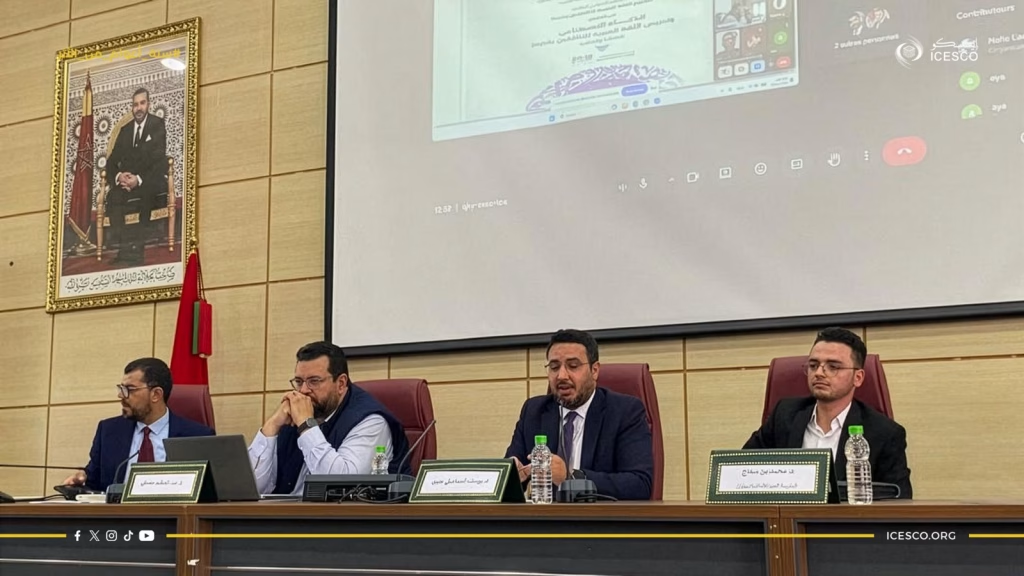
    The Islamic World Educational, Scientific and Cultural Organization (ICESCO), through its Center for Arabic for Non-Arabic Speakers, held the third International Conference on Teaching Arabic to Non-Arabic Speakers, in partnership with the École Normale Supérieure of Abdelmalek Essaâdi University and the Moroccan Association in Service of the Arabic Language, on 19 and 20 May 2026 in Tetouan, under the theme “Artificial Intelligence and Teaching Arabic to Non-Arabic Speakers: Issues and Experiences.” The conference brought together more than 50 researchers and experts representing 16 countries.

    The conference addressed the rapid transformations taking place in the global education sector, with a focus on the growing international interest in advancing the teaching of Arabic to non-Arabic speakers and leveraging the potential of artificial intelligence technologies to modernize curricula, improve pedagogical practices, and enhance the quality of learning in multilingual and multicultural educational environments.

    ICESCO was represented at the conference by Dr. Majdi Hajj Ibrahim, Head of the ICESCO Center for Arabic for Non-Arabic Speakers, who emphasized during the Organization’s address in the opening session that artificial intelligence constitutes a strategic lever for developing the teaching of Arabic, provided it is employed within a balanced educational vision that takes ethical and human dimensions into account and is grounded in rigorous scientific research and successful field experiences.

    He added that ICESCO remains committed to supporting international academic initiatives aimed at advancing the teaching of Arabic to non-Arabic speakers and strengthening cooperation among universities, research centers, and international organizations, thereby contributing to expanding the reach of the Arabic language and consolidating its presence in the global digital space.

    In the same respect, Dr. Youssef Ismaili, Head of the Language Training Department at ICESCO’s Center for Arabic for Non-Arabic Speakers, chaired the first scientific session, which was devoted to presenting international experiences in the use of artificial intelligence in teaching Arabic and discussing prospects for developing curricula and smart digital resources.

    The conference concluded with a set of scientific and strategic recommendations, emphasizing the importance of evaluating digital educational platforms, expanding the use of smart applications in teaching Arabic, and developing educational policies better equipped to keep pace with technological transformations.
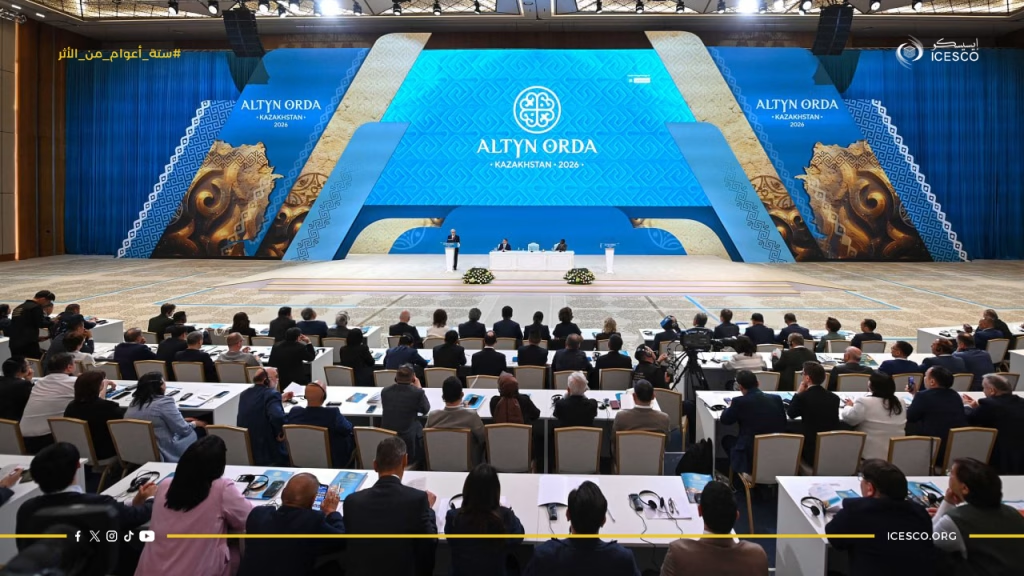
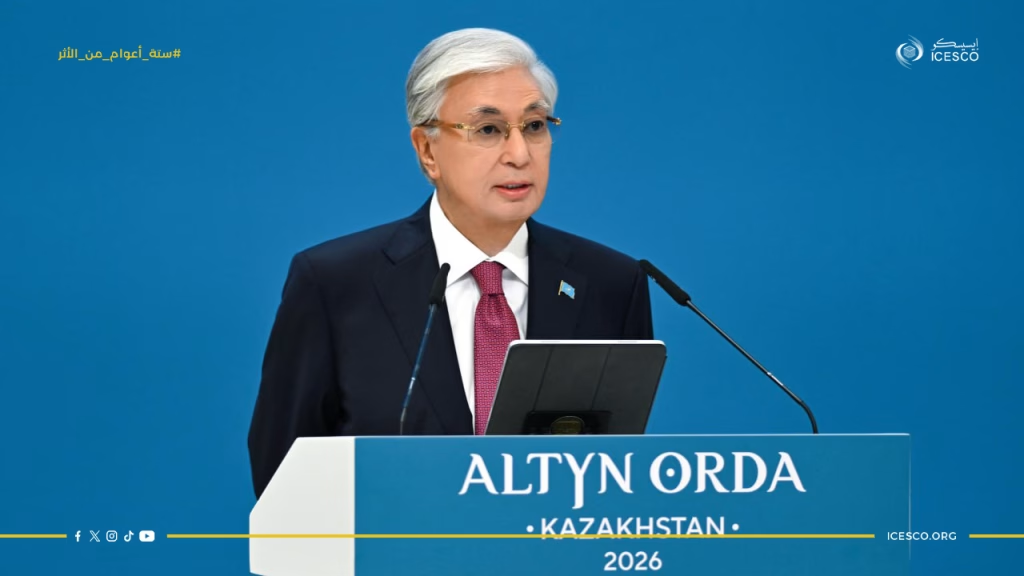
    In the presence of H.E. President Tokayev, ICESCO Presents its Civilizational Vision at the Golden Horde Forum in Kazakhstan

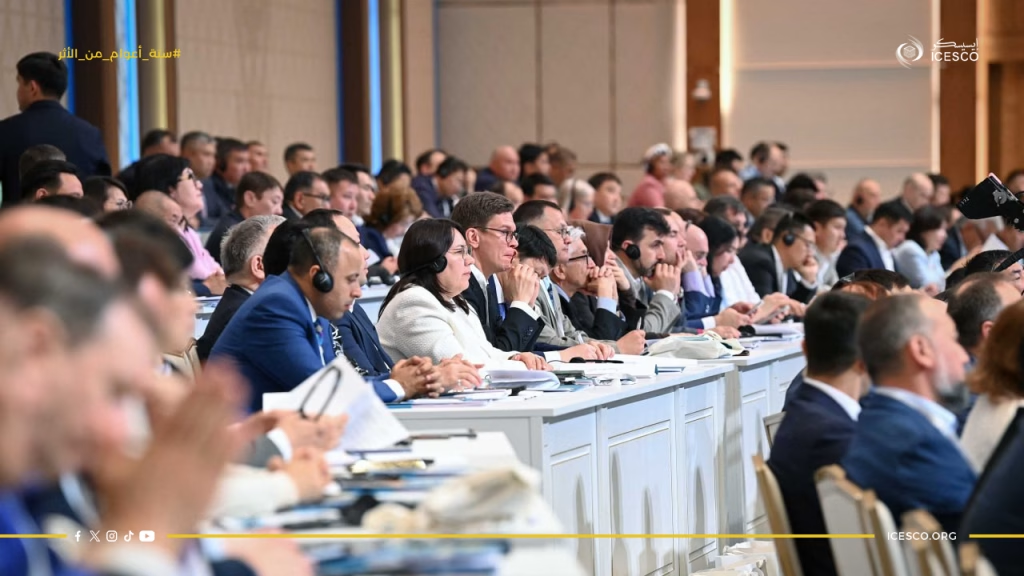
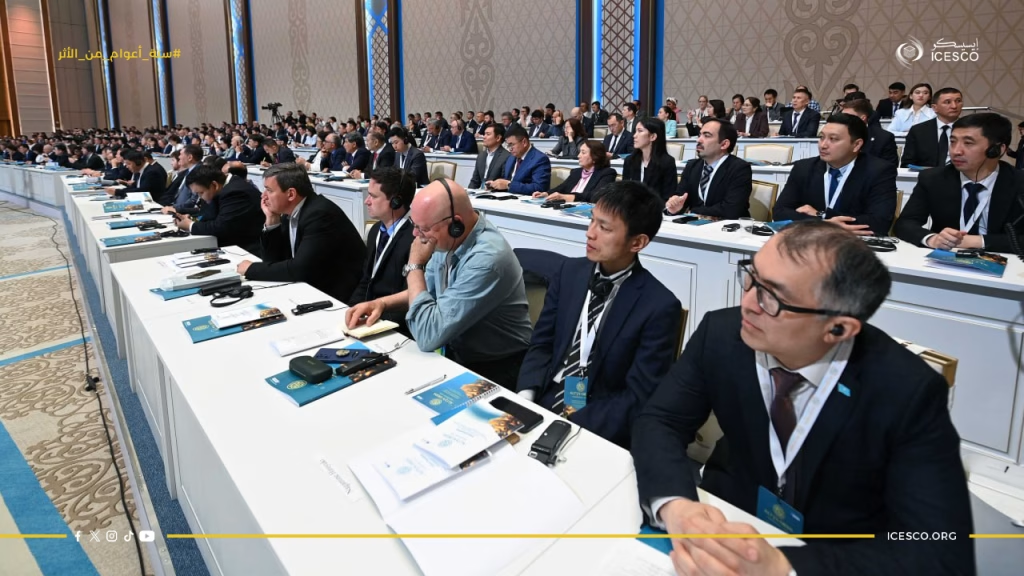
    The Islamic World Educational, Scientific and Cultural Organization (ICESCO) participated in the Forum “The Golden Horde as a Model of Steppe Civilization: History, Archaeology, Culture, and Identity,” held on 19-20 May 2026 in Astana, Republic of Kazakhstan, by the Kazakh Ministry of Science and Higher Education, in cooperation with the United Nations Educational, Scientific and Cultural Organization (UNESCO). The event saw the presence of His Excellency President Kassym-Jomart Tokayev and brought together 350 participants from 20 countries and several international organizations.

    In his opening remarks, the President of the Republic expressed his country’s pride in belonging to the Golden Horde civilization, describing it as a historically and culturally significant legacy in both the natural and legal spheres, the influence of which is still evident in the contemporary world. He emphasized that commemorating the past is not merely a symbolic act of remembrance, but rather a genuine pathway to understanding the present and building the future.

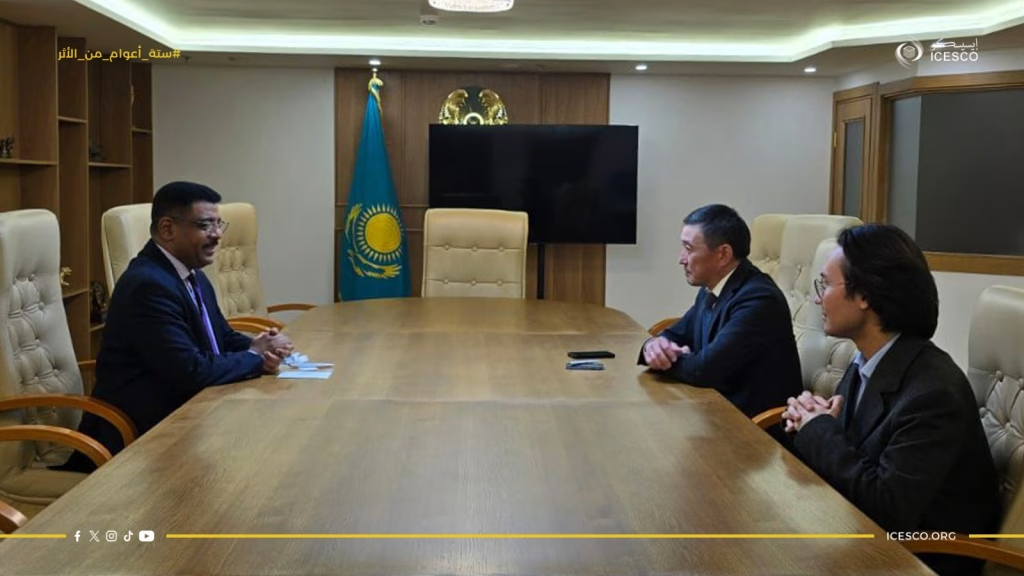
    ICESCO was represented at the Forum by Ambassador Khalid Fathalrahman, Director of the Center for Civilizational Dialogue, who delivered an insightful presentation on the Organization’s vision for the preservation of civilizational memory and the revival of historical consciousness, as the cornerstone of understanding the present and anticipating the future. He affirmed ICESCO’s commitment to supporting efforts aimed at reviving the glorious pages of Islamic history and consolidating its achievements in strengthening national and collective identity.

    Moreover, Ambassador Fathalrahman highlighted several distinctive features of the Golden Horde civilization, notably its vast territory and rich ethnic and cultural diversity, which Kazakhstan has successfully managed through a coherent civilizational model. He also emphasized the role of individual leadership in harnessing and managing national resources, as well as the pioneering role of this civilization in establishing values of humane treatment, particularly regarding the status of women.

    The Director of the Center for Civilizational Dialogue also reviewed the existing cooperation between ICESCO and the Republic of Kazakhstan, noting the selection of Turkestan as the Culture Capital in the Islamic World for 2027 and Astana’s hosting, early next year, of the meeting of ICESCO’s Islamic World Heritage Committee, as two indicators of the depth of the partnership between the two parties in the areas of culture, heritage, and intercultural dialogue.

    Following his participation in the Forum, Ambassador Fathalrahman accepted an invitation extended by the International Center for Interfaith and Interreligious Dialogue in Astana. During his visit, he met Mr. Marat Kalizhanov, Deputy Chairman of the Board of Directors of the Center, to discuss the implementation of the Action Plan emanating from the partnership agreement recently signed between ICESCO and the Center, stressing the importance of identifying joint programs to be implemented in 2027.

    ICESCO, Mali Discuss Cooperation on Historic Manuscripts Restoration

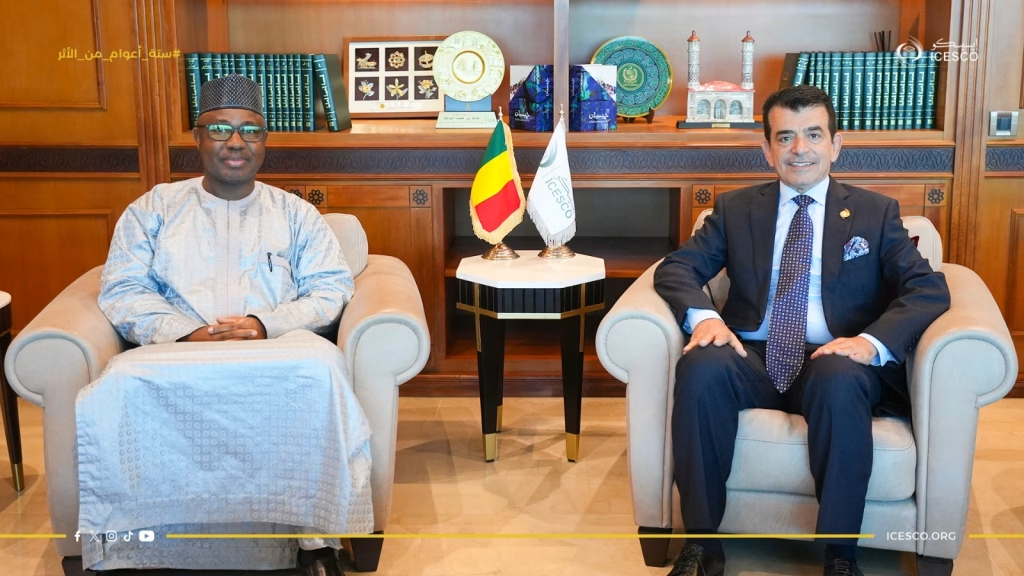
    Dr. Salim M. AlMalik, Director-General of the Islamic World Educational, Scientific and Cultural Organization (ICESCO), received Mr. Fafré Camara, Ambassador of the Republic of Mali to the Kingdom of Morocco, on Tuesday, 19 May 2026, to discuss mechanisms for cooperation between ICESCO and Mali in the restoration of the historic Timbuktu manuscripts.

    During the meeting, held at ICESCO’s headquarters in Rabat, Dr. AlMalik reaffirmed the Organization’s commitment to supporting its Member States’ efforts to showcase the civilization of the Islamic world and enrich cultural heritage through the implementation of initiatives, programs, and projects with tangible impact, tailored to the specific needs of each country.

    Dr. AlMalik underscored the importance of strengthening cooperation with international organizations and cultural institutions in Mali and other African countries, with a view to harnessing culture as a means to achieve stability and promote sustainable peace.

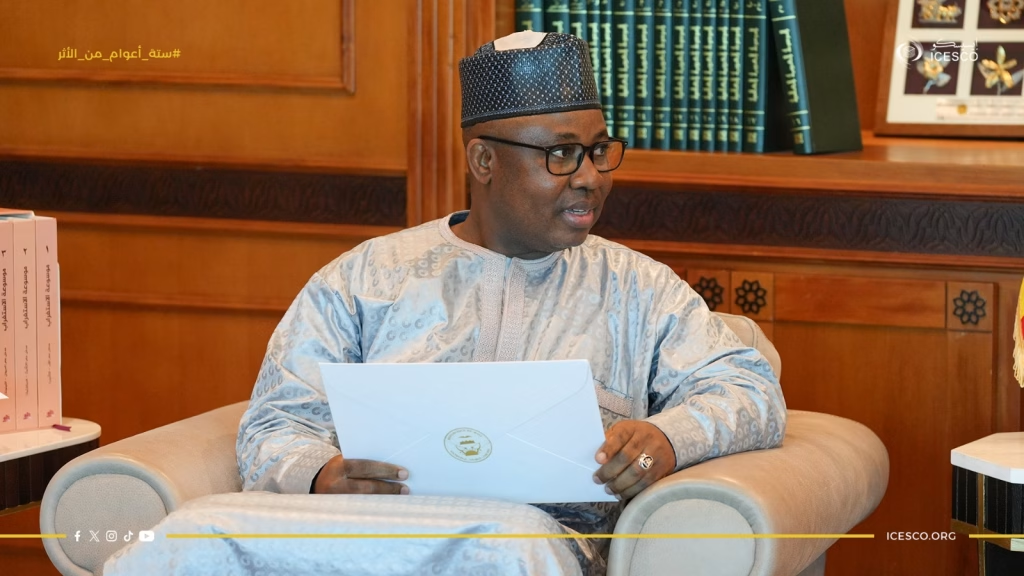
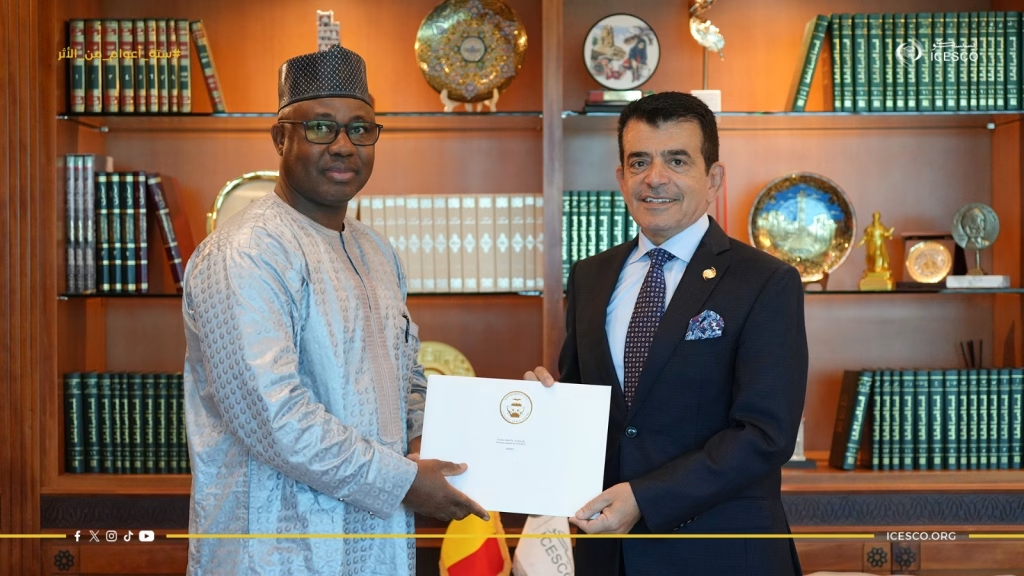
    For his part, Ambassador Camara congratulated Dr. AlMalik on his election as Director-General of ICESCO for a new term, wishing him continued success in his mission. He also delivered to the Director-General a message from His Excellency President Assimi Goïta, President of the Transition and Head of State of the Republic of Mali. Ambassador Camara commended ICESCO’s sustained efforts to safeguard African and Islamic heritage and affirmed Mali’s willingness to cooperate with the Organization in implementing the initiative to restore the historic Timbuktu manuscripts.

    The meeting was attended by Dr. Abdelilah Benarafa, ICESCO Deputy Director-General; Dr. Ahmed Said Ould Bah, Advisor to the ICESCO Director-General; and Dr. Idham Hanash, Director of the Center for Calligraphy and Manuscripts.

    ICESCO, Pearson Education Sign MoU to Cooperate on Improving Education and Developing a School Assessment Guide

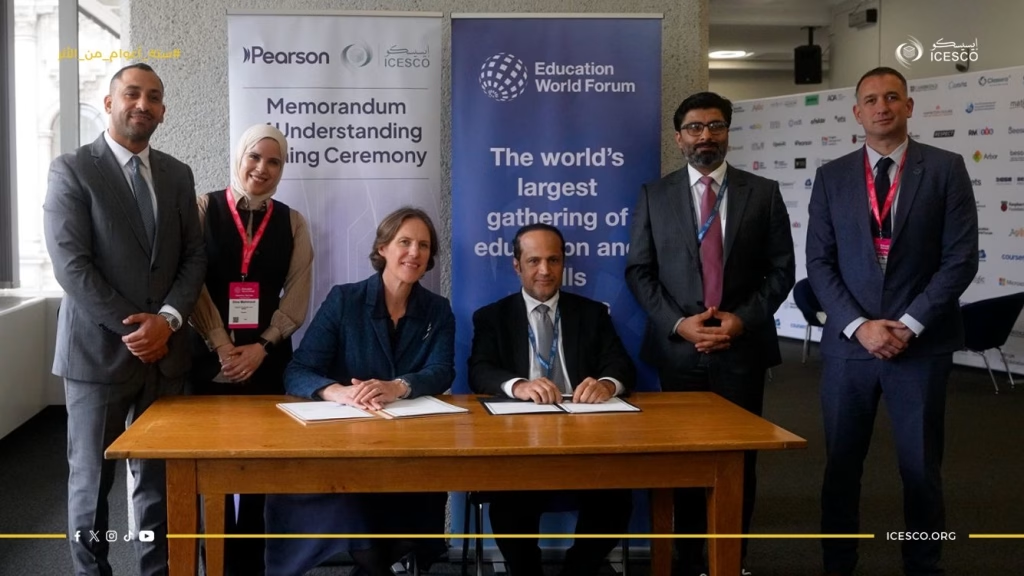
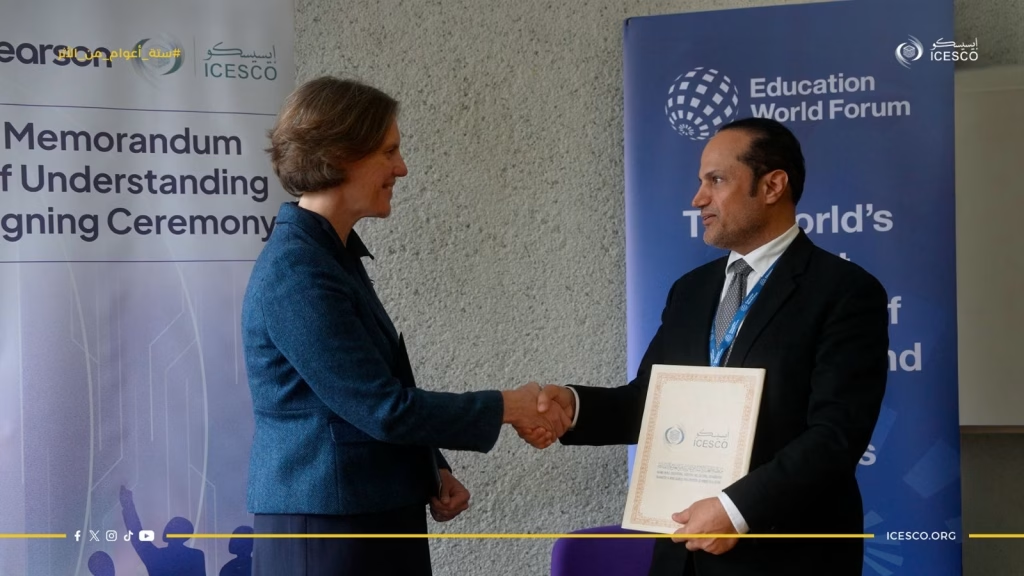
    The Islamic World Educational, Scientific and Cultural Organization (ICESCO) and the British Pearson Education signed a memorandum of understanding (MoU), on the sidelines of the 2026 Education World Forum, to strengthen ways and mechanisms of cooperation in improving teaching methods and developing a school assessment guide.

    The MoU was signed on Monday, 18 May 2026, in London, by Dr. Ahmed Albanyan, Supervisor of the Education Sector and Head of the Translation and Publishing Center at ICESCO, and Ms. Freya Thomas Monk, Senior Vice President of Pearson Education. On this occasion, Dr. Albanyan affirmed that this partnership represents an important step towards developing education systems within and beyond the countries of the Islamic world, through strengthening teachers’ skills, integrating technology and artificial intelligence into education in the Organization’s Member States, and improving assessment systems.

    For her part, Ms. Monk highlighted the importance of harnessing education and modern technologies to support educational initiatives and exchange international expertise to keep pace with the developments of the era and find sustainable solutions to the challenges of the field.

    The provisions of the MoU include cooperation in developing the “ICESCO-Pearson Guide for School Assessment Standards” to standardize school assessment across the countries of the Islamic world, and to implement activities and projects in several fields, foremost among them strengthening foundational education for all, developing tools to assess reading, writing, and numeracy skills, as well as teaching methods, developing school curricula, in addition to providing training opportunities for teachers, and harnessing modern technologies in professional development and distance learning platforms, particularly in science, technology, engineering, and mathematics, and information and data management.

    The signing ceremony of the MoU was attended by Mr. Waqas Afridi and Ms. Faizah Alaoui, experts at the Education Sector.

    ICESCO Director-General Receives Omani Undersecretary of Culture to Discuss Expanding Cultural Partnership

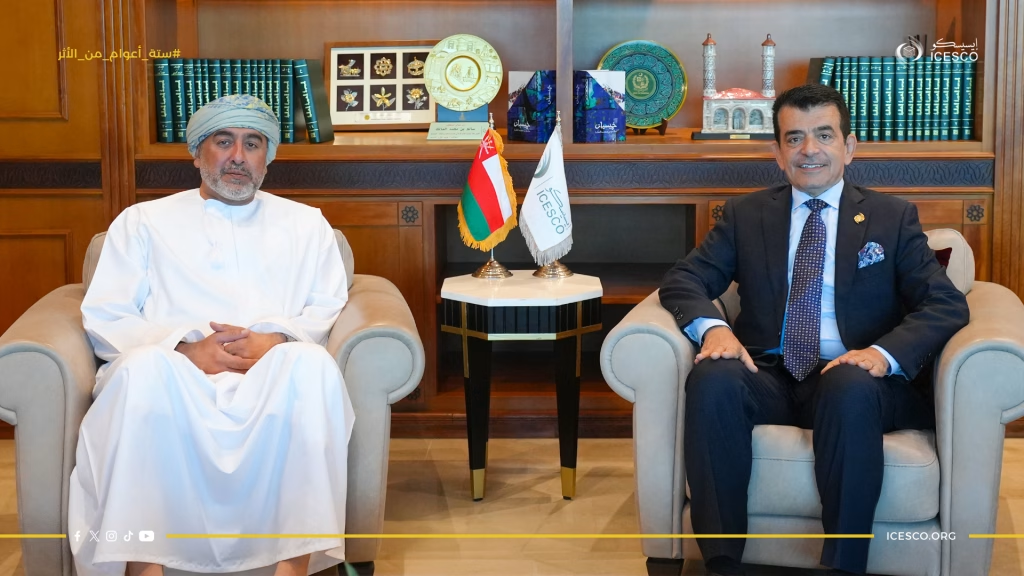
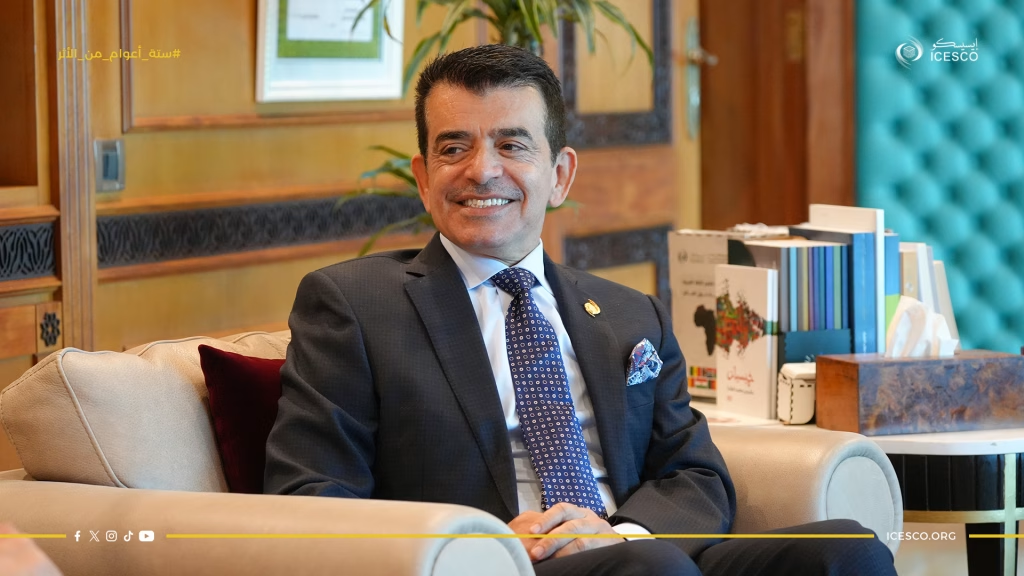
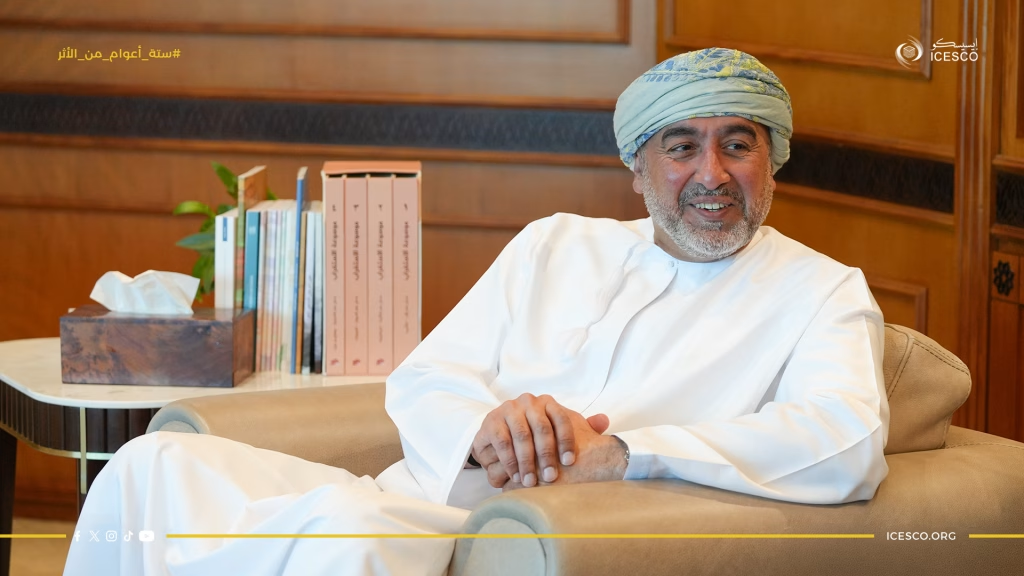
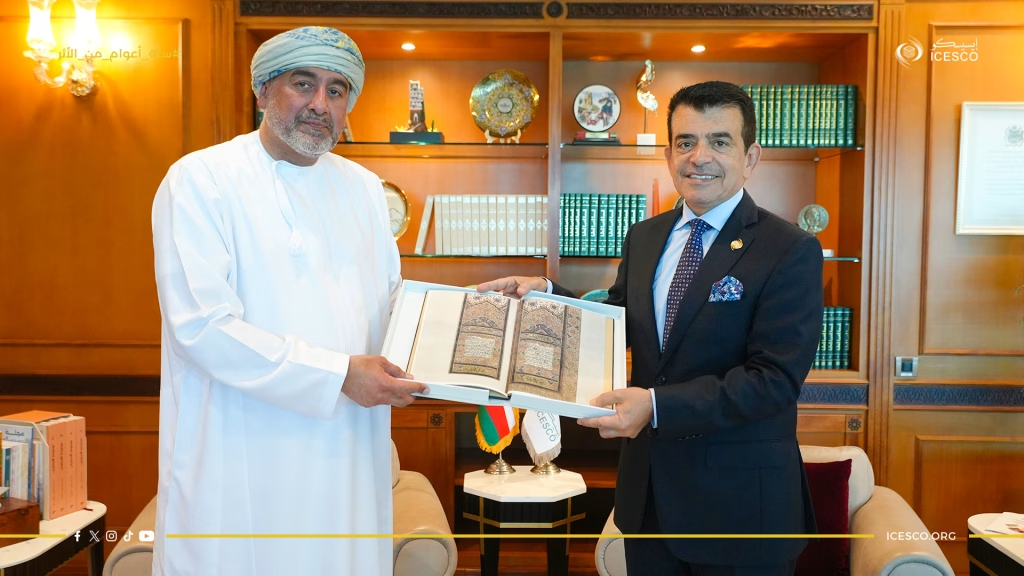
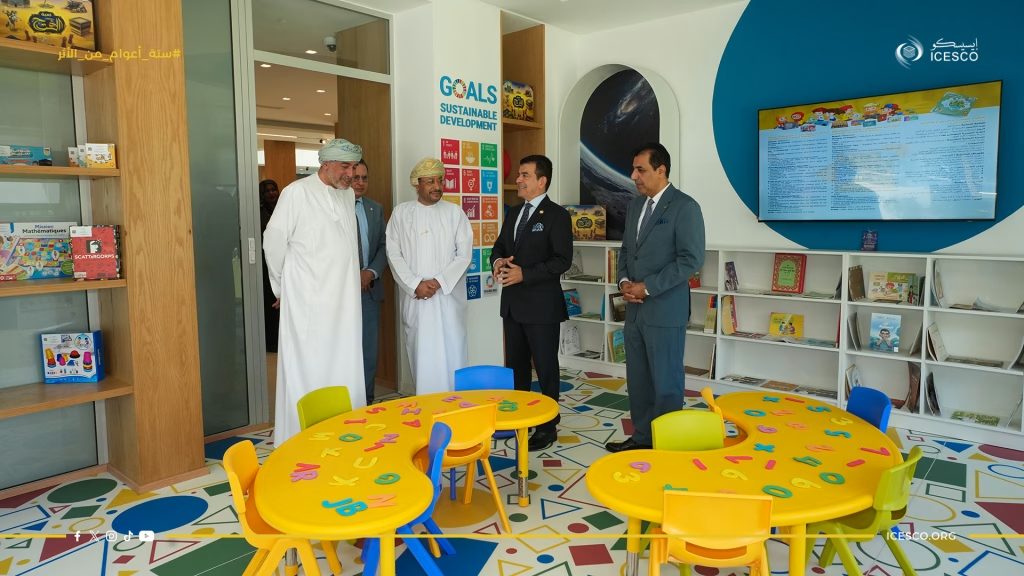
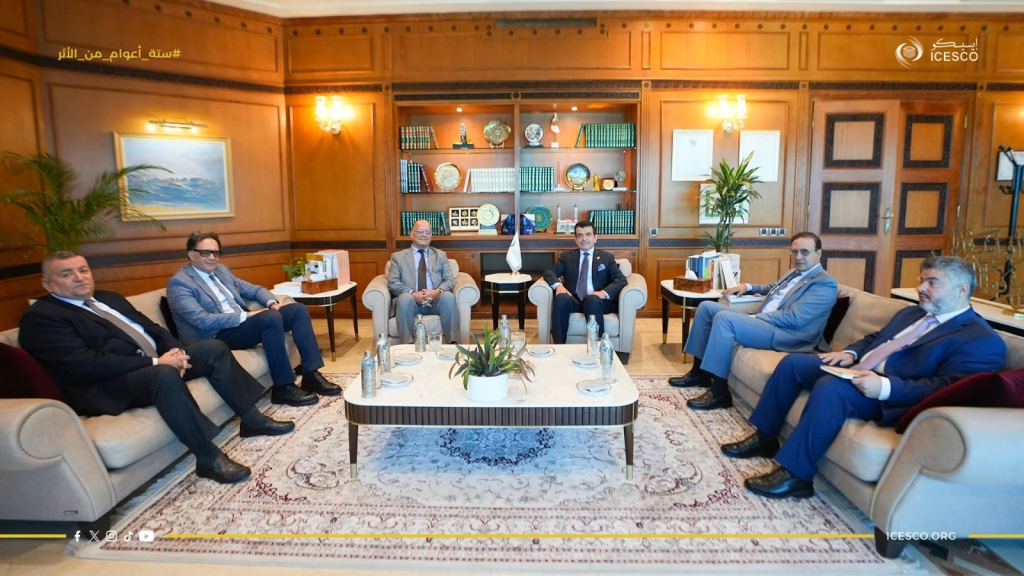
    Dr. Salim M. AlMalik, Director-General of the Islamic World Educational, Scientific and Cultural Organization (ICESCO), received on Tuesday, 19 May 2026, at the Organization’s headquarters in Rabat, Mr. Saeed bin Sultan Al Busaidi, Undersecretary of the Ministry of Culture, Sports and Youth for Culture of the Sultanate of Oman. The meeting reviewed ways to strengthen joint cooperation in the fields of culture, heritage, and creative industries.

    At the outset of the meeting, Mr. Al Busaidi congratulated Dr. AlMalik on his unanimous re-election as Director-General of ICESCO for a second term, commending his leadership of the Organization and the distinction achieved by its programs and projects, which have positioned ICESCO as a centre of expertise in the fields of culture, science, education, and communication.

    Dr. AlMalik then affirmed that, over recent years, ICESCO has continued to consolidate its standing as a reference organization and a centre of expertise in its fields of competence, thanks to the launch of high-quality projects and practical initiatives with tangible impact in the Member States. He stressed that the Organization views cooperation with the Sultanate of Oman as an important driver for strengthening joint cultural action, particularly in the areas of heritage preservation, valorization of civilizational heritage, and support for intellectual and literary initiatives in the Islamic world.

    Dr. AlMalik renewed the call to inscribe elements and sites from Oman’s rich and diverse heritage on ICESCO’s Heritage Lists in the Islamic World, affirming the Organization’s readiness to provide technical support through its Heritage Center. He also proposed holding one of the meetings of the Heritage Committee in the Islamic World in the Sultanate of Oman, selecting one of the Omani cities as a Capital of Culture in the Islamic World, and strengthening cooperation within the ICESCO Forum of Women Poets, thereby consolidating the Organization’s role as a unifying space for cultural creativity.

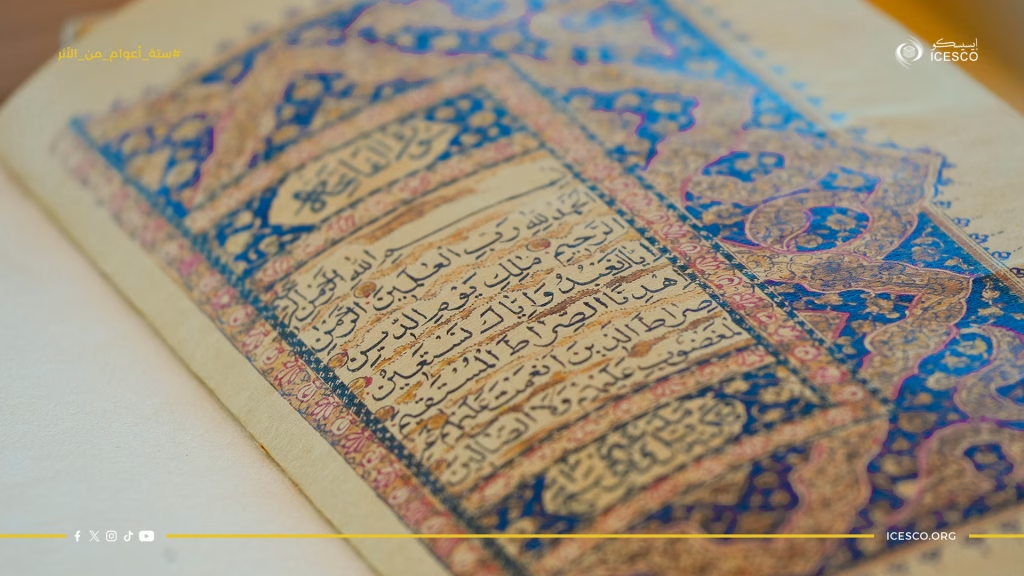
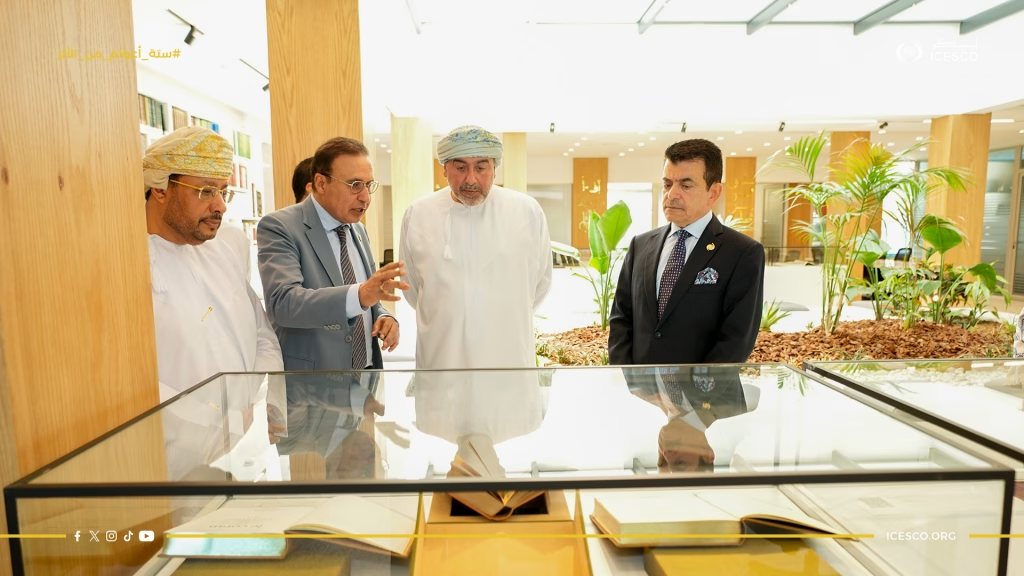
    For his part, Mr. Saeed bin Sultan Al Busaidi affirmed the Sultanate of Oman’s commitment to strengthening cooperation with ICESCO and regarding it as a strategic partner in the fields of culture and heritage. In this context, he donated three historical manuscripts to the Sultan Qaboos Library, hosted at ICESCO headquarters in Rabat: a complete Qur’an whose pages are framed with gilding and whose opening page is adorned with gold decorations; a copy of Al-Burda Poem transcribed in 1271 AH; and a manuscript on Hajj, the copying of which dates back to before the sixteenth century CE, for inclusion among the library’s rare books and manuscripts.

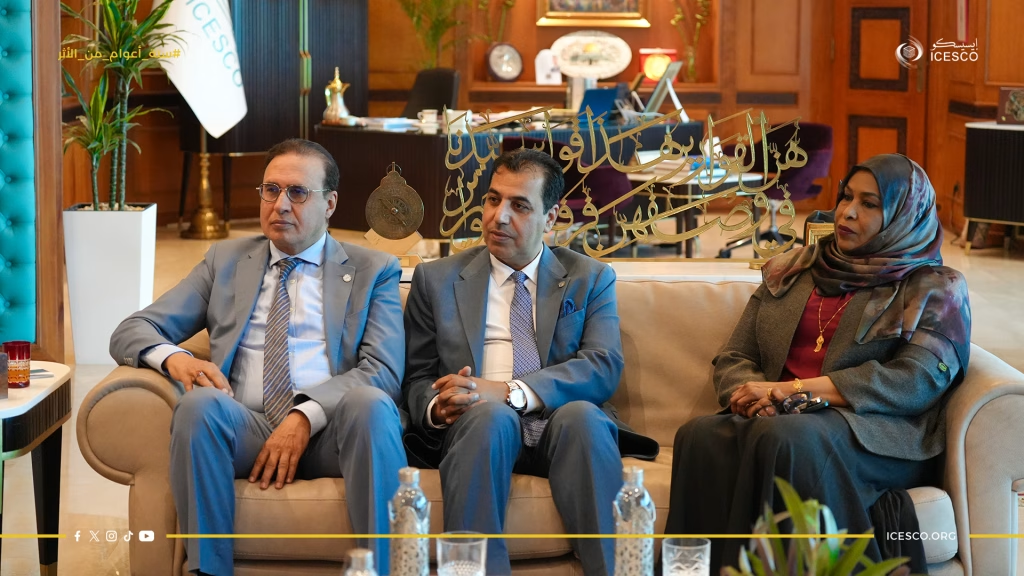
    The meeting was attended on the Omani side by Mr. Khalid Al Harthy, Director-General of Museums and Exhibitions at the Ministry of Culture, and Mr. Khalid Al Busaidi, Director of the Undersecretary’s Office. On the ICESCO side, the meeting was attended by Dr. Abdelilah Benarafa, Deputy Director-General; Dr. Mohamed Zine El Abidine, Head of the Culture Sector; Dr. Salim Al Habsi, Head of the General Secretariat of National Committees and Conferences; and Dr. Rawda Al-Hajj, Head of the Literature and Poetry Center.

    ICESCO, Afro-Arab Cultural Institute Explore Cooperation Prospects in Manuscript Restoration and Arabic Language Promotion

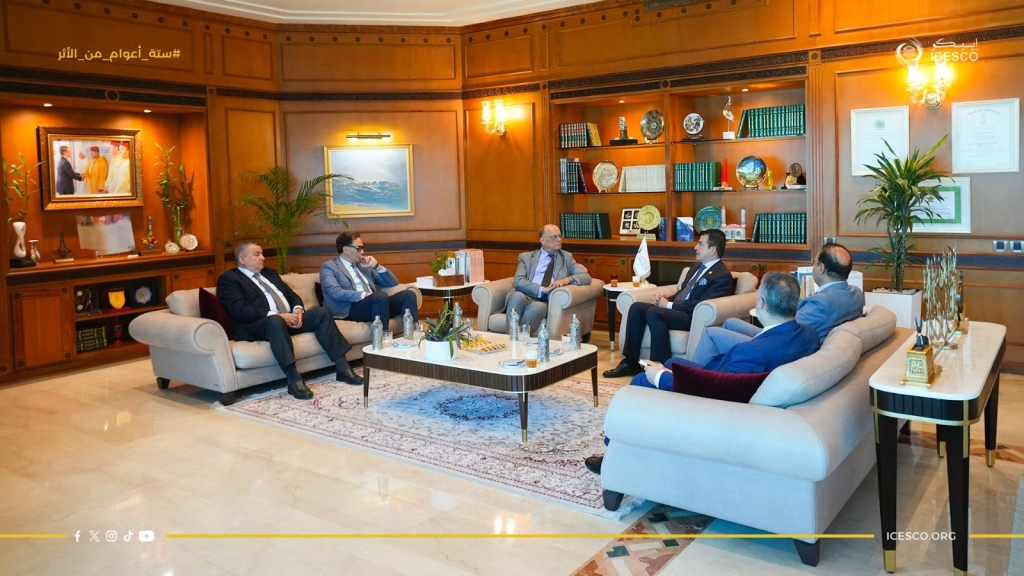
    Dr. Salim M. AlMalik, Director-General of the Islamic World Educational, Scientific and Cultural Organization (ICESCO), received Ambassador Mohamed Ben Youssef, Director-General of the Afro-Arab Cultural Institute, on Tuesday, 19 May 2026, at ICESCO Headquarters in Rabat. The meeting explored cooperation prospects in manuscript restoration, heritage protection, and strengthening the international presence of the Arabic language.

    During the meeting, Dr. AlMalik reviewed the Organization’s contributions to heritage preservation, including the inscription of heritage sites and cultural elements, the safeguarding of tangible and intangible heritage, and initiatives to transcribe African languages using the Arabic script.

    Dr. AlMalik affirmed ICESCO’s willingness to develop a joint program with the Afro-Arab Cultural Institute to restore the historic Timbuktu manuscripts in Mali and implement activities aimed at raising awareness of shared figures and symbols between the Arab and African worlds.

    For his part, Ambassador Ben Youssef commended the Organization’s efforts in recent years to advance initiatives and programs within its areas of competence. He underscored the Institute’s commitment to developing joint activities in teaching Arabic to non-Arabic speakers and promoting civilizational exchange among Arab and African cultures to disseminate the values of coexistence, tolerance, and peace among peoples.

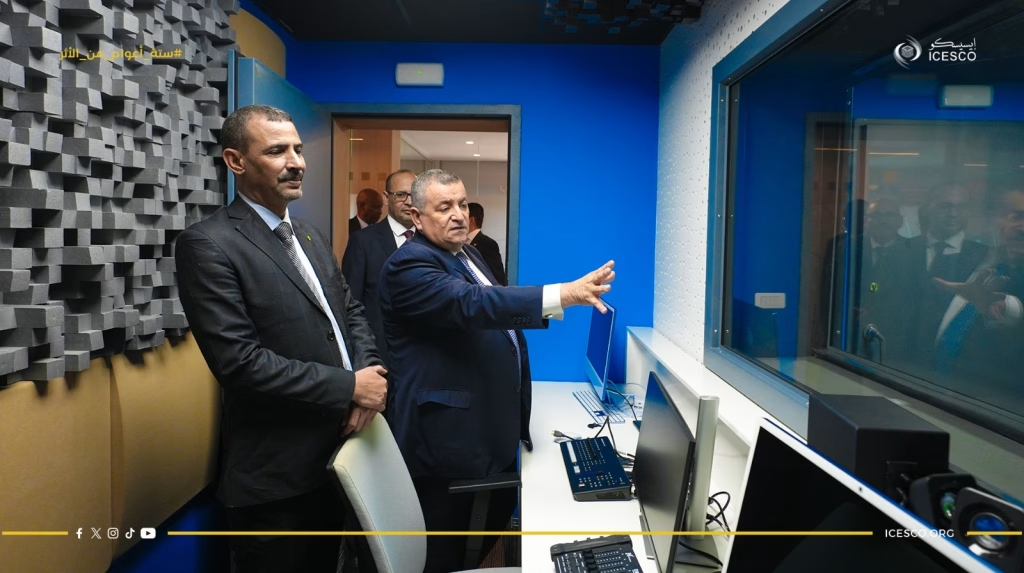
    The meeting was attended by Dr. Abdelillah Benarafa, Deputy Director-General of ICESCO; Dr. Mohamed Zine El Abidine, Head of the Culture Sector; Mr. Osama Heikal, Head of the Media and Communication Sector; and Dr. Anas Husam Al-Nuaimi, expert at ICESCO’s Center of Arabic for Non-Arabic Speakers.

    ICESCO Participates in Education World Forum 2026 in London

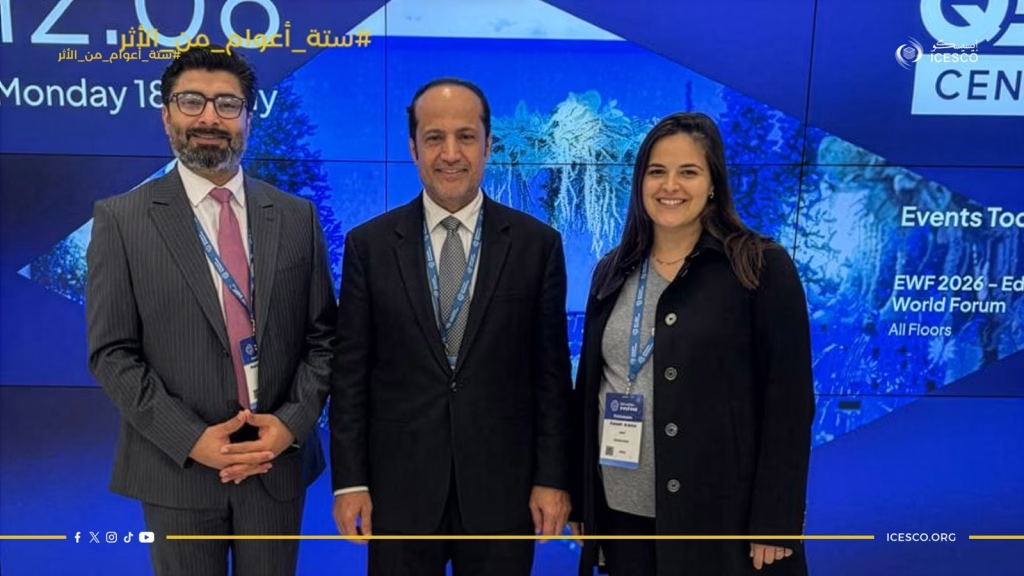
    A delegation from the Islamic World Educational, Scientific and Cultural Organization (ICESCO) is participating in the Education World Forum (EWF) 2026, being held from 17 to 20 May 2026 in London, United Kingdom, under the theme “Educating for a Shared Future: Peace, Planet, Purpose and Pathways.” The forum brings together a host of education ministers, senior officials, and education policymakers from around the world to discuss key challenges facing the education sector and explore innovative solutions.
    On the first day of the forum, ICESCO’s delegation, headed by Dr. Ahmed Albanyan, Supervisor of the Education Sector and Director of the Translation and Publishing Center, and comprising Dr. Waqas Afridi and Ms. Faizah Alaoui, experts at the Education Sector, took part in sessions and panel discussions on inclusive basic education, sustainable education, the transformation of education systems, the role of artificial intelligence and digital learning in education, and teacher training and qualification.

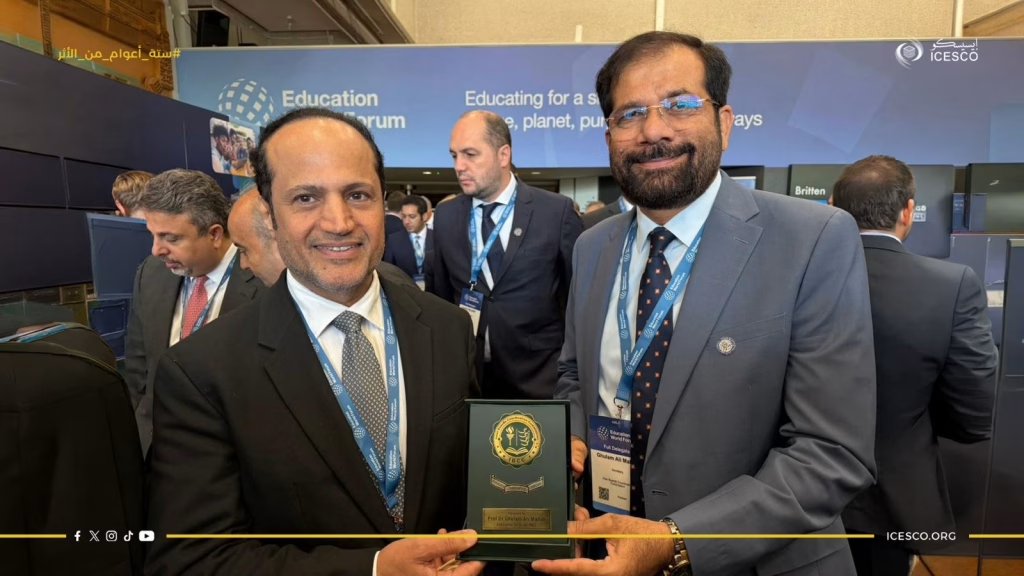
    On the sidelines of the forum’s first day, ICESCO’s delegation held two meetings. The first was with Dr. Ghulam Ali Mallah, Executive Director of the Inter-Boards Coordination Commission under Pakistan’s Federal Ministry of Education and Professional Training, during which he presented a commemorative shield in recognition of ICESCO’s efforts and achievements in the field of education in recent years.

    In the second meeting, Dr. Albanyan and Dr. Phil Baty, Director-General of the Education World Forum, discussed arrangements for the signing of a memorandum of understanding between the Organization and the Forum.

    ICESCO Director-General Receives Mauritanian Minister of Culture to Discuss Cooperation in Media and Civilizational Upbringing

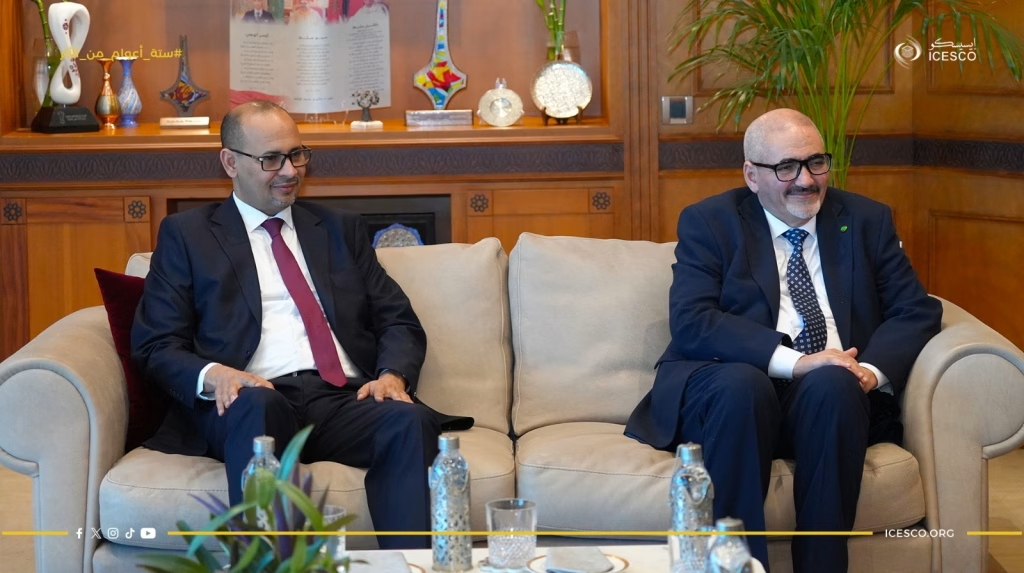
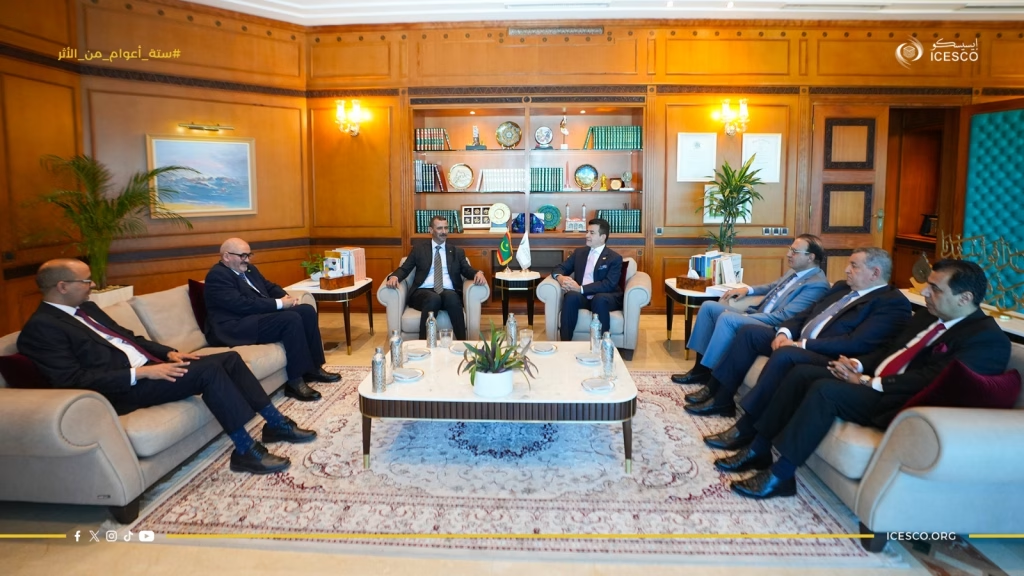
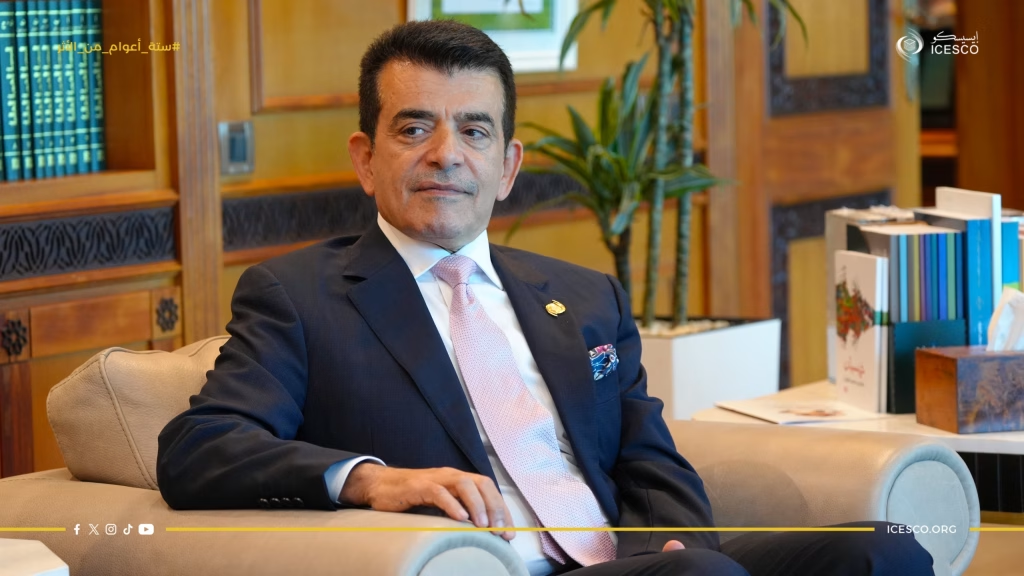
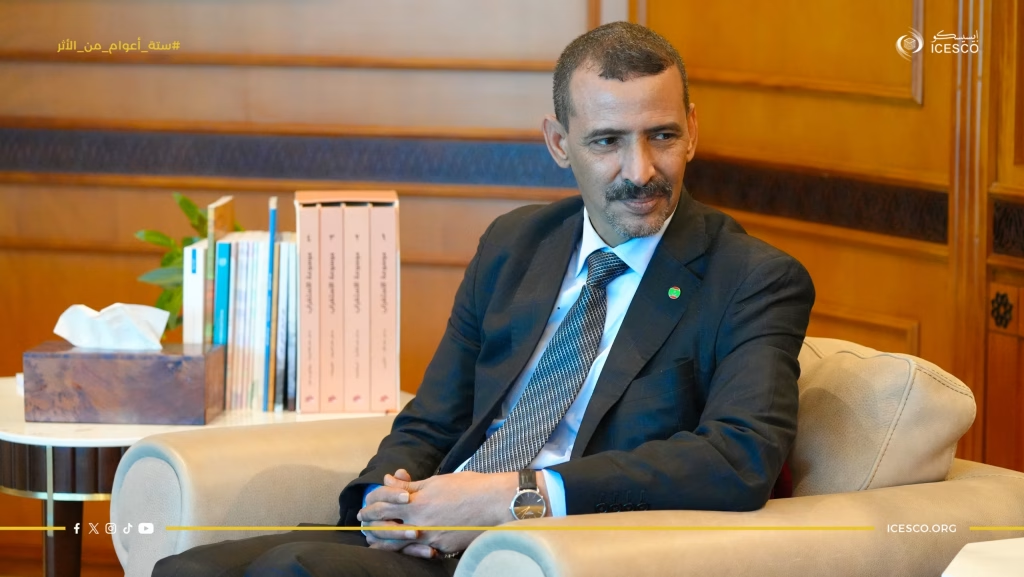
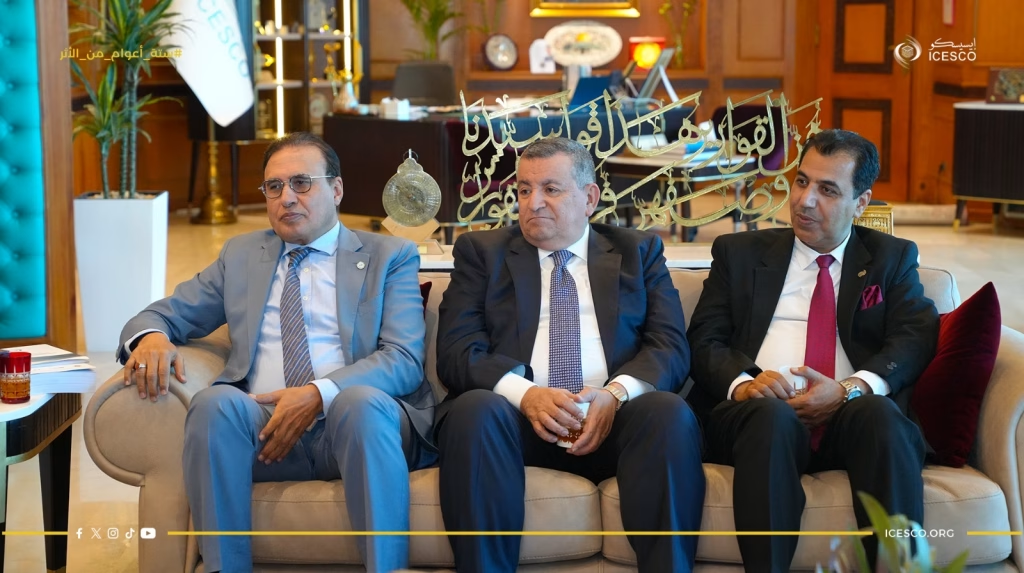
    Dr. Salim M. AlMalik, Director-General of the Islamic World Educational, Scientific and Cultural Organization (ICESCO), received Mr. El Houssein Ould Meddou, Minister of Culture, Arts, Communication, and Relations with Parliament of the Islamic Republic of Mauritania, to discuss ways of strengthening cooperation between the two sides in the fields of media, civilizational dialogue, and the preservation and safeguarding of heritage. The meeting was attended by Mr. Ahmed Ould Bahiya, Ambassador of Mauritania to the Kingdom of Morocco, and Mr. Mohamed Ould Sidi Abdallah, Secretary-General of the Mauritanian National Commission for Education, Culture, and Science.

    During the meeting, held on Monday, 18 May 2026, at the Organization’s headquarters in Rabat, Dr. AlMalik stressed that ICESCO attaches the utmost importance to cooperation with Mauritania in the areas of media literacy, civilizational upbringing, and the use of artificial intelligence and digital technologies in the protection of manuscripts and the promotion of the civilizational heritage of the Organization’s Member States, particularly as ICESCO’s vision for the coming period will focus on new horizons of development and innovation.

    Dr. AlMalik also underscored the importance of investing in the young men and women of the Islamic world as a creative human capital, which requires equipping them with skills that keep pace with rapid technological developments, within the framework of an innovative action plan aimed at building a prosperous Islamic world.

    For his part, Mr. Ould Meddou congratulated Dr. AlMalik on his unanimous re-election by the Organization’s Member States for a new term, noting that this would open new horizons for strengthening the strong partnership between ICESCO and Nouakchott. He also praised the Organization’s sustained efforts in recent years, under the leadership of Dr. AlMalik, in educating younger generations and building youth capacities through initiatives and projects in the fields of education, science, and culture.

    The Minister further expressed his Ministry’s readiness to cooperate in disseminating knowledge and raising awareness about prominent figures of the Islamic world, in addition to collaborating on the development of a joint international platform dedicated to promoting Islamic civilizational identity, its values, and its distinctive characteristics.

    During the meeting, ICESCO was represented by Dr. Abdelilah Benarafa, Deputy Director-General; Mr. Osama Heikal, Head of the Media and Communication Sector; and Dr. Salim Al-Habsi, Director of the General Secretariat of National Commissions and Conferences.

    ICESCO Participates in the Second International Solidarity Culinary Arts Festival in Rabat

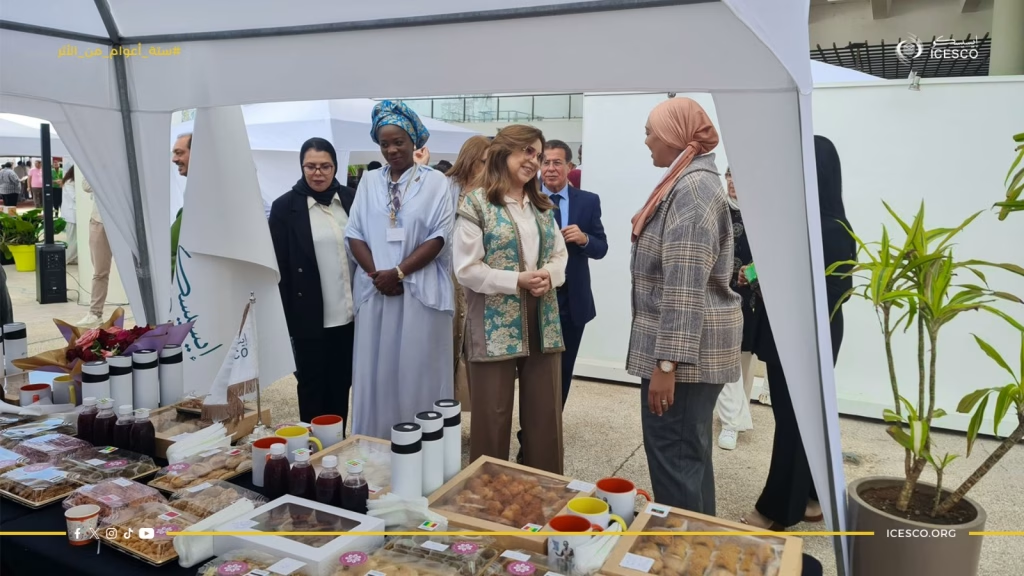
    The Islamic World Educational, Scientific and Cultural Organization (ICESCO) participated in the second edition of the International Solidarity Culinary Arts Festival, held on Saturday, 16 May 2026, at the National Library of the Kingdom of Morocco in Rabat, with the participation of diplomatic missions and international organizations.
    The opening of the festival was attended by Ms. Naima Ben Yahia, Minister of Solidarity, Social Inclusion and Family; Mr. Abdelilah Bouzidi, President of the Agdal-Riad District Council; and Ms. Oniel Obolo, President of the Diplomatic Club in Morocco, along with a number of ambassadors and representatives of foreign missions.
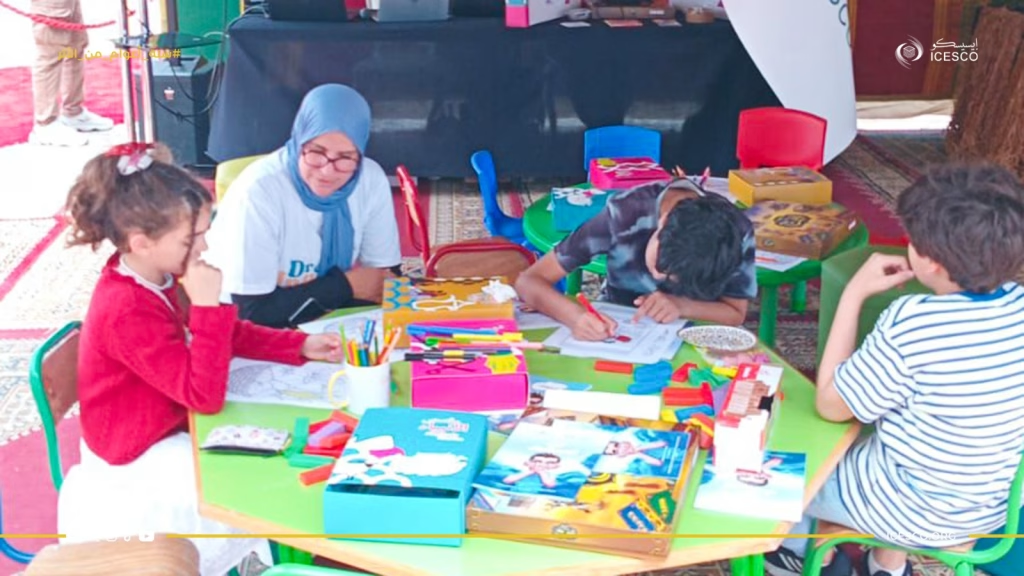
    ICESCO’s participation in this edition reflected the cultural richness and diversity that characterize the countries of the Islamic world and highlighted the importance of using culinary arts as a means of cultural exchange and support for social action. This year’s participation also featured a dedicated children’s area with a variety of awareness-raising and educational activities, traditional games, and the screening of the animated film “Show Me Your Smile,” produced by ICESCO as part of its program to combat bullying in schools. Children were given an explanation of the phenomenon and received motivational gifts.
    The festival, the proceeds of which were allocated to support a project of the Girls’ Schooling Committee, was organized within the framework of promoting the values of solidarity and rapprochement among peoples through the use of culinary arts as a means to enhance cultural exchange and support social and humanitarian initiatives.

    ICESCO, Academy of Sciences of Tatarstan Sign MoU to Cooperate in Heritage Preservation and Scientific Research

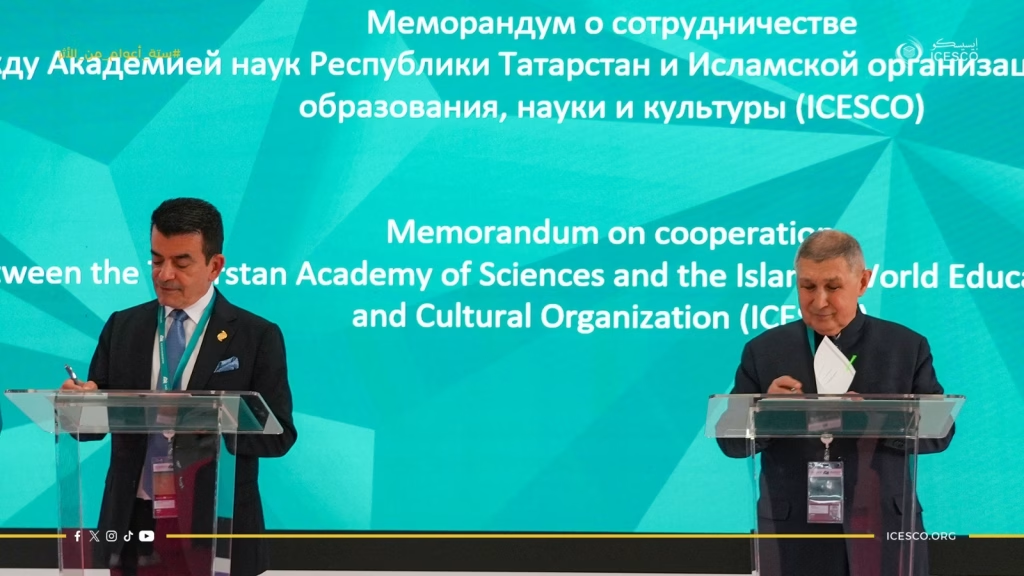
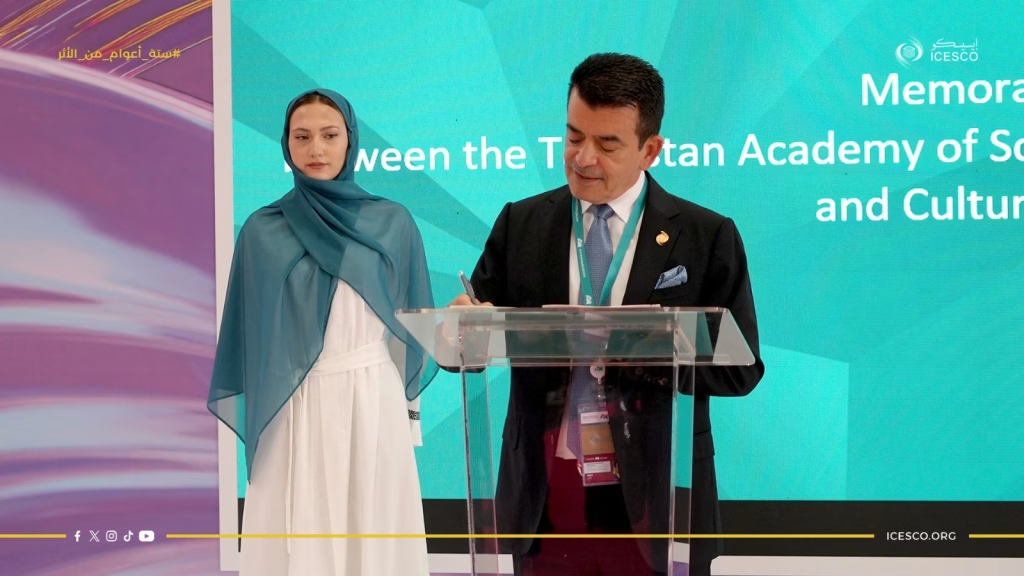
    The Islamic World Educational, Scientific and Cultural Organization (ICESCO) and the Academy of Sciences of the Republic of Tatarstan in the Russian Federation signed a memorandum of understanding (MoU) to cooperate in heritage protection, promote scientific research, exchange expertise, and enhance the professional development of researchers and specialists through the joint organization of scientific programs, projects, and studies.

    The MoU was signed on Friday, May 15, 2026, in the Tatar capital of Kazan, by Dr. Salim M. AlMalik, Director-General of ICESCO, and Dr. Rifkat Minnikhanov, President of the Academy of Sciences of Tatarstan.

    Following the signing ceremony, Dr. AlMalik highlighted ICESCO’s commitment to adopting an open approach with organizations, institutions, and research centers, both within and outside the Islamic world, to promote scientific exchange, disseminate knowledge, and protect the cultural heritage that constitutes the collective memory of diverse cultures.

    Dr. AlMalik affirmed that the partnership between ICESCO and the Academy would foster innovation in developing sustainable solutions for preserving and enriching cultural heritage.

    For his part, Dr. Minnikhanov reviewed the Academy’s efforts to achieve sustainable development and cultivate innovative human capital in science. He praised ICESCO’s contributions in its areas of competence across the Islamic world.

    The five-year MoU includes organizing joint programs to preserve, document, and promote tangible and intangible heritage; promote scientific research and innovation; and conduct applied studies in archaeology, heritage, and the management of museums and cultural resources. It also includes launching initiatives to build the capacities of researchers and specialists, as well as providing opportunities for professional training, academic exchange, and expertise sharing through the joint organization of training workshops, conferences, and seminars.