Disclaimer: You are using Google Translate. The ICESCO is not responsible for the accuracy of the information in the translated language .
your opinion

User Feedback

Overall, how satisfied are you about the website?

    Extremely Dissatisfied Extremely Satisfied

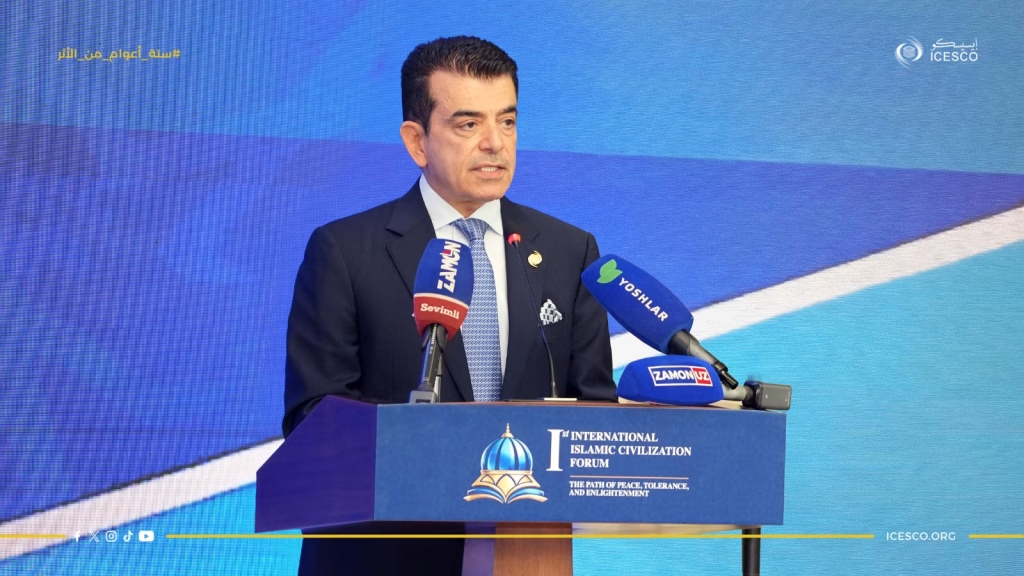
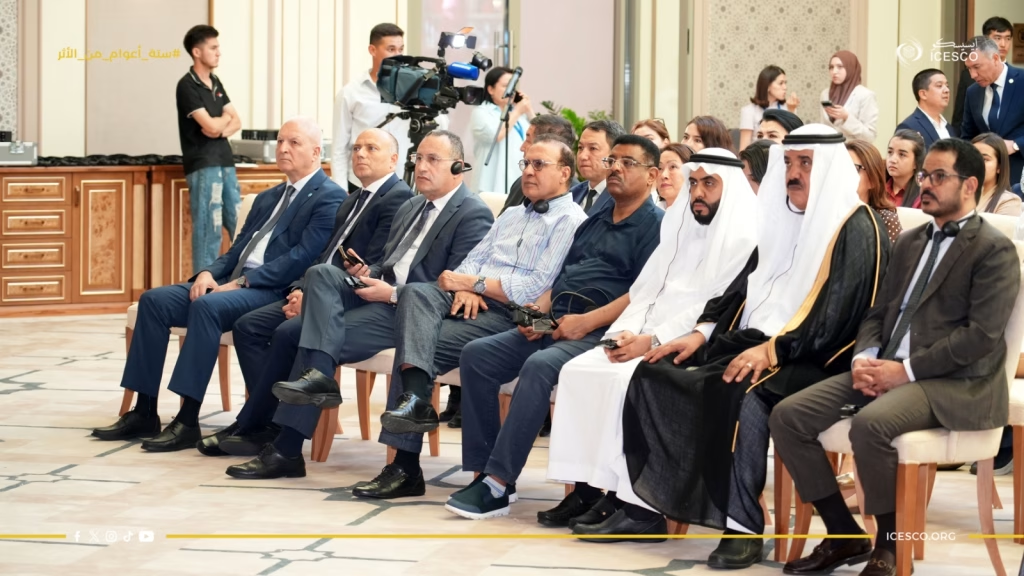
    ICESCO Director-General Attends Opening of the 2026 Regional Ecological Summit in Kazakhstan

    Dr. Salim M. AlMalik, Director-General of the Islamic World Educational, Scientific and Cultural Organization (ICESCO), took part in the opening of the Regional Ecological Summit 2026 (RES26), organized by the Republic of Kazakhstan, represented by Ministry of Ecology and Natural Resources, in partnership with the United Nations, under the theme “A Shared Vision for a Resilient Future,” from April 22 to 26, 2026, in the Kazakh capital, Astana. The event is held under the high patronage of H.E. Mr. Kassym-Jomart Tokayev, President of the Republic of Kazakhstan, and features high-level participation by heads of state, leaders of international organizations, ministers, and senior officials.

    Through its participation, ICESCO aims to contribute to the development of coordinated solutions to address the environmental, economic, and social impacts of climate change, as well as to strengthen regional and international cooperation with governments, organizations, and institutions working in the field of environmental protection. In this regard, the summit will feature the participation of delegations from 15 member and non-member states of the Islamic world.

    The summit’s program includes 58 activities, including 17 high-level events, 4 sessions dedicated to the specific needs and priorities of Central Asian countries, as well as 37 roundtables, conferences, and seminars. An expo is also being organized with the aim of establishing a comprehensive framework and proposing operational tools for the protection of ecosystems, the rational use of water resources, and the preservation of biodiversity in Central Asian countries.

    Participants, including officials, experts, and specialists in environmental issues, will examine several key themes, notably ways to promote climate transition, adapt to environmental and natural risks, and build economic resilience in the face of these challenges. Discussions will also focus on mechanisms to strengthen food security, protect ecosystems, and ensure the sustainable management of natural resources, as well as combat air pollution and manage waste.

    ICESCO, Kazakhstan Explore Ways to Strengthen Cooperation in the Field of Water Security

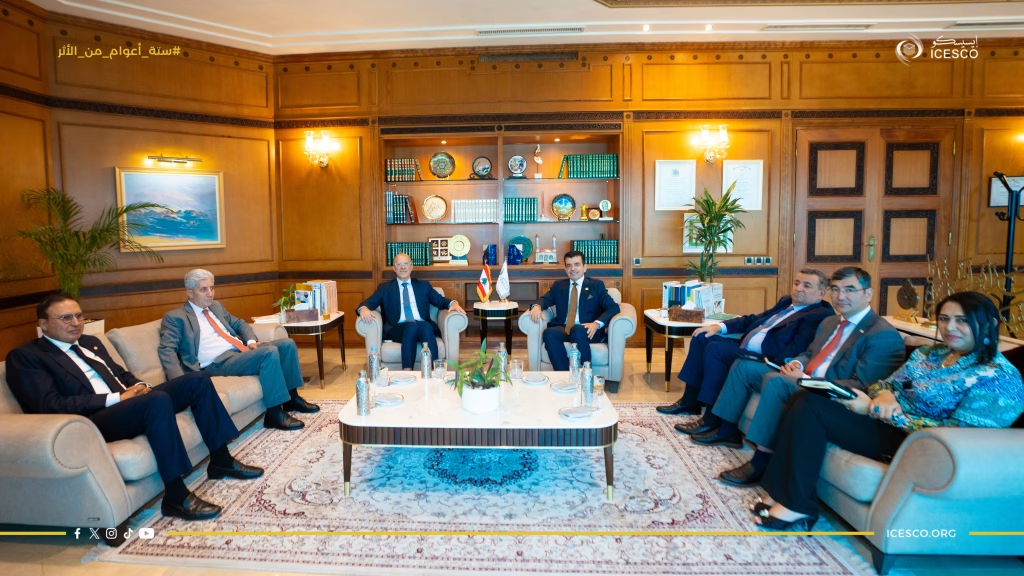
    Dr. Salim bin Mohammed AlMalik, Director-General of the Islamic World Educational, Scientific and Cultural Organization (ICESCO), met with Mr. Nurzhan Moldiyarovich Nurzhigitov, Minister of Water Resources and Irrigation of the Republic of Kazakhstan, during his visit to the Republic of Kazakhstan to participate in the Regional Environment Summit, held from April 22 to 24, 2026.

    During the meeting, held on Tuesday, April 21, 2026, in the capital, Astana, the two sides reviewed areas of joint cooperation between ICESCO and the Ministry of Water Resources and Irrigation, particularly programs and initiatives aimed at conserving water resources and enhancing the capacities and training of youth in this vital field.

    The two sides reviewed Kazakhstan’s efforts in the water sector, especially following the establishment of the Ministry of Water Resources two years ago—a move reflecting a strategic focus on water resource management—as well as the integration of a culture of water conservation and its importance into educational programs.

    Dr. AlMalik also highlighted the most significant initiatives and programs launched by ICESCO over the past five years in the field of water resource protection, addressing the challenges of water scarcity, and enhancing water security in Member States.

    The two sides agreed on the importance of deepening cooperation and expanding areas of partnership to include the implementation of joint programs, as well as including these priorities in ICESCO’s strategic plan and action plan for the coming years.

    For his part, the Kazakhstani minister affirmed his country’s commitment to strengthening cooperation with ICESCO in this field and its readiness to share its expertise and experiences with Member States, thereby contributing to international efforts aimed at achieving water security and sustainable development in the Islamic world.

    ICESCO Partners in Organizing Ninth International Congress of Leaders of World and Traditional Religions in Kazakhstan

    Dr. Salim M. AlMalik, Director-General of the Islamic World Educational, Scientific and Cultural Organization (ICESCO), met with Ms. Gulsana Kozhabay, Chair of the Board of the International Center for Interfaith and Interreligious Dialogue (ICIID). The two officials signed a memorandum of understanding whereby ICESCO becomes a strategic partner in co-organizing the Ninth International Congress of Leaders of World and Traditional Religions, scheduled to be held in 2027 under the patronage of His Excellency the President of the Republic of Kazakhstan.

    The meeting, held on Tuesday, 21 April 2026, at the Center’s headquarters in Astana, focused on ways to strengthen cooperation between ICESCO and the Center, particularly in advancing and developing interfaith and intercivilizational dialogue and consolidating the values of mutual understanding and coexistence.

    During the meeting, Ms. Kozhabay reviewed the Center’s key initiatives and programs aimed at promoting interfaith and intercivilizational dialogue, as well as its future orientations in light of current global challenges, which are expected to be addressed at the upcoming congress scheduled for next year.

    For his part, Dr. AlMalik emphasized that this memorandum falls within the framework of supporting interreligious and intercultural dialogue, building relevant capacities, and rejecting all forms of extremism and fanaticism.

    He noted that ICESCO has established the Center for Civilizational Dialogue, tasked with developing modern concepts, most notably the concept of “Civilizational Diplomacy,” which the Organization has adopted within its strategic initiatives as a means of promoting openness and mutual understanding with others through a renewed civilizational vision.

    Dr. AlMalik also underscored the importance of engaging youth in these programs by equipping them with modern concepts of dialogue and encouraging their participation in relevant forums and conferences, enabling them to serve as ambassadors for their countries in promoting a culture of peace and understanding among peoples.

    The memorandum of understanding includes several provisions, notably a strategic partnership in organizing the Ninth International Congress of Leaders of World and Traditional Religions, which the Center convenes every two years with the participation of prominent international figures. The memorandum also stresses the importance of youth participation and attendance in these events.

    Agreement Reached to Launch ICESCO Satellite in Partnership with Kazakhstan

    Dr. AlMalik: ICESCO’s Satellite Aims to Support Scientific and Environmental Research in the Islamic World

    The Islamic World Educational, Scientific and Cultural Organization (ICESCO) and JSC NC Kazakhstan Gharysh Sapary signed a memorandum of understanding to launch a joint satellite in 2028 bearing the name ICESCO, with the aim of enhancing scientific research in space sciences and developing and implementing related training programs and projects.

    The MoU was signed on Tuesday, 21 April 2026, at the company’s headquarters in the capital, Astana, by Dr. Salim M. AlMalik, Director-General of ICESCO, and Mr. Amanat Ombetbayev, Managing Director and Board Member of JSC NC Kazakhstan Gharysh Sapary.

    Prior to the signing, the two sides held bilateral talks to discuss ways to strengthen cooperation in support of advancing space sciences in ICESCO Member States. The discussions underscored the importance of launching a CubeSat satellite named ICESCO, with the participation of a number of partners and supporters, dedicated to scientific and environmental research. The satellite is expected to contribute to monitoring natural disasters and early warning systems, serving countries of the Islamic world and strengthening their capacities to address environmental challenges.

    In this context, both sides highlighted the success of the specialized workshop on the design of an educational satellite (CanSat), hosted last year by Al-Farabi Kazakh National University in cooperation with ICESCO, which attracted wide participation and achieved outstanding results.

    At the conclusion of the meeting, Dr. AlMalik expressed his appreciation to JSC NC Kazakhstan Gharysh Sapary for this fruitful cooperation, reaffirming the Organization’s commitment to supporting high-impact initiatives in space sciences that contribute to sustainable development and serve communities in its Member States.

    Following the meeting, Dr. AlMalik toured the Company’s scientific and research facilities, where he visited several specialized laboratories for the design, manufacture, and integration of satellites. He was briefed on the advanced technologies developed by the Kazakh team, reflecting the advanced level Kazakhstan has achieved in this vital field.

    JSC NC Kazakhstan Gharysh Sapary is a leading national company in space technology, operating in the fields of remote sensing, satellite manufacturing, and the development of advanced space solutions.

    ICESCO Director-General and Omani Minister of Social Development Discuss Strengthening Cooperation in Safe Childhood, Civilizational Upbringing

    Dr. Salim M. AlMalik, Director-General of the Islamic World Educational, Scientific and Cultural Organization (ICESCO), received Dr. Laila bint Ahmed Al Najjar, Minister of Social Development of the Sultanate of Oman, on Friday, 17 April 2026, at the Organization’s headquarters in Rabat, to discuss ways to strengthen cooperation between ICESCO and the Ministry in the fields of safe childhood, family cohesion, and civilizational upbringing.

    During the meeting, attended by Ambassador Khalid Salim Bamakhalif, Ambassador of the Sultanate of Oman to the Kingdom of Morocco, Dr. AlMalik expressed ICESCO’s pride in its distinguished partnership with the Sultanate of Oman, which has resulted in the joint organization of activities, programs, conferences, and projects, most recently the inauguration of the Sultan Qaboos Library at ICESCO’s headquarters with the generous support of the Sultanate of Oman.

    The Director-General underscored the importance of cooperation in raising awareness of the concept of civilizational upbringing, with a view to strengthening young people’s attachment to the values of the Islamic world while encouraging openness to world cultures. He also reviewed ICESCO’s contributions to building the leadership and creative capacities of youth and women in the Islamic world through the development of training programs in modern technologies and innovation.

    For her part, the Omani Minister commended ICESCO’s efforts in keeping pace with contemporary issues and the priorities of the Organization’s Member States, in disseminating knowledge and maximizing benefit. She expressed the Ministry’s willingness to develop programs and projects in the areas of safe childhood and family cohesion, and to harness modern technologies to support persons with disabilities.

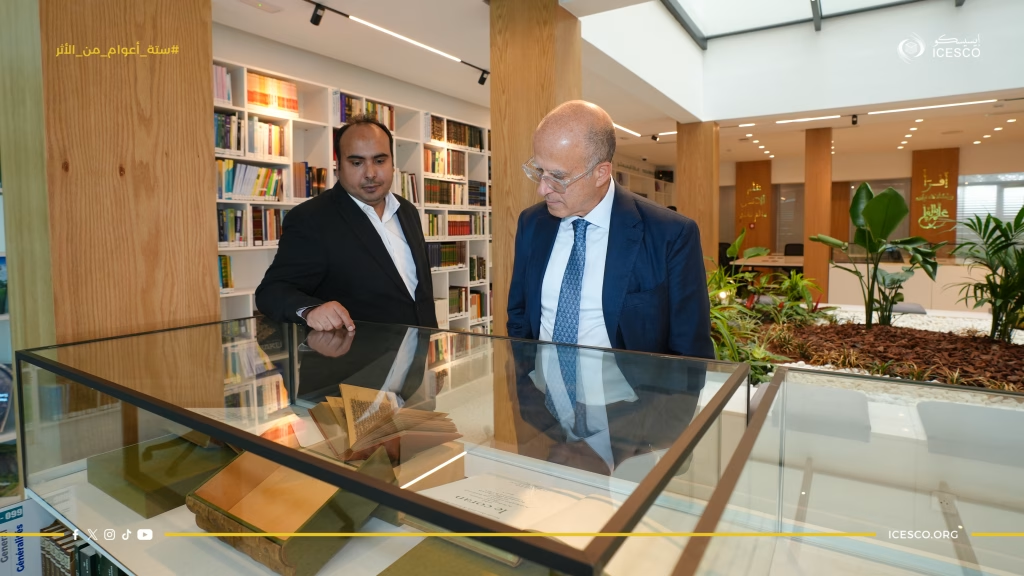
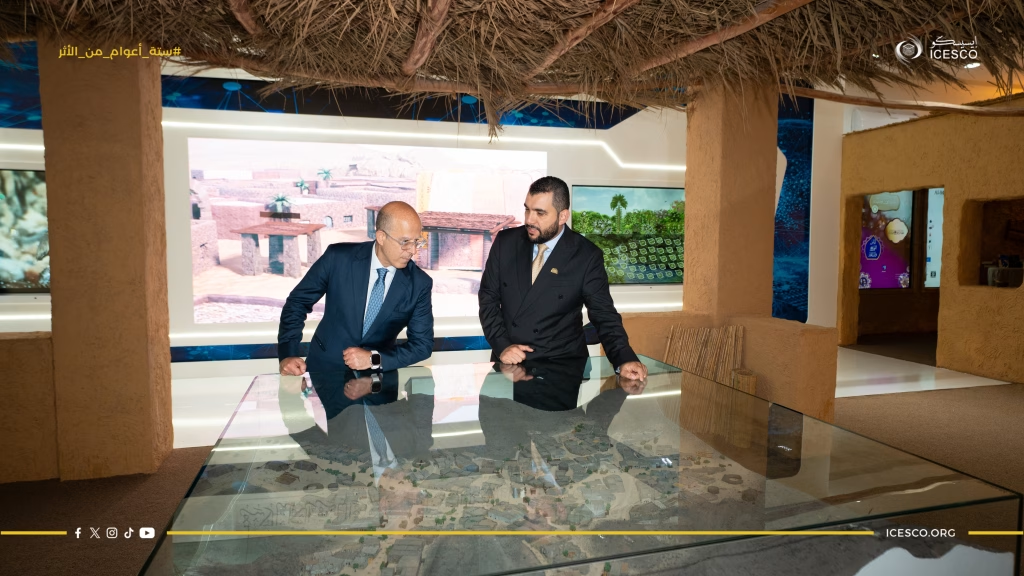
    Following the meeting, Dr. AlMalik accompanied the Minister and her delegation on a tour of the Sultan Qaboos Library, which houses more than 6,000 printed titles, nearly 200,000 digital publications, and a number of rare documentary treasures, including a copy of the Holy Quran handwritten by Ibn al-Bawwab. They also visited the International Exhibition and Museum of the Prophet’s Seerah and Islamic Civilization housed at ICESCO’s headquarters.

    The meeting also saw the presence of Dr. Abdelilah Benarafa, Deputy Director-General; Mr. Osama Heikal, Head of the Media and Communication Sector; Dr. Sally Mabrouk, Director of the Director-General’s Office and Supervisor of the Strategy and Institutional Excellence Sector; Ms. Ramata Almamy Mbaye, Head of the Human and Social Sciences Sector; Ambassador Khaled Fatahalrahman, Director of the Center for Civilizational Dialogue; and Dr. Salim Al-Habsi, Director of the General Secretariat of National Commissions and Conferences.

    ICESCO, King Abdulaziz Library in Morocco Explore Enhanced Cooperation in Knowledge Dissemination and Manuscript Preservation

    Dr. Salim M. AlMalik, Director-General of the Islamic World Educational, Scientific and Cultural Organization (ICESCO), held a meeting today, Friday, 17 April 2026, with Mr. Mohamed El Ferrane, Director of the King Abdulaziz Public Library in the Kingdom of Morocco, to discuss ways and mechanisms to strengthen cooperation between the Sultan Qaboos Library at ICESCO and the King Abdulaziz Public Library in the dissemination of knowledge, the exchange of expertise in the cultural field, and the preservation and valorization of manuscripts.

    During the meeting, held at the Organization’s headquarters in Rabat, Dr. AlMalik stressed that the Islamic world is rich in a vast collection of manuscripts and rare books, which necessitates enhanced cooperation among organizations and libraries across ICESCO Member States to develop mechanisms for safeguarding this invaluable heritage. He also highlighted ICESCO’s efforts in implementing programs and projects aimed at promoting the history and culture of the Islamic world.

    For his part, Mr. El Ferrane expressed the readiness of the King Abdulaziz Public Library to strengthen its partnership with ICESCO and the Sultan Qaboos Library in developing a network of libraries across the Organization’s Member States, and in organizing international seminars and conferences to raise awareness of the manuscripts of the Islamic world and its rich heritage.

    The two parties agreed to establish a technical team to identify a number of joint activities, programs, and projects of mutual interest, with a view to signing a partnership agreement in the near future.

    ICESCO was represented during the Meeting by Dr. Abdelilah Benarafa, Deputy Director-General, and Dr. Ahmed AlBanyan, Director of the Translation and Publishing Center. Following the meeting, Mr. El Ferrane toured the Sultan Qaboos Library, which was inaugurated in a grand ceremony earlier this week.

    ICESCO Inaugurates Sultan Qaboos Library at Its Headquarters in Rabat

    The Islamic World Educational, Scientific and Cultural Organization (ICESCO), in partnership with the Sultanate of Oman, inaugurated the Sultan Qaboos Library at its headquarters in Rabat during a high-level ceremony held on Thursday, 16 April 2026, attended by a large number of ambassadors, officials from cultural organizations and institutions, and a group of prominent thinkers, researchers, and writers.

    The inauguration ceremony opened with a recitation of verses from the Holy Quran, followed by an address by Dr. Salim M. AlMalik, Director-General of ICESCO, in which he emphasized that libraries are civilizational landmarks and repositories of humanity’s intellectual wealth. He noted that the Islamic world is a civilization of the book, whose first revealed word was “Read,” and the civilization of the House of Wisdom Library in Baghdad, which served as a center for research, translation, and publishing.

    Dr. AlMalik added that ICESCO is inaugurating today a library bearing the name of an exceptional leader known for his devotion to knowledge and culture, the late Sultan Qaboos, may Allah rest his soul. He pointed out that the library represents ICESCO’s gift to the Islamic world at a time when the status of the book has declined, and concluded his remarks by expressing gratitude to the leadership and government of the Sultanate of Oman.

    For his part, Ambassador Khalid Salim Bamakhalif, Ambassador of the Sultanate of Oman to the Kingdom of Morocco, praised the inauguration of the Sultan Qaboos Library at ICESCO headquarters, considering it a message affirming that knowledge will remain the strongest bond among peoples, and that investment in culture is an investment in the future of humanity. He also stressed that the relationship between ICESCO and the Sultanate of Oman stands as a model of cooperation based on supporting cultural and scientific action in the Islamic world.

    Introducing the ceremony, Dr. Ahmed Albanyan, Director of the Translation and Publishing Center at ICESCO, highlighted the role of libraries throughout history, noting that they have consistently served as incubators of thought and platforms for civilizational interaction.

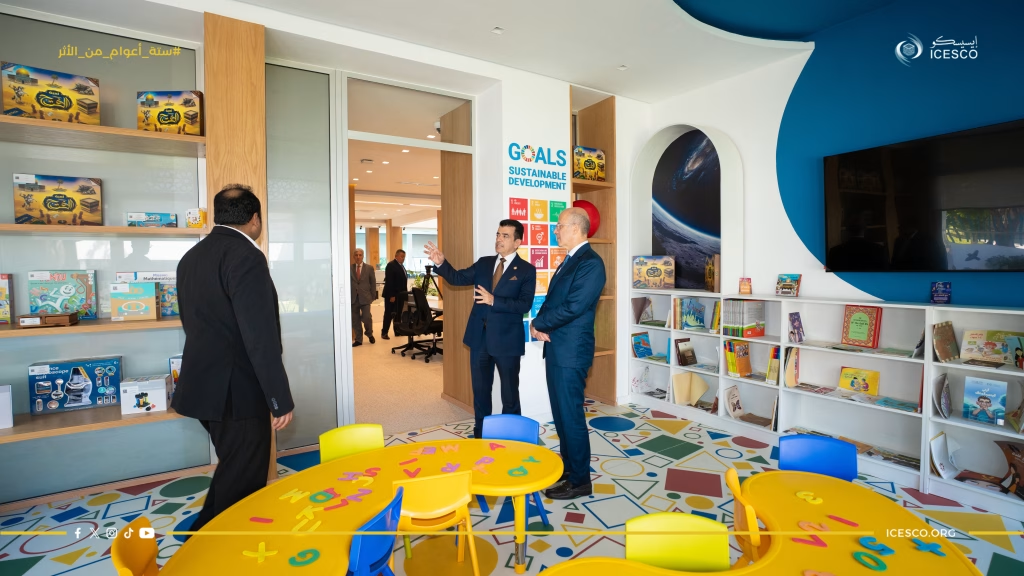
    This was followed by the official opening of the library, during which Dr. AlMalik and Ambassador Bamakhalif unveiled the commemorative plaque and accompanied senior guests on a tour of the library’s facilities, with explanations provided on the knowledge edifice, including reading halls, multidisciplinary spaces, and a dedicated area for children.

    The inauguration was followed by an intellectual symposium featuring three presentations. The first, titled “Libraries Between Preserving Heritage and Shaping Cultural Transformation,” was delivered by Dr. Albanyan. Dr. Salim Al Habsi, Director of the General Secretariat of National Commissions and Conferences at ICESCO, presented a paper on Omani cultural diplomacy and the means and mechanisms for its deployment, highlighting elements of the history and heritage of the Sultanate of Oman, as well as the distinction between cultural diplomacy and political diplomacy. Dr. Mahmoud bin Abdullah Al Abri, Secretary-General of the Omani National Commission for Education, Culture and Science, reviewed his country’s relations with international organizations concerned with cultural affairs, taking ICESCO as a model.

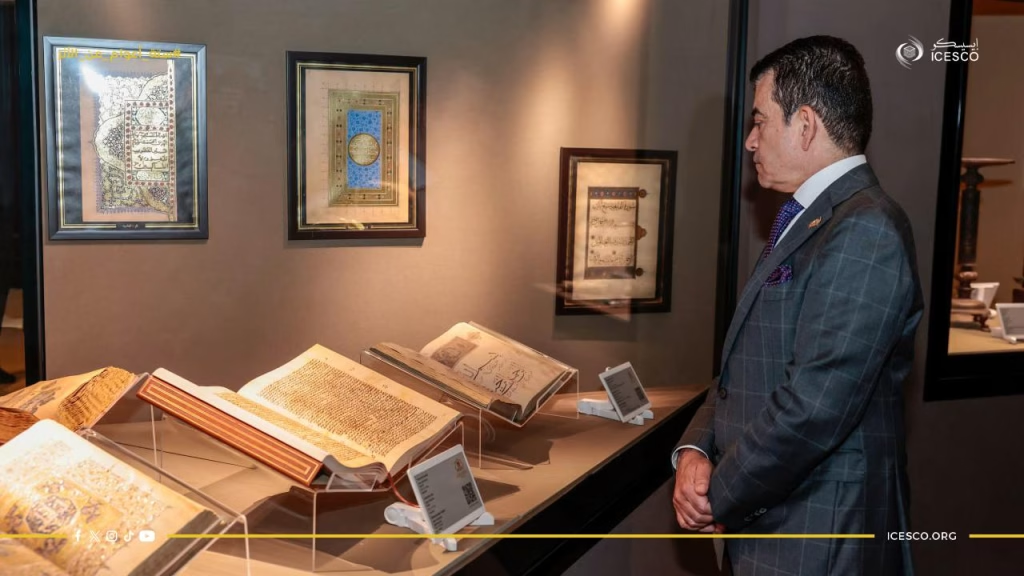
    The library provides a reading and research space equipped with the latest technological media and interactive devices. In its first phase, it includes more than 6,000 print titles, alongside a digital extension offering nearly 200,000 works available through ICESCO’s digital platform. The library also houses a number of rare documentary treasures, including a copy of the Holy Quran transcribed in the hand of Ibn Al-Bawwab.

    ICESCO Director-General Meets with Senegalese Prime Minister

    Dr. Salim AlMalik, Director-General of the Islamic World Educational, Scientific and Cultural Organization (ICESCO), began his visit to Senegal with a meeting with Prime Minister Ousmane Sonko. During his visit, Dr. AlMalik participated in the closing ceremony of the Fourth Session of the Quranic Schools.

    During the meeting held on Monday, March 30, 2026, in Dakar, the two sides discussed areas of mutual cooperation and ways to strengthen the partnership between ICESCO and Senegal in education, culture, and science.

    Mr. Sonko commended ICESCO’s programs and projects that benefit Senegal, emphasizing the importance of developing this cooperation and building a distinguished strategic partnership that serves national priorities in these fields.

    For his part, Dr. AlMalik affirmed that Senegal is one of ICESCO’s distinguished Member States and praised the level of existing cooperation between the two sides.

    Mr. Sonko also reaffirmed his country’s commitment to settling its arrears, thereby enabling it to benefit more fully from ICESCO’s programs and opportunities.

    At the conclusion of the meeting, Dr. AlMalik reaffirmed ICESCO’s commitment to supporting joint programs and ICESCO’s interest in strengthening the role of Quranic Schools and implementing the recommendations issued by the Fourth Session of the Quranic Schools.

    Senegal’s Minister of National Education, Mr. Moustapha Mamba Guirassy, attended the meeting.

    Second International Conference on Cancer Research 2026 Kicks off at ICESCO Headquarters

    Under the High Patronage of His Majesty King Mohammed VI, may Allah assist him, the Second International Conference on Cancer Research (MCRS 2026) opened on Monday, 30 March 2026, at the headquarters of the Islamic World Educational, Scientific and Cultural Organization (ICESCO) in Rabat. The event is organized in partnership with Moulay Ismail University in Morocco and the Moroccan Association for Cancer Research, under the theme “Translational Research in Support of Clinical Advances,” with the participation of 180 researchers and specialists from 10 countries. It aims to highlight the crucial role of translational science in transforming laboratory findings into practical clinical applications.

    During the opening session of the three-day conference, Dr. Salim M. AlMalik, ICESCO Director-General, affirmed in a speech delivered on his behalf by Dr. Abdelillah Benarafa, Deputy Director-General, that the Organization is guided by the principle of making science serve humanity and accessible to all. He stressed that ICESCO builds bridges of communication and cooperation between the global North and South to enhance the exchange of expertise and accelerate health solutions.

    Dr. AlMalik noted that ICESCO has accumulated significant experience in supporting scientific research, particularly in health sciences. He emphasized that the Organization’s work goes beyond research funding to investing in people and building capacities, including support for training programs in human genome analysis, based on the conviction that prevention begins with knowledge.

    For his part, Dr. Aboubakr Bouyaad, President of Moulay Ismail University, stated that hosting this event reflects growing recognition of the importance of translational research as a cornerstone of medical progress. He reaffirmed the University’s commitment to fostering an academic environment grounded in openness and innovation.

    Dr. Lhoussain Hajji, Professor at the Faculty of Medicine of Moulay Ismail University, underlined that the conference seeks to promote scientific exchange and develop new strategies to improve patient recovery prospects. Dr. Mouad Edderkaoui, Adjunct Professor at the University of California, highlighted that scientific research and collaboration among researchers constitute two fundamental pillars for transforming the challenge of combating cancer into a pathway for progress.

    Dr. Saber Boutayeb, Director of the Mohammed VI Center for Research and Innovation, warned against delays in translating scientific findings related to cancer research into practical applications. Dr. Taoufiq Fechtali, Dean of the Faculty of Sciences at Moulay Ismail University, stressed that strengthening cooperation among researchers helps accelerate the transformation of scientific knowledge into solutions that improve treatment outcomes.

    The first session of the conference was moderated by Dr. Adel Smeda, Supervisor of ICESCO’s Science and Environment Sector, with the participation of four international experts in the medical and oncology fields. The session featured specialized presentations and interactive discussions on the latest developments in translational research and clinical innovation in cancer treatment.

    The first day also featured a presentation by Dr. Stephen Pandol, Professor of Medicine at the University of California, on modern approaches to cancer prediction and treatment outcome assessment. He highlighted the role of predictive models and clinical data in improving early diagnosis accuracy and guiding therapeutic decisions toward the most suitable options for each case, drawing strong engagement from attending experts and physicians.

    The conference program includes a series of scientific and discussion sessions addressing key topics such as immunotherapy in cancer recovery, evolving cancer control models in Morocco, targeted radiotherapy biology, and prospects for developing clinical research.

    On World Poetry Day… Dr. AlMalik Highlights Poetry’s Role as a Major Human Art Form

    The twenty-first of March marks the annual celebration of World Poetry Day. On this occasion, Dr. Salim M. AlMalik, Director-General of the Islamic World Educational, Scientific and Cultural Organization (ICESCO), extended his congratulations to poets across the Islamic world, praising their generous contributions and noble creativity that have enriched life, preserved values, and reinforced the meanings of love, goodness, and beauty. He reaffirmed the Organization’s commitment to maintaining continuous engagement with poets and ensuring that poetry receives the distinguished standing it merits as a great human art.

    ICESCO recently established a dedicated Centre for Poetry and Literature, which is set to significantly contribute to advancing poetic and literary activity in the Islamic world. The Centre is implementing several projects, including “20 Moons in the Poetry Sky,” which focuses on publishing twenty collections by twenty female poets participating in the ICESCO Women Poets Forum, comprising more than two hundred poets. Other initiatives include the “Cities of Poems” contest, the quarterly ICESCO Cultural Magazine, and the ICESCO Youth Creators Camp.