
ICESCO Participates in Regional Workshop on Applying the Findings of International Studies to Advance Education

14 September 2026
The Education Sector of the Islamic World Educational, Scientific and Cultural Organization (ICESCO) participated in a specialized regional workshop titled “Best Practices in Addressing Large-Scale International Studies,” organized by the UNESCO Regional Centre for Quality and Excellence in Education, in cooperation with the Ministry of Education and Higher Education of the State of Qatar and the Qatar National Commission for Education, Culture and Science, on 13 and 14 September 2026.
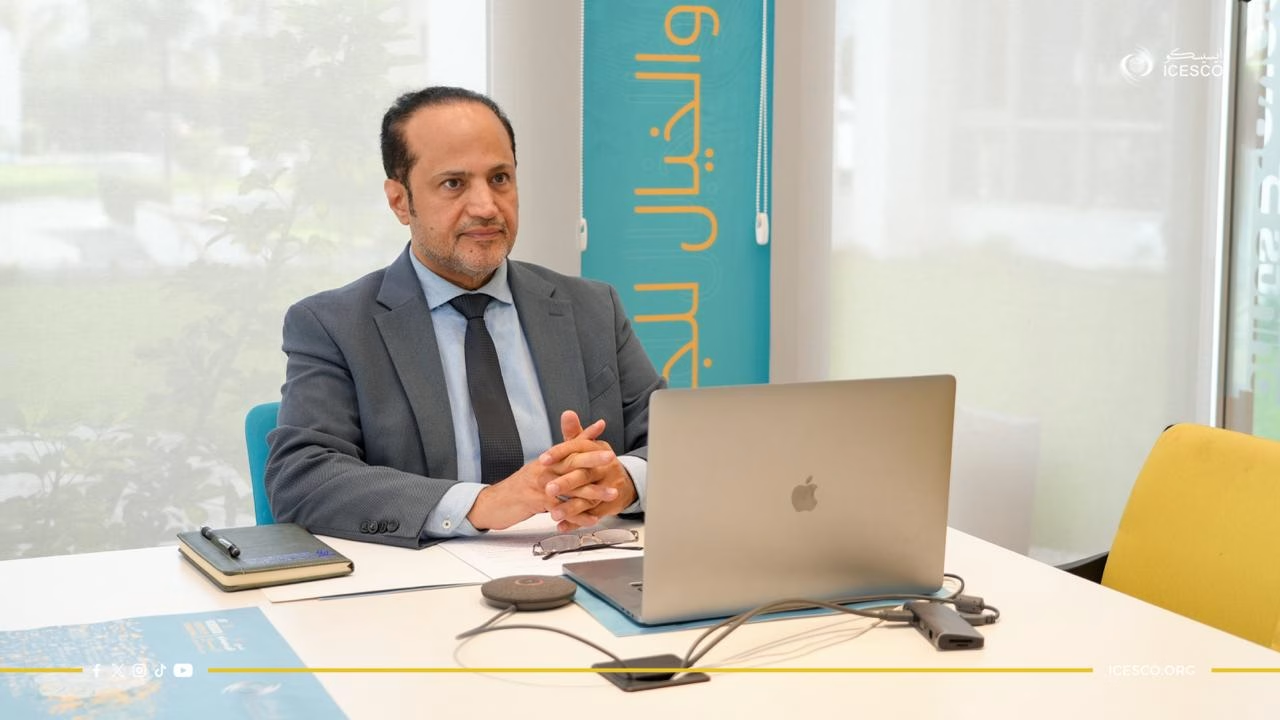
Representing the Education Sector at the workshop, held via videoconference, was Dr. Ahmed Albanyan, Head of the Education Sector and Director of the Translation and Publishing Center at ICESCO. He discussed ways to transform the outputs of international studies, including data, indicators and reports, into development policies and programs that generate tangible impact in schools and classrooms.
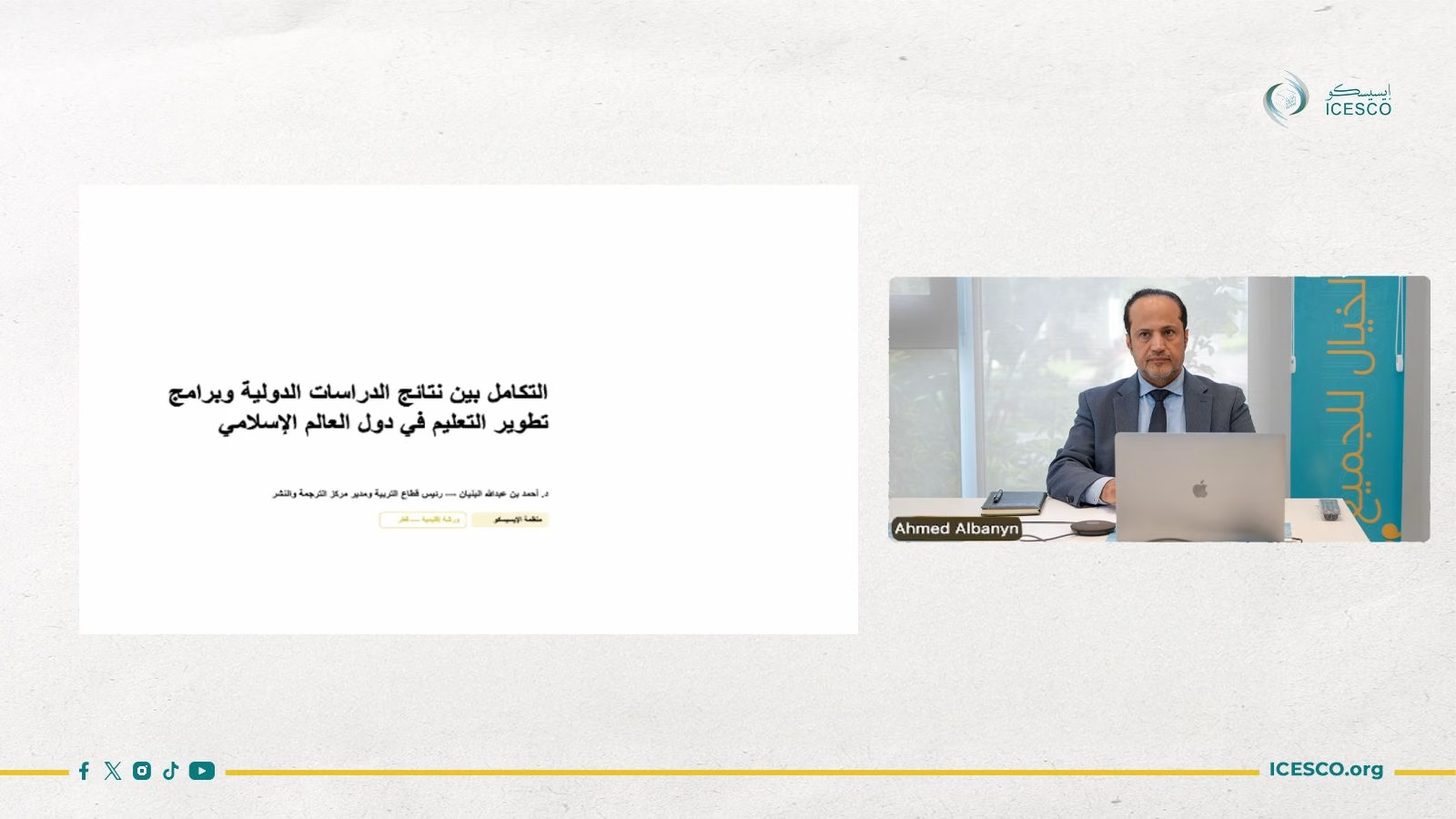
He also emphasized that the true value of international studies is measured by the ability of education systems to interpret their findings and translate them into decisions, policies and programs that can be implemented, measured and reviewed. He noted that international studies provide countries with an opportunity to identify gaps among learners, schools and regions, as well as assess the impact of environmental and social challenges, educational resources, teacher preparation and curricula.
Furthermore, Dr. Albanyan outlined an integrated framework for leveraging the findings of international studies through six interconnected processes: reading and interpreting the findings, setting priorities, designing and implementing programs, and then evaluating their impact. He also called for the development of clear, evidence-based implementation programs, specifying target groups, responsible entities, budgets, timelines and measurable indicators, while adopting a systematic piloting approach for programs before scaling up their implementation.
In conclusion, Dr. Albanyan proposed establishing a permanent national mechanism for leveraging the findings of international studies, bringing together representatives from the sectors of assessment, measurement, planning, curricula, teacher training, and funding, alongside universities and research centers. He also proposed launching a regional initiative titled “From International Study Findings to Classroom Impact,” including a practical guide for translating findings into policies through the development of a standard model for national response plans.