
ICESCO, UNESCO Foster Partnership to Develop Cultural Policies and Support Sustainable Development

18 July 2026
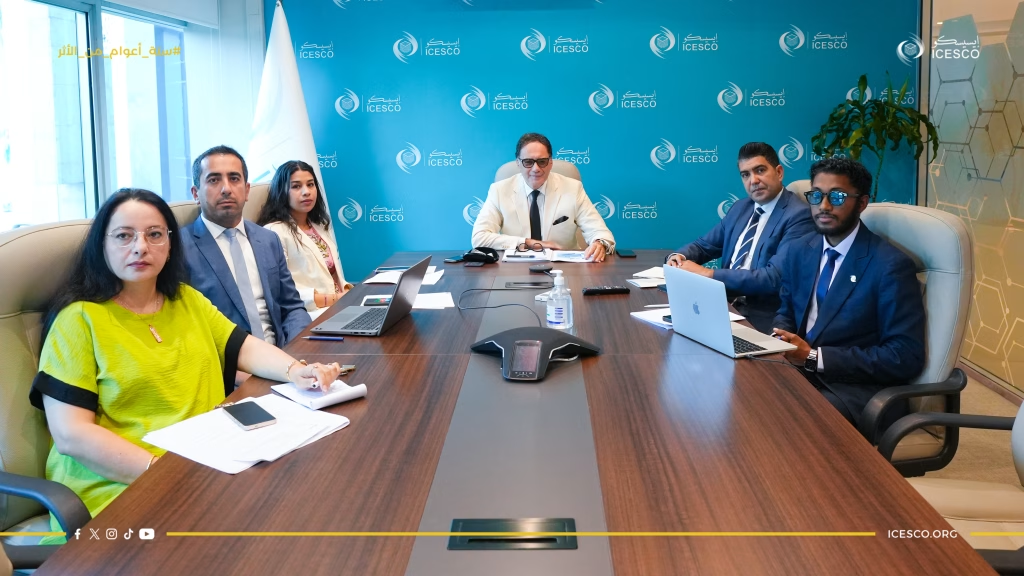
The Islamic World Educational, Scientific and Cultural Organization (ICESCO) and the United Nations Educational, Scientific and Cultural Organization (UNESCO) held, via videoconference on Thursday, 16 July 2026, the Fourth Meeting of the Joint Committee on Cultural Policies for Sustainable Development. The meeting was held as part of both parties’ efforts to promote cultural policy reforms in ICESCO Member States and to strengthen the role of culture as a lever for sustainable development at the regional and international levels.
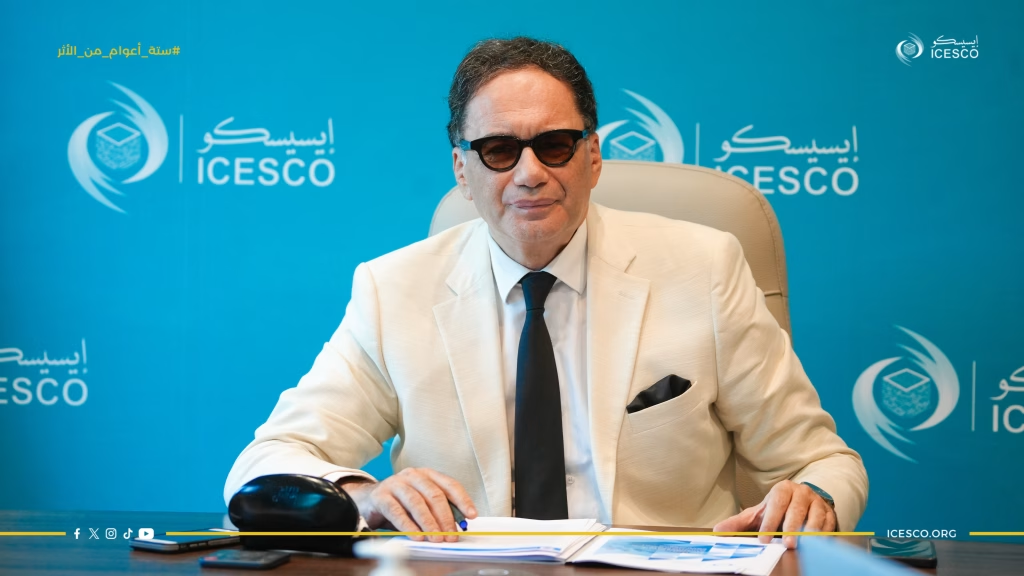
Dr. Mohamed Zinelabidine, Head of ICESCO’s Sector of Culture, opened the meeting, reaffirming the key role of the Committee as a mechanism to measure the progress made in implementing the relevant international commitments, in line with the Doha Declaration (2023) on Renewing Cultural Action in the Islamic World and the Jeddah Declaration (2025) on the Impact of Culture on Development.
Ms. Emmanuelle Robert, Expert at the Culture Sector of UNESCO, highlighted the Organization’s priorities in the fields of cultural rights, culture and education, creative industries, technological integration, climate action, and cultural response in times of crisis. For her part, Ms. Somia Djacta, Head of ICESCO’s Office at UNESCO in Paris, stressed the importance of the meeting, held prior to the upcoming signature of a partnership agreement between the two organizations. Likewise, Ms. Rime Jirari, Head of the Division of Organizations and Bodies at the Sector of Partnerships and International Cooperation at ICESCO, reaffirmed the Sector’s commitment to widening the scope of cooperation in the upcoming period.
The meeting saw the presentation of ICESCO’s project, the “ICESCO Charter on the Development of Cultural Rights in the Islamic World,” and the Strategic Action Plan of the Culture Sector for the period 2026–2029. The meeting also shed light on key studies and analytical tools developed by ICESCO pertaining to cultural GDP, sustainable cultural and creative economies, the reference framework for cultural professions and skills, and ICESCO’s indicators for cultural and creative technologies.
At the close of the meeting, the two parties agreed to launch joint workshops to foster cultural policies and development strategies, in partnership with the National Commissions, as well as to jointly prepare for the next session of the World Conference on Cultural Policies (MONDIACULT). They also agreed to coordinate efforts to strengthen cultural rights, citizenship, and education through culture, thereby contributing to the development of more inclusive, innovative, and sustainable cultural policies across the Member States.