

ICESCO Calls for Accelerating Transition from Commitments to Impact in Education at the Transforming Education Summit in Paris

11 July 2026
The Islamic World Educational, Scientific and Cultural Organization (ICESCO) participated in the Transforming Education Summit (TES+4), organized by the United Nations Educational, Scientific and Cultural Organization (UNESCO) at its headquarters in Paris, on Friday, 10 July 2026. The Summit, themed “System Transformation and Resilience for SDG 4,” brought together a distinguished group of ministers, officials, representatives of international and regional organizations, and education decision-makers.
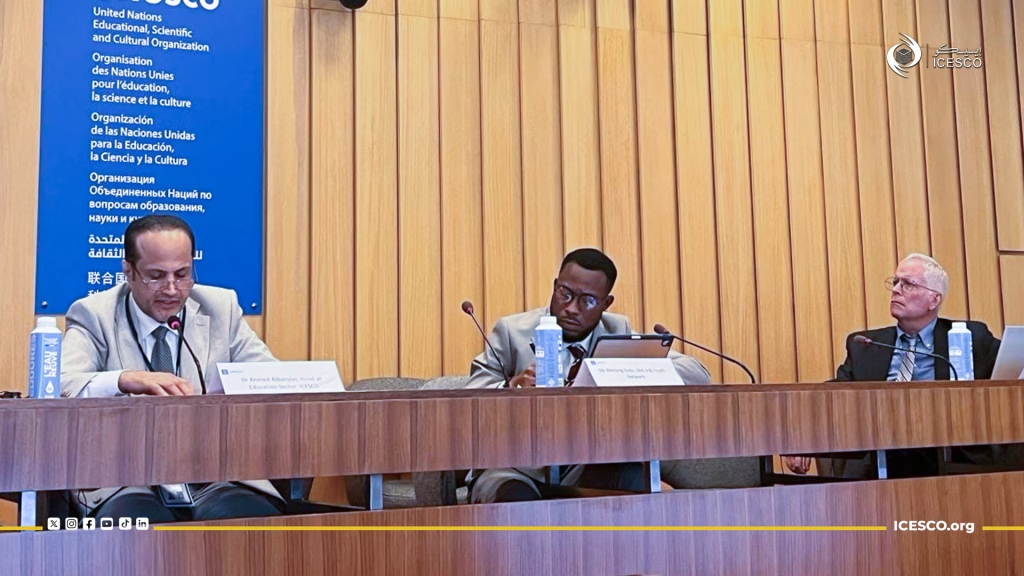
Speaking during the high-level panel discussion titled “Persisting Gaps and the Way Forward,” Dr. Ahmed Albanyan, Head of the Education Sector at ICESCO, called for accelerating the transition from international commitments to tangible impact in education. He noted that the next phase requires building education systems capable of preparing learners to address climate change challenges and strengthening their ability to contribute to sustainable development.
Dr. Albanyan presented ICESCO’s vision of the key challenges facing efforts to accelerate the development of climate-ready education systems, drawing on the Organization’s regional expertise and its monitoring of progress in Member States.
Additionally, Dr. Albanyan emphasized that the four years following the TES have seen notable progress in positioning climate education within policy priorities, strengthening international cooperation, and launching national initiatives to support education transformation. He noted that the main challenge is no longer securing political commitments, but translating them into concrete educational practices.
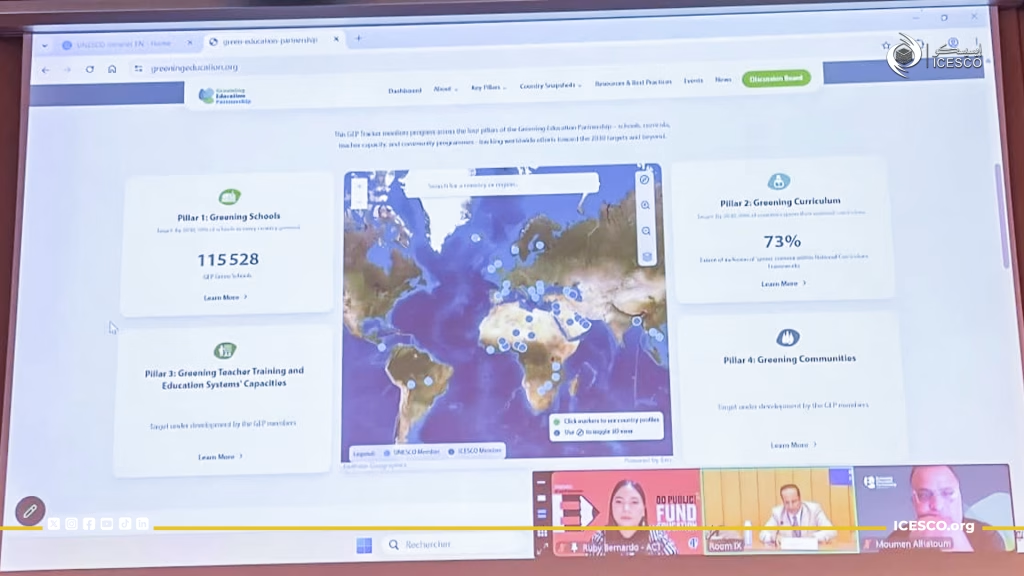
Subsequently, Dr. Albanyan reviewed the Greening Education Partnership (GEP) Dashboard for Member States, developed jointly by ICESCO and UNESCO. He highlighted key findings of ICESCO’s regional report titled “Beyond the Transforming Education Summit: From Commitments to Action,” which monitors progress made by Member States in implementing their commitments and identifies areas of advancement, particularly in digital transformation, governance and financing, equity and inclusion, and teachers’ professional development.
In closing, Dr. Albanyan called for focusing on integrating climate education within national education systems, strengthening monitoring and evaluation mechanisms, and enhancing the exchange of data and expertise.


