
ICESCO Holds the Second International Conference on Teaching Arabic to Non-Arabic Speakers in Türkiye

2 May 2026
The Islamic World Educational, Scientific and Cultural Organization (ICESCO) held the Second International Conference entitled “Modern Approaches and Smart Applications in Teaching Arabic Grammar and Morphology to Non-Arabic Speakers”, in cooperation with Bursa Uludağ University (Türkiye), its Faculty of Theology, and the Faculty of Theology Foundation, from April 28 to 30, 2026, in the city of Bursa, Republic of Türkiye, with the participation of 68 researchers from 21 countries.
The conference aimed to explore ways to develop the teaching of grammar and to review modern experiences in enabling learners to build their linguistic competencies on solid scientific and applied foundations. Its sessions addressed several themes, including challenges in teaching Arabic grammar and morphology; modern strategies in grammar instruction, from rote learning to empowerment; and artificial intelligence and contemporary applications in grammar teaching.
The opening session featured remarks by Dr. Ferudun Yılmaz, Rector of Bursa Uludağ University; Dr. Nasseria Al-Araja, Deputy Permanent Representative of the League of Arab States to the United Nations in New York; and Dr. Adem Apak, Dean of the Faculty of Theology at Bursa Uludağ University. They commended the scientific and academic cooperation with ICESCO in organizing the conference to support the Arabic language in Türkiye and to promote specialized research in this field.
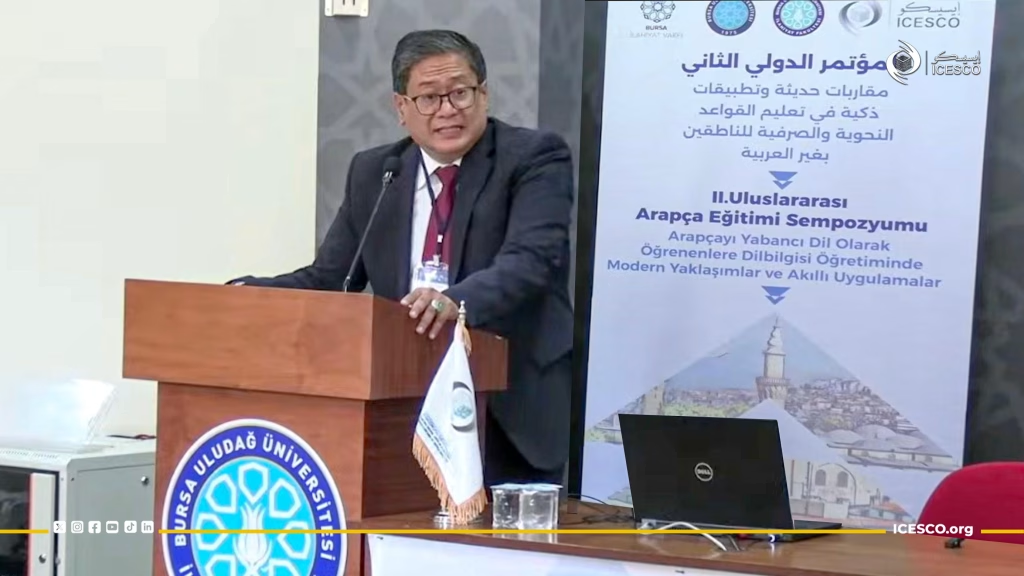
In his address, Dr. Magdi Haji Ibrahim, Head of the ICESCO Center of Arabic for Non-Arabic Speakers, emphasized that facilitating the teaching of Arabic grammar requires a well-balanced approach between theoretical foundations and practical application. This, he noted, can be achieved through a logical progression from simple sentences to contextualized textual examples rooted in real-life situations, moving away from rote memorization and rules detached from lived linguistic reality.
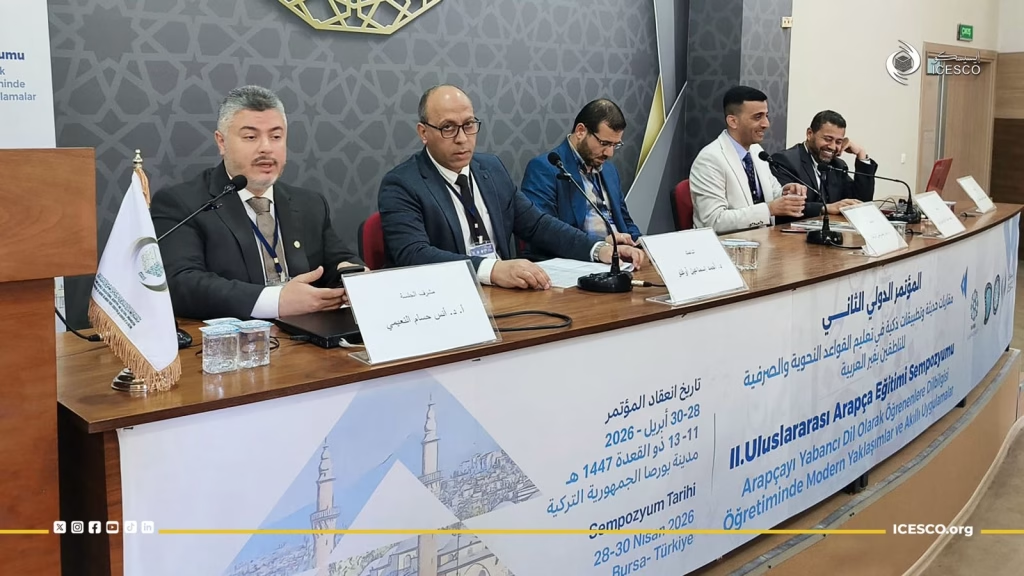
Dr. Anas Hossam Al-Nuaimi, Head of the International Leadership Support Section for the Arabic Language at the Center, chaired the second session of the conference, which focused on curricula for teaching Arabic to non-Arabic speakers, methods of presenting and teaching grammar and morphology, and ways to further develop these materials.
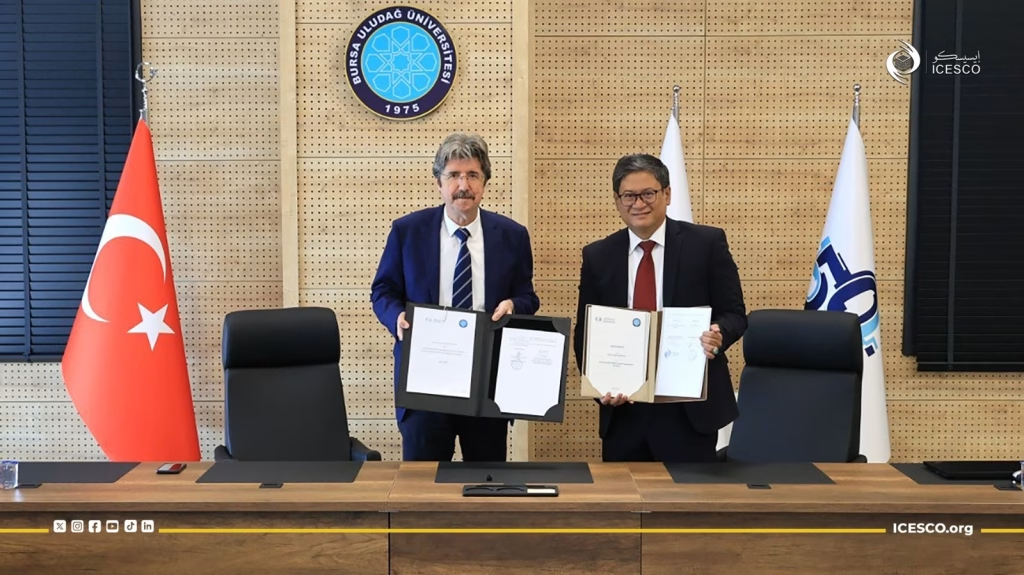
On the sidelines of the conference, a cooperation agreement was signed between the Center and Bursa Uludağ University to implement a set of activities, programs, and research projects related to teaching Arabic to non-Arabic speakers.