The Islamic
Educational, Scientific and Cultural Organization (ISESCO) will host an open
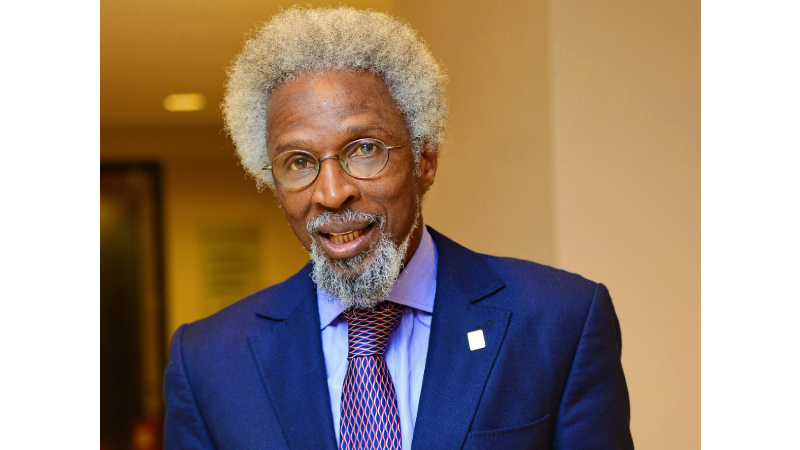
meeting with Dr. Alioune Sall, Founder, Executive Director of the African
Futures Institute in South Africa, at 10.30 a.m. on Wednesday 4 December 2019,
to discuss Social transformations and strategic anticipation.
The meeting
will discuss anticipatory culture and simplify the notion of strategic
anticipation and its interaction with social transformations, with the participation
of Dr. Kais Hammami, Expert, Director of the Center of Strategic Anticipation;
Ms. Ramata Almamy Mbaye, Director of Human and Social Sciences.
The event
will be held as part of ISESCO’s new vision through which it seeks to turn into
a beacon of global outreach by promoting wider openness to the world,
cooperation with international organizations sharing the same fields of action.
It also aims to support civil society, protect children, give refugees and the
displaced access to education and promote the new roles of artificial
intelligence (AI) and future education models.
The meeting
is open to the interested public for attendance and contribution to the open
debate.
the
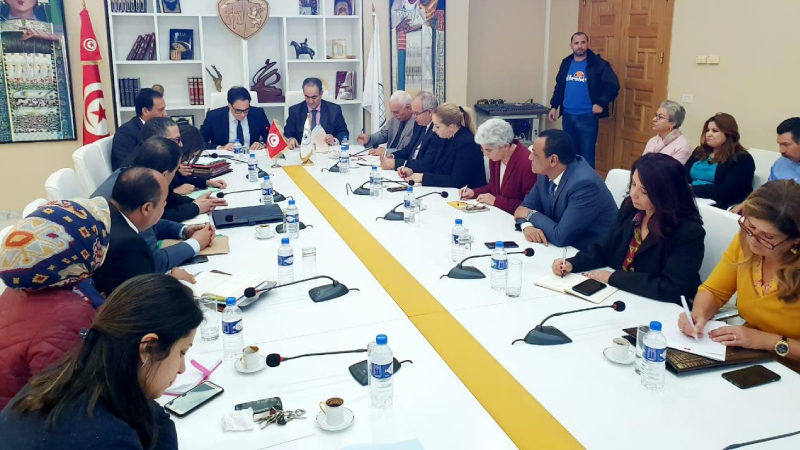
Tunisian Ministry of Cultural Affairs, yesterday in Tunis, held the meeting of
the Joint Preparatory Committee of the 11th Islamic Conference of
Culture Ministers and the closing ceremony of Tunis as Capital of Islamic
Culture for 2019, due to be held on 17-18 December 2019. The meeting was
presided over by Dr. Mohamed Zine El Abidine, Tunisian Minister of Cultural
Affairs, and attended by Mr. Mohamed Ghemari, Director of the Executive Council,
General Conference and the Specialized Ministerial Conferences of the Islamic
Educational, Scientific and Cultural Organization (ISESCO).
In
addition to officials of the Tunisian Ministry of Cultural Affairs, the meeting
brought together the representatives of the Tunisian Ministries of Foreign
Affairs, Local Affairs and Environment, Tourism and Handicrafts, Equipment,
Housing and Territorial Planning, and the Tunisian Customs as well as Tunis’ Municipality
and Governorate.
During
this meeting, Dr. Zine El Abidine stressed the need to provide adequate logistic
and technical organization and media coverage for this Conference to reflect
the event’s value and Tunisia’s position in the Islamic world. He also lauded
the efforts exerted throughout a whole year to ensure the success of this event,
give the Conference due attention in both Tunisia and the Islamic world, and
upgrade the Islamic culture’s presence in the Tunisian cultural identity.
On his
side, Mr. Ghemari commended the cooperation between ISESCO and the Tunisian
Ministry of Cultural Affairs and the other official bodies concerned with the
event to ensure its success and highlight the position of Tunisia.
Moreover,
the meeting reviewed the overall cultural activities and events organized throughout
a whole year in Tunis as the Capital of Islamic Culture, and the participation
of some of Tunisian internal parties with Islamic civilizational dimension and
national and Islamic significance. The participants also explored the necessary
measures and arrangements, and the final preparations for the 11th
Islamic Conference of Culture Ministers and the closing ceremony of Tunis as
the Capital of Islamic Culture on 17-18 December 2019.
The Islamic Educational, Scientific and Cultural Organization (ISESCO) and Alwaleed Philanthropies, in cooperation with the Ministers of Health and Education, the University of Jordan and the National Commission for Education, Science and Culture in the Hashemite Kingdom of Jordan, will organize a medical, social and educational caravan for the benefit of the population of Al Jofa region, South Shouna, Jordan from 15 to 19 December 2019.
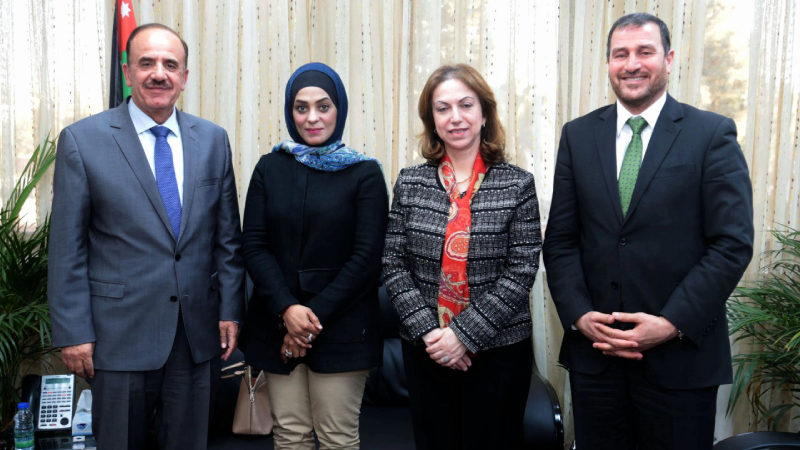
In this respect, Dr. Amina Al-Hajri, ISESCO Deputy Director General, paid a preparatory visit to the targeted region to examine the final arrangements and obtain the approval of the official authorities of the medical, educational and social needs. She also made field visits to know people’s needs, visited garment factories and hospitals, and met with medical doctors to determine the needed specialties.
Furthermore, Dr. Al-Hajri met with the President of the University of Jordan, the Secretary General of the Jordanian National Commission and the Director of the “Faculty for Factory” project, who represent ISESCO partners in implementing the caravan, in order to finalize the preparations.
The Director General of the Islamic Educational, Scientific and Cultural Organization (ISESCO), Dr. Salim M. AlMalik, received Abdelmajid Ghait Seif Ennasr, Chargé d’Affaires of the Libyan Embassy in Rabat, today at the Organization’s headquarters and together they explored ways to further cooperation between ISESCO and the State of Libya in the fields of education, science and culture under ISESCO’s new vision and future action strategy.
Talks during this meeting centered on the obstacles to education process in Libya and possible measures to overcome them and ways to allocate some programmes for Libya, namely in safe areas which are most in need for some educational services, as part of ISESCO’s new vision that focuses on sustainable development issues, elimination of poverty, counter-terrorism and eradication of extremism, youth and women empowerment, support of civil society, child protection and teaching of refugees and displaced people.
Moreover, the two parties considered inviting a delegation from the World Islamic Call Society, a Libyan philanthropy, to discuss cooperation prospects in the common action areas.
For his part, ISESCO Director General reaffirmed the need to attract some qualified Libyan competencies to work at the Organization and invite a Libyan intellectual to lecture at one of ISESCO’s Cultural Forum gatherings.
The meeting was attended by Dr. Ahmed Said Ould Bah, Director of External Relations and Cooperation; Dr. Kais Hammami, Director of Strategic Anticipation; and Dr. Abdelilah Ben Arafa, Cultural Advisor to ISESCO Director General.
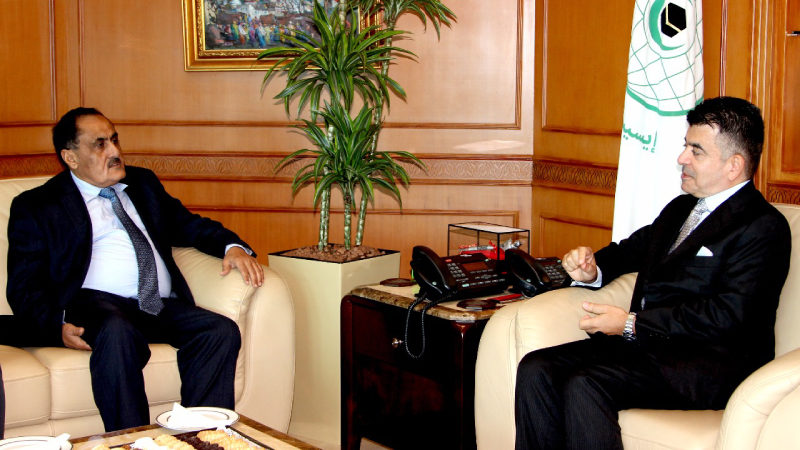
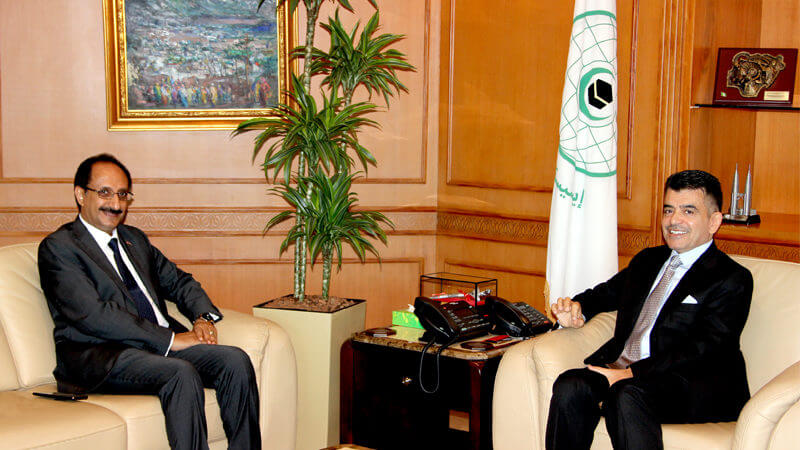
Dr. Salim M. AlMalik, Director General of the Islamic Educational, Scientific and Cultural Organization (ISESCO), explored with Mr. Azzedine Saeed Al-Asbahi, Ambassador of the Republic of Yemen to the Kingdom of Morocco, ways to develop cooperation between ISESCO and Yemen in the coming period, take practical steps towards overcoming the difficulties which face the educational process, and preserve heritage and natural reserves in Yemen.
During this meeting, held today at ISESCO headquarters, the two parties explored the support that ISESCO may grant to the sector of education in Yemen to digitalize the Yemeni educational curricula as part of ISESCO’s new vision aiming to empower youth, women and children to exercise their educational, scientific and cultural rights. Besides, ISESCO Director General reaffirmed the Organization’s willingness to host and train a number of Yemeni young people on the latest techniques in the fields of education, science, culture and communication.
The meeting also exchanged views on the threats facing the Yemeni heritage and archeological sites. In this regard, Dr. AlMalik stressed the need to inscribe the Yemeni heritage sites on the Islamic World Heritage List and restore the damaged sites. He also invited the Yemeni Ambassador to attend the Extraordinary Meeting of the Islamic World Heritage Committee, to be held on 2-3 December 2019 at ISESCO headquarters in Rabat, to present this issue to the participants in the meeting.
Furthermore, Dr. AlMalik stressed the need for concrete action to solve the problems facing natural reserves in Yemen through visits of experts to assess the current situation, develop a strategy therefor and put practical solutions to preserve these reserves.
The meeting was attended by Dr. Ahmed Said Bah, Director of External Relations and Cooperation,p Dr. Kais Hammami, Director of the Strategic Anticipation Centre, and Dr. Abdelilah Benarafa, Cultural Advisor to the Director General.
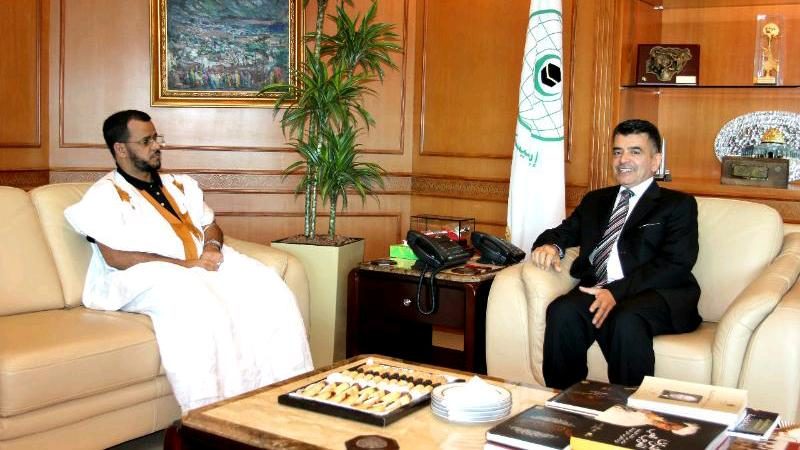
Dr. Salim M.
AlMalik, Director General of the Islamic Educational, Scientific and Cultural
Organization (ISESCO) discussed with Mr. Dah Ould Sidi Ould Amar Taleb,
Minister of Islamic Affairs and Traditional Education of Mauritania, the
promotion of cooperation between the two parties in education, science and
culture.
During this
meeting held at ISESCO headquarters, Dr. AlMalik and Mr. Taleb agreed to boost
support for ISESCO Regional Educational Center for the Promotion of Traditional
Education in Nouakchott, cooperate in establishing the Institute of Training
Imams and Preachers, conduct studies on the development of ‘Mahdras’
(traditional Quranic schools) and publicize their objectives, working
mechanisms and impact at the educational, scientific and cultural levels.
For the record,
ISESCO Educational Center in Nouakchott was established under an agreement
signed on 22 October 2014 between ISESCO and the Mauritanian Ministry of
Islamic Affairs and Traditional Education. The Centre started operating in July
2017 with the first 9 month-long educational training session for traditional
education teachers in Mauritania.
The Centre’s
continuous training programmes aim to provide trainees with the necessary
educational and methodological skills to plan, schedule, implement and assess
the educational activities, and strengthen ties between trainees and the
Islamic values and Arabic culture, and ensure openness to contemporary culture
through the adopted educational curriculum.
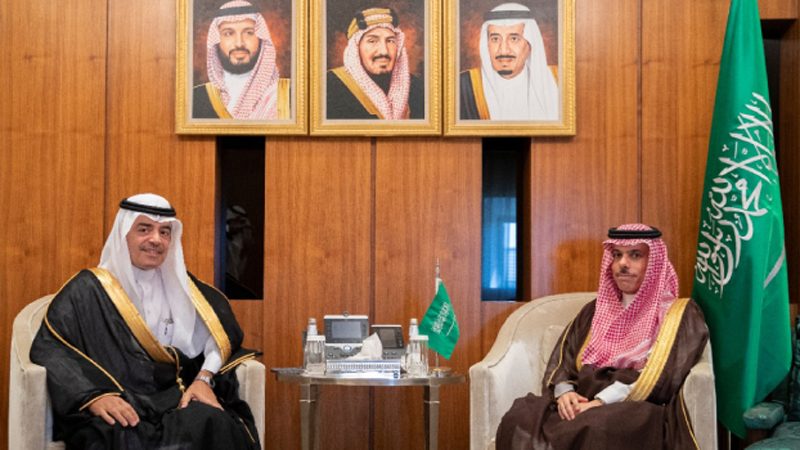
Dr. Salim M. AlMalik, Director General of the Islamic Educational, Scientific and Cultural Organization (ISESCO), explored with His Highness Prince Faisal Bin Farhan, Saudi Minister of Foreign Affairs, the cooperation ties between the Organization and the Kingdom of Saudi Arabia. Dr. AlMalik also reviewed ISESCO’s activities and future programmes within the framework of the new strategic vision, which makes of ISESCO a source of civilizational influence in the Islamic world as well as the rest of the world.
This was part of today meeting of the Saudi Minister of Foreign Affairs with ISESCO Director General, who congratulated the Minister on the trust of the Custodian of the Two Holy Mosques, King Salman Bin Abdulaziz, and his new position.
The meeting further highlighted the great interest and considerable support of the Kingdom of Saudi Arabia for the efforts of ISESCO in the fields of education, science and culture.
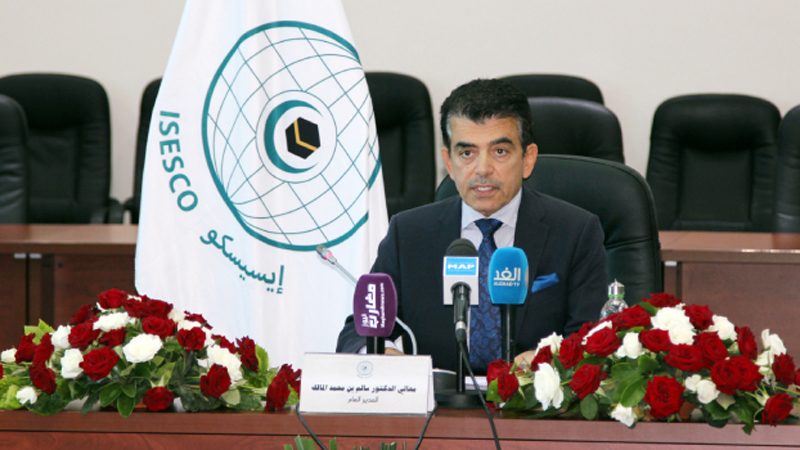
Dr. Salim M. AlMalik, Director General of the Islamic Educational, Scientific and Cultural Organization (ISESCO), stated that the Organization has entered into a new phase of rebuilding based on an innovative vision, a developed methodology and modern foundations in its pursuit to achieve a genuine transformation to secure its proper international position and keep up with the rapid changes and modern technologies.
His statement was part of the press conference held today at ISESCO headquarters. Dr. AlMalik started this meeting with media professionals by saying that “ISESCO was founded to become the Islamic world’s version of UNESCO. Today, we seek to become an international organization rather than a local or regional one. Besides, this aspiration is legitimate as it hinges upon a new vision which constitutes the basis of a strategy having future dimensions.”
Moreover, ISESCO Director General stressed that the Islamic world deserves having a high-standing organization, with wide impact on Muslim communities inside and outside the Islamic world, which expresses the Muslim world’s enlightened vision on contemporary issues relevant to ISESOC’s areas of competence.
Dr. AlMalik further highlighted that modernizing ISESCO both in form and content is the major objective which includes the strategic objectives of the Organization. He also explained that ISESCO’s new vision is based on three foundations: a) innovation in planning and achievement, and modernization of performance while rationalizing costs through a developed financial management; b) openness to the prospects of this era so as to be enlightened with modern humanist ideas and international expertise in education, science, innovation, culture, communication and creativity by establishing “ISESCO International Consultative Body”; c) transformation of ISESCO from an organization with limited resources into an organization which produces resources through the establishment of the Waqf Fund on modern bases to ensure its security and continuity in times of crises likely to drain its resources.
ISESCO Director General also said “Our vision aims to turn ISESCO into an international beacon in the fields of civilizational building and knowledge progress, and make of its conferences, meetings and workshops occasions to present new initiatives and useful innovative ideas.”
Besides, Dr. AlMalik stated “we are working to make ISESCO an organization of competencies and a leadership and creativity center, which coordinates the efforts seeking to develop policies and educational systems in Member States, and improve the performance and outputs of these systems.”
He further added that ISESCO should have a purposeful and innovative information mission, an effective communication strategy to defend and promote the status of Arabic language at the Islamic and international levels through the programmes of teaching Arabic language to non-Arabic speakers, support the programmes of writing the languages of Muslim peoples in Arabic script, and become open to the Muslim peoples regardless of the geographical borders.
Dr. AlMalik also underscored that the mission of ISESCO is to develop key leaderships, set developmental policies in its areas of competence, develop knowledge and innovative systems, and provide technical expertise and advice and institutional support through openness to its environment and the world at large.
In conclusion, Dr. AlMalik tackled the nature of the relationship that should be established between ISESCO and media outlets as he commended the role of media professionals and asked to support and develop their role in a consistent way with ISESCO’s new vision.
Afterwards, ISESCO Director General received and responded to the remarks and questions of the various media outlets’ representatives. He also lauded the suggestions made in some remarks and promised to examine and adopt them in line with the new vision of ISESCO while calling for further communication between the organization and media professionals.
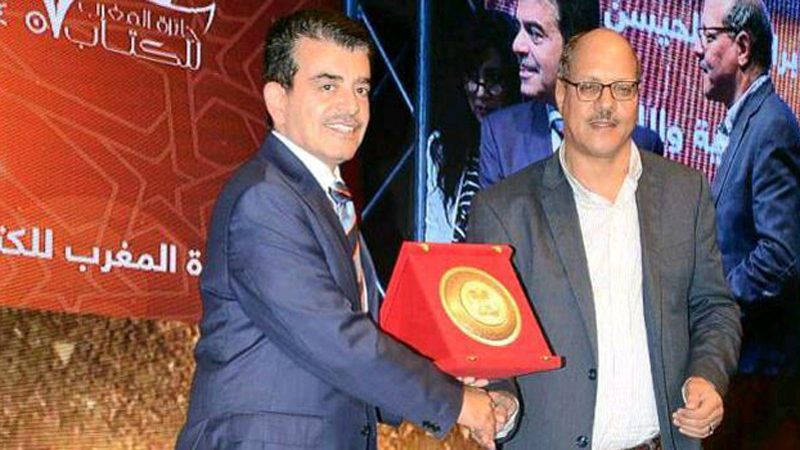
During his participation in the award ceremony of Morocco Book Prize 2019, held by the Moroccan Ministry of Culture, Youth and Sports, under the high patronage of His Majesty King Mohammed VI, Dr. Salim M. AlMalik, ISESCO Director General, after presenting the Prize to one of the winners, announced his initiative to hold the award ceremony of the next year’s edition of the Prize at the Organization’s headquarters in Rabat. The initiative was largely appreciated by the participating audience made up of intellectuals and members of the diplomatic corps in Morocco.
At the invitation of Mr. El Hassan Abyaba, Minister of Culture, Youth and Sports, Government Spokesperson, Dr. AlMalik attended the ceremony along with Mr. André Azoulay, Advisor to His Majesty the King of Morocco. During his friendly discussion with ISESCO Director General, Mr. Azoulay reaffirmed his great respect for the Organization and its efforts and expressed his willingness to cooperate with its General Directorate.
It is worth mentioning that the Prize covers the following categories: poetry, story-telling and narrative, literary creation in Amazigh language, youth and children’s literature, social sciences, translation, literary, artistic and linguistic studies, and studies in the field of Amazigh culture.
The award ceremony took place today evening at the National Library in Rabat.
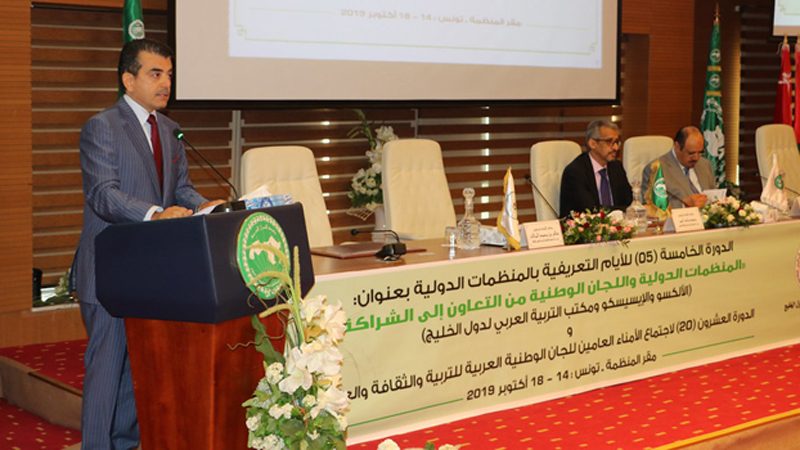
The Director General of the Islamic Educational, Scientific and Cultural Organization (ISESCO), Dr. Salim M. AlMalik, stated that the present juncture in the history of the Islamic world gives rise to greater responsibilities to tackle challenges and require constant attention to adapt to and keep abreast of changes, as part of a new innovative and comprehensive vision, and through scientific approaches and an anticipatory culture.
In his address at the opening of the 20th Meeting of the Secretaries General of Arab states’ National Commissions for Education, Science and Culture, held today in Tunis, Republic of Tunisia, ISESCO Director General underlined that “the tough challenges faced by the Islamic world should not shatter our hopes and discourage us from working. A glimmer of hope is always in the horizon as long as there are good initiatives, firm resolve and good anticipation of the future, as Ibn al-Muqaffa says: whoever travels aimlessly, his mount will let him down”.
In addition, Dr. AlMalik stated that advancing the civilizational project in the Arab-Islamic world hinges on updating educational systems; promoting science, technology, innovation and creativity; and renewing policies specific to culture, communication and information. He added that that this civilizational project embodies the collective objective of joint Arab-Islamic action in the fields closely connected to the elaboration of development policies and knowledge systems.
In the same vein, ISESCO Director General pointed out that ISESCO’s new development vision, whose broad-lines are contained in the Medium-Term Strategic Plan (2020-2029), adopts the slogan “Building Systems… Making Minds” and that it will be implemented as part of a forward-looking approach that aims to accomplish ISESCO’s mission and desired objectives. He highlighted that the vision consists of making of ISESCO a beacon of global outreach in the fields of civilizational edification, knowledge progress, with the mission of elaborating development policies and building knowledge and innovation systems, and providing expertise, technical counsel and institutional support.
Moreover, Dr. AlMalik urged Member States to be more effective, be makers of decisions instead of passive observers and achieve their autonomy as dependency, he maintained, kills ambitions and aspirations and breaks wills. He also reaffirmed that from now on, ISESCO will never propose programmes and workshops but rather will wait for the propositions of National Commissions, while taking into consideration their outcomes and impact assessment. He explained that each Commission lives the reality of its country and is well aware of its needs and requirements, while promising that ISESCO would be at the level of expectations of National Commissions only when it receives their support and the one of their countries.












 At the invitation of Mr. El Hassan Abyaba, Minister of Culture, Youth and Sports, Government Spokesperson, Dr. AlMalik attended the ceremony along with Mr. André Azoulay, Advisor to His Majesty the King of Morocco. During his friendly discussion with ISESCO Director General, Mr. Azoulay reaffirmed his great respect for the Organization and its efforts and expressed his willingness to cooperate with its General Directorate.