
The Islamic World Educational, Scientific, and Cultural
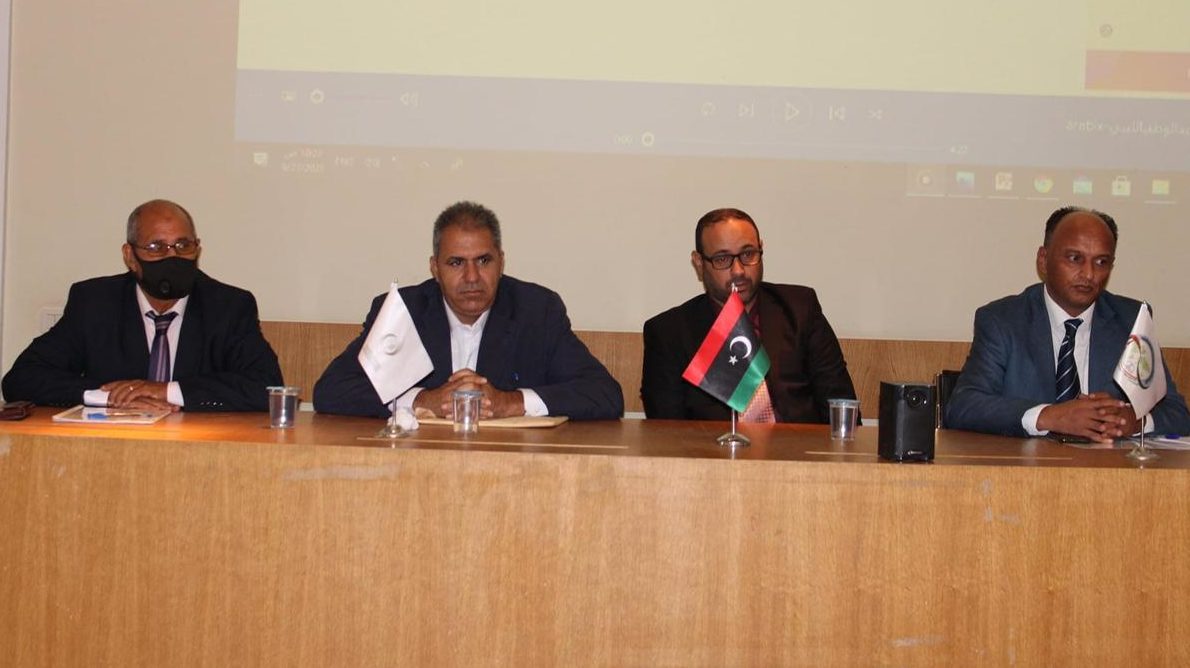
Organization (ICESCO) participated, via videoconferencing, in the regional
workshop of UNESCO Regional Center of Quality and Excellence in Education in
Saudi Arabia (RCQE), held on Tuesday, June 15, 2021, under the theme “Education
in Emergencies in the Arab Region in accordance with the Education 2030 Agenda.”
The event saw the participation of intellectuals, experts, and specialists from
several local, regional and international bodies.
Program directors at ICESCO’s Sector of Education, Dr. Youssef Abou
Daka, Dr. Aziz Elhajir, and Dr. Ahmed Zanfali represented the Organization in the
workshop.
The event reviewed the outcomes of the study which was conducted
under the supervision of the RCQE on “Education in the Arab States in Crisis in
accordance with the Education 2030 Agenda.” The study focused on analyzing the
sector of education in light of the Sustainable Development
Goal 4 in several Arab countries, including Syria, Yemen, Libya, and the Sudan,
which witnessed many crises and conflicts in the past years.
The analysis aims at encouraging the Arab countries facing crises
to capitalize on successful experiences and lessons learned from other
countries that faced certain crises and managed to overcome their negative
effects on education, such as Vietnam, Bosnia and Herzegovina, and Tunisia. The
three reference countries represent different geographical regions that offer
rich experiences, diverse lessons, and various success stories.
The workshop discussed the recommendations and proposals likely to
help Arab countries improve the quality of education by analyzing the sector of
education to overcome relevant crises in light of the experiences of reference
countries as well as the outlined guidelines to achieve SDG 4.
The Islamic World Educational, Scientific
and Cultural Organization (ICESCO) and the International Camel Organization
(ICO) held, on Monday, June 14, 2021, a virtual working session to explore
areas of cooperation between the two parties.
The two parties examined ways to set up a
strategic plan of cooperation on several programs and activities pertaining to
promoting camels’ civilizational and cultural heritage, conducting scientific
studies on this subject, supporting the traditional and handicraft industry,
and promoting the desert cultural heritage.
H.H. Prince Sultan bin Saud bin Mohammed, ICO
Vice President, and Dr. Salim M. AlMalik, ICESCO Director-General (DG) chaired
the meeting. The session also witnessed the participation of H.R.H. Prince
Abdulrahman bin Khalid bin Musaad, Representative of Saudi Arabia to the ICO,
Dr. Mubarak Al-Suwailem, ICO Secretary-General, and Dr. Abdelilah Benarafa,
Deputy ICESCO DG, in addition to advisors and heads of sectors and departments
at the Organization.
At the beginning of the meeting, H.H.
Prince Sultan bin Saud conveyed to the participants the greetings and gratitude
of H.E. Sheikh Fahd bin Hathleen, Founder and Chairman of the ICO Board of
Directors.
During the meeting,
which was held as part of the implementation of the Partnership
Agreement signed between the two organizations in April 2021, the two parties
reviewed the broad lines of the proposed programs and cooperation activities as
well as implementation plans to achieve the expected outcomes of the programs.
The list includes programs on civilizational and cultural heritage relating to
camels and desert culture, the inscription of this heritage on the List of
Intangible Heritage of the Islamic World, and participation in King Abdulaziz
Festival of Camels and camel races, in addition to the organization of
conferences, symposia, festivals and fairs dedicated to camels.
The working session
also focused on the studies and scientific research that parties will jointly conduct
to protect camel breeds, improve their DNA through genetic research and
increase the production of camel milk and meat, to promote camel economy and investment
in the field.
The two parties
also agreed to issue several publications, such as the encyclopedia of camels,
and publicize camel heritage by employing various mediums such as
documentaries, digital content and children’s stories. The goal is to bring the
new generations of the Islamic world closer to this heritage, which is a source
of pride.
At the end of this
meeting, which was marked by rich discussions and practical ideas and
proposals, both parties reaffirmed that this cooperation will be fruitful,
given the two Organizations’ complementary visions and shared objectives,
especially in the field of heritage protection and identity promotion. The
participants also agreed to hold bilateral technical meetings, to launch the
implementation of the agreed-upon programs and activities.
The Islamic World Educational, Scientific, and Cultural
Organization (ICESCO) and the United Nations Population Fund (UNFPA) signed on
Monday, June 14, 2021, a memorandum of understanding (MoU) for joint cooperation
to promote the role of girls, women, and young people in the Islamic world to
achieve sustainable development.
Dr. Abdelilah Benarafa, ICESCO Deputy Director-General, and Mr.
Louis Mora, UNFPA Resident Representative in Morocco, signed the MoU during an official ceremony, held at
ICESCO headquarters, with the participation of several UNFPA Officials as well
as the heads of sector and department, and consultants at ICESCO. Mr. Karim Hamidouche,
head of the Legal Affairs and Partnership Pole at the General Secretariat of
the Moroccan National Commission for Education, Science and Culture, also
attended the ceremony.
In his address, Dr. Benarafa stressed the importance of cooperation
between ICESCO and UNFPA for building the capacities of women and young people and
strengthening their creativity in ICESCO Member States to overcome the
challenges facing them and to ensure the right to education, science and
technology.
On his part, Mr. Mora expressed his happiness for the signing of the
agreement, which will strengthen the bilateral relationship between ICESCO and
UNFPA and support their joint cooperation to ensure women’s rights and
strengthen their role, especially in entrepreneurial activity.
The memorandum covers the following:
Promoting cooperation between ICESCO and UNFPA in advocating for
comprehensive public policies for women, young people and girls;
Empowering women, young people, and girls and enhancing their role
as leading actors in sustainable development;
Strengthening the leadership of women, young people, and girls through
community
support programs;
Promoting access to information, services
and opportunities for marginalized women, young people and girls through
innovative digital solutions;
Developing digital content suiting the
needs of marginalized groups through building the capacities of content
creators, teachers, civil society, the private sector as well as academics;
Capitalizing on expertise and promoting
cooperation between countries of the global south to exchange experiences and
best practices on women, young people
and girls’ empowerment;
Preparing reports and analytical studies on
women, young people and girls’ empowerment and protecting their rights.
The Islamic World Educational, Scientific, and
Cultural Organization (ICESCO) participated in the 84th Educational
Affairs Council of the Palestinian Children that the Sector of Palestine and Occupied
Arab Territories, General Secretariat of the League of Arab States, in Cairo,
held on Monday, June 14, 2021. The council focused on the sector of education
and its needs in the occupied Palestinian territories in light of continuous
Israeli aggression and attacks on Palestinian curricula.
Dr. Youssef
Abou Daka, Programs Director at ICESCO’s Sector of Education, represented the
Organization in this edition through a report on its efforts to support the
education sector in Palestine for 2019-2021.
The report shed
light on ICESCO’s key educational programs and activities as well as its major orientations
and efforts to increase support for the competent authorities in the State of
Palestine in the fields of education, science, culture and communication. The
aim is to strengthen the Arab identity through cooperation with the Palestinian
National Commission for Education, Culture, and Science by developing and promoting
the Palestinian educational institutions through financial support and the
necessary educational materials and multimedia to ensure the continuity of the
educational process, particularly during the COVID-19 pandemic.
Dr. Abou
Daka also underscored that the Organization developed the Palestinian
educational programs in line with the development requirements and the needs of
society. The aim is to strengthen the capacities of the relevant educational
institutions and help them improve their educational role to counter Israeli obstacles
and challenges in support of the Palestinian people.
The Council
discussed the serious impact of the separation wall on the educational
processes in both the occupied Palestinian territories and the eastern occupied
part of Al-Quds, as well as the Israeli Judaizing policies. It also stressed
the need to enhance the mechanisms of educational collaboration between the
State of Palestine and the Arab educational and scientific organizations to
support the implementation and development of their programs and follow-up to
the implementation of the decisions of the Education Affairs Council.
Dr. Salim M. AlMalik,
Director-General (DG) of the Islamic World Educational, Scientific and Cultural
Organization (ICESCO), received Mr. Sultan Bin Abdulrahman Al-Marshad, CEO of
the Saudi Fund for Development, who paid a visit to the Organization’s
headquarters, in Rabat, today, Friday, June 11, 2021.
During the meeting, which
also brought together some directors of ICESCO’s sector, Dr. AlMalik reviewed
the salient programs and projects that the Organization is implementing, in
cooperation with the competent authorities in several Member States. The DG
also reviewed the new vision and action strategy of ICESCO, which seek further
communication with the Member States to identify their priorities and needs,
develop programs and activities that meet these needs, open up to non-Member
States, international and donor organizations, bodies and institutions, and
build partnerships with them for the benefit of the countries of the Islamic
world and Muslim communities around the world.
ICESCO DG also highlighted
the key initiatives, programs, and projects that the Organization launched and
implemented to support the efforts geared towards addressing the COVID-19
pandemic and assisting many countries in facing the effects of the pandemic on
the fields of education, science, and culture.
For his part, the CEO of
the Saudi Fund for Development praised the roles of ICESCO in its areas of
competence and its support to its Member States during the COVID-19 pandemic.
The Saudi Fund for
Development was established in 1974. Its objectives include financing development
projects by granting loans to developing countries and providing grants for
technical aid to finance studies and institutional support.
The Islamic World Educational,
Scientific, and Cultural Organization (ICESCO) welcomes the decision of His
Majesty King Mohammed VI to facilitate the return of all unaccompanied Moroccan
minors, who have an illegal status in some EU countries.
The royal decision confirms the
responsible humanitarian approach of Morocco in dealing with the migration
issue and its commitment to the laws, conventions, and guidelines aimed at
protecting children, including the 1989 Convention on the Rights of the Child.
The Organization calls for the
necessity of building a bridge of rational dialogue between EU countries and
the Southern Mediterranean countries regarding the critical issue and avoiding
any considerations that would hinder international efforts to enhance the
protection of migrants’ rights.
ICESCO asserts that the Kingdom is a
distinguished model of successful regional cooperation in many vital issues, as
it is both a country of transit and stability for migrants. H.M. King Mohammed
VI took the initiative at the 30th Africa Union Summit in January 2018, to
propose the establishment of a body to monitor the migration phenomenon in
Africa. The proposal resulted in the establishment of the African Migration
Observatory in Rabat in December 2020, a body that responds to the urgent needs
related to migration by collecting data, analyzing them, and exchanging
information among African countries.
The decision of H.M. King Mohammed
VI to facilitate the return of Moroccan minors reflects the strong and sincere
involvement of Morocco in all humanitarian and international issues.
The Organization expresses its full
support to the decision and to the rational approach stemming from the spirit
of true partnership between Morocco and EU countries to achieve peace,
stability, and decent living.
Innovative
ideas and rich discussions during the First International Symposium on Space
Science
The First International Symposium on “Space Science:
Importance, Challenges, and Emerging Opportunities in the Space Industry and
Islamic World” that the Islamic World Educational, Scientific and Cultural
Organization (ICESCO) held, on Thursday, June 10, 2021, in partnership with the
American Space Foundation, under the theme: “Building tomorrow’s innovators.”
The Symposium brought together a powerhouse of high-level
space program officials and experts, scientists, and astronauts from around the
world, who exchanged innovative ideas, explored vital questions, and rich
discussions on the challenges and opportunities of space science and development
of space-related applications and industries.
The Symposium, organized both at ICESCO headquarters,
in Rabat, and on the Zoom platform, aimed at spreading awareness of the
importance of space science and technology, and the enormous potential of space
technology applications in achieving sustainable development and reinforcing the
drive of the countries of the Islamic world towards developing space programs
and using space technology in the fields of education, science, and innovation.
At the opening session, Dr. Salim M. AlMalik, ICESCO
Director-General (DG), gave an address, wherein he stressed that space science
and technology offer broad prospects that can help us overcome the challenges
facing our planet, which is why space science should be a major part of the
long-term plans and strategies of all countries.
Dr. AlMalik explained that data derived from space
science can help improve agriculture, increase crop productivity, discover new
sources of energy, contribute to safe waste recycling, and protect and monitor
the environment, and other vital areas of human activities.
ICESCO DG also considered that “the drive towards
space science in the 21st century heralds a new global industrial
revolution, which could be called “space industrial revolution” and constitute
in bringing about engineering and revolutionary changes able to create new
space markets, systems and technologies.”
In his address, Mr. Thomas E. Zelibor, Chief Executive
Officer of Space Foundation, called on all countries to direct their attention
towards space science, which should not be limited to certain countries, to
achieve a balance in this field, stressing that the world today hinges upon data
that space can provide.
On his part, Dr. Driss Ouaouicha, Minister Delegate in
charge of Higher Education and Scientific Research, Morocco, confirmed that 50
years of human activity in space enhanced life quality on Earth, noting that
Muslim scientists were pioneers in space sciences and planetary exploration,
including Al-Khwarizmi. He also reviewed Morocco’s projects in the field of
space science development.
Dr. Fawad Hussain Chaudhry, Federal Minister of Information and
Broadcasting, Pakistan, stated that stars and space have always been a source
of inspiration for humans through monitoring their motion and shifts and
developing telescopes. He also congratulated ICESCO for organizing such a key
event.
In his address, Dr. Modibo Diarra, Chairman of Africa Legal Network
(ALN), described space
exploration as an opportunity to bring together different civilizations,
cultures, and individuals. He added that space sciences should be accessible to everyone and that the Global South countries should work on
bridging the North-South gaps which prevent them from gaining access to the
space industry. Dr. Diarra also noted that space sciences could contribute to
the development of the African continent.
The Symposium’s first session, under the theme
“Space ecosystem awareness: the importance of space technology for humanity,”
saw the participation of Ms. Shelli Brunswick, COO of Space Foundation; Maj.
Gen. Jose Vagner Vital, Brazilian Air Force Executive Vice President; Maj. Gen.
Amer Nadem, Inter Islamic Network on Space Sciences and Technology (ISNET),
Chairman at Pakistan Space & Upper Atmosphere Research Commission
(SUPARCO); and Dr. Farouk El-Baz, Director of Center for Remote Sensing at
Boston University, NASA Astronaut Trainer.
The second session tackled space commerce and
career opportunities in the space industry for young graduates. The
participants then took part in the first roundtable discussion on developing
leadership thinking in the fields of sciences and space among university
researchers, which witnessed the participation of several experts, including
Moroccan inventor Rachid Yazami. The second roundtable discussion touched upon
the importance of strategic relationships between the space industry and
academia in developing countries, while the last session explored ways of
creating the future space innovation workforce.
Dr. Salim M. AlMalik, Director-General (DG) of the Islamic World
Educational, Scientific and Cultural Organization (ICESCO), underscored that
the Organization’s new vision, embodied in its renewed strategic documents,
accords great attention to the National Commissions for Education, Science and
Culture as a special strategic partner. The DG stated that National Commissions
shoulder the great responsibilities of outlining ICESCO’s future orientations
and identifying its programs and activities to meet Member States’ priorities.
Dr. AlMalik made the statement during the inauguration of the new
headquarters of the General Secretariat of the National Commission for
Education, Science and Culture of Morocco in Rabat, on Thursday, June 10, 2021.
The inauguration saw the participation of Dr. Saaïd Amzazi, Minister of
National Education, Vocational Training, Higher Education and Scientific Research,
President of the Moroccan National Commission; Mr. Jamal Eddine El-Aloua, Secretary-General
of the Commission; Mr. Abdeljalil Lahjomri, Permanent Secretary of the Academy
of Morocco; Mr. Alexander Scheschlik, Acting Director of the UNESCO Maghreb; Mr.
Abdelfattah Lahjomri, Representative of ALECSO, in addition to a host of the
National Commission’s officials and members.
Dr. AlMalik expressed his delight that ICESCO is part of such an event,
noting that the Organization takes great pride in having its permanent
headquarters in Rabat. He added that ICESCO greatly treasures the honor of the
high patronage of His Majesty King Mohamed VI. The Monarch granted his
patronage to ICESCO’s initiative to proclaim 2021 as the Year of Women, as well
as to the International Conference on the Civilizational Values in the
Prophet’s Seerah, held in partnership with the Mohammedan League of Scholars in
Morocco and the Muslim World League.
The DG stated that the Moroccan National Commission for Education,
Science and Culture is one of the major institutions that reflect the gains and
success Morocco scores in the sectors of education, science, technology, culture,
and communication, noting that cooperation between ICESCO and the Commission
took a major leap in 2020 and 2021 despite the impact of the pandemic.
At the close of his address, the DG reiterated the Organization’s
commitment towards the Seat country to provide through cooperation and
coordination with the National Commission to provide more venues for Moroccan
institutions and specialists to share expertise and leading initiatives in the
fields of education, science and culture with the rest of the world.
The Islamic World Educational, Scientific and Cultural Organization (ICESCO) held on Tuesday, June 8, 2021, the first session of its Leadership Training Program for Peace and Security, implemented in partnership with the UNESCO Office for the Maghreb, the Conference of the Ministers of Education of French Speaking Countries (CONFEMEN), and the Conference of Ministers of Youth and Sports of French Speaking Countries (CONFEJES).
The program aims to train young people on leadership for achieving peace and building the societies we want by providing them with knowledge tools through exchange with inspirational leaders and experts to become true ambassadors of peace in their societies.
At the outset of the opening session, held face-to-face at ICESCO headquarters in Rabat and on Zoom platform, Dr. Salim M. AlMalik, ICESCO Director-General (DG), gave a recorded speech, wherein he stressed the importance of training young people to build peace and contribute to the prosperity of their societies, noting that we should encourage our young people and instill in them the values of tolerance and coexistence.
In his address, Dr. Abdelilah Benarafa, Deputy DG of ICESCO, welcomed the participants in the training session and stressed that young people are better able to ensure civilizational mediation to achieve social cohesion, adding that leadership requires real peace. Dr. Mohamed Zine El Abidine, Director of Culture and Communication Sector at ICESCO, expressed his pleasure to take part in the training with young people, who represent hope for a better future, pointing out that Islam is a reference for the ethics and conditions for achieving and sustaining peace.
For his part, Dr. Cheikh Tidiane Gadio, former Minister of Foreign Affairs of Senegal, Special Envoy of the International Organization of La Francophonie in Mali, stressed the need for peace and security to achieve development and prosperity. He also stressed the importance of the role of African women and youth, who are ready to lead the continent towards a secure and prosperous future thanks to their academic training and professional capabilities. In his address, Dr. Ahmed Senouni, Deputy Secretary-General of Mohammadia League of Scholars, stressed that faith in human brotherhood ensures further coexistence while stressing the need to find intellectual, value-based and cultural elements that strengthen the immunity of individuals and societies against all threats to peace.
Ms. Ramata Almami Mbaye, Director of Human and Social Sciences Sector at ICESCO, stressed that the Organization’s Leadership Training Program for Peace and Security constitutes an important opportunity to share expertise and experiences among experts, inspiring young leaders, adding that ICESCO attaches utmost importance to empowering and integrating women and youth in decision-making circles.
The training session began with the participation of 30 young ambassadors of peace representing 22 countries along with experts in the fields of education, peace, security, and strategic foresight. The event witnessed rich discussions and innovative ideas to achieve peace and promote the values of coexistence and dialogue.
ICESCO will continue the series of virtual training seminars between June and September 2021, which will focus on 10 modules related to peace issues. These young trainees will form the first cohort of ICESCO Youth and Women Network for Peace.
In line with its new vision and action strategy, and in a bid to raise awareness of the importance of space science and technology and highlight the enormous potential of its technological application in achieving sustainable development, the Islamic World Educational, Scientific and Cultural Organization (ICESCO) will hold on Thursday, 10 June 2021, the First Symposium on “Space Sciences: Importance, Challenges and Emerging Opportunities in the Space Industry and Islamic World.” The Symposium will be held in cooperation with the American Space Foundation, under the theme, “Building Future Innovators,” which will be an opportunity to discuss and exchange views and knowledge about the latest trends in space technology and sciences and the relevant industries. The event also aims to promote the Islamic world’s embrace of this field by setting up space programs and capitalizing on space technology in the fields of education, science and innovation.
The Symposium will kick off at 10:00 a.m (UCT) at ICESCO Headquarters in Rabat and via videoconference and will bring together a host of prominent experts in space sciences and relevant industries, astronauts, representatives of several ICESCO Member States’ Ministries of Science and Technology, in addition to researchers and entrepreneurs from the Islamic world and beyond.
The Symposium’s agenda features the respective opening addresses of Mr. Thomas E. Zelibor, Chief Executive Officer of the American Space Foundation; Dr. Driss Ouaouicha, Minister Delegate in Charge of Higher Education and Scientific Research in the Kingdom of Morocco; and Dr. Salim M. AlMalik, ICESCO Director-General.
The symposium is divided into the following three working sessions: “Space ecosystem awareness and the importance of space technology for humanity,” “Space commerce and career opportunities in the space industry for young graduates,” and, “Space workforce development, creating the future space innovation workforce.” Moreover, the Symposium will include two roundtables to discuss two key topics namely: “Development of space-science entrepreneurial mindset among researchers at universities,” and, “Importance of strategic relationships between the space industry and academia in developing countries.”