ICESCO, IFLA Hold International Workshop to Explore the Future of Libraries

24 November 2026
The Islamic World Educational, Scientific and Cultural Organization (ICESCO), in partnership with the International Federation of Library Associations and Institutions (IFLA), launched an international workshop on Monday, 23 November 2026, at ICESCO headquarters in Rabat to explore the future of libraries. Attended by library professionals from Sri Lanka, Türkiye, Canada, Nigeria, Mexico and the Sultanate of Oman, the workshop aims to facilitate the exchange of experiences, foster collective reflection on the future of libraries and anticipate the transformations that will reshape their roles.
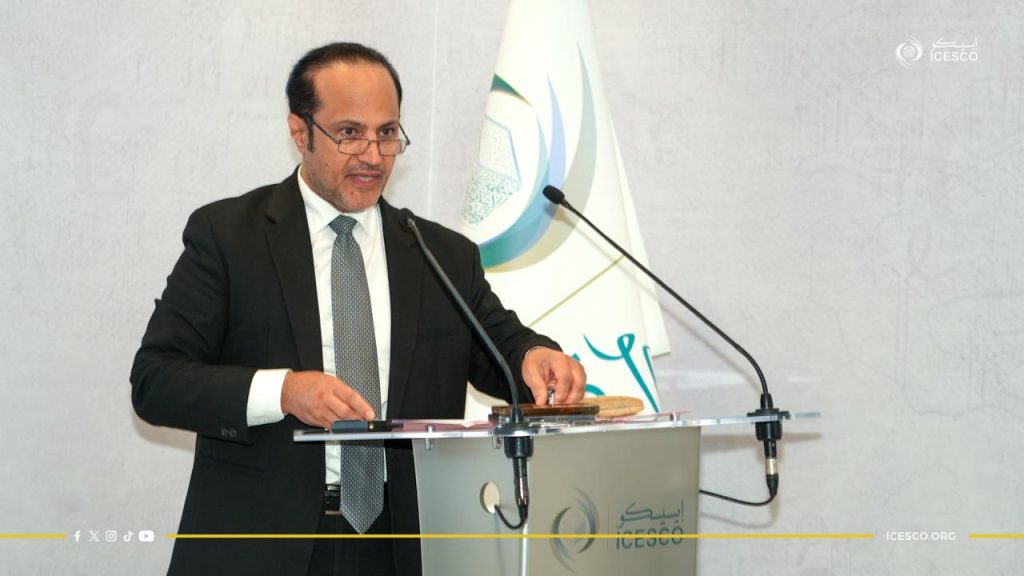
In his opening remarks, Dr. Ahmed Albanyan, Head of the Education Sector, Supervisor of the Translation and Publishing Center, stressed that libraries are increasingly becoming institutions tasked with keeping pace with change, rethinking their roles and developing services that meet the needs of new generations.
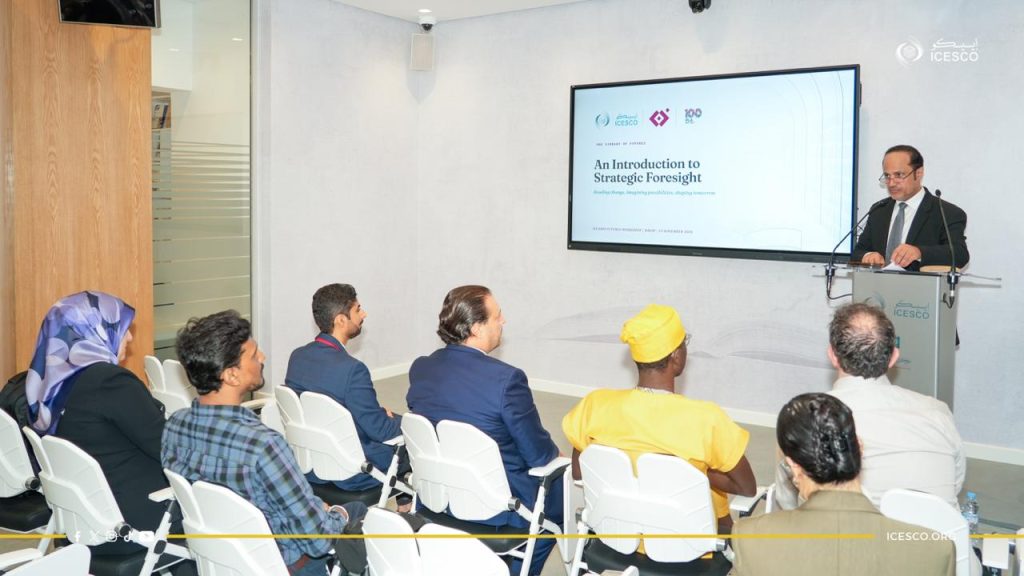
Dr. Albanyan outlined the opportunities offered by artificial intelligence and other digital technologies to enhance cataloging and classification, content analysis, translation, information retrieval and archive management. At the same time, he highlighted the responsibilities associated with these technologies, including safeguarding data and privacy and promoting their responsible and ethical use. He also reaffirmed ICESCO’s commitment to supporting libraries and knowledge institutions in its Member States, citing the Sultan Qaboos Library at ICESCO headquarters, which provides open access to 200,000 sources and references.
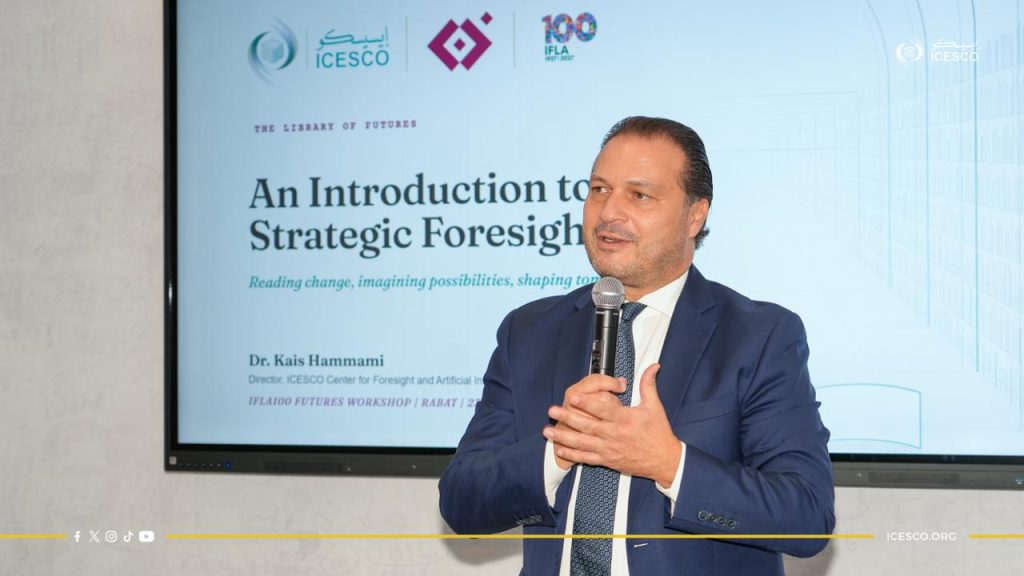
On the first day of the two-day workshop, Dr. Kaïs Hammami, Head of ICESCO’s Foresight and Artificial Intelligence Center, delivered a presentation on the foundations, evolution and methodologies of strategic foresight. He explained the distinction between forecasting and foresight and emphasized the importance of moving beyond linear projections toward considering multiple possible futures. He noted that strategic foresight enables institutions to gain a deeper understanding of emerging transformations, reassess prevailing assumptions and make informed long-term decisions.
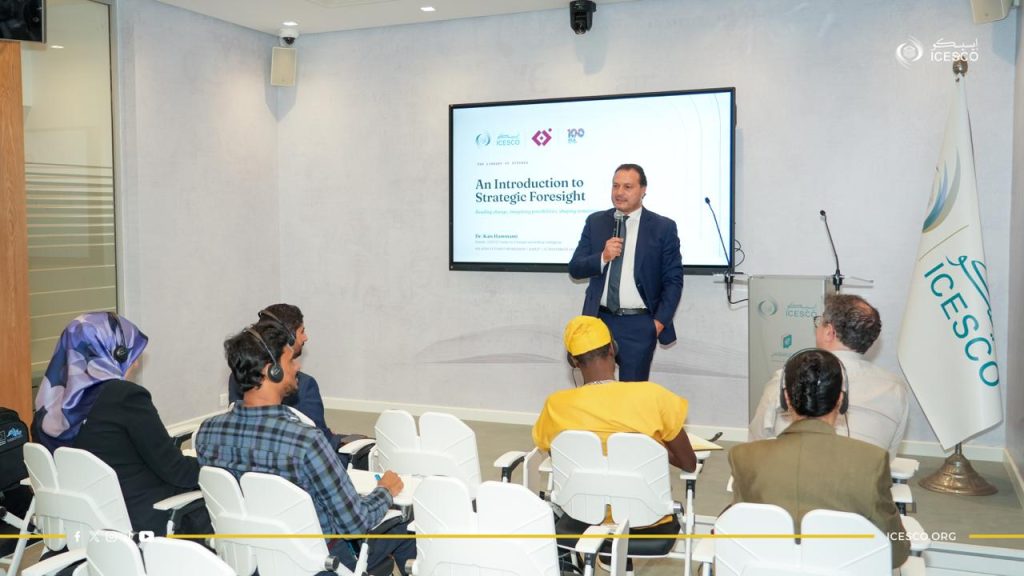
Dr. Hammami also reviewed key foresight approaches and methods, underscoring their relevance to libraries, which must prepare for technological, social and cultural transformations while preserving their core mission of serving communities and facilitating access to knowledge.
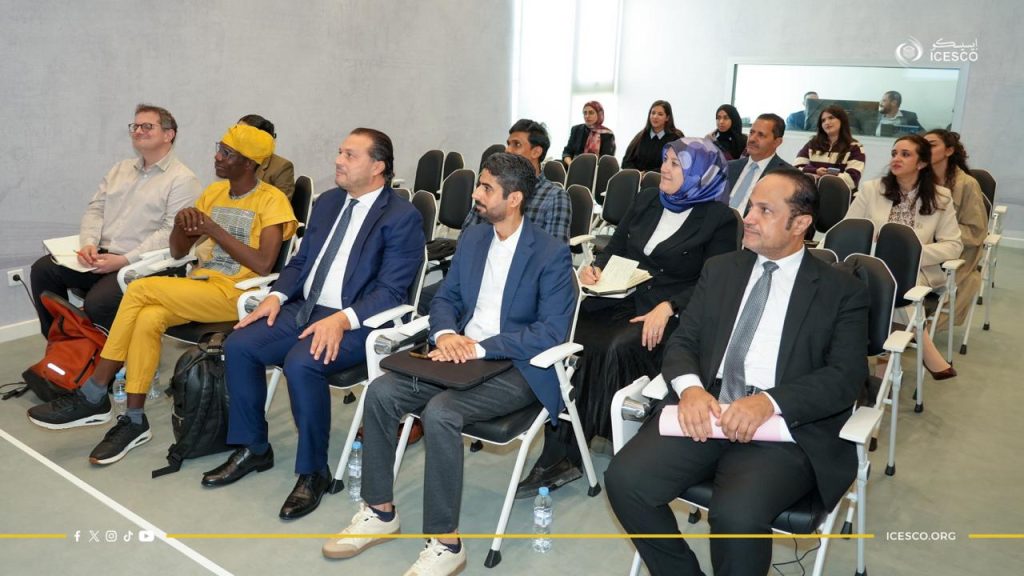
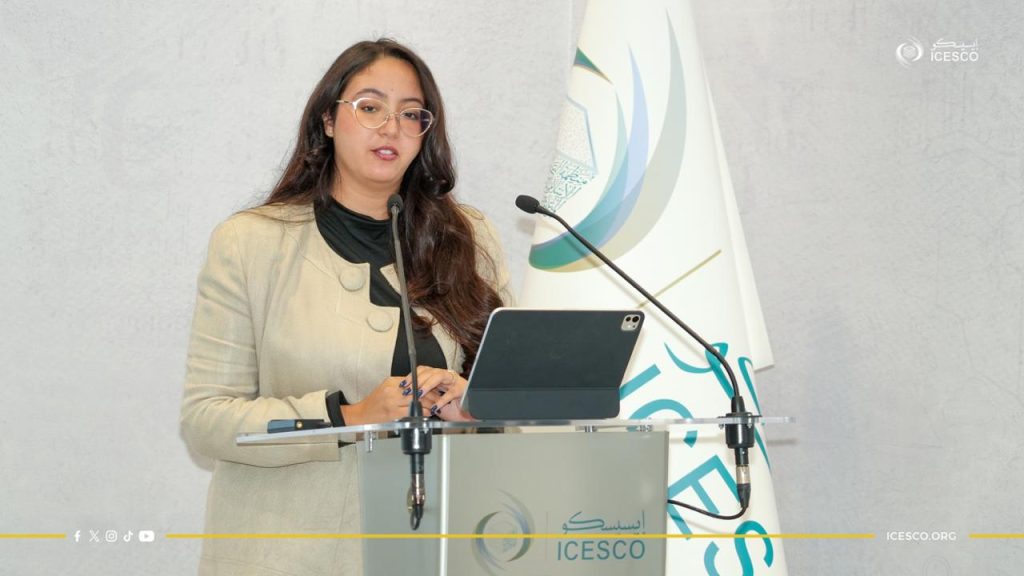
For her part, Ms. Ouiam Chafik of the Foresight and Artificial Intelligence Center addressed the theme of libraries in 2040 and explored how their roles may evolve through a training exercise titled “The Library of the Future: An Introduction to Strategic Foresight.”
An applied Futures Literacy Lab was also held, giving participants an opportunity to adapt foresight methodologies to the needs and regional particularities of their respective areas. Dr. Riel Miller contributed his expertise to enrich reflection on the future of libraries.
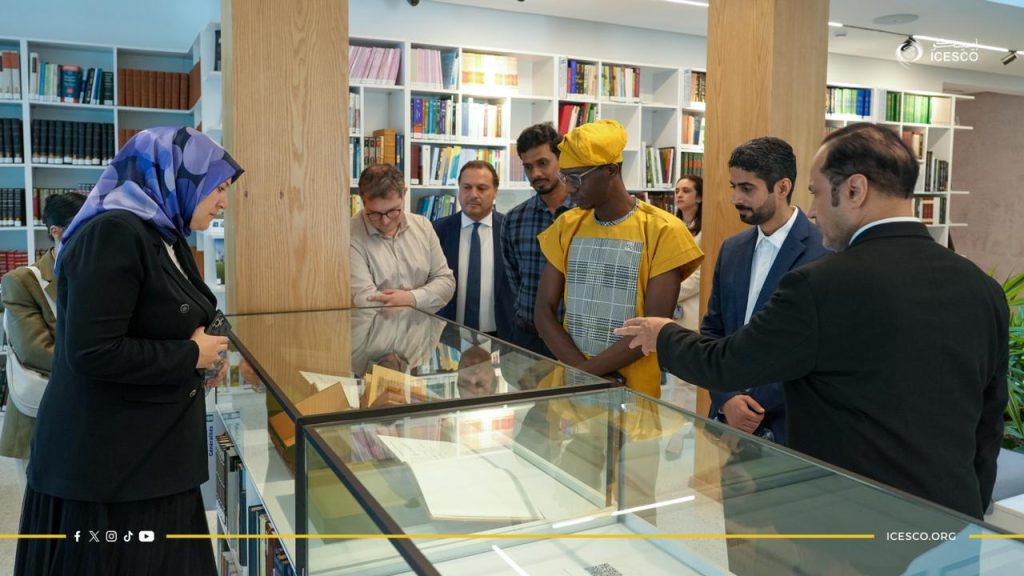
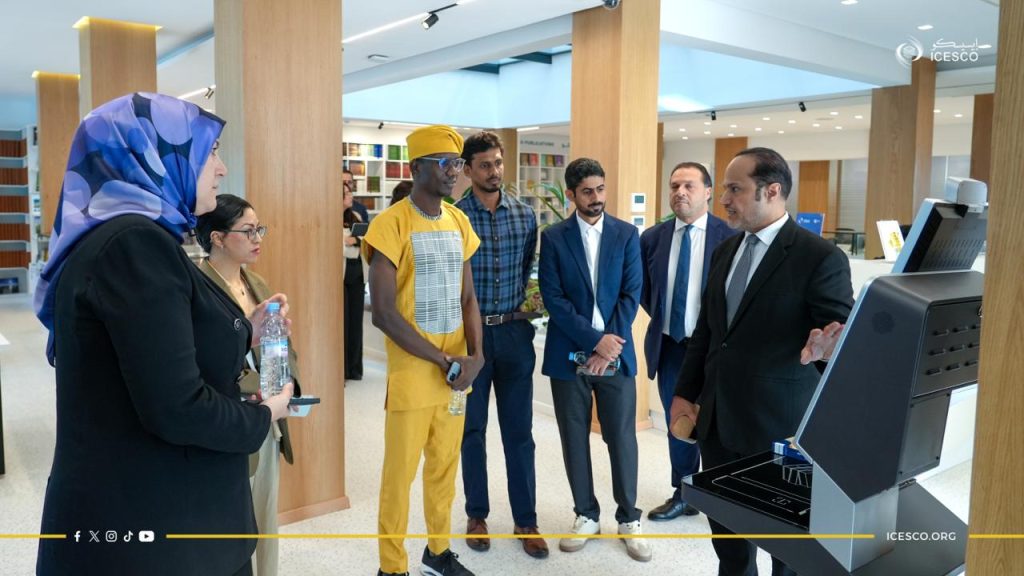
As part of the workshop program, participants visited the Sultan Qaboos Library, learned about its collections and services, and connected their discussions on the future of libraries with the role of knowledge institutions in preserving and disseminating knowledge.
The workshop’s second day will feature practical exercises in strategic foresight to help participants design regional initiatives based on the methodologies and tools introduced during the training.