
ICESCO Discusses Arabic Manuscripts in Hebrew Script in Its Calligraphy and Manuscripts Series

24 November 2026
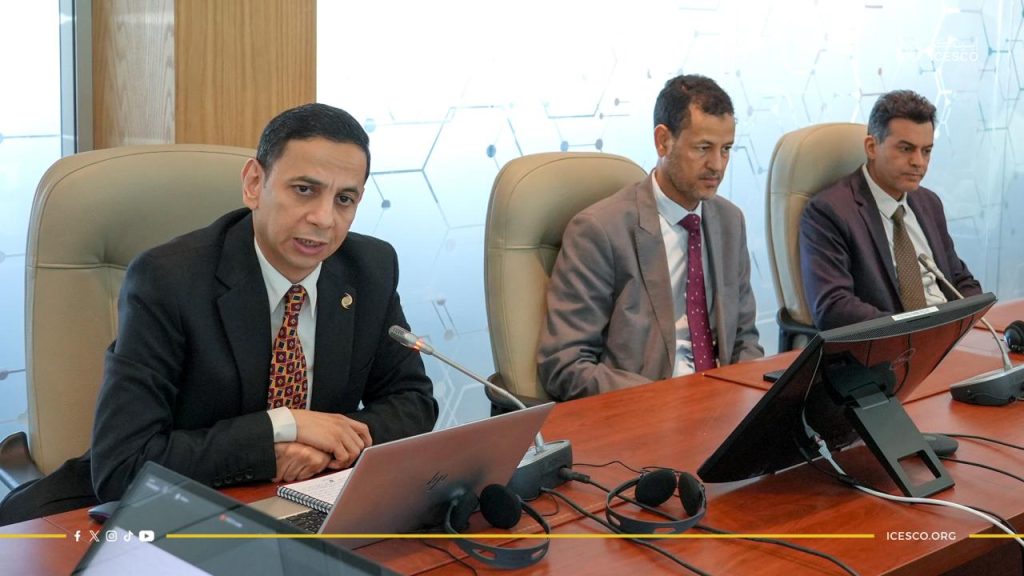
The Islamic World Educational, Scientific and Cultural Organization (ICESCO) held the fifth academic lecture in its “Calligraphy and Manuscripts in the Islamic World” series, titled “Arabic Manuscripts in Hebrew Script.” The lecture was delivered by Dr. Ahmed Chahlane, Member of the Academy of the Kingdom of Morocco, with the participation of several specialists, experts, and researchers in manuscripts and related studies.
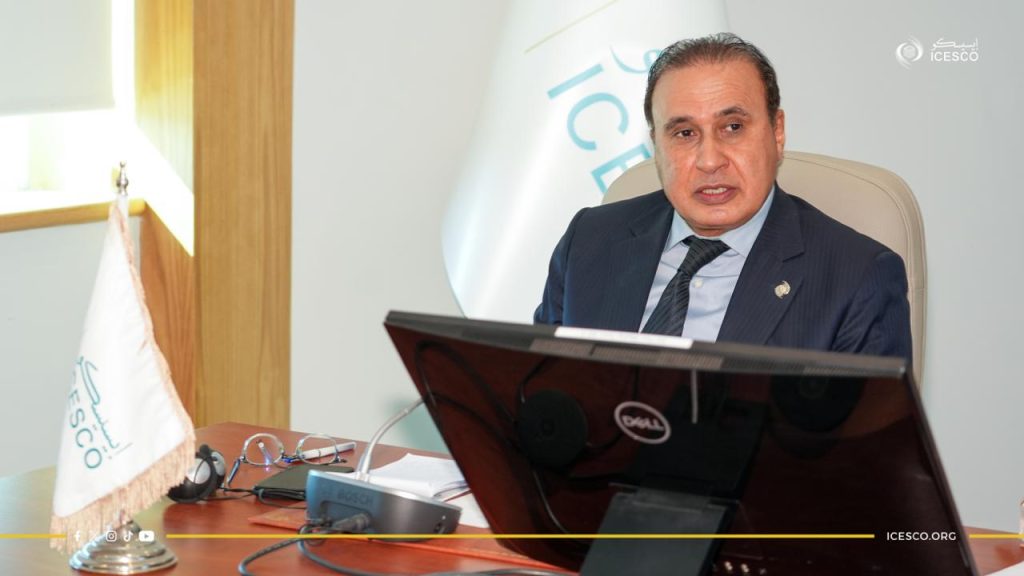
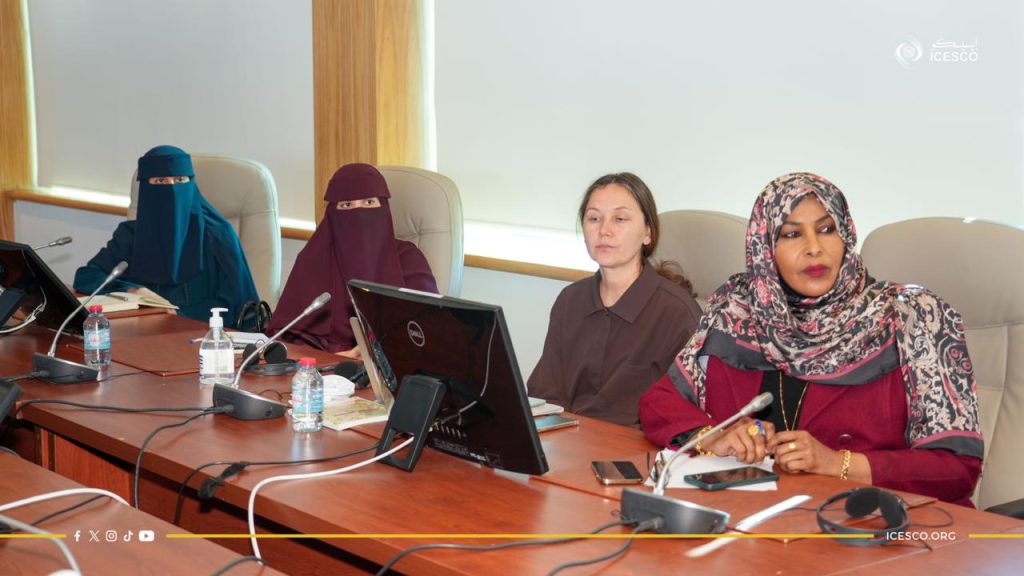
The lecture, organized by ICESCO’s Calligraphy and Manuscripts Center on Monday, 23 November 2026, both in person at the Organization’s headquarters in Rabat and via videoconference, opened with remarks by Dr. Abdelillah Benarafa, ICESCO Deputy Director-General. He highlighted several challenges posed by Arabic texts in Hebrew script and the ways researchers and editors approach them. These include the standards for correcting and verifying the text, converting colloquial language into sound Modern Standard Arabic, establishing its degree of reliability, and the difficulty of classifying it in manuscript catalogues.
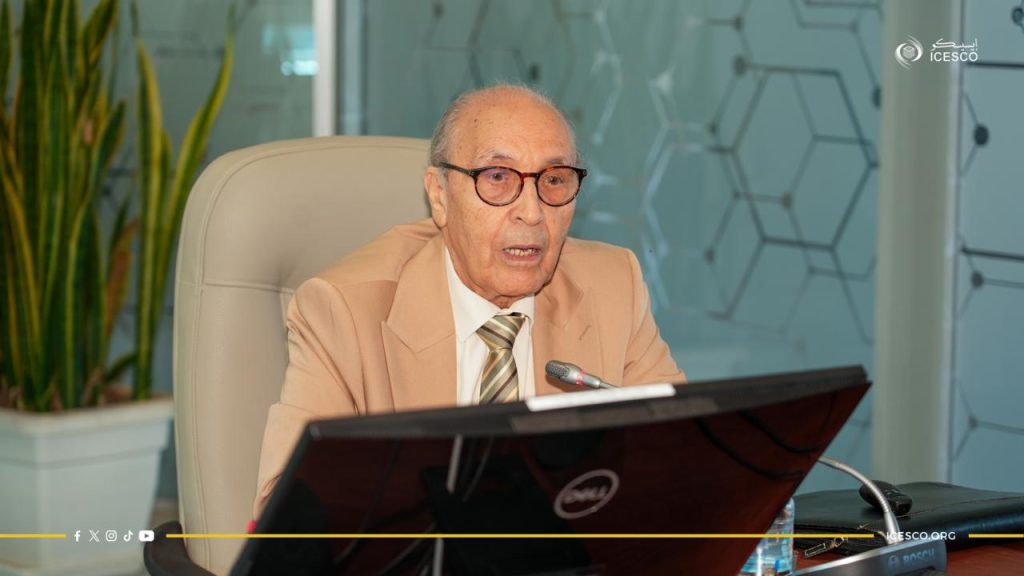
Following the opening remarks, Dr. Chahlane provided a historical overview of Jewish society in Islamic civilization. He explained that Jews, as part of society at the time, joined Muslims in studying Arab sciences and knowledge. In their early history, they produced no works of their own, focusing instead on transcribing Arab scholarship in Hebrew script. He then noted that anyone tracing the history of Jewish thought in Al-Andalus and the East would recognize that manuscripts in Hebrew script once numbered in the thousands, although only a small portion has survived in libraries around the world.
In concluding his lecture, Dr. Chahlane reviewed some of the surviving Arabic manuscript corpus in Hebrew script now held in libraries worldwide. Drawing on his examination of library catalogues, he cited several figures, including 63 manuscripts on medicine and the sciences, 34 on philosophy, and 24 on astronomy and mathematics, in addition to works in other fields whose Arabic originals were in Hebrew script. He also referred to Quranic texts written in Hebrew script and preserved in several European libraries.
The lecture, moderated by Dr. Ahmed Abdelbaset, expert at ICESCO’s Calligraphy and Manuscripts Center, concluded with a discussion focused largely on the importance of this Arabic intellectual legacy that has reached us in Hebrew script, and on the individual and institutional efforts required to preserve and study it.