
ICESCO, UN Explore Cooperation Prospects in AI and Emerging Technologies

23 September 2026
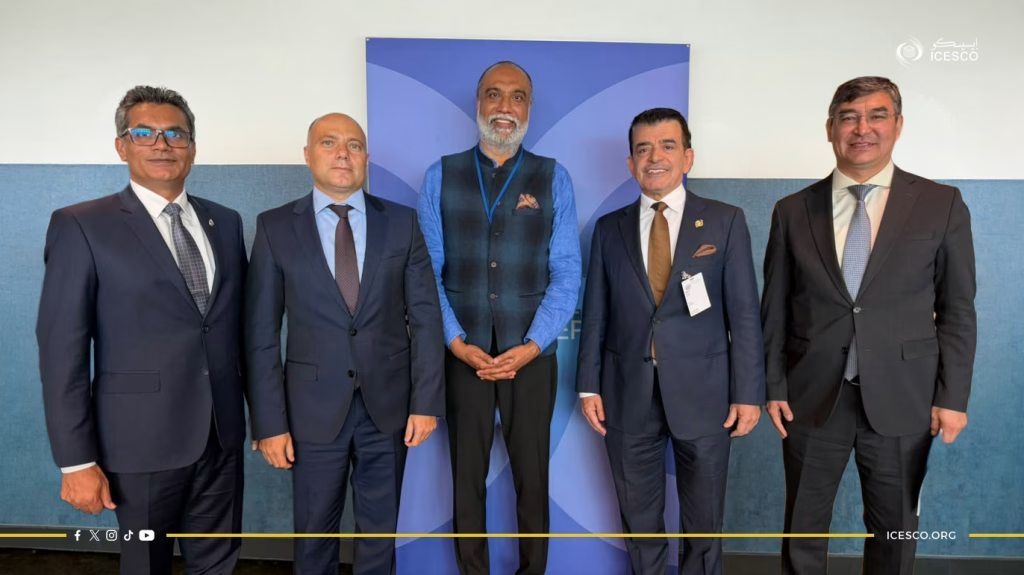
Dr. Salim M. AlMalik, Director-General of the Islamic World Educational, Scientific and Cultural Organization (ICESCO), met with Dr. Amandeep Singh Gill, United Nations Under-Secretary-General and Special Envoy for Digital and Emerging Technologies, to discuss avenues and mechanisms for cooperation between ICESCO and the United Nations in artificial intelligence and capacity-building in science.
During the meeting, held on Tuesday, 22 September 2026, in New York City, the two sides explored opportunities for cooperation to support artificial intelligence initiatives, raise awareness of its applications, and promote the responsible use of modern technologies across various fields. They also discussed supporting countries in developing national strategies to integrate artificial intelligence, given technology’s pivotal role in achieving sustainable development and meeting the aspirations of communities across the Islamic world.
Dr. AlMalik stressed that ICESCO seeks to foster a culture of innovation among young people in its Member States, highlighting the Organization’s efforts in modern technology through several pioneering initiatives and programs, most notably the “Riyadh Charter on Artificial Intelligence for the Islamic World,” the “10K AI Leaders” Program, and the “ICESCO Network of Experts in Quantum Sciences.”
Dr. AlMalik reviewed ICESCO’s role in expanding researchers’ access to advanced scientific infrastructure through an agreement signed with Al-Farabi Kazakh National University to develop the “Inclusive Access to Artificial Intelligence and High-Performance Computing Infrastructure” initiative. The initiative aims to broaden researchers’ access, particularly in the Global South, to computing resources by leveraging the University’s facilities, while also developing their capacities through training and joint research projects.
For his part, Dr. Gill presented the United Nations Secretary-General’s proposal to establish a global fund for artificial intelligence capacity-building by mobilizing an initial investment of US$3 billion to facilitate knowledge exchange and support countries in developing these modern technologies and harnessing their potential.
The meeting also addressed the widening artificial intelligence divide among countries and the need for Global South countries to develop expertise and build capacity in computing and data infrastructure. It was also attended by by Mr. Anar Karimov, Head of Partnerships and International Cooperation Sector; Dr. Yergaliyev Kuanysh, Head of Science and Environment Sector; and Dr. Muhammad Sharif, Advisor at the Sector.