
ICESCO Holds Webinar to Discuss Ways to Strengthen International Cooperation in Cultural, Knowledge, and Creative Fields

15 July 2026
On Tuesday, 14 July 2026, the Islamic World Educational, Scientific and Cultural Organization (ICESCO) held an international webinar in partnership with IHM International, the Institute for Technology-Based Education in Health, Management, and Social Services, and the European Academy of Sciences and Arts in Vienna. The webinar saw the participation of more than 50 experts, university professors, and researchers from 15 countries.
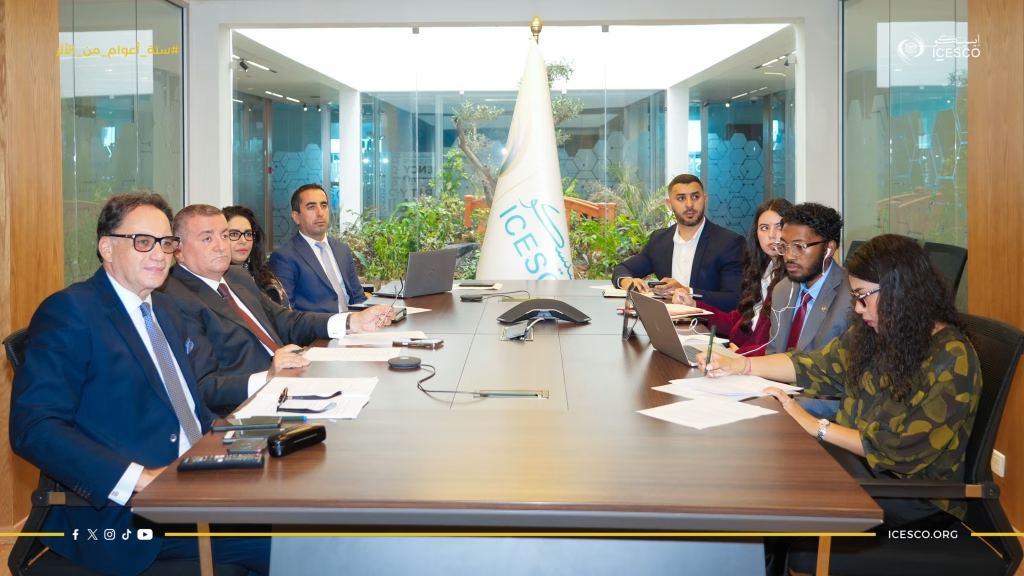
Discussions focused on several topics, including: the importance of culture and the arts as bridges for dialogue, mutual understanding, and cooperation between the East and the West; scientific and cultural diplomacy: current realities and future perspectives; the role of universities, academies, and cultural institutions in promoting international cooperation; and university cooperation in culture, literature, arts, and sciences between the Islamic World, Europe, and Africa.
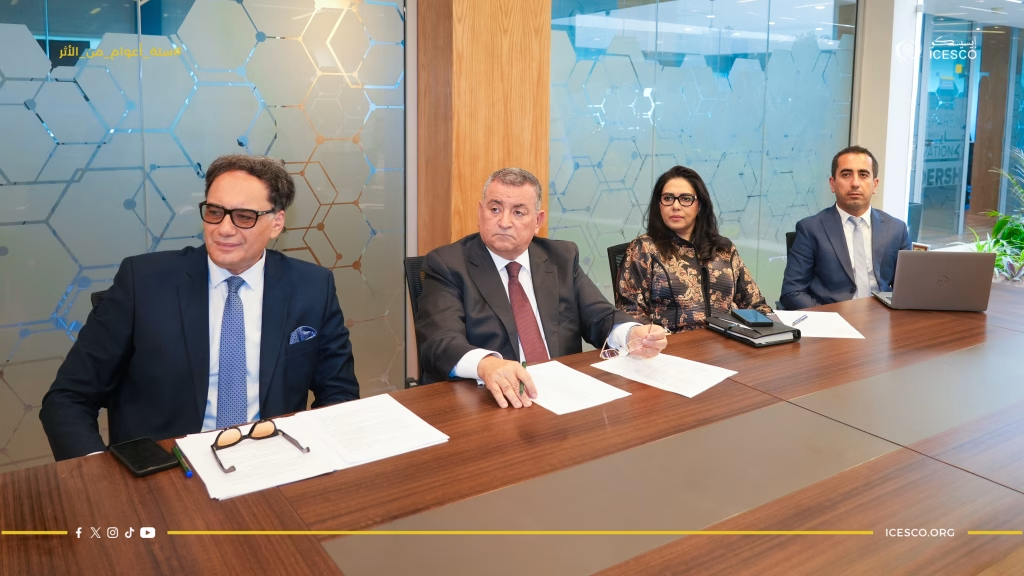
The webinar was opened by Osama Heikal, Head of ICESCO’s Media and Communication Sector. He emphasized that the gathering embodies a shared commitment to strengthening cooperation in science, education, culture, and media, driven by the conviction that knowledge is a universal language that unites peoples and civilizations. He further explained that partnerships between scientific and cultural institutions have become indispensable for addressing global challenges, fostering innovation, empowering future generations, and solidifying dialogue and mutual understanding.
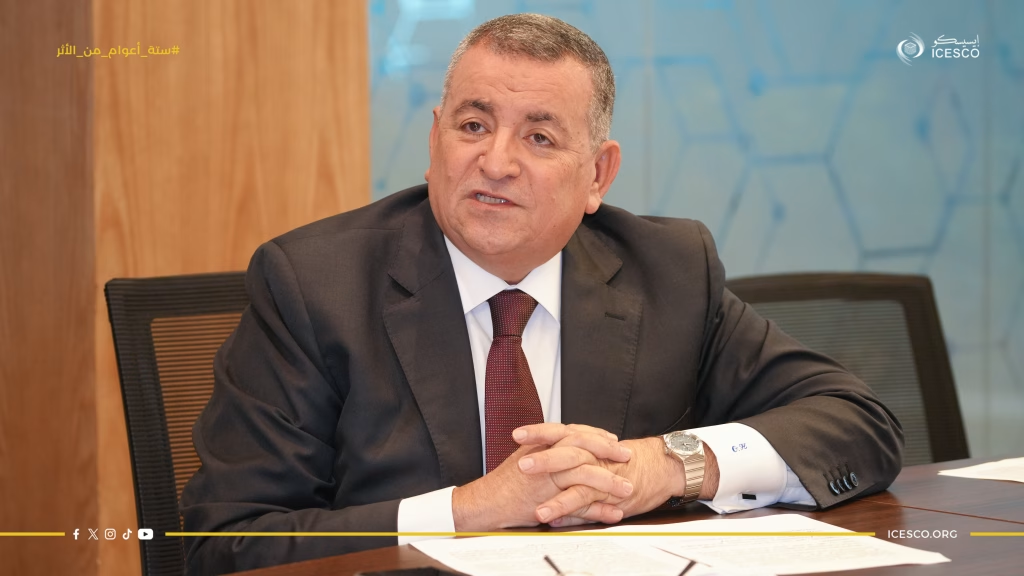
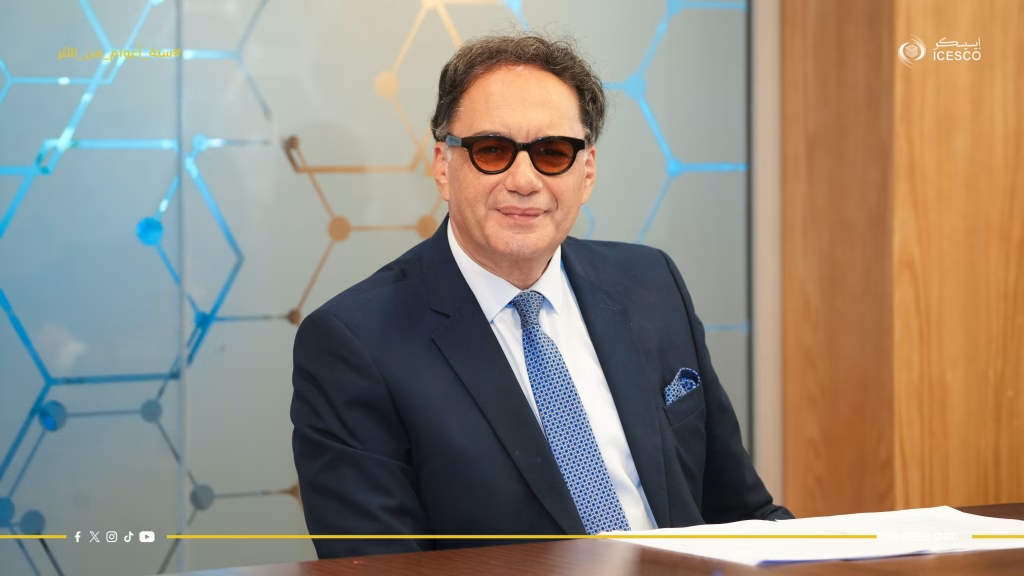
For his part, Dr. Mohamed Zinelabidine, Head of the Culture Sector at ICESCO, expressed his pride in the partnership with European institutions, emphasizing that culture serves as a bridge for dialogue between the North and the South, and among the Organization’s Member States. Dr. Zinelabidine reviewed examples of successful international initiatives, stressing the importance of building a cultural space that reflects cultural diversity and fosters cooperation, creativity, and the exchange of expertise.
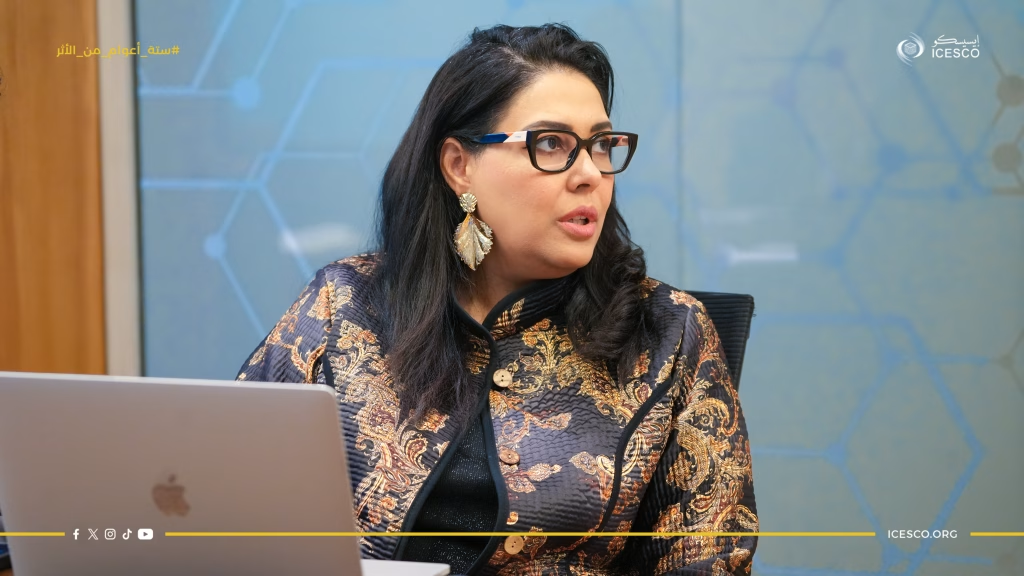
Furthermore, Dr. Sally Mabrouk, Head of the Office of ICESCO’s Director-General and Supervisor of the Strategy and Institutional Excellence Sector, delivered a presentation on the Organization’s strategic plan for the 2026–2029 cycle. She explained that the plan is grounded in institutional governance and data-driven decision-making, alongside consultation with experts and decision-makers, ensuring that planning remains flexible and responsive to cultural, social, and developmental shifts.
In his remarks, Dr. Klaus Mainzer, President of the European Academy of Sciences and Arts, underscored that culture, arts, scientific research, and cultural diplomacy are key tools for promoting dialogue among peoples and building bridges of peace amid current global challenges.
For his part, Dr. Martin Stieger, President of IHM International, highlighted the importance of leveraging artificial intelligence in vital sectors through a comprehensive, human-centered approach that accounts for social and cultural dimensions. Meanwhile, Dr. Georg Votava, Vice President of IHM International, reviewed leading international experiences in multidimensional development, while Ing. Martin Schaffenrath, Auditor at the European Academy of Sciences and Arts, stressed the need to invest in youth as a cornerstone of sustainable development.
The webinar featured presentations from ICESCO’s Media and Communication and Culture Sectors on their priorities and upcoming programs, in addition to a presentation by Dr. Mohamed Amin Hammami, an international expert on creativity and digital culture, who introduced an innovative measurement tool to support the cultural and creative industries in Member States.


