
ICESCO Holds Third Lecture Series on Calligraphy and Manuscripts in the Islamic World

30 June 2026
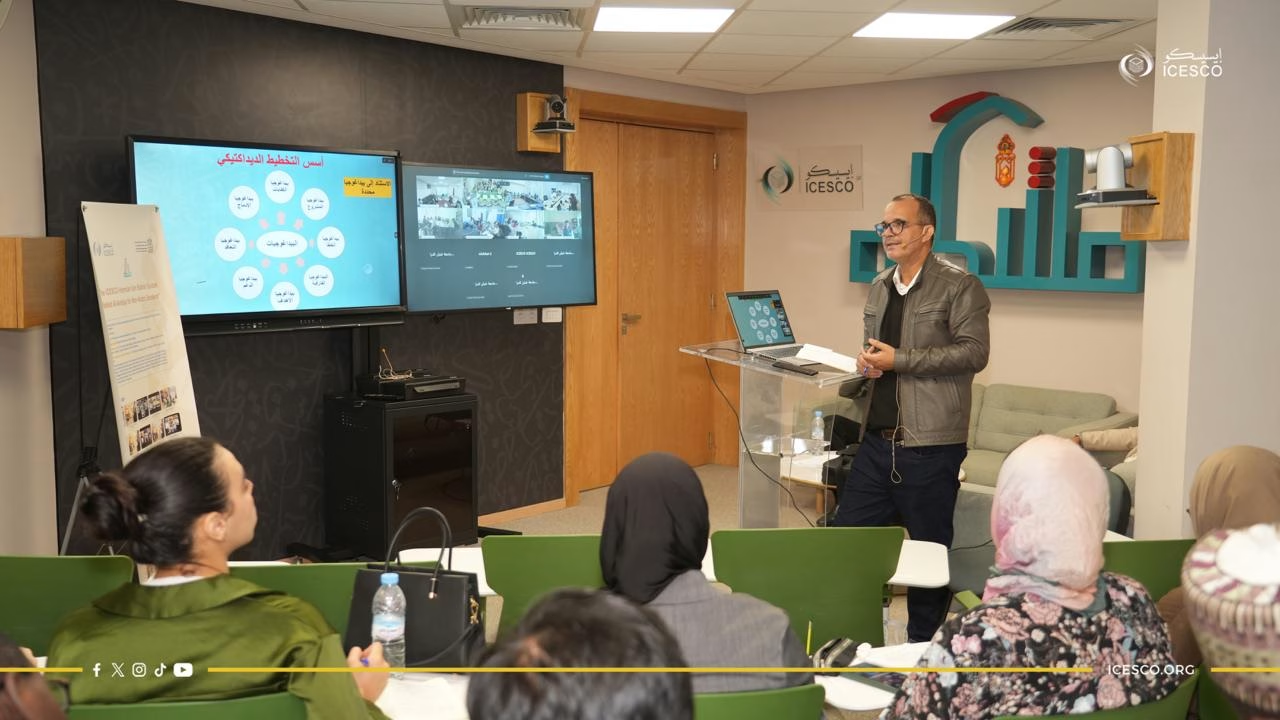
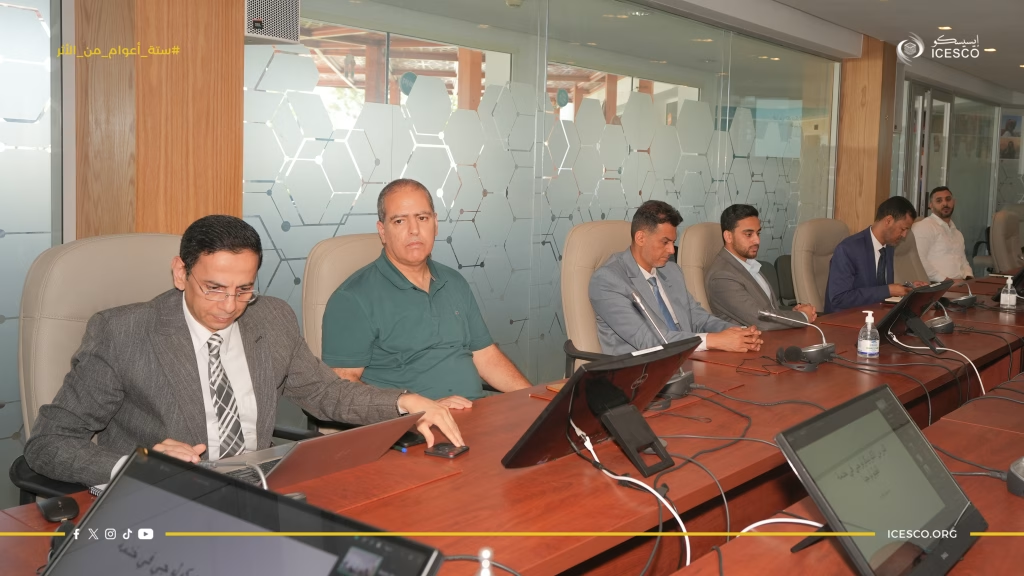
The Islamic World Educational, Scientific and Cultural Organization (ICESCO) held, on Monday, 29 June 2026, the third lecture in its Series on Calligraphy and Manuscripts in the Islamic World, titled “Codicological Study in the Service of Philology.” The lecture was delivered by Dr. Mustapha Toubi, Professor of Manuscript Studies at Mohammed V University in Rabat, with the participation of a number of specialists, experts, and university professors, both in person and via videoconference.
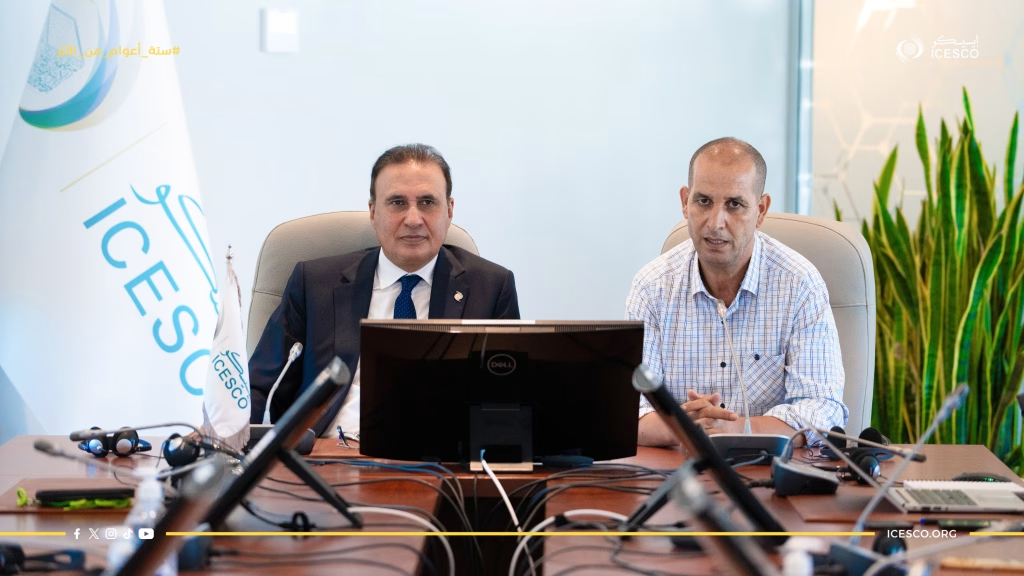
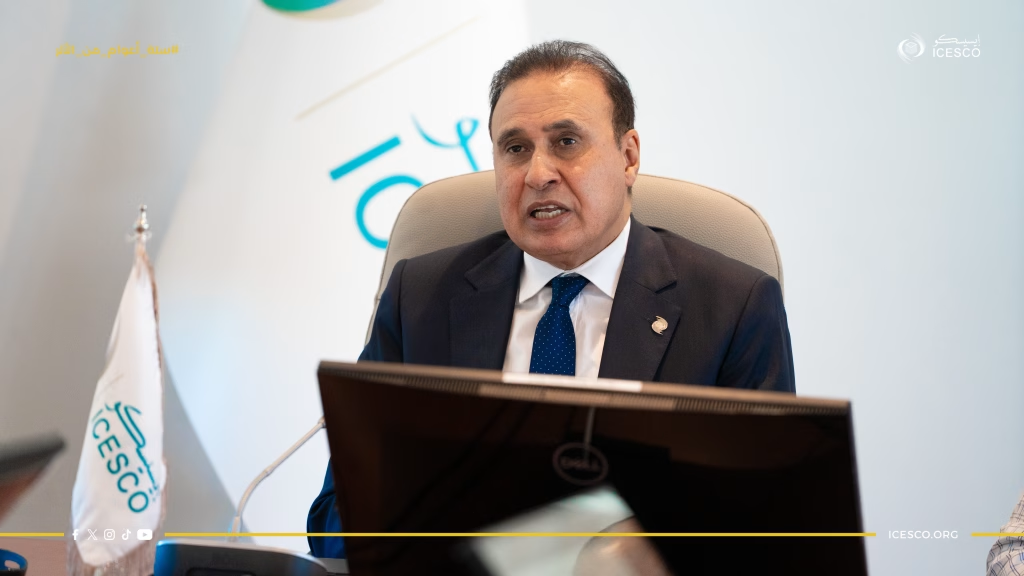
The lecture opened with remarks by Abdelilah Benarafa, ICESCO Deputy Director-General, who emphasized the importance of manuscript studies in preserving Arab-Islamic heritage and promoting academic research on the role of manuscripts in Islamic civilization. He noted that this scientific series contributes to enriching specialized debate and linking heritage studies with modern approaches to editing and research.
Dr. Mustapha Toubi then delivered a presentation addressing the concepts of codicology and philology, explaining the relationship between the study of the physical components of manuscripts and textual analysis, and highlighting their role in supporting critical editions and ensuring accurate readings of heritage texts.
During the lecture, moderated by Dr. Idham Hanash, Director of ICESCO’s Calligraphy and Manuscripts Center, Dr. Toubi discussed methodologies for dealing with manuscript copies according to rigorous scientific standards. These include evaluating complete and incomplete copies, clear and unclear texts, and old and recent versions, alongside the principles of textual criticism and the scholarly flexibility they offer for additions, omissions, and modifications within a disciplined framework.
He also highlighted the Lachmann method, developed by the German scholar Karl Lachmann, for classifying manuscripts, which distinguishes between ideal, good, and poor copies. He further reviewed developments in modern philology, particularly those introduced by the French scholar Alphonse Dain, and the debates they have generated regarding the value of textual errors and their role in tracing the history of manuscript transmission.
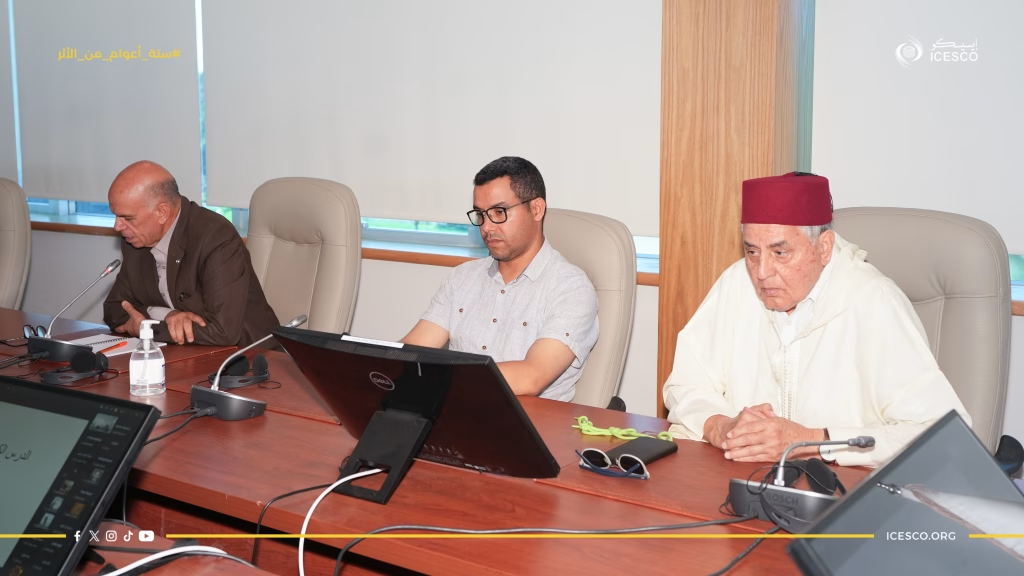
Dr. Toubi stressed that the physical components of manuscripts constitute a fundamental element in supporting philological findings, while cautioning against exclusive reliance on either material evidence or textual constraints alone. The lecture concluded with scholarly interventions and discussions underscoring the importance of advancing manuscript studies in the Islamic world.