
ICESCO Holds International Workshop on Developing Cultural Employment Policies in the Islamic World

12 June 2026
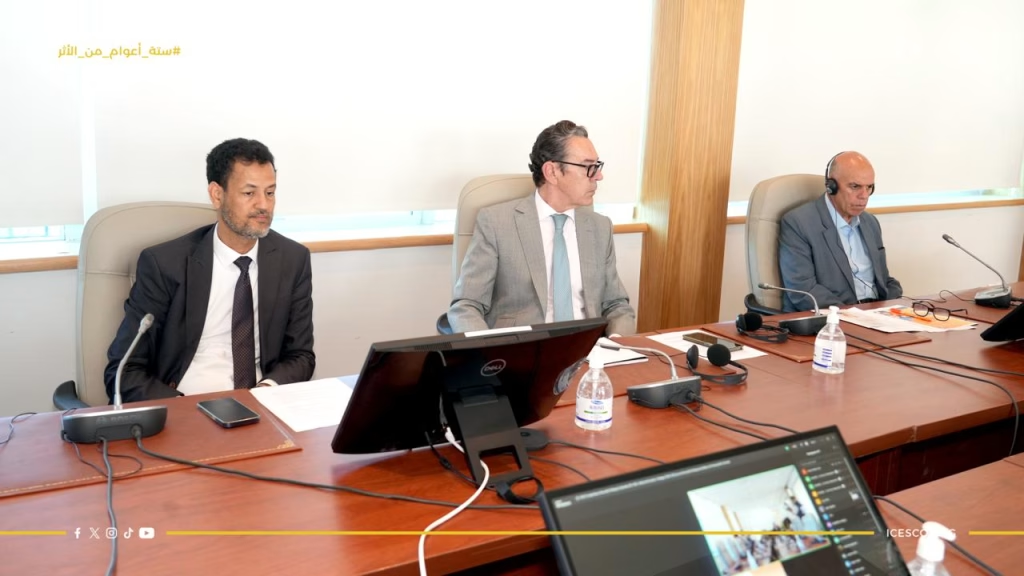
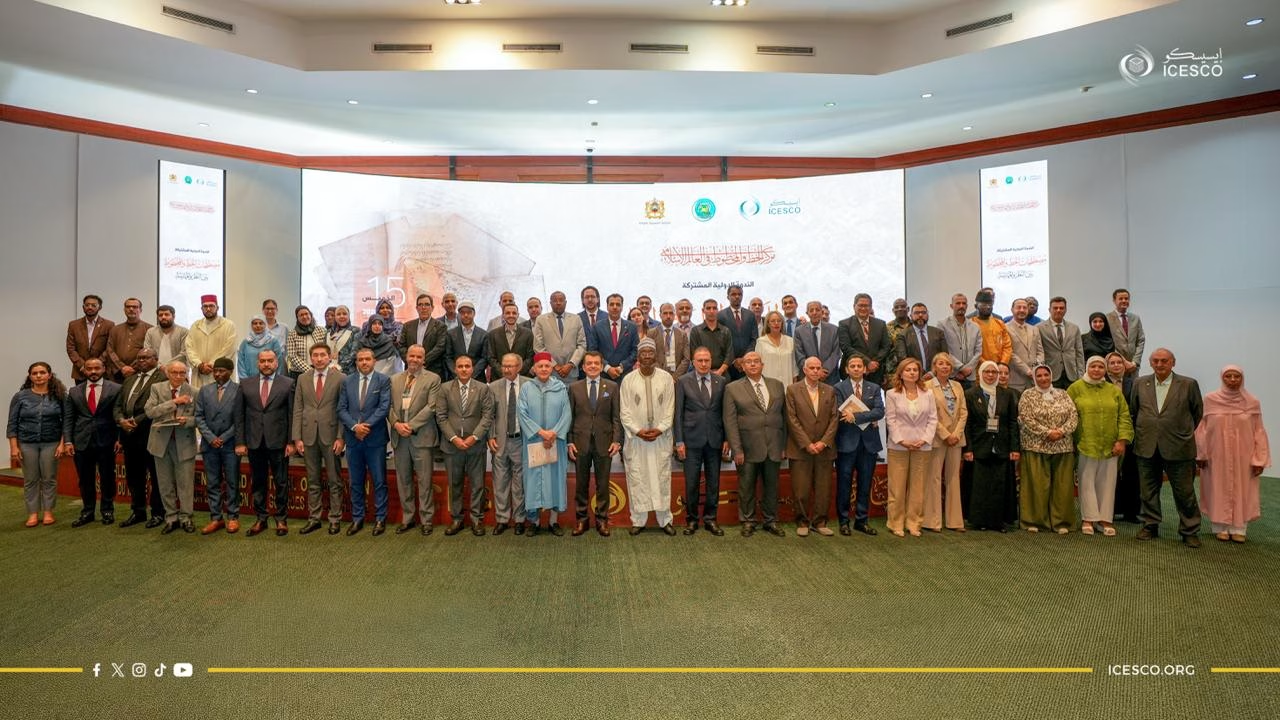
The Islamic World Educational, Scientific and Cultural Organization (ICESCO) held an international online training workshop titled “New Policies for Cultural Professions and Employability” as part of the series “ICESCO: Leadership in New Cultural Policies 2021–2029,” with the participation of over 160 experts, researchers, and representatives of cultural institutions and National Commissions from 22 countries.
Opening the workshop, held on Thursday 11 June 2026, Dr. Mohamed Zinelabidine, Head of the Culture Sector at ICESCO, stressed that culture has become a key driver of development, innovation, and societal transformation. He emphasized the need to integrate the cultural dimension into the development policies of Member States and to strengthen the position of cultural identity as one of the principal foundations for building balanced and sustainable societies.
For his part, Mr. Anar Karimov, Head of the Partnerships and International Cooperation Sector at ICESCO, who moderated the session, explained that the development of cultural policies remains dependent on the availability of accurate data and specialized studies. He noted that the absence of reliable indicators limits the ability to demonstrate the true contribution of culture to economic, social, and civilizational development.
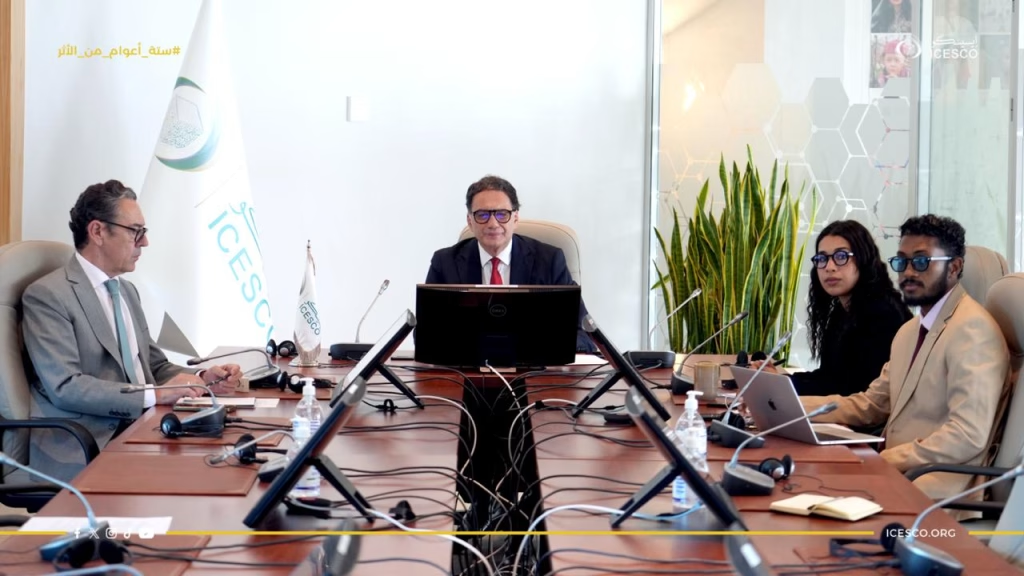
During the workshop’s keynote presentation, Dr. Rim Jellouli, ICESCO external expert specializing in cultural policies and sustainable development, presented the outcomes and tools of the ICESCO 2025 Strategy on Cultural Professions and Employability. The Strategy is structured around three main pillars: a framework for sustainable and innovative cultural and creative economies, the ICESCO Reference Framework for Cultural Professions and Competencies, and a roadmap toward 2030 aimed at supporting Member States in developing information systems dedicated to cultural employment.
Dr. Jellouli further explained that cultural and creative industries contribute, on average, 3.1% of gross domestic product (GDP), although with significant variation among countries. She also noted that 43% of ICESCO Member States have not yet adopted reliable indicators related to cultural employment, underscoring the need to develop modern measurement tools that support the integration of culture into development planning priorities.