

ICESCO, Saudi Ministry of Culture Discuss Progress on Illustrated Dictionary of the History of Arabic Calligraphy Project

7 May 2026
Dr. Salim M. AlMalik, Director-General of the Islamic World Educational, Scientific and Cultural Organization (ICESCO), held a meeting via videoconference on Thursday, 7 May 2026, with Dr. AlBara AlAuhali, Deputy Minister of Cultural Strategies and Policies at the Saudi Ministry of Culture, and Dr. Abdullah Hamidaddin, Assistant Secretary-General for Scientific Affairs at the King Faisal Center for Research and Islamic Studies, to discuss the progress achieved in the joint project for the Illustrated Dictionary of the History of Arabic Calligraphy.
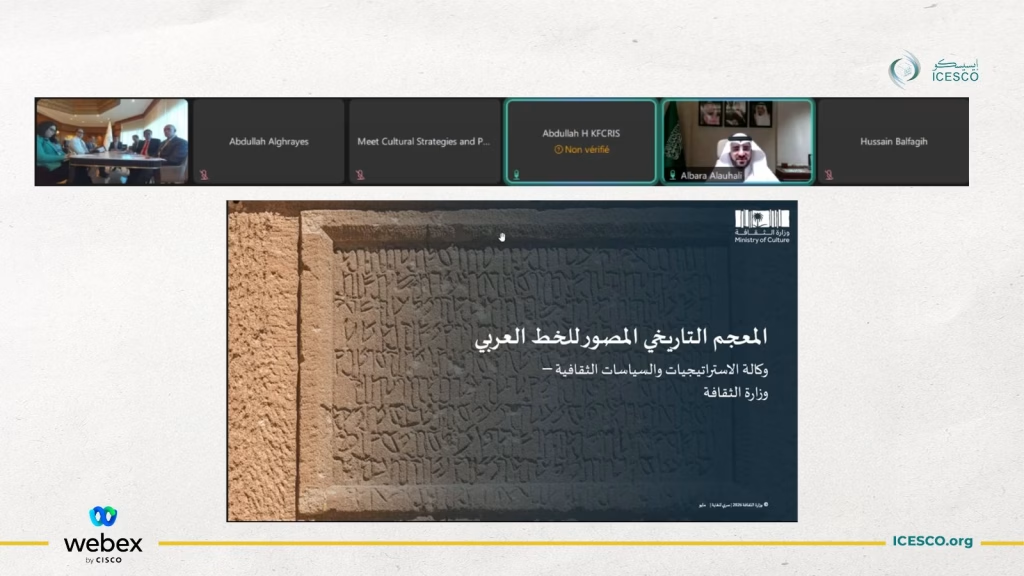
The discussions focused on the level of progress attained in the project, particularly with regard to the preparation of a scientific framework documenting the most prominent sources of Arabic calligraphy in the Islamic world, including manuscripts, inscriptions, artistic panels, and other materials, in order to present this civilizational heritage in a rigorous scholarly format that highlights its evolution and distinctiveness. The meeting also addressed a proposal to organize a scientific workshop at ICESCO headquarters in Rabat, with the participation of researchers, experts, and specialists in the art of Arabic calligraphy.
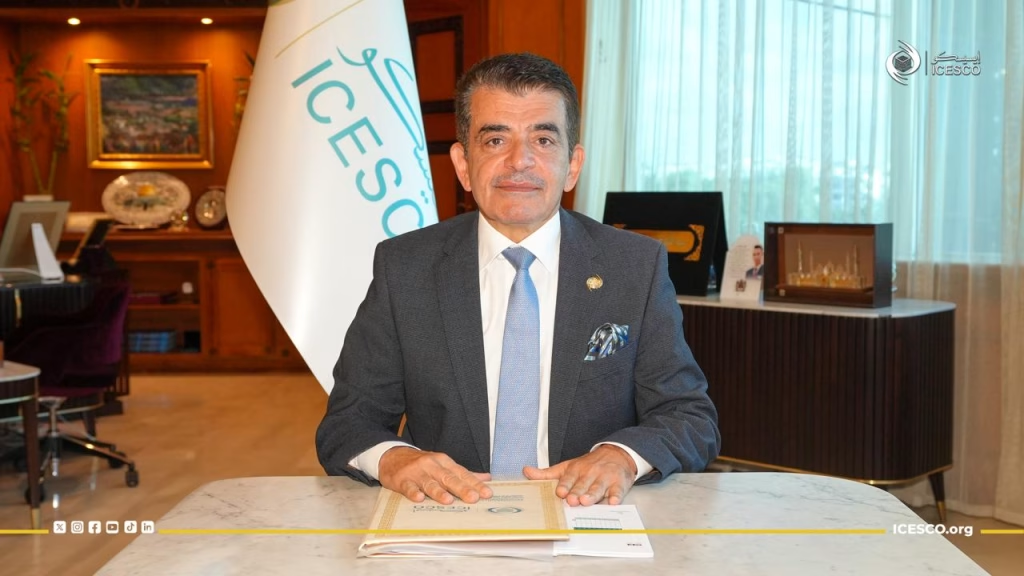
In this regard, Dr. AlMalik emphasized that this major cultural project aims to consolidate the authenticity of Arabic calligraphy and highlight its uniqueness, independence, and distinction within its civilizational context. He further noted that the project constitutes one of the reference initiatives with profound impact in the Islamic world, as it will contribute to preserving and documenting this art through an illustrated scientific dictionary comprising three volumes.
Dr. AlMalik added that ICESCO continues to work seriously and in close coordination with its partners on the project, explaining that current efforts include the preparation of a guidebook on the project and the formulation of the titles of the three volumes. He also proposed launching the project from ICESCO headquarters in Rabat in the presence of His Highness Bader bin Abdullah bin Farhan Al Saud, Minister of Culture of the Kingdom of Saudi Arabia, which would provide the project with momentum commensurate with its significance.
For his part, Dr. AlBara AlAuhali stressed the particular importance of the dictionary, as it seeks to affirm the authenticity, uniqueness, and independence of Arabic calligraphy, and to highlight its distinction as an art form in its own right rather than one derived from other scripts. He also underscored the importance of completing the project within the established timeframe.
Meanwhile, Dr. Hamidaddin delivered a presentation on the project and its scientific and intellectual dimensions, highlighting that the dictionary seeks to demonstrate the role of Islam as a principal driver in the development and spread of Arabic calligraphy.
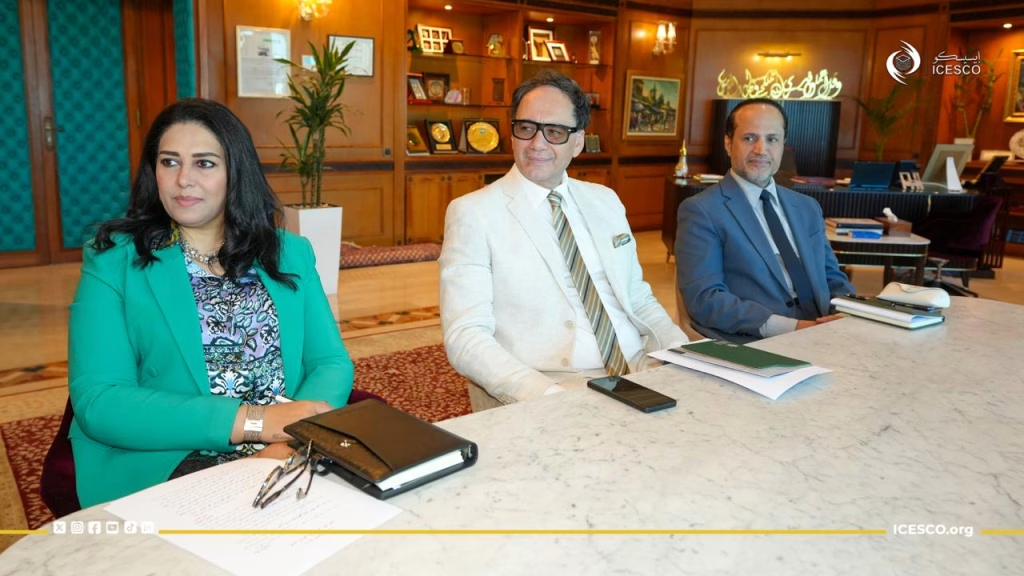
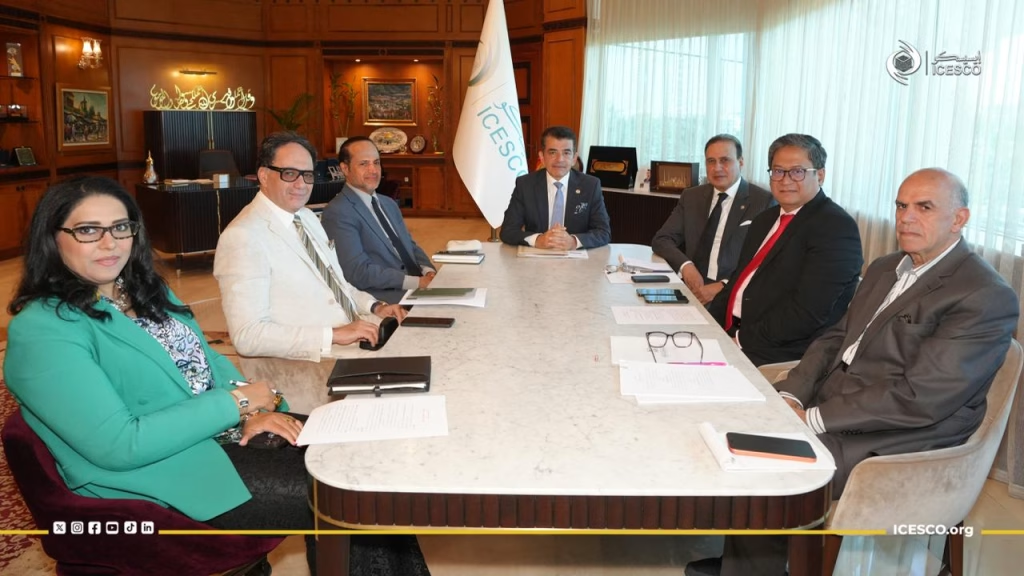
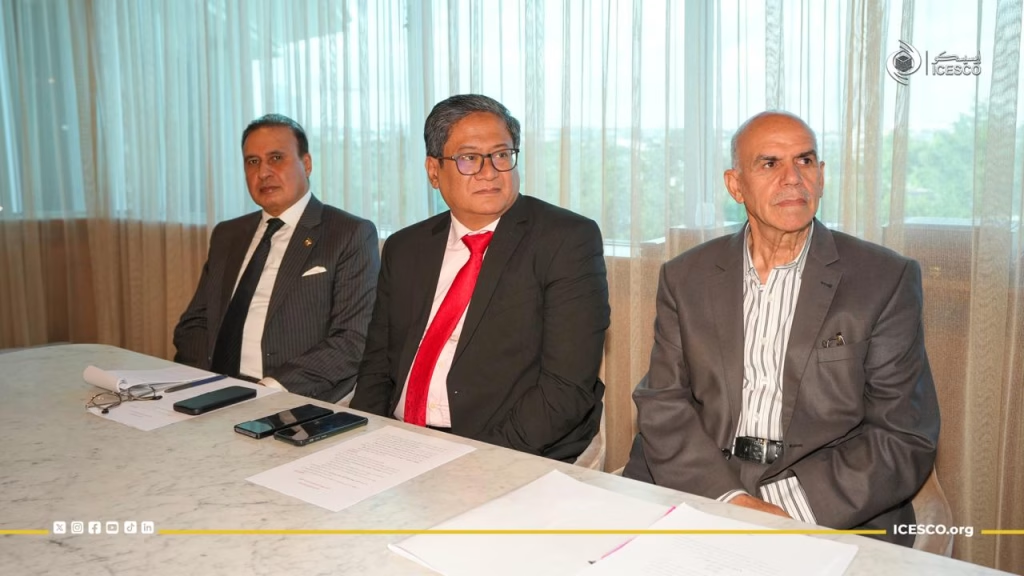
During the meeting, ICESCO was represented by Dr. Abdelilah Benarafa, Deputy Director-General; Dr. Mohamed Zine El Abidine, Head of the Culture Sector; Dr. Ahmed AlBanyan, Director of the Translation and Publishing Center; Dr. Idham Hanash, Director of the Center for Calligraphy and Manuscripts; Dr. Sally Mabrouk, Director of the Office of the Director-General and Supervisor of the Strategy and Institutional Excellence Sector; and Dr. Magdi Haji Ibrahim, Director of the Center for Arabic for Non-Arabic Speakers.


