Disclaimer: You are using Google Translate. The ICESCO is not responsible for the accuracy of the information in the translated language .

your opinion

User Feedback

Overall, how satisfied are you about the website?

    Extremely Dissatisfied Extremely Satisfied

    ICESCO, Naif Arab University Invite Researchers to Participate in International Symposium on Publishing and Security

    The Islamic World Educational, Scientific and Cultural Organization (ICESCO), in cooperation with Naif Arab University for Security Sciences, invites researchers and specialists to participate in an international symposium titled “Publishing and Security: The Role of the Publishing Industry in Promoting Societal Awareness and Intellectual Security,” due to be held at ICESCO headquarters in Rabat on 27–28 April 2026.

    The Symposium will address the growing challenges of intellectual and information security in traditional and digital spaces. The print and digital publishing industry plays a key role in shaping public awareness, either by promoting values of peace and coexistence or by fueling hate speech and extremism. Consequently, the development of the publishing industry is closely linked to the Sustainable Development Goals, particularly Goals 4 and 16, which focus on quality education, peace, justice, and strong institutions respectively.

    The Symposium will cover seven themes reflecting the relationship between publishing and security. These themes are: publishing and intellectual security; publishing and misinformation; digital publishing and information security; institutional publishing in a security context; regulatory policies and legislation; the role of libraries in promoting knowledge security; and the role of security agencies in combating misinformation and fake news.

    In this context, ICESCO invites interested individuals to submit original, unpublished papers that fall within the themes of the Symposium. Papers should be between 12 and 20 pages long (approximately 3,000–5,000 words), written in 12-point Times New Roman font and accompanied by an abstract of no more than 300 words in one of the following languages: Arabic, English, or French.

    The organizing committee has set 1 November 2025 as the deadline for submitting abstracts accompanied by CVs via email to:
    TPC@ICESCO.org and events.sc@nauss.edu.sa.

    Accepted submissions will be announced on 1 December 2025, along with a participation form. The deadline for receiving and accepting the full texts of research papers is 1 February 2026.

    All submissions will undergo rigorous scientific review by a committee of experts in publishing and knowledge security. Accepted papers will be published in a numbered scientific book under the supervision of ICESCO.

    At the end of the Symposium, practical conclusions and recommendations will be drawn up on responsible publishing policies that can strengthen societies’ immunity against extremism and hate speech, while supporting education and media systems in the Arab and Islamic worlds.

    ICESCO Participates in St. Petersburg International Religious Forum in Russia

    Dr. Abdelillah Benarafa, Deputy Director-General of the Islamic World Educational, Scientific and Cultural Organization (ICESCO), took part in the third edition of the St. Petersburg International Religious Forum (SPIRF-25), held on Monday, 22 September 2025, in St. Petersburg, Russian Federation, under the theme: “Interreligious Cooperation for the Spiritual and Moral Development of Humanity in the Modern World.” The Forum gathered a distinguished group of religious, intellectual, and academic figures from around the globe.

    During the plenary session, Dr. Benarafa delivered a keynote speech highlighting the importance of interreligious and intercultural dialogue in addressing global challenges, countering extremism and hate speech, and promoting the values of coexistence and peace.

    Moreover, Dr. Benarafa outlined some of ICESCO’s leading initiatives in this field, including the organization of the International Virtual Forum on the “Role of Religious Leaderships in the Face of Crises” during the COVID-19 pandemic, the “International Conference on the Civilizational Values in the Prophet’s Seerah,” the publication of the “Encyclopedia on Deconstructing Extremist Discourse,” the launch of the “Leadership Training in Peace and Security (LTIPS),” as well as various training and research programs that foster intercultural and interreligious understanding.

    In conclusion, Dr. Benarafa reaffirmed ICESCO’s commitment to building a global framework of solidarity that upholds peace and security and strengthens a culture of tolerance and creativity in service of humanity.

    The Forum also featured discussions on a range of key issues, including interreligious cooperation and prospects for collaboration, the role of traditional spiritual and moral values as a foundation for interreligious solidarity, and the contribution of religious diplomacy to bridging peoples and fostering mutual understanding.

    ICESCO Director-General Visits Turkistan, Explores Cultural Cooperation Opportunities

    Dr. Salim M. AlMalik, Director-General of the Islamic World Educational, Scientific and Cultural Organization (ICESCO), paid an official visit to the City of Turkistan in southern Kazakhstan on 21 September 2025, where he was received by Mr. Altayev Ertay Kanjenbrkovich, Deputy Akim (Deputy Governor) of Turkistan Region, and Mr. Azimbek Pazylbekuly, Akim (Mayor) of Turkistan City, along with several senior officials.

    During the visit, Dr. AlMalik toured the city to explore its urban and cultural development, and held a meeting with the Deputy Akim of Turkistan Region and the Akim of Turkistan City to discuss opportunities for cooperation, including the possible nomination of Turkistan as the Cultural Capital in the Islamic World for 2027 or 2028. Dr. AlMalik emphasized that the Islamic Culture Capitals Program is a rich and diverse initiative that reflects the civilizational and historical wealth of cities, praising Turkistan’s strong potential for this nomination.

    Furthermore, Dr. AlMalik visited a number of historical and cultural landmarks, including the Uly Dala Eli Center, Farab Library, Music and Drama Theater, Karavansaray Tourist Complex, and the Mausoleum of Khoja Ahmed Yasawi.

    At the end of the visit, the Deputy Akim of Turkistan Region, Mr. Altayev, and the Akim of Turkistan City, Mr. Azimbek, offered their parting remarks to Dr. AlMalik and the accompanying delegation, which included Mr. Anar Karimov, Head of ICESCO’s Partnerships and International Cooperation Sector, and Dr. Abdulhakeem AlSenan, Director of ICESCO’s Regional Office in Baku. Ms. Aktoty Raimkulova, President of the Turkic Culture and Heritage Foundation, also took part in the visit and meetings.

    ICESCO Director-General Lectures at Khoja Ahmet Yassawi International Kazakh-Turkish University

    Dr. Salim M. AlMalik, Director-General of the Islamic World Educational, Scientific and Cultural Organization (ICESCO), delivered a high-level lecture at Khoja Ahmet Yassawi International Turkish-Kazakh University during his official visit to Kazakhstan.

    In his lecture, delivered on Sunday, 21 September 2025, to the University’s students and faculty, Dr. AlMalik emphasized that “science is an eternal mission, not a degree, and that students who combine reason and values are the ones who can build the future.” He also offered ten valuable advice to the students, encouraging them to make the most of their youth, preserve their cultural identity, respect their teachers, and embrace the world while staying firmly connected to their roots.

    Dr. AlMalik highlighted the prominent role of Khoja Ahmet Yassawi University in training young talent to serve Kazakhstan, the Turkic world, and the entire Islamic world. He also called for strengthening academic cooperation between the University and ICESCO in the fields of education, scientific research, and innovation.

    In addition, Dr. AlMalik invited the University to join the Federation of Universities of the Islamic World (FUIW) in order to benefit from student exchange programs and contribute to the awarding of scholarships to students from the Islamic world, thereby strengthening its leadership role at the regional and international levels.

    For her part, Dr. Janar Temirbekova, President of Khoja Ahmet Yassawi University, praised Dr. AlMalik and stressed the University’s pride in his conference, which inspired students and encouraged them to be pioneers in the service of their communities and countries.

    ICESCO Calls for Global Efforts to Spread Values of Peace and Promote Dialogue on International Day of Peace

    Every year on September 21, the world celebrates the International Day of Peace under the theme: “Act Now for a Peaceful World.” The Islamic World Educational, Scientific and Cultural Organization (ICESCO) takes this opportunity to call for greater synergy and cooperation to consolidate world peace, particularly in conflict zones.

    In this vein, ICESCO renews its commitment to promoting the values of peace, tolerance, and civilizational dialogue within the communities of its Member States through various programs and initiatives, and to mobilizing key actors such as religious and traditional leaders, youth leaders, and women to achieve this goal.

    In this regard, ICESCO highlights its Peace 360° initiative, an inclusive and multidisciplinary approach to peacebuilding, aimed at establishing peace among key social actors and making development a tool for consolidating the values of peace.

    The Leadership Training in Peace and Security, which is part of this initiative, has trained and mobilized 180 Peace Ambassadors from 68 countries. The Organization’s efforts in this area were recently recognized with the King Abdulaziz Center for Civilizational Communication Award in Saudi Arabia.

    ICESCO’s innovative concept of Civilizational Diplomacy has also made a major contribution to the global debate on peace, seeking to consolidate civilizational action within traditional diplomacy.

    In order to broaden the scope of its initiatives and programs related to peace and civilizational dialogue, ICESCO and its Youth Peace Ambassadors have officially joined the World Youth Peace Initiative (WYPI) in China, which is an important opportunity for these ambassadors to join a global network of young leaders committed to promoting peace and security.

    In conclusion, ICESCO reiterates its call for intensifying international efforts to promote world peace by consolidating the values of tolerance, moderation, dialogue, and cultural diversity, and by strengthening the capacities of young leaders and women at the local and global levels.

    ICESCO Director-General Visits Shymkent, Meets with its Mayor

    Dr. Salim M. AlMalik, Director-General of the Islamic World Educational, Scientific and Cultural Organization (ICESCO), paid an official visit to Shymkent, Kazakhstan, where he was received by the Mayor, Mr. Gabit Syzdykbekov, and senior local officials.

    During the meeting, the Mayor reviewed the city’s ancient history and its prominent role in Islamic civilization. He warmly welcomed Dr. AlMalik and his delegation, stressing his readiness to strengthen cooperation with ICESCO in culture, science, and education, and to host future symposiums and conferences organized by the Organization.

    The Mayor also accompanied the Director-General on a field visit to the city’s historical and cultural sites. He later hosted a formal dinner in his honor, featuring authentic Kazakh folk performances. As part of his visit, the Director-General led collective prayers at the Seyitjan Kari Esjanuly Grand Mosque, built in the modern Islamic style and comprising a school, a library, a large amphitheater, and several educational institutions. The mosque was built with the generous support of the well-know businessman Serikjan Seitzhanov, who dedicated the mosque to his father, Seyitjan Esjanuly, to serve as a beacon of knowledge, learning, and worship.
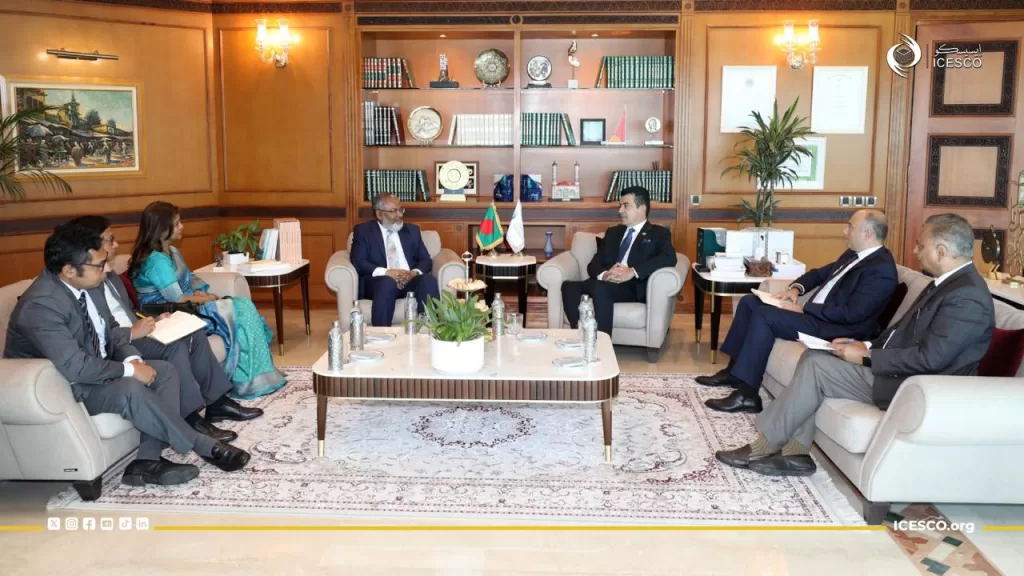
    Shymkent is the third-largest city in Kazakhstan and one of its oldest. Located in the south near the border with Uzbekistan, it was originally a Silk Road stop and played a major commercial role over the centuries. Today, it is recognized as a leading industrial and commercial hub, blending modern and historical influences. It is also a cultural center, home to major theaters, museums, and monuments.

    ICESCO Director-General Visits Kazakhstan National Space Center

    Dr. Salim M. AlMalik, Director-General of the Islamic World Educational, Scientific and Cultural Organization (ICESCO), visited Kazakhstan’s National Space Center on Thursday, 18 September 2025. He was received by Mr. Malik Olzhabekov, Vice-Minister of Digital Development, Innovation and Aerospace Industry of the Republic of Kazakhstan.

    During the visit, the Vice-Minister gave a comprehensive presentation on the Center’s missions and achievements in the fields of space science and related technologies, introducing the various departments of the Center, the latest developments in spacecraft manufacturing, the preparation of astronaut missions, as well as the Center’s industrial innovations over the years and its major space industry achievements.

    For his part, Dr. AlMalik emphasized that ICESCO attaches particular importance to space science and focuses on training young people in the Islamic world to explore this vital field. He also pointed out that the Organization supervised the organization of a training program at Almaty University, which introduced participants to small satellite manufacturing techniques, with broad participation from Member States’ representatives and young people from the Islamic world.

    The ICESCO Director-General also expressed his gratitude and appreciation to the Kazakh leadership and the officials of the National Space Center for their pioneering efforts in supporting space science and developing its technologies, stressing the Organization’s keenness to strengthen future partnerships in this field.

    For his part, Mr. Olzhabekov indicated that strengthening cooperation among ICESCO Member States in the field of space science would keep pace with the successful experiences of countries that have been able to build pioneering international partnerships in this sector.

    Dr. AlMalik was accompanied during the visit by Dr. Anar Karimov, Head of the Partnerships and International Cooperation Sector at ICESCO, and Dr. Abdulhakeem AlSenan, Director of the Organization’s Baku Regional Office.

    ICESCO Director-General Meets State Counselor of the Republic of Kazakhstan

    Dr. Salim M. AlMalik, Director-General of the Islamic World Educational, Scientific and Cultural Organization (ICESCO), met with Mr. Erlan Karin, State Counselor of the Republic of Kazakhstan, on the sidelines of the Congress of Leaders of World and Traditional Religions held in Astana.

    During the meeting, which took place on Thursday, 18 September 2025, Dr. AlMalik reviewed the programs and initiatives implemented by ICESCO in Kazakhstan in recent years, along with the positive results achieved in the fields of education, science, culture, and heritage protection. He emphasized the strategic importance of Kazakhstan as one of the active Member States, endowed with a rich history and flourishing civilization.

    Dr. AlMalik further stressed that cooperation with Kazakhstan opens vast prospects, particularly in the field of artificial intelligence and its requirements, which he described as the language of our time and one of the key drivers of future development. He praised the strong interest of H.E. President Kassym-Jomart Tokayev in this vital field, noting that it aligns with ICESCO’s vision and fosters greater convergence of perspectives and joint projects between both sides.

    For his part, Mr. Erlan welcomed the development of close cooperation with ICESCO and affirmed Kazakhstan’s readiness to advance practical partnerships in the fields of artificial intelligence, as well as the protection, preservation, documentation, and inscription of cultural heritage for the benefit of future generations.

    He also commended the substantial progress ICESCO has made over the past five years, marked by its remarkable international presence, numerous international awards, and recognition by several global institutions as a leading organization in creativity and innovation.

    At the close of the meeting, Dr. AlMalik extended an invitation to the State Counselor to attend the International Conference on Artificial Intelligence and its Applications, scheduled to be held in Baku this coming December, as well as to participate in ICESCO’s General Conference, to be convened early next year in the Kingdom of Saudi Arabia. The State Counselor welcomed both invitations, reaffirming his keen interest in making Kazakhstan a significant partner in ICESCO’s journey to exercise foresight and craft innovative solutions.

    ICESCO Launches Regional Language Training Program in Central Asia

    The Islamic World Educational, Scientific and Cultural Organization (ICESCO), in partnership with the Sultan bin Abdulaziz Al Saud Foundation, has launched a regional language training initiative, the Sultan bin Abdulaziz Al Saud International Language Training in Central Asia. The launch took place during a ceremony held in Bishkek, Kyrgyz Republic, from 15 to 18 September.

    The program aims to develop curricula for teaching Arabic to non-Arabic speakers in the countries of Central Asia and to enhance the efficiency of educational personnel working in this field. The program will begin in Kyrgyzstan and later expand to Bashkortostan, Kazakhstan, Tajikistan, Uzbekistan, and Azerbaijan.

    The inauguration ceremony was attended by several academic, political, and diplomatic figures, including Dr. Mirlan Dyldaev, Rector of Bishkek State University (BSU); H.E. Mr. Ibrahim bin Radi Al-Radi, Ambassador of the Kingdom of Saudi Arabia to Kyrgyzstan; and Dr. Abdulaziz Almagushi, Assistant Director-General of the Sultan bin Abdulaziz Al Saud Foundation, along with university professors and representatives of local institutions.

    In his opening remarks, Dr. Anas Hussam Saeed Al-Nuaimi, Expert at ICESCO’s Center of Arabic for Non-Arabic Speakers, highlighted the importance of this program in creating broad career opportunities for Kyrgyz students across sectors such as diplomacy, commerce, tourism, and education. He further emphasized its role in strengthening Arab-Kyrgyz relations at all levels.

    On the sidelines of the launch, ICESCO, BSU, and the Sultan bin Abdulaziz Al Saud Foundation held meetings to discuss avenues for future cooperation. Additionally, specialized lectures were delivered to students of the university’s Arabic Language Department.

    ICESCO, Morocco’s Ministry of Higher Education Launch Two Trainings for 240 Faculty Members

    The Islamic World Educational, Scientific and Cultural Organization (ICESCO) and the Federation of the Universities of the Islamic World (FUIW), in partnership with the Ministry of Higher Education, Scientific Research and Innovation of Morocco, launched two trainings on Thursday, 18 September 2025, under the program “Pedagogical and Digital Capacity-Building of Moroccan Universities (ReCOMP-ES).”

    The program will benefit 240 early-career assistant professors in Moroccan universities and is based on a modern approach designed to strengthen competencies in pedagogy, didactics, and digital education. It focuses on equipping professors with innovative and effective teaching methods by integrating digital tools across all stages of learning, thereby improving teaching performance and ensuring more comprehensive, high-quality education for students.

    Dr. Omar Halli, Adviser to ICESCO Director-General for the Federation of the Universities of the Islamic World, explained that the program will enable new professors and researchers to acquire digital teaching skills and adopt innovative pedagogical methods that enhance the quality of higher education. For his part, Dr. Khalid Berrada, Project Coordinator, Director of ICESCO’s Open Education Chair at Mohammed V University in Morocco, emphasized that this initiative represents a significant step in supporting digital transformation in universities and in fostering a culture of innovation and knowledge-sharing among universities.

    The two trainings will be delivered in six Moroccan universities, divided into two groups. The first includes Ibn Tofail University in Kenitra, Cadi Ayyad University in Marrakesh, and Abdelmalek Essaâdi University in Tetouan. The second includes Chouaib Doukkali University in El Jadida, Hassan I University in Settat, and Hassan II University in Casablanca.

    This program aligns with the 2030 Vision of ICESCO and FUIW, which focuses on digital transformation in economic, environmental, and educational sectors, particularly higher education, in line with the UN Sustainable Development Goals, especially Goal 4 on ensuring inclusive and equitable quality education for all.

    By messaging ICESCO, you agree to our Terms & AI policy
    Alem AI assistant