

With Ministerial Participation, ICESCO Holds International Seminar on Green Education and Climate Solutions at COP31 in Antalya

13 November 2026
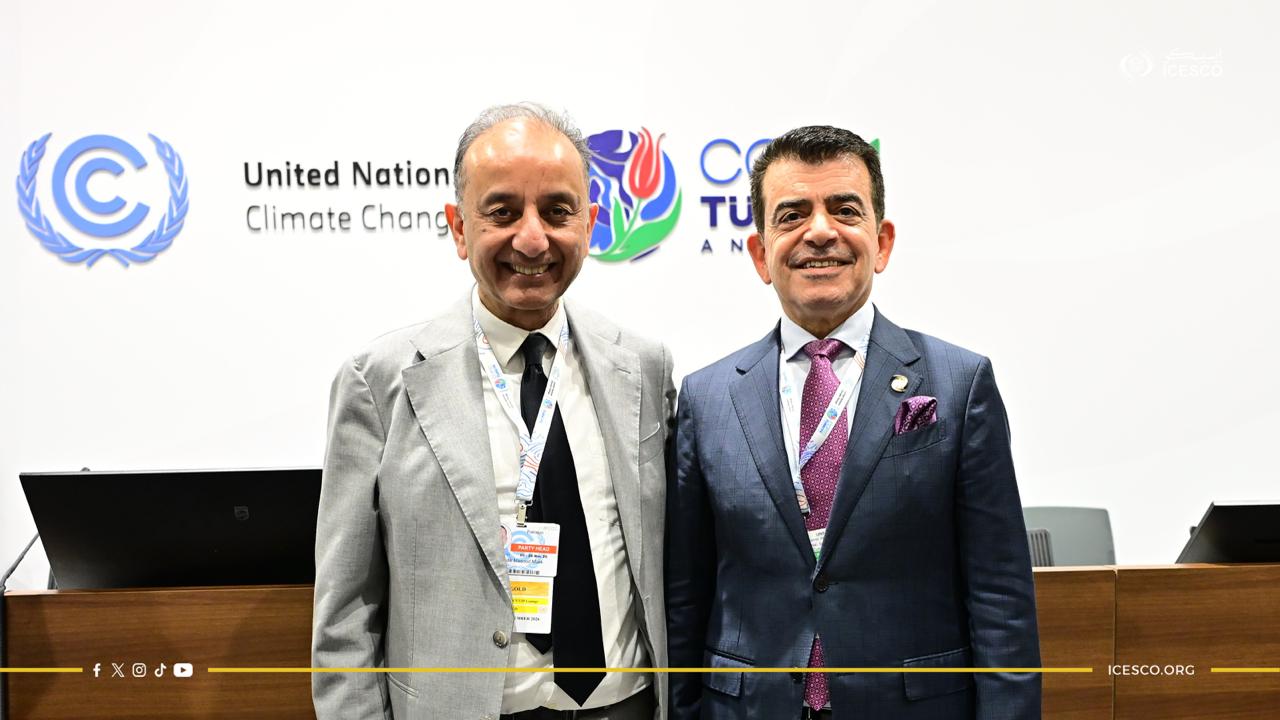
Dr. Salim M. AlMalik, Director-General of the Islamic World Educational, Scientific and Cultural Organization (ICESCO), stated that climate commitment depends on the knowledge and skills individuals acquire in schools and universities, as well as on scientific research that responds to community needs. Dr. AlMalik underscored the central role of education and science in addressing the impacts of climate change.
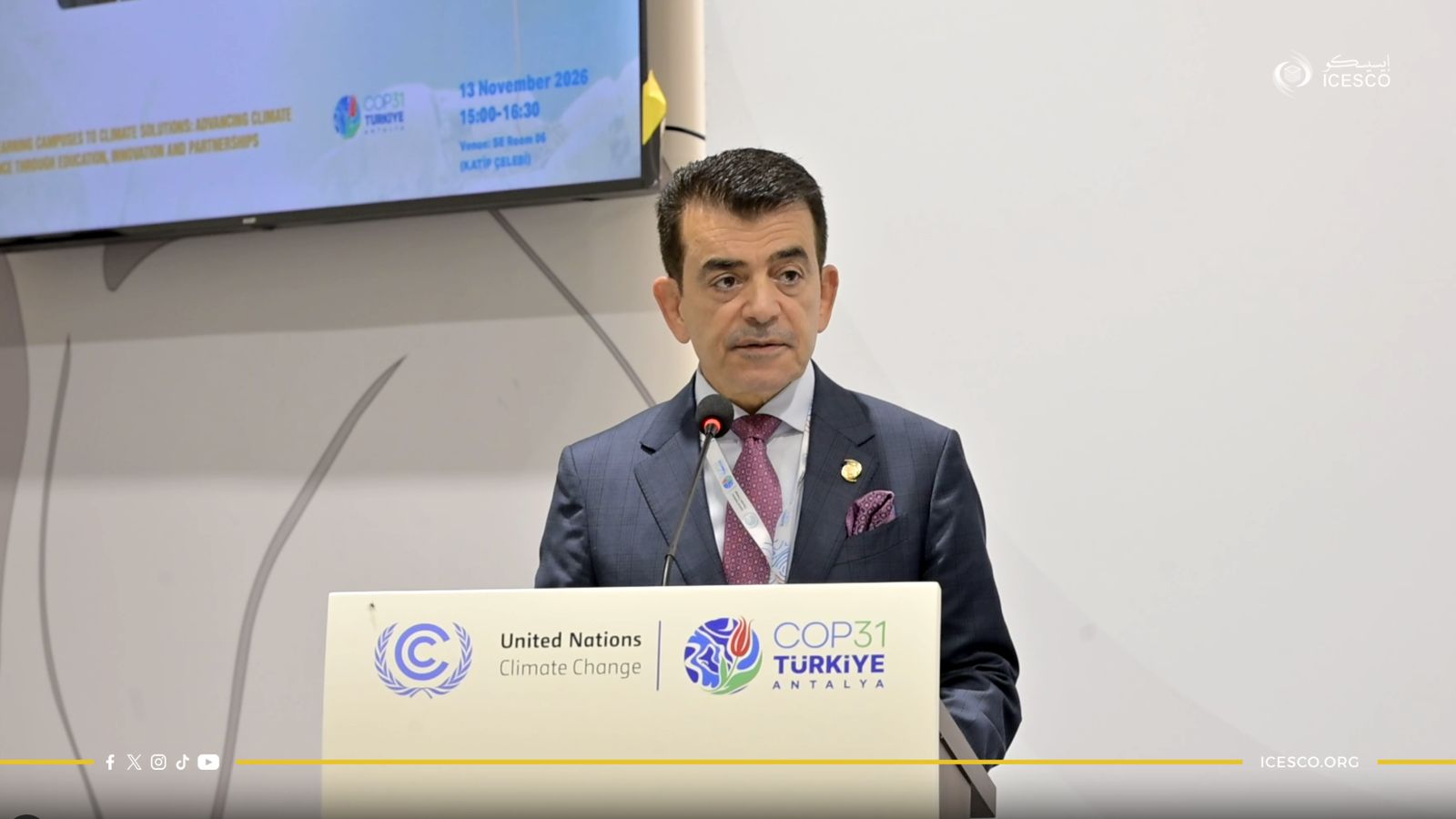
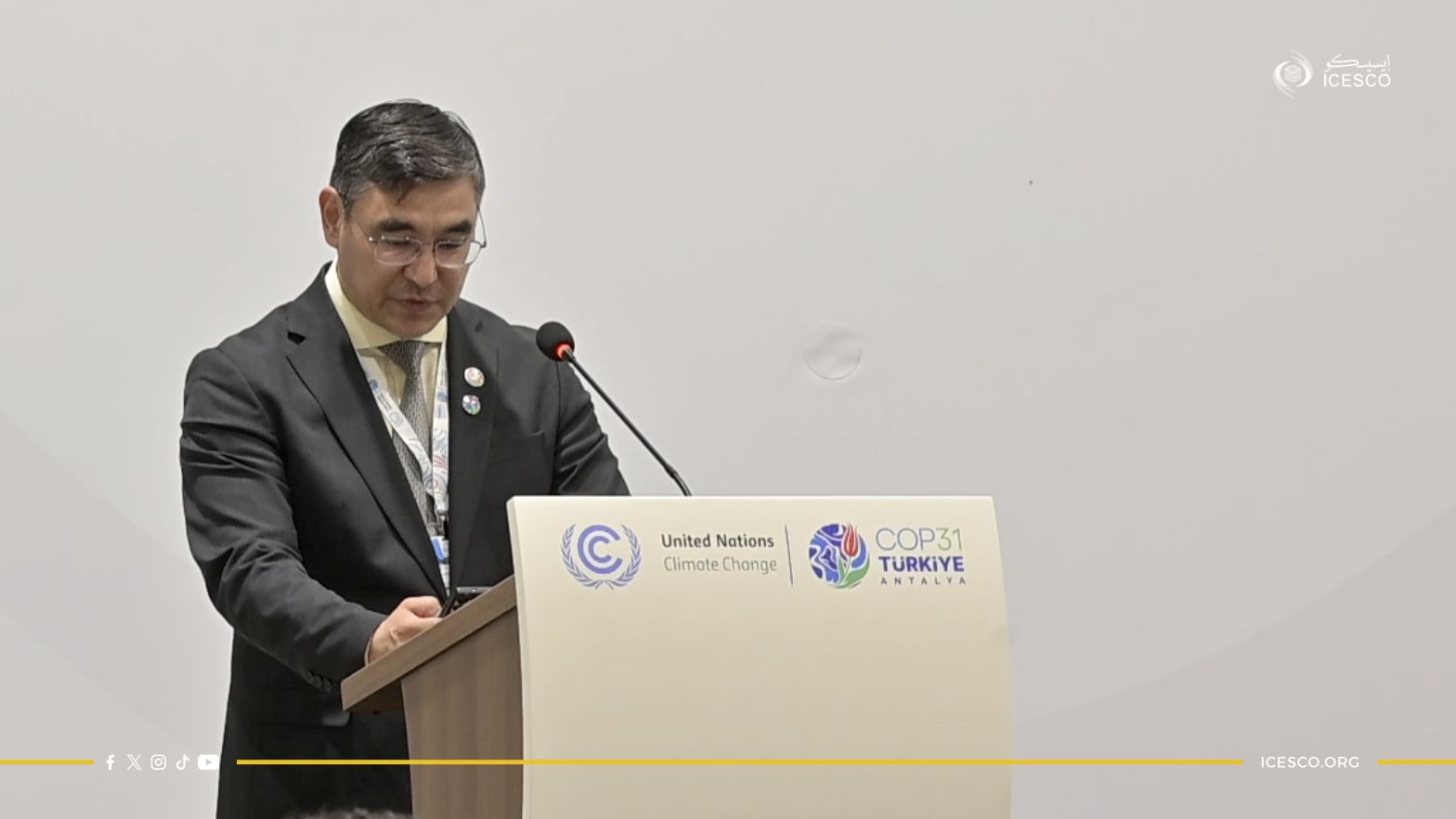
Dr. AlMalik made these remarks during an international seminar titled “From Learning Campuses to Climate Solutions: Advancing Climate Resilience Through Education, Innovation and Partnerships,” organized by ICESCO in partnership with the Ministry of Climate Change and Environmental Coordination of the Islamic Republic of Pakistan on Friday, 13 November 2026, in Antalya, Türkiye. The seminar was held as part of the 31st United Nations Climate Change Conference (COP31), with the participation of H.E. Dr. Musadik Masood Malik, Federal Minister for Climate Change and Environmental Coordination of Pakistan; H.E. Mr. Alibek Kuantyrov, Minister of Ecology and Natural Resources of Kazakhstan; and a number of senior officials and representatives of relevant international institutions.
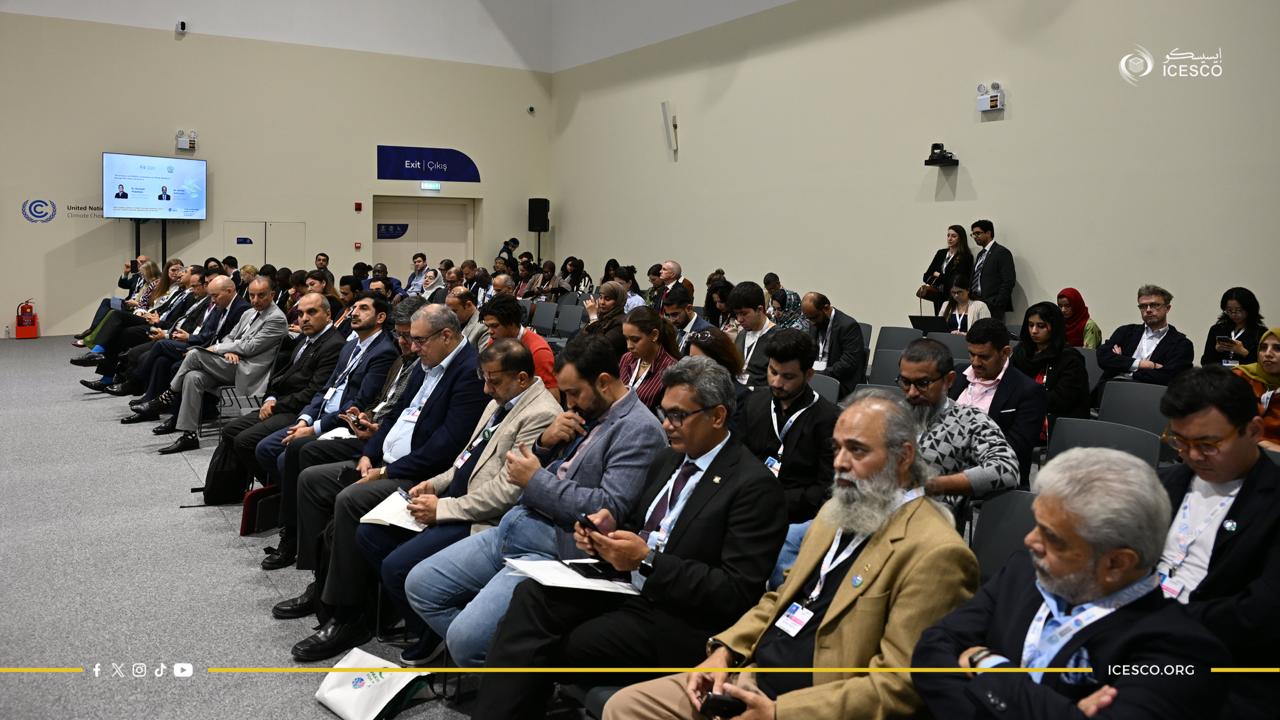
At the outset of his address, Dr. AlMalik expressed appreciation to the Government of Pakistan for its cooperation with ICESCO in organizing the event, which provided an opportunity to develop joint projects supporting education systems and strengthening climate resilience. He noted that this cooperation reflects ICESCO’s and Pakistan’s commitment to placing education and science at the heart of climate action.
The ICESCO Director-General stressed the pivotal role of teachers in raising students’ awareness of the adverse effects of climate change on their lives and communities. Dr. AlMalik also highlighted the importance of developing curricula tailored to young people’s needs and building institutional expertise and capacities in climate science.
Following, Dr. AlMalik reviewed ICESCO’s efforts to advance climate action, foremost among them the development of the “ICESCO Standards and Guidelines for Greening Curricula in the Islamic World” project in cooperation with the Cambridge University Press & Assessment. The project aims to support countries in integrating sustainability into education policies. He also highlighted the launch of the Global Dashboard for Tracking Progress in Green Education, in partnership with UNESCO.
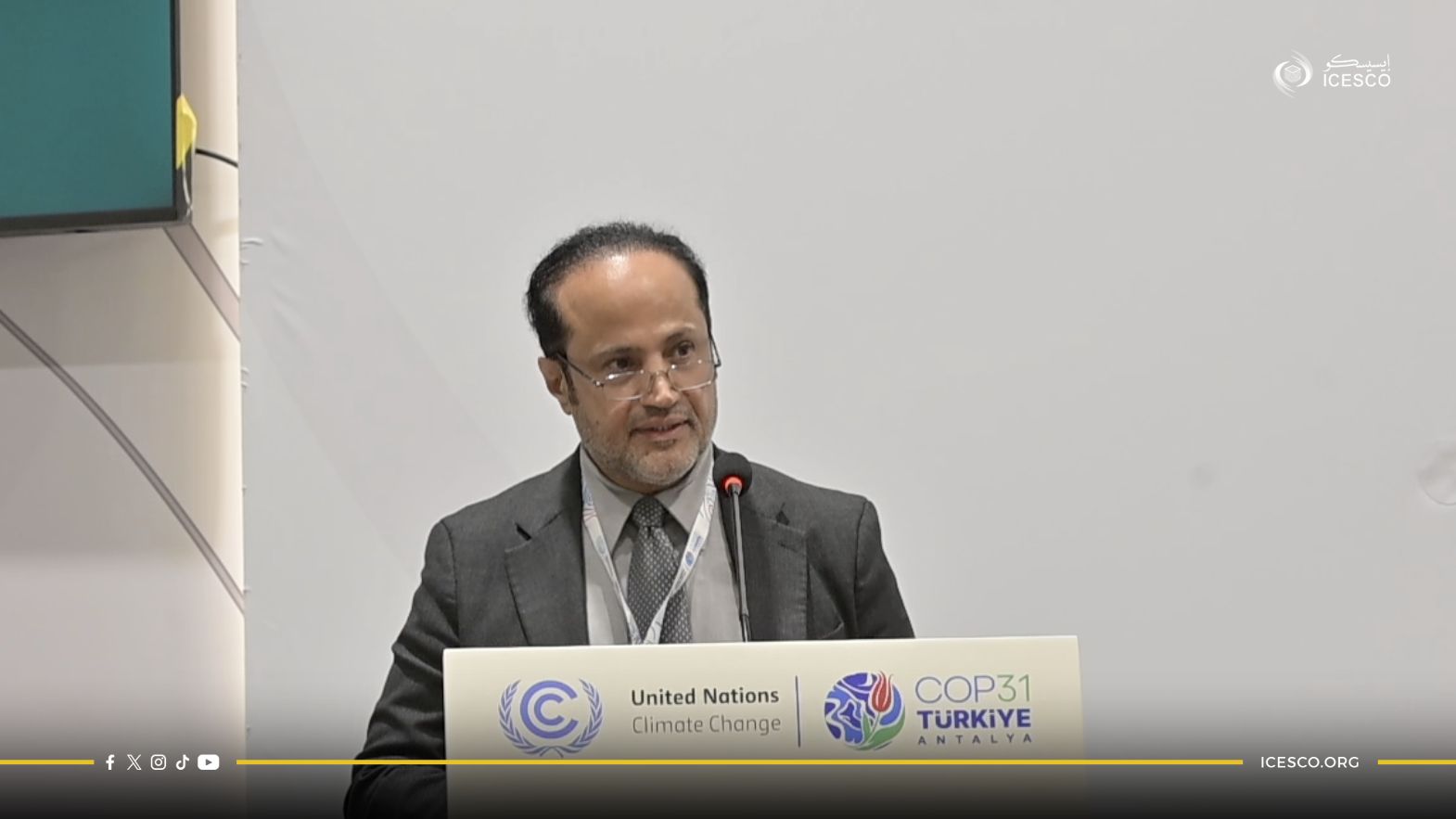
Dr. AlMalik added that the Organization’s efforts also included launching the “ICESCO Platform for Green Transformation” to strengthen cooperation among government entities, organizations, universities and research centers in clean energy, environmental governance and water management.
Dr. AlMalik concluded his address by emphasizing the role of universities in preparing young people for the labor market and developing solutions to the challenges facing communities, thereby strengthening climate action.
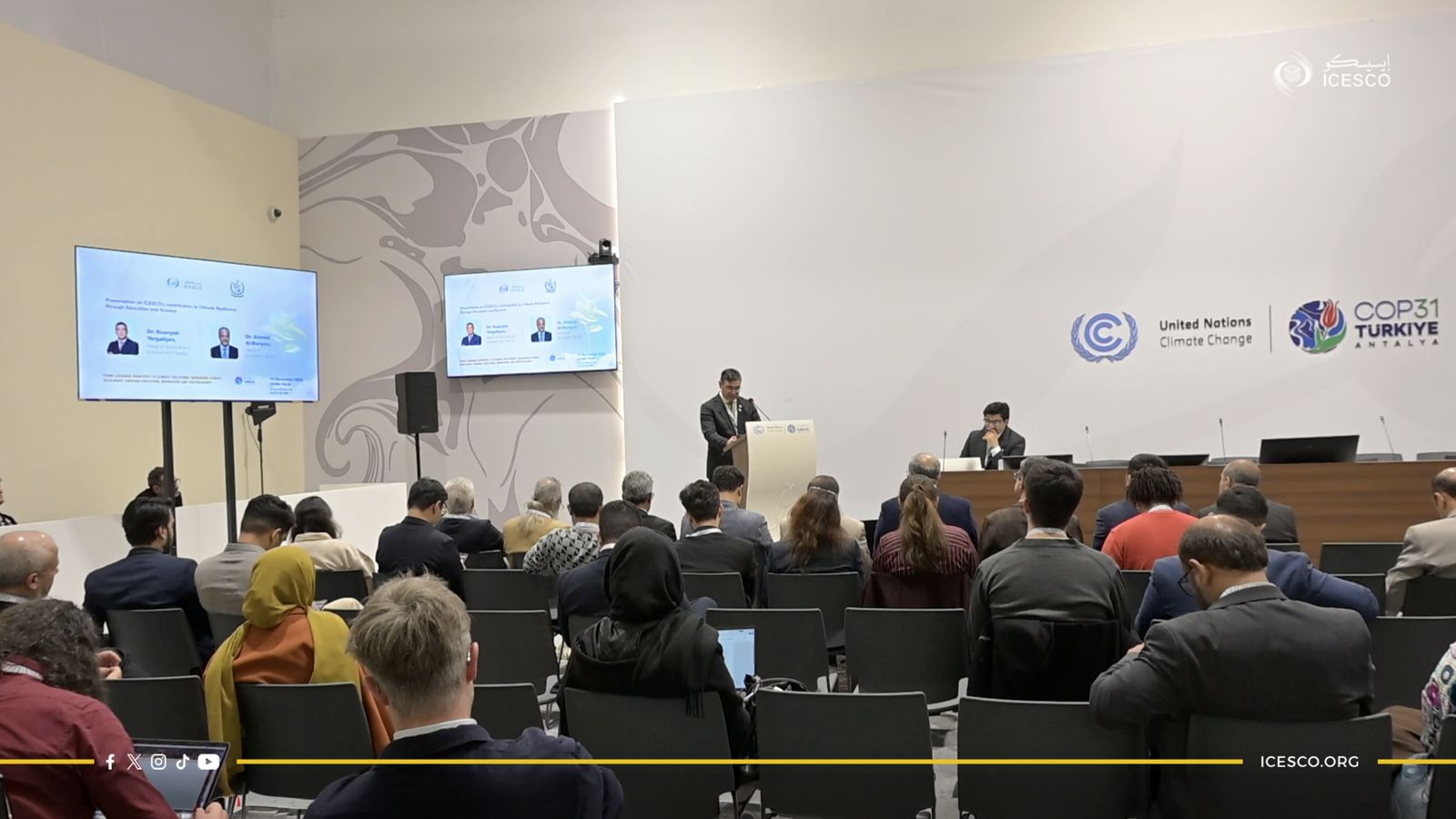
The seminar featured a presentation on ICESCO’s contribution to climate resilience through education and science, delivered by Dr. Ahmed Albanyan, Head of the Education Sector, Supervisor of ICESCO’s Center of Translation and Publishing, and Dr. Kuanysh Yergaliyev, Head of the Science and Environment Sector.


