
ICESCO Participates in First International Conference on African Manuscript Heritage in Russia

25 September 2026
Saint Petersburg: 25 September 2026
The Islamic World Educational, Scientific and Cultural Organization (ICESCO) participated in the First International Conference on African Manuscript Heritage, held on 23 and 24 September 2026 at the National Library of Russia in Saint Petersburg, under the theme “The Comprehensive Study of African Manuscript Heritage: Codicology, Paleography, Textology, History of Collections, Cataloguing, and Conservation.” The Conference was jointly organized by Libya’s Al-Shaikh Al-Tahir Al-Zawi Center for Research and Manuscript Studies (TCRMS) and the Faculty of Asian and African Studies at Saint Petersburg State University (FAAS).
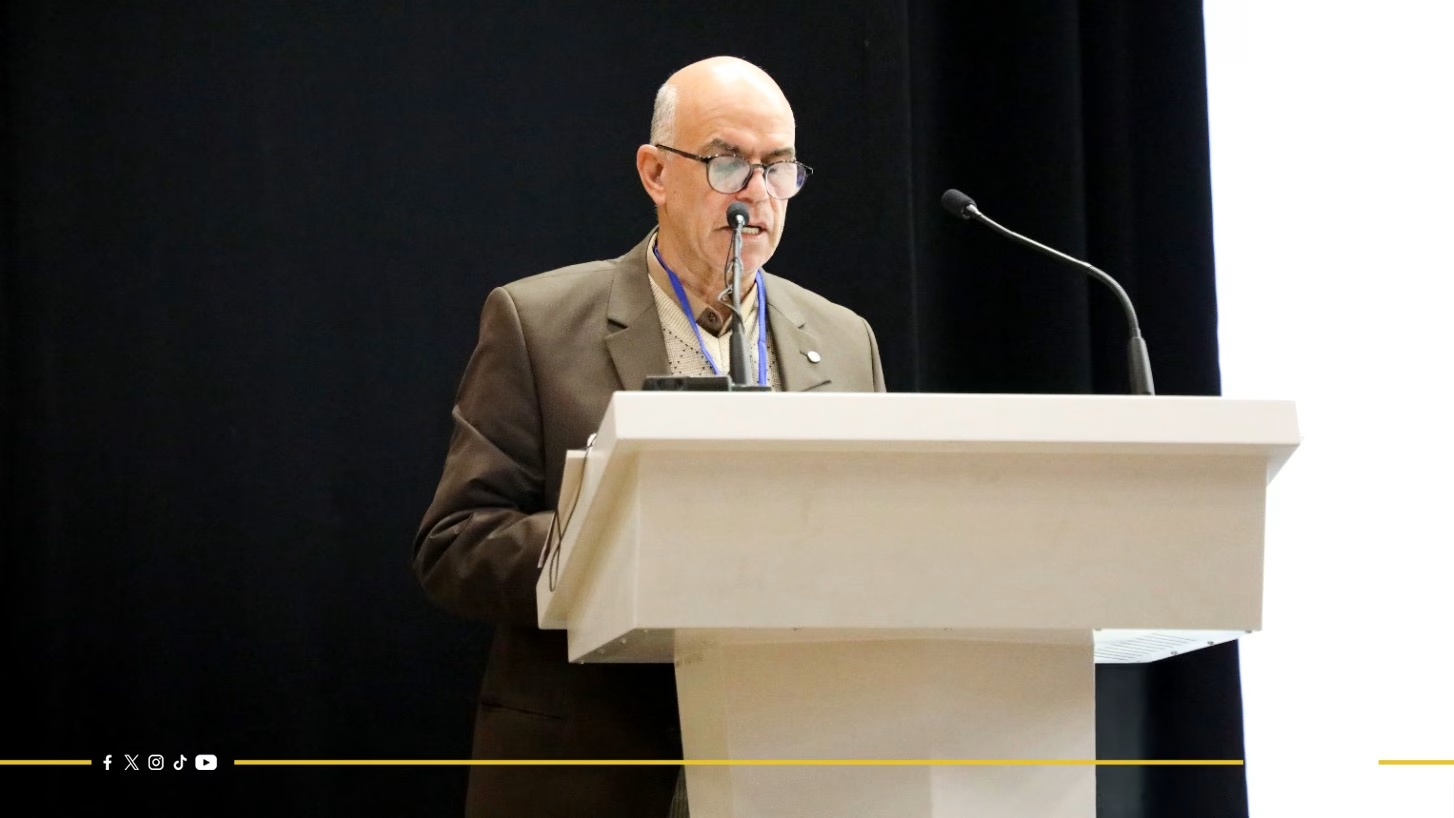
In an address delivered on his behalf during the opening session by Dr. Idham Hanash, Director of ICESCO’s Center for Calligraphy and Manuscripts, Dr. Salim AlMalik, ICESCO Director-General, underscored the major civilizational and historical significance of African manuscripts. He noted that these manuscripts provide compelling evidence of the intellectual advancement achieved across Africa’s diverse peoples and languages, as well as the centuries-long flourishing of writing traditions and manuscript production. Dr. AlMalik also reviewed ICESCO’s ongoing efforts in this field, including the organization of scientific events, training workshops, and activities aimed at preserving this cultural heritage.
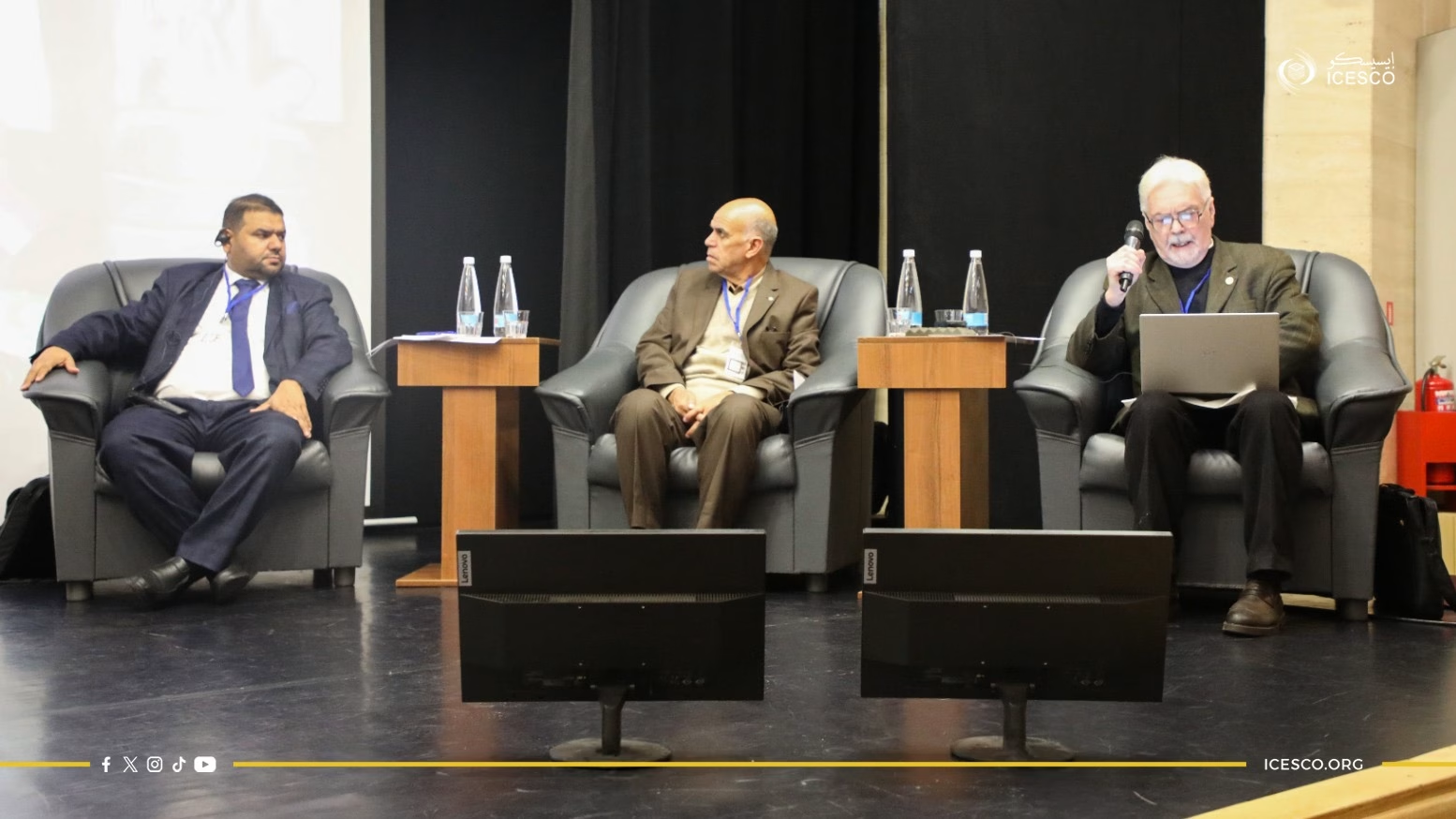
He further noted that ICESCO is currently developing a joint program with the African Cultural Institute (ACI) to restore Timbuktu’s historic manuscripts, as part of the Organization’s continuing international efforts to protect Africa’s cultural and human heritage.
During the first scientific session, titled “Toward Codicological Cataloguing of African Arabic Manuscripts,” Dr. Ahmed Abdelbaset, expert at the Center for Calligraphy and Manuscripts at ICESCO, discussed the concept of Codicological Cataloguing, comparing it with the three recognized levels of traditional descriptive cataloguing. He also outlined the extensive knowledge required of manuscript cataloguers and the need for a thorough understanding of the physical dimensions of African manuscripts.
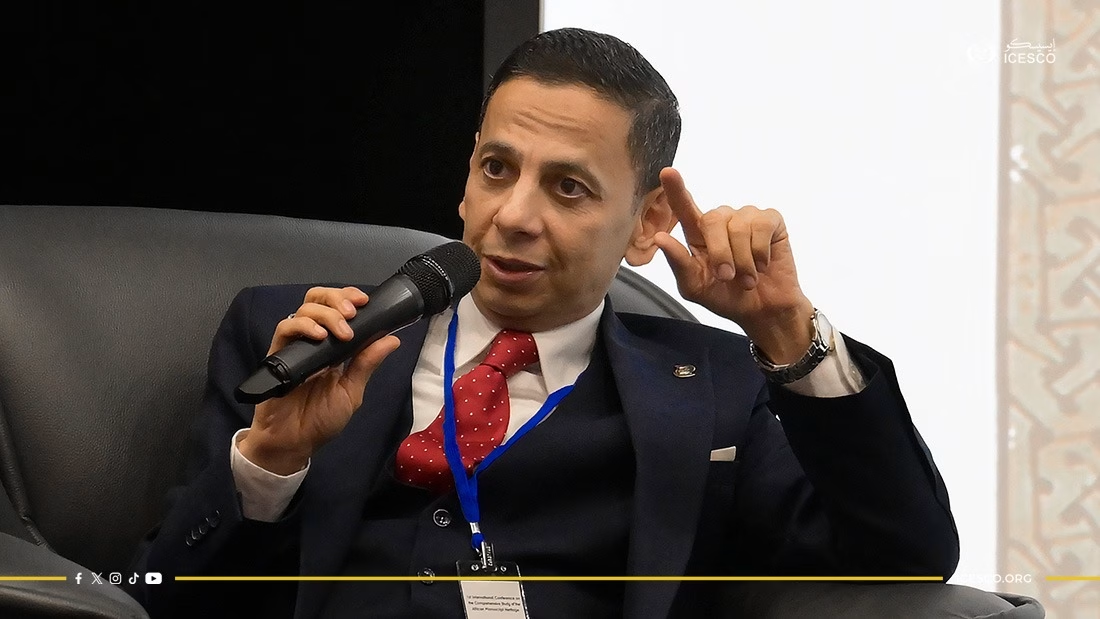
Over the course of two days, the Conference featured a range of substantive scientific presentations, as well as visits to the halls of the National Library of Russia, where they viewed its rare works and collections.