

ICESCO Holds Two Workshops in Kazakhstan on Space Sciences and Their Applications for the Benefit of 320 Students and Researchers

12 September 2026
The Islamic World Educational, Scientific and Cultural Organization (ICESCO) held two separate workshops in Astana on 8 and 9 September 2026, the first at Saken Seifullin Kazakh Agrotechnical University and the second at Satbayev University, for the benefit of 320 students and researchers, as well as faculty members. The workshops aimed to explore the opportunities offered by space sciences, modern technologies, and innovation.
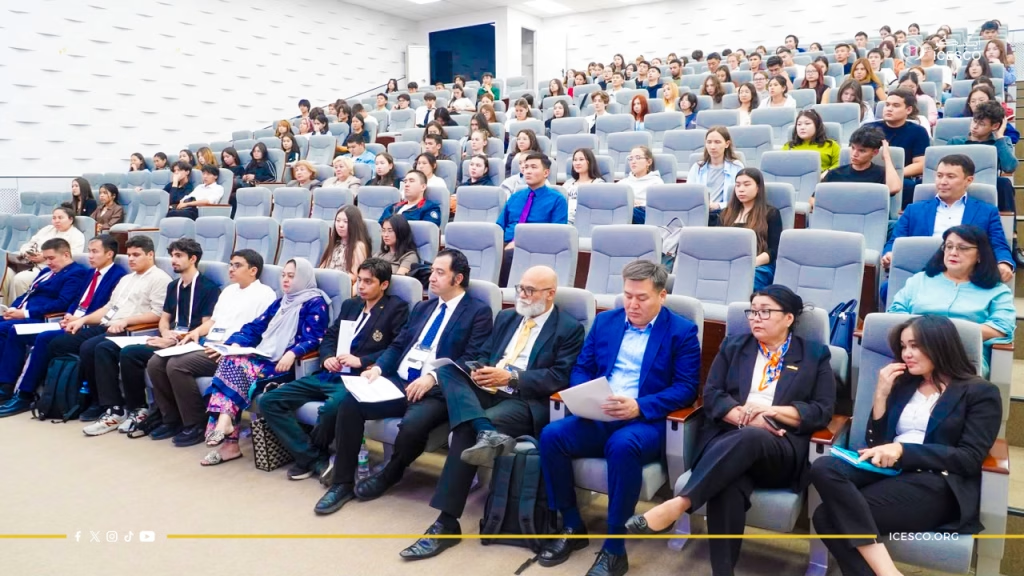
The first workshop, hosted by Saken Seifullin University, was held under the theme “Space, Science and Technology: Engaging Students in Global Projects.” It featured a lecture delivered by Dr. Muhammad Sharif, Advisor at ICESCO’s Science and Environment Sector, who highlighted the role of space technologies and Earth observation systems in providing tools to address the challenges of climate change, food security, sustainable agriculture, and water resource management.
The second workshop, hosted by Satbayev University, aimed to showcase ICESCO’s efforts to build the capacities of students and young people and strengthen research and innovation ecosystems across the countries of the Islamic world. These efforts include programs and projects in the field of space sciences, as well as youth training initiatives aimed at preparing the next generation of scientists, engineers, innovators, and technology entrepreneurs. Chief among these are ICESCO’s program to train young people on how to establish and develop small-scale projects in technology and innovation, and the training workshop on the design of an educational satellite (CanSat).
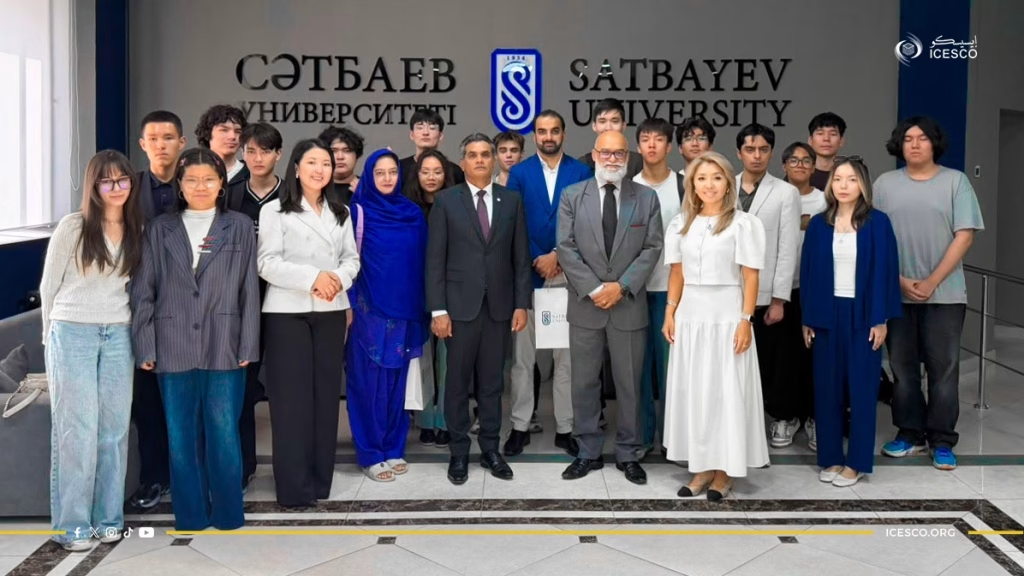
The two workshops also featured practical activities, during which participants, including students, researchers, and young people, formed working groups to identify current challenges and develop solutions by harnessing modern technologies and their applications. At the conclusion of the workshops, Dr. Sharif answered participants’ questions on the skills required for the jobs of the future in the fields of space sciences and modern technologies, and ways to develop research projects and mechanisms for joining international scientific networks.


