
Grand Mufti of Egypt at Imam Al-Bukhari Conference in Samarkand: Doubts Cast Upon Sahih Al-Bukhari Fundamentally Challenge the Prophetic Sunnah and Its Legislative Authority

10 July 2026
Dr. Nazir Mohamed Ayyad, Grand Mufti of the Arab Republic of Egypt and Chairman of the General Secretariat for Fatwa Authorities Worldwide, participated in the international scientific conference, “Imam Al-Bukhari’s Al-Jami‘ As-Sahih: The Book of the Ummah,” organized by the Islamic World Educational, Scientific and Cultural Organization (ICESCO), in partnership with the Islamic Civilization Center in Tashkent and the Imam Bukhari International Scientific-Research Center, under the patronage of His Excellency Shavkat Mirziyoyev, President of the Republic of Uzbekistan.
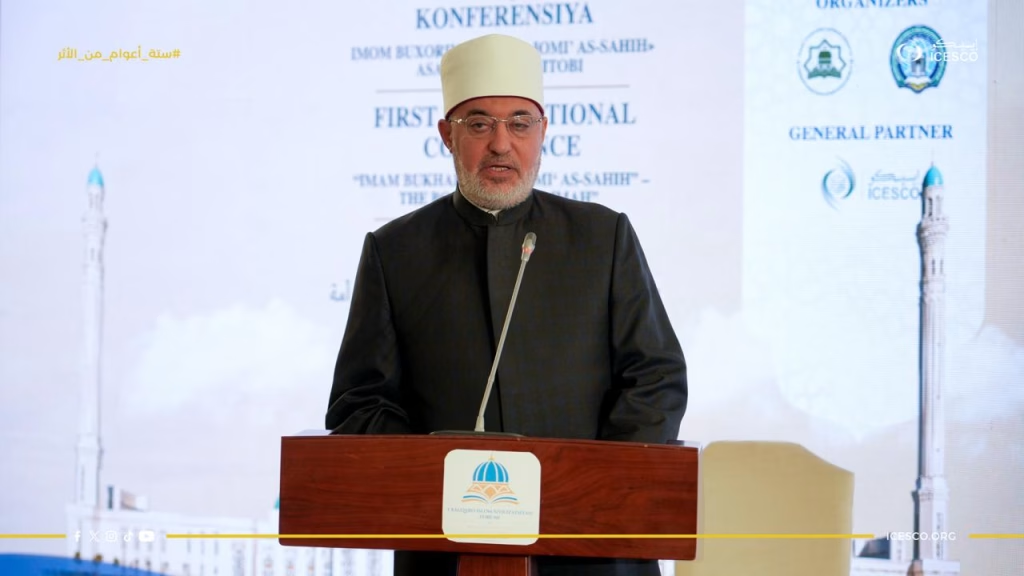
In a speech delivered on Thursday, 9 July 2026, during a scientific session on Imam Al-Bukhari, the Grand Mufti affirmed that revisiting the Imam’s legacy in his homeland holds profound scholarly and civilizational significance, reflecting a deep connection to the scholars who dedicated their lives to upholding the noble Prophetic Sunnah. He emphasised that Sahih Al-Bukhari is not just a book studied in academic circles, but a universal heritage and a comprehensive intellectual framework.
Dr. Ayyad explained that “Al-Jami‘ Al-Musnad As-Sahih” was not simply a compilation of hadiths, but a practical manifestation of the civilization of isnad (chain of transmission) and documentation that distinguished the Islamic world, which built knowledge on verification, critique, and rigorous scholarship rather than the mere transmission of reports. He added that celebrating Sahih Al-Bukhari is a celebration of a scientific methodology that has contributed to consolidating a culture of documentation, preserving knowledge, and safeguarding the sources of Islamic law throughout the centuries.
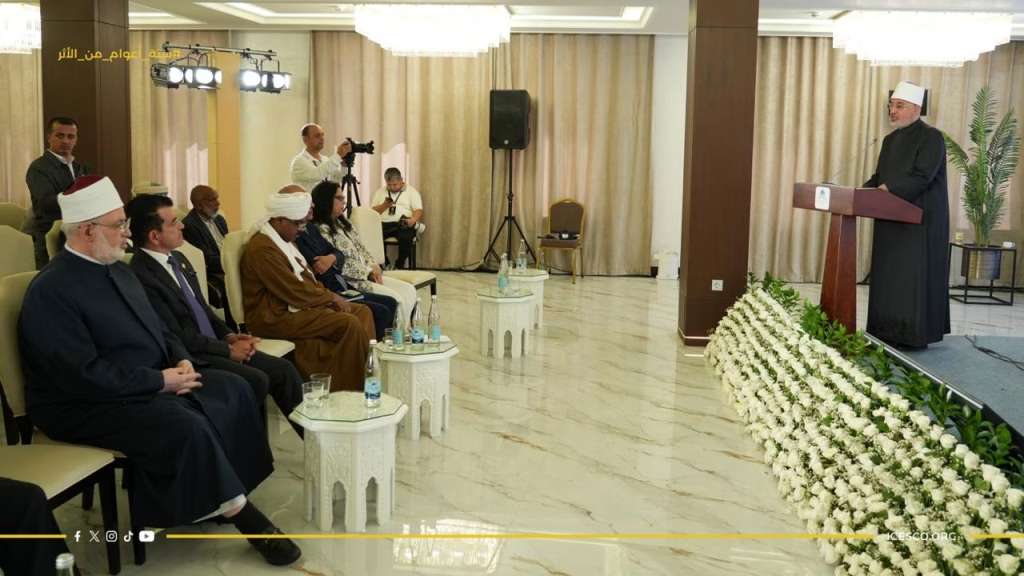
Regarding the doubts raised about Sahih Al-Bukhari, the Grand Mufti emphasized that they fundamentally challenge the Prophetic Sunnah and its legislative authority, calling on scholars and institutions across the Muslim world to present this heritage in a contemporary language and clarify its methodological foundations through argument and evidence.
In conclusion, Dr. Ayyad commended the efforts of ICESCO and Uzbekistan in reviving the legacy of Imam Al-Bukhari and promoting the study of his work through conferences, research, verification, and publication.