
ICESCO Highlights Key Pillars for the Success of Smart Government at International Seminar in Rabat
24 April 2026
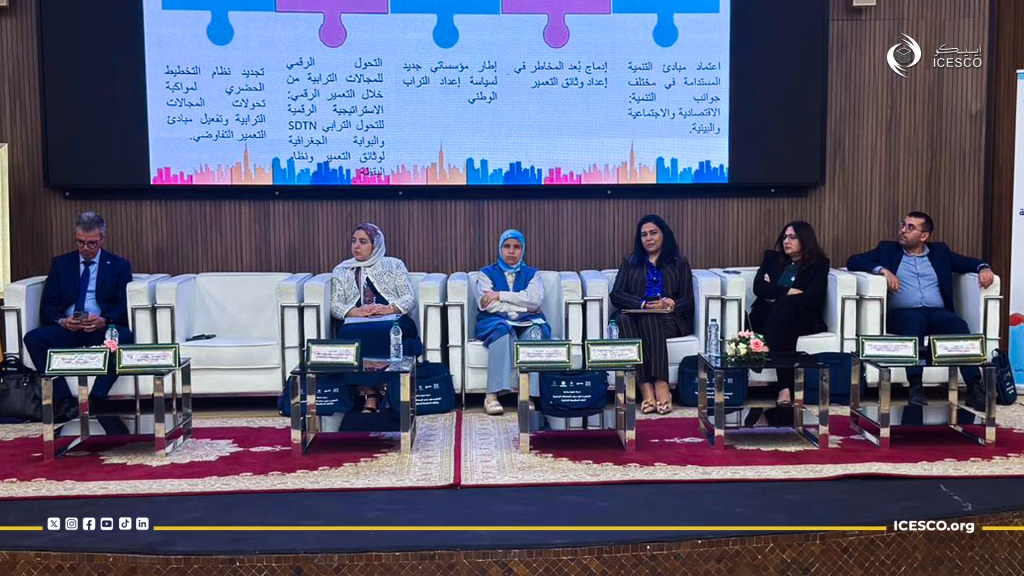
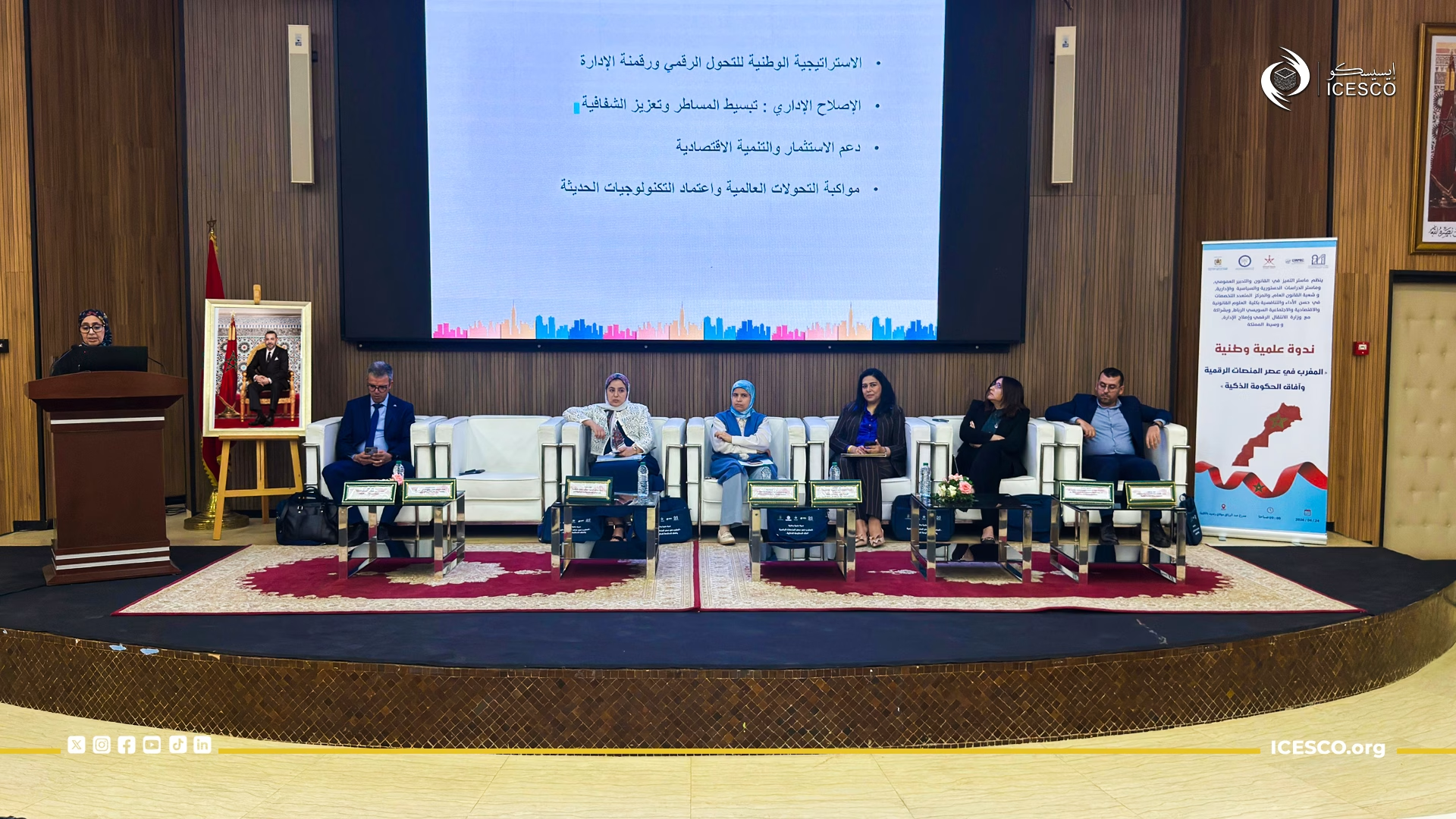
The Islamic World Educational, Scientific and Cultural Organization (ICESCO) took part in the scientific seminar titled “Morocco in the Era of Digital Platforms and Prospects for Smart Government,” organized by the Faculty of Juridical, Economic and Social Sciences, Souissi, in Rabat, on Friday, 24 April 2026. The seminar brought together a select group of international experts and specialists to anticipate Morocco’s digital transformation pathway and explore prospects for building a smart government capable of keeping pace with rapid change.
ICESCO was represented by Dr. Sally Mabrouk, Head of the Director-General’s Office and Supervisor of the Strategy and Institutional Excellence Sector, who delivered a presentation illustrating how the acceleration of digital transformation has made it common to measure progress by the number of digital platforms and the speed of service delivery. However, international experience has shown that these indicators alone are insufficient to assess the success of digital transformation.
Dr. Mabrouk explained that governments today possess unprecedented volumes of data, along with advanced analytical capabilities and large-scale digital systems, yet many digital transformation projects fail to achieve their intended impact. She attributed this to deeper shortcomings related to decision-making frameworks.
In this respect, Dr. Mabrouk proposed adopting a smart government model founded on an integrated decision cycle, beginning with data monitoring and intelligent analysis, followed by risk assessment and human review, then decision-making and digital implementation, and culminating in impact measurement and lessons learned. She noted that this model ensures technology is directed to serve public decision-making, rather than becoming an end in itself or a substitute for sound institutional vision.