
ICESCO Holds Second Session of Regional Workshop on Bridging Curricula to Tech Industry

20 February 2026
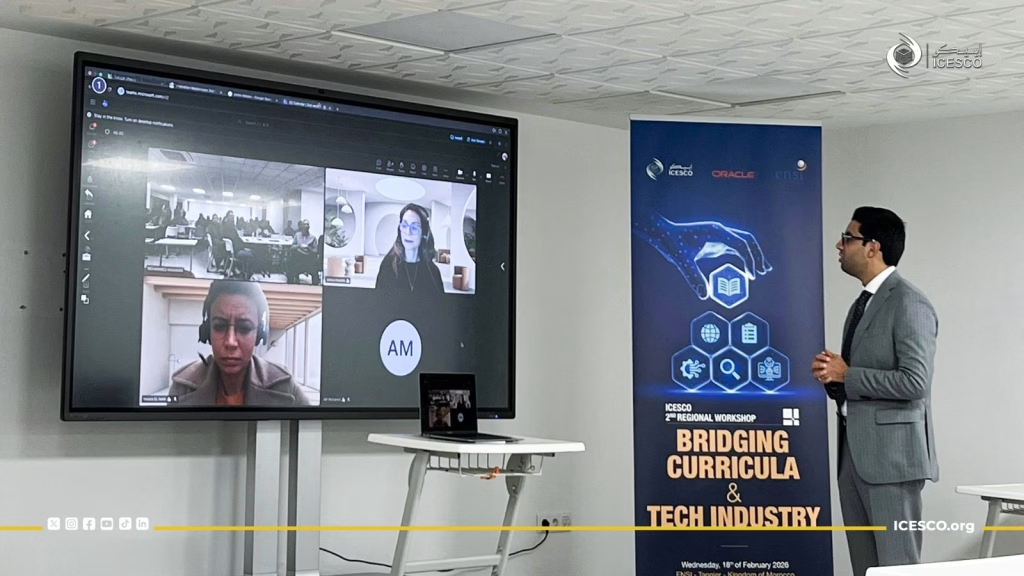
The Islamic World Educational, Scientific and Cultural Organization (ICESCO), in partnership with Oracle’s Research and Development Center in Morocco, held the Second Session of the Regional Workshop on Bridging Curricula and the Tech Industry. The event aimed to support Member States’ efforts in keeping pace with digital transformations and accelerating the development of more effective innovation ecosystems. The workshop brought together about 50 university professors, researchers, and experts from engineering schools and higher education institutions.
Held on Wednesday, February 18, 2026, in Tangier, Kingdom of Morocco, the workshop focused on identifying gaps between academic training and industry needs. Participants explored practical solutions to enhance graduates’ readiness for emerging technologies, improve their employability, and align university programs with the evolving job market.
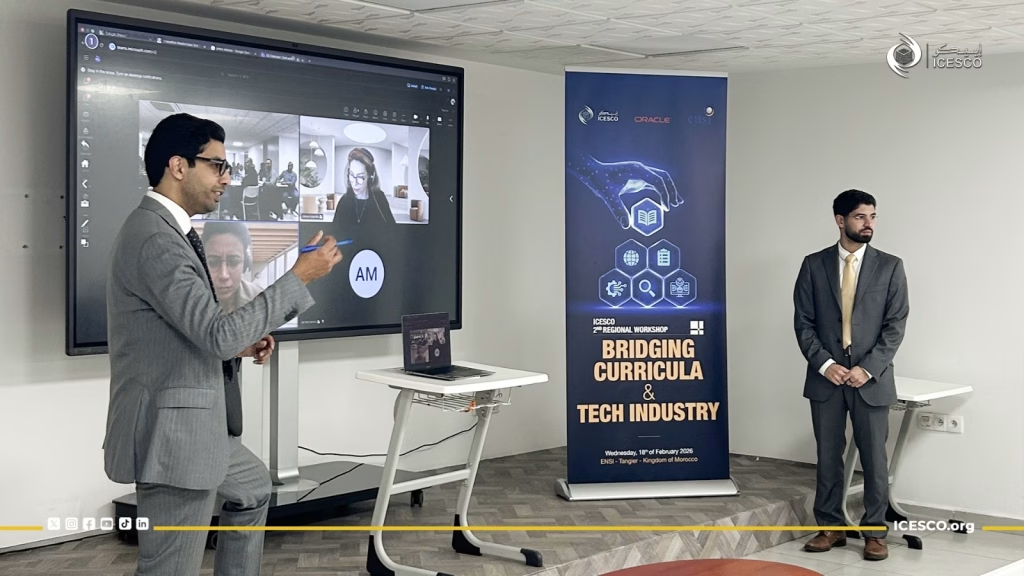
In this context, Dr. Issam Krimi, an Expert from ICESCO’s Science and Environment Sector, delivered a presentation on the vital role of sustainable partnerships between universities and industries in modernizing curricula and linking them to productive realities, stressing that such collaborations foster innovation-driven development across Member States. Meanwhile, Mr. Mohammed Rashwan, from ICESCO’s Young Professionals Program, highlighted the importance of participatory approaches in program design to bring together academic and economic stakeholders.
The workshop featured two presentations by representatives of the Oracle Center, namely Ms. Yousra Elhatib, Strategy Director, and Ms. Valerie Hayotte, Director of University Skills Development for Europe, the Middle East, and Africa. The two experts proposed practical integration pathways and areas of cooperation to bridge the divide between education and the workforce.
At the close of the workshop, participants stressed the need to build sustainable coordination channels between academic institutions and industry partners and to develop collaboration models that incorporate hands-on training, career guidance, and up-to-date pedagogical content.