
Naseer Shamma Hosted by ICESCO: Music as a Bridge Between Nations

9 February 2026
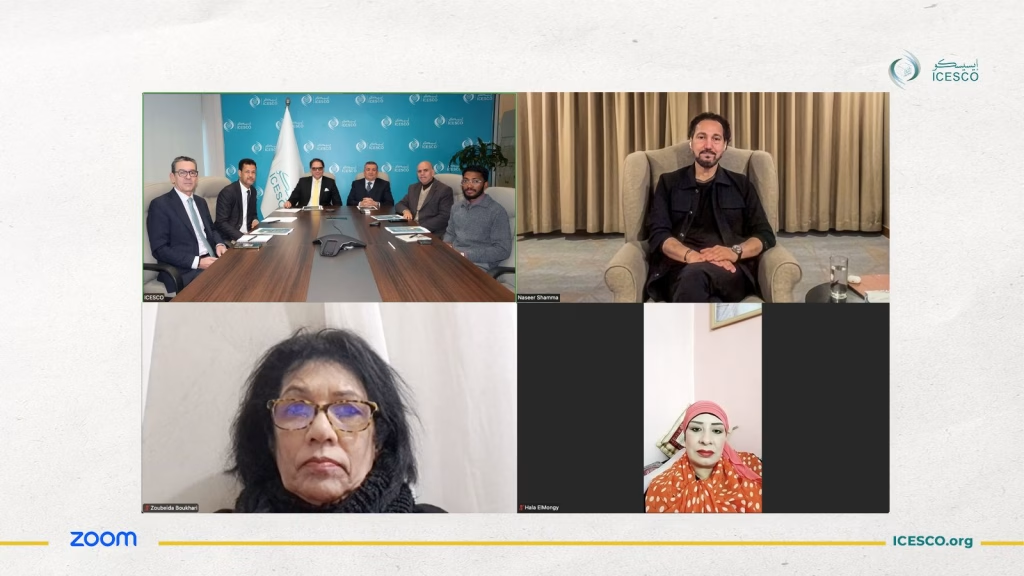
As part of ICESCO’s Forum “Culture to Rethinking the World,” the Islamic World Educational, Scientific and Cultural Organization (ICESCO) hosted Internationally renowned Iraqi oud virtuoso Dr. Naseer Shamma on Thursday, 5 February 2026, in the second session of its initiative “Artists of the World, Guests at ICESCO,” with the participation of several ICESCO senior officials, experts, academics, and media professionals.
During the meeting, Dr. Shamma emphasized that music is a universal human language that fosters communication among peoples and reinforces the values of peace. He highlighted its leading role in conveying civilizational and cultural values across societies, noting the richness of the musical heritage of the Islamic world and the need to envision the future through an informed reading of history. He added that the scientific achievements of Islamic civilization and its history continue to face attempts of appropriation and distortion, stressing that music is an integral component of this legacy and must be preserved.
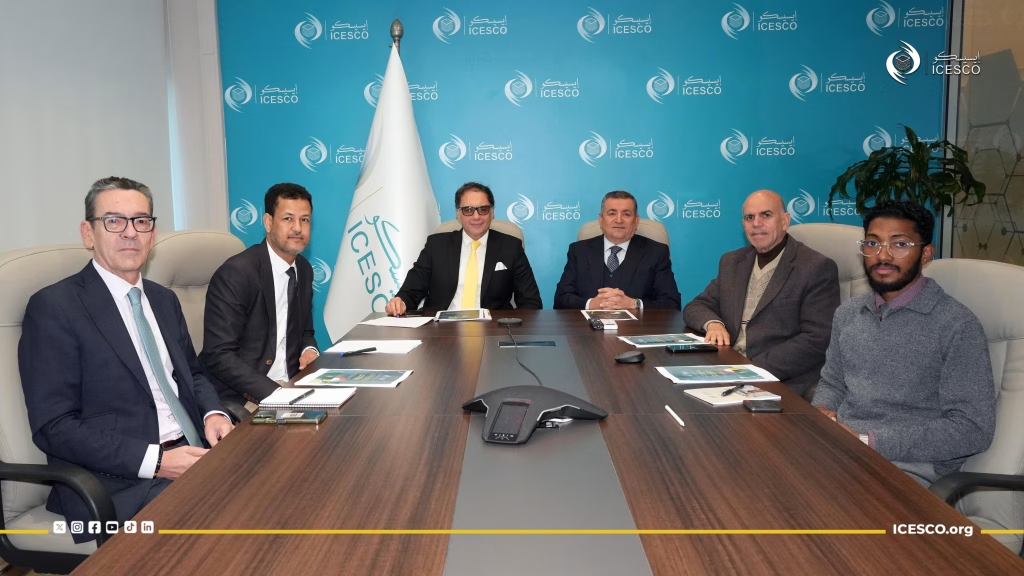
He also pointed out that the growing number of music institutes in Arab countries contributes to enriching musical heritage, noting the increasing interest of students from Southeast Asia in studying at the “Arab Oud Houses,” which he established in several Arab countries.
For his part, Dr. Mohammed Zinelabidine, Head of Culture Sector at ICESCO, who moderated the session, underlined the significance of music and the oud in advancing encyclopedic intellectual pursuits throughout Islamic civilization, from Al-Kindi to Al-Farabi to al-Urmawi.
In turn, Osama Heikal, Head of Media and Communication Sector at the Organization, stressed the importance of safeguarding and promoting Islamic identity, particularly among youth in light of the influence of social media and Artificial Intelligence applications. He underscored that Arab music is an essential part of this cultural heritage and must be strengthened and presented through contemporary tools. While, Dr. Idham Hanash discussed the close relationship between calligraphy and music, explaining that Arab rhetoricians view calligraphy as the moving still, as it is a geometric form that moves in accordance with a musical rhythm.