

ICESCO Signs Two MoUs in Civilizational Dialogue and Scientific Research in Thailand

10 October 2025
The Islamic World Educational, Scientific and Cultural Organization (ICESCO) signed two MoUs with the Wasatiyyah Institute for Peace and Development, affiliated with the Office of the Sheikhul Islam of Thailand, and with Krirk University in Bangkok, with the aim of strengthening cooperation in the fields of peaceful coexistence and civilizational dialogue, and advancing academic, scientific, and research collaboration. The signing took place on Thursday, 9 October 2025, on the sidelines of the third international conference titled “The Arabic Language in the Modern Era: Literacy, Opportunities, Challenges,” held in the Thai capital.
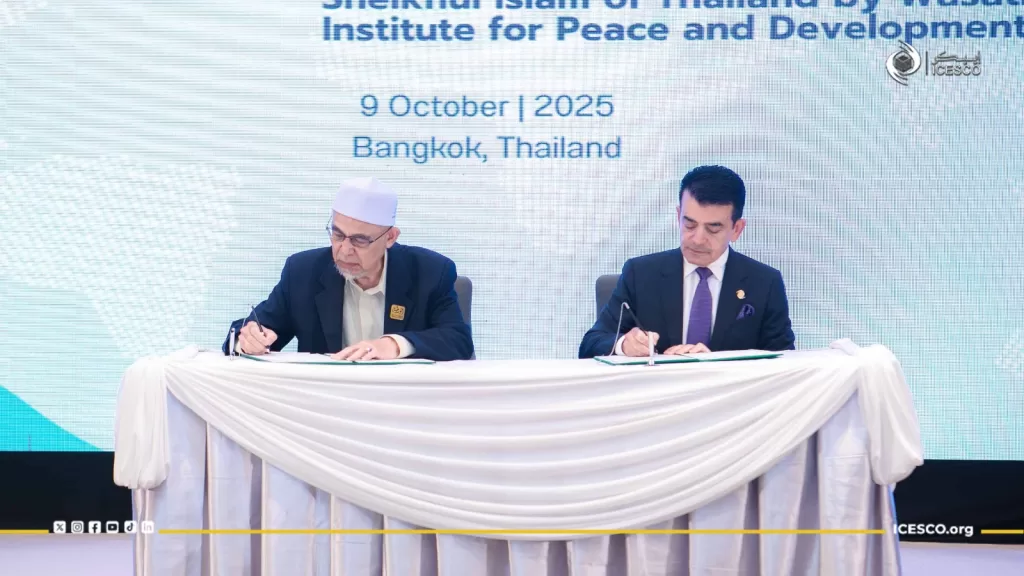
The first MoU was signed by Dr. Salim M. AlMalik, ICESCO Director-General, and Dr. Abdullah Numsuk, Director of the Wasatiyyah Institute for Peace and Development. Spanning three years, the MoU seeks to promote intercultural dialogue and mutual understanding, spread the values of peace and coexistence, and foster sustainable peace and social cohesion, through joint training programs, international conferences, and exchange of expertise, research, and scientific publications.
Following the signing ceremony, Dr. AlMalik emphasized that partnerships with religious and civil institutions in Asia are a key driver for embedding a culture of peace. He noted that the MoU supports the implementation of joint initiatives to build youth capacities, empower community leaders, and carry out practical programs to counter hate speech.
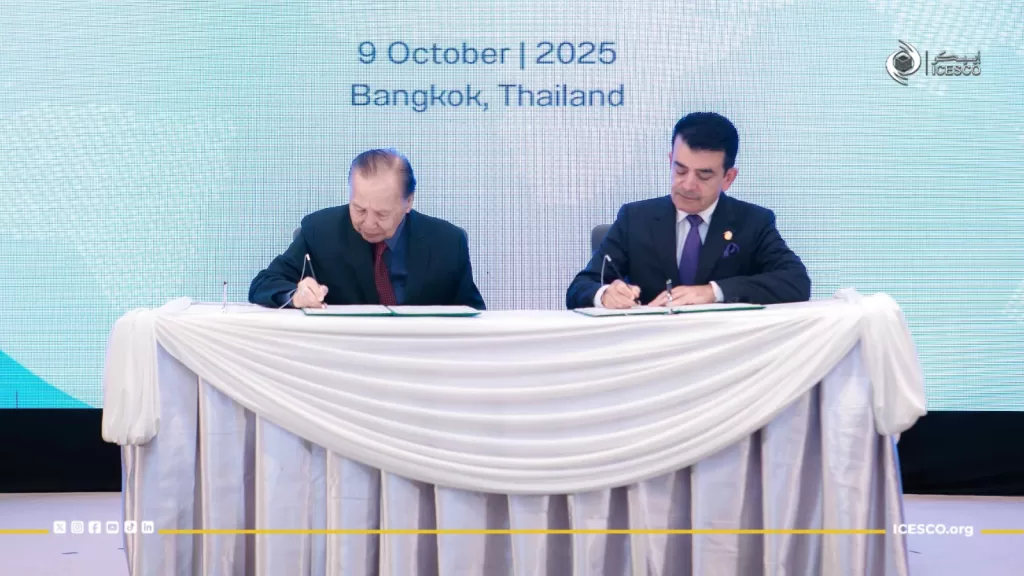
The second MoU was signed by Dr. AlMalik and Dr. Krasae Chanawongse, President of Krirk University. It aims to establish an institutional framework for academic and research cooperation, including the launch of joint research projects and the organization of specialized conferences and seminars in the fields of language, innovation, and civilizational studies.
In this context, Dr. AlMalik affirmed that the signing of the MoU aligns with ICESCO’s strategic approach to expand international cooperation networks and exchange expertise, thereby supporting societal stability and enhancing the role of education, science, and culture in fostering peace and development.


