
ICESCO Calls for Accelerating Climate Action in the Global South through Circular Economy Policies at COP31

12 November 2026
Dr. Salim M. AlMalik, Director-General of the Islamic World Educational, Scientific and Cultural Organization (ICESCO), affirmed that the transition to a circular economy has become an economic and development priority given its direct impact on environmental protection. He pointed out that this challenge represents an opportunity for countries of the Global South, as the circular economy reduces waste and pollution, improves resource efficiency, contributes to lowering emissions, and opens up new economic opportunities.
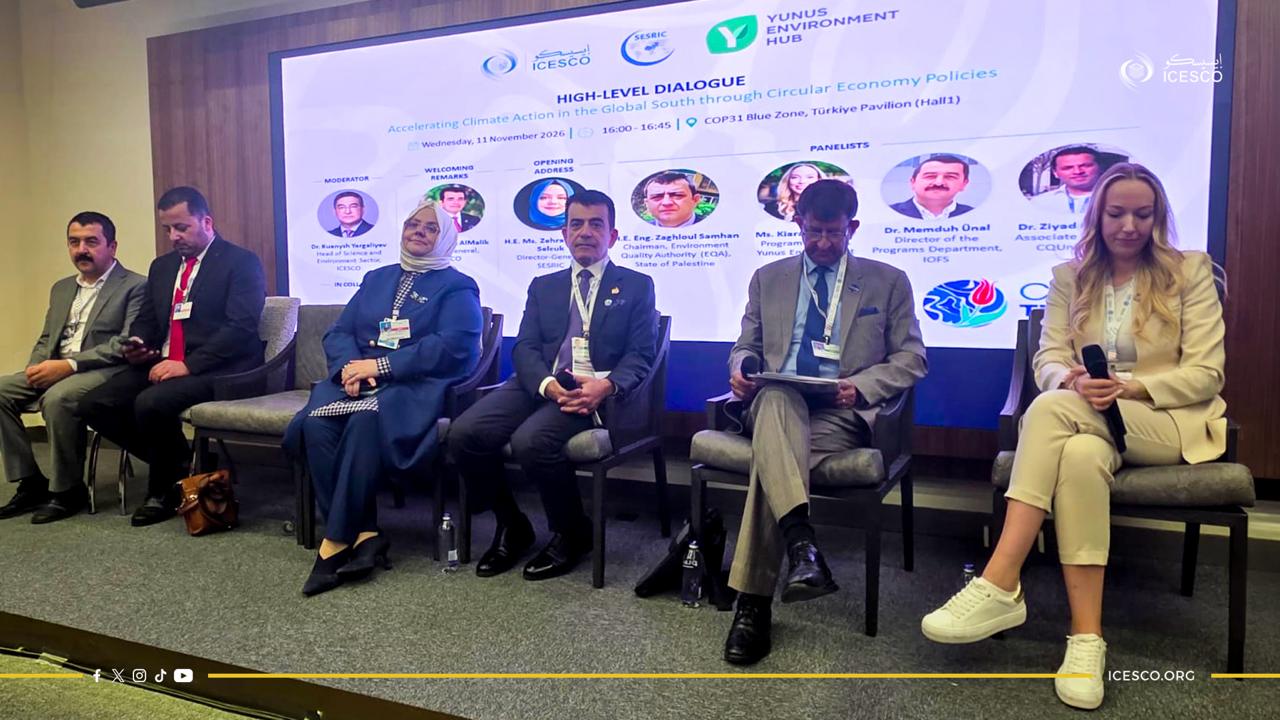
Dr. AlMalik made these remarks during the High-Level Dialogue on Accelerating Climate Action in the Global South through Circular Economy Policies, held on Wednesday, 11 November 2026, by ICESCO, the Statistical, Economic and Social Research and Training Centre for Islamic Countries (SESRIC), the Yunus Environment Hub, and the Commission on Science and Technology for Sustainable Development in the South (COMSATS). The event took place at the Republic of Türkiye Pavilion during the 31st United Nations Climate Change Conference (COP31), hosted by Antalya, Türkiye.
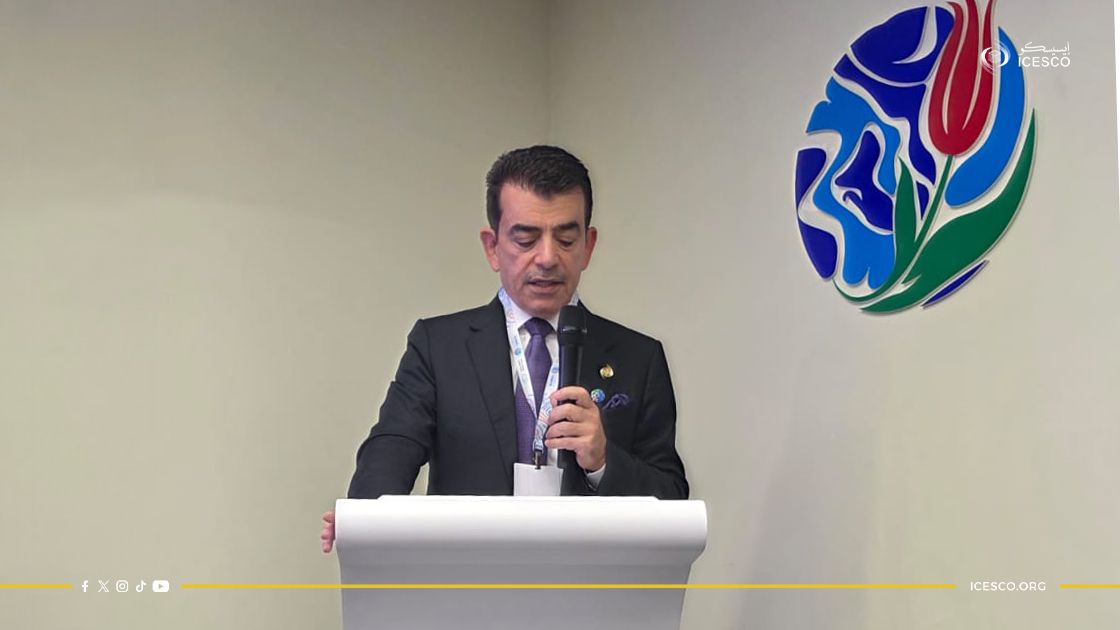
The Director-General began his address by thanking the Government of the Republic of Türkiye for hosting the dialogue at its pavilion. He then emphasized that pressure on natural resources is increasing due to prevailing production and consumption patterns, while recycled materials account for only around 6.9% of the total materials input into the global economy, revealing the gap between ambitions and current practices. He added that the success of circular economy policies is measured by the ability to implement them, which requires regulatory frameworks and institutional capacities, as well as facilitating access to financing and strengthening cooperation among governments and academia, and between international organizations and the private sector.
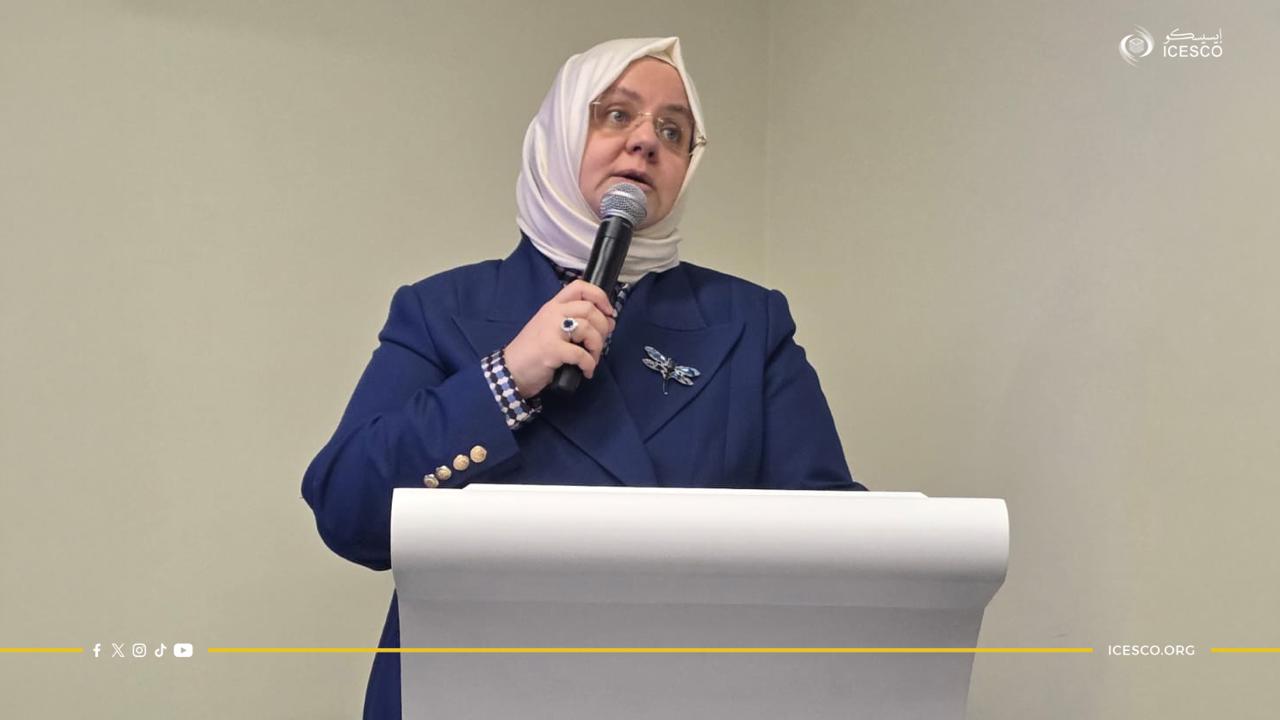
In this regard, he pointed out that ICESCO, through its Science and Environment Sector, supports Member States’ efforts to achieve sustainable development by leveraging scientific and technological advances and promoting innovation. He also explained that the Organization is preparing a technical report on the options available to its Member States for waste management and pollution reduction in accordance with the circular economy approach. The report provides practical guidance to help each country identify the approach best suited to its circumstances, alongside recommendations for addressing existing gaps and strengthening implementation.