

Head of Culture Sector at ICESCO Delivers Lecture on Cultural Policies and the Creative Economy During an Intellectual Seminar in Rabat

7 November 2026
Dr. Mohamed Zineelabidine, Head of the Culture Sector at the Islamic World Educational, Scientific and Cultural Organization (ICESCO), delivered a lecture titled “The Current State of Cultural Policies and the Stakes of the Cultural and Creative Economy Today” during an intellectual seminar organized by the Islamic Development Bank Regional Hub of Rabat, Morocco, on Thursday, 5 November 2026. The event was attended by several intellectuals and officials from the banking, insurance, finance and business sectors.
Before the lecture, Mr. Ahmed Aboubacrine, Head of the Regional Hub, spoke about the qualitative transformation ICESCO had undergone in recent years, particularly in the field of cultural work. He noted that, through its Culture Sector, the Organization had become a key driver of the modernization and development of cultural policies in the Islamic world.
He also expressed the Bank’s willingness to build a partnership with ICESCO to support the cultural economy, build young people’s capacities, and invest in start-ups.
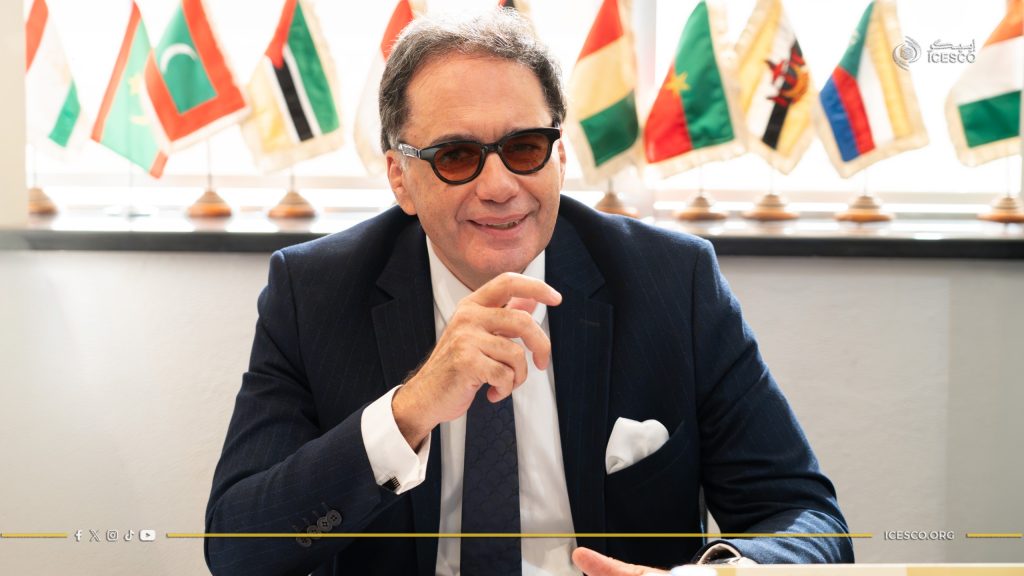
Dr. Zinelabidine began his lecture by stressing that the Regional Hub of the Islamic Development Bank’s hosting of the event demonstrated its recognition of culture’s role as a key driver of economic development, innovation and creativity. He then shed light on the current state of cultural policies worldwide, noting that the creative economy had become an integral part of public policies, particularly in the areas of sustainable development and international relations.
He explained that ICESCO had undertaken to implement a vision aligned with these emerging requirements, beginning with its “ICESCO Roads for the Future” program in 2021. Under this vision, the Organization conducted studies on leadership and governance of cultural policies in the Islamic world, including the development of “Strategic Benchmarks for Cultural Indicators, New Economies, Modern Interactive Technologies and Employment-Oriented Professions”. It also developed a dedicated Charter of Cultural Rights and established incubators for start-ups in the creative industries targeting young people, in addition to workshops on the use of AI and creative applications.
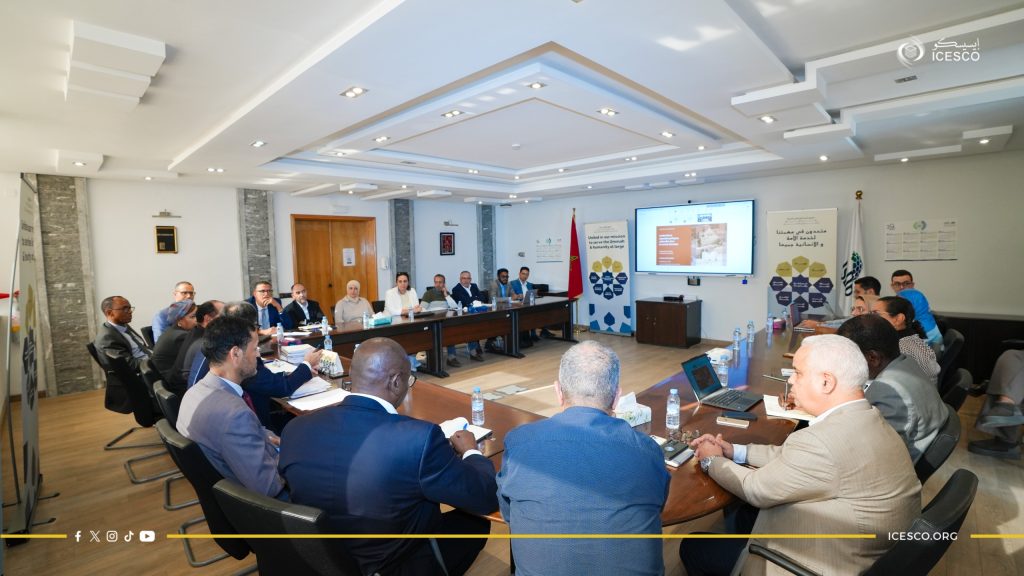
The Organization further expanded its work to include the launch of the ICESCO Creative platform and the ICESCO Agora network, which has published more than 270 articles and research papers. Other initiatives included the ICESCO International Forum: Culture to Rethink the World, which brings together more than 200 international cultural figures, including ministers, ambassadors, scholars and creative professionals; the ICESCO International Network of Chairs for Thought, Heritage, Letters, and the Arts; and the ICESCO International Network of Civil Society Organizations for Culture and Development, which comprises 70 organizations from 30 countries.
The lecture concluded with an open discussion between Dr. Zinelabidine and the attendees on the state of culture and the most effective ways to support culture, intellectuals and creative professionals.


