

ICESCO Holds Second Webinar of Research Group on Women’s Thought and Creativity in the Islamic World

8 April 2026
The Culture Sector of the Islamic World Educational, Scientific and Cultural Organization (ICESCO) held the second webinar of the Research Group on Women’s Thought and Creativity in the Islamic World via videoconference. The meeting was held under the theme “Women’s Thought and Creativity in the Service of Peace” and was attended by 20 female lecturers from 13 countries. The aim was to highlight women’s intellectual, scientific, and artistic contributions to defending the values of dialogue and coexistence.
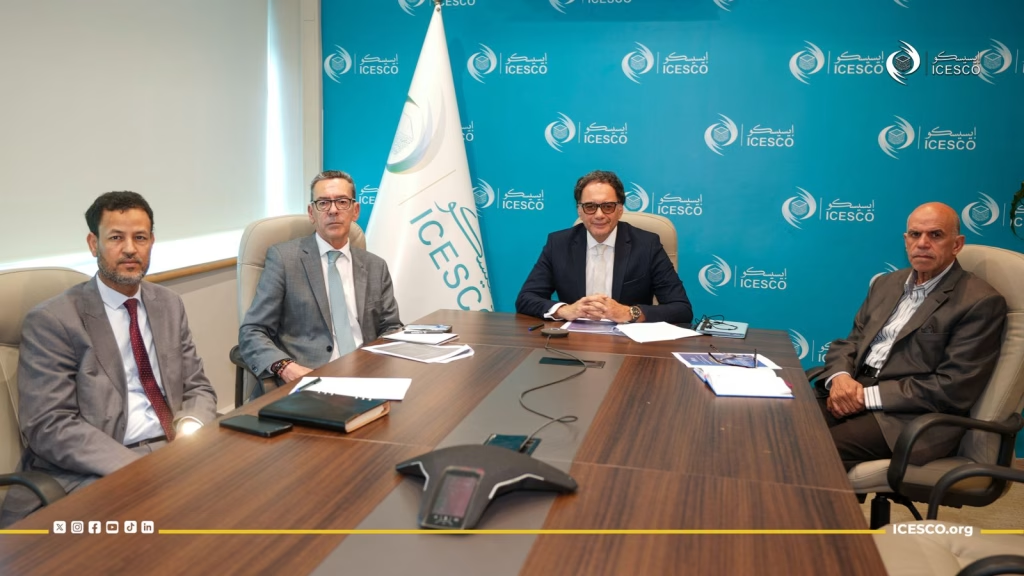
Dr. Mohamed Zinelabidine, Head of ICESCO’s Culture Sector, opened the meeting on Tuesday, April 7, 2026. He emphasized that peace in the Islamic world is inextricably linked to the vital role women play in building societies and directing collective consciousness toward the values of coexistence and moderation.
Dr. Zoubeida Boukhari, International Advisor on Culture, Education, and Environmental Communication, explained that the meeting is the second phase of an ongoing project following an initial symposium that resulted in a book. She noted that the initiative is gradually expanding in terms of participants and countries involved.
The meeting featured presentations on educational, literary, and artistic topics. Mori Traoré of Burkina Faso emphasized the importance of girls’ education as the foundation for achieving independence and understanding the world. Jeannette Yolande of Gabon focused on the ways women make their voices heard, whether through singing or organized activism. Amal Abdelhadi of Egypt discussed her desire to highlight positive aspects of women’s roles and image in her writing.
Aimée Koffi of Côte d’Ivoire highlighted inspiring female role models, including Wangari Maathai of Kenya, the first African woman to win the Nobel Peace Prize in 2004. Aicha Cherif of France recited a poem calling for love and rejecting violence and war. Marie Claude of France presented her artistic experience influenced by Mexican culture. Neheda Mohamed Ali of Iraq addressed the impact of wars and conflicts on societies.
Contributions also came from Katia Saab of Lebanon, Fatima Ben Mahmoud, Rim Foughali, Wejdene Jerbi, and Olfa Abidi of Tunisia, as well as speakers from Algeria, Egypt, the Union of the Comoros, and Mauritania.
The meeting concluded by emphasizing that women’s thought and creativity represent a soft power capable of establishing a culture of peace, expanding spaces for dialogue, and promoting the values of coexistence.


