
ICESCO Holds Interactive Workshop in Morocco on Employing Artificial Intelligence in Teaching the Arabic Language

17 February 2026
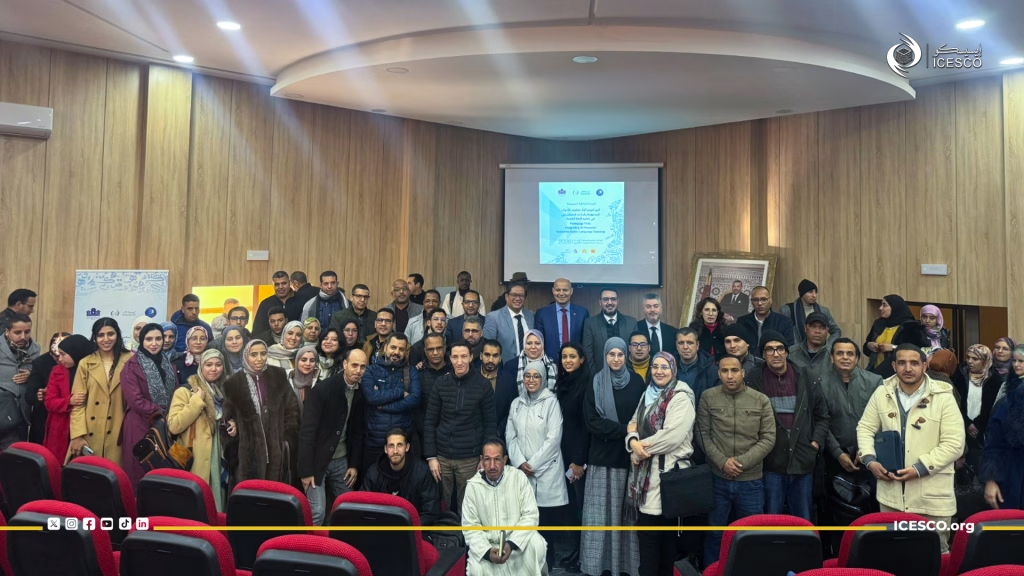
The Islamic World Educational, Scientific and Cultural Organization (ICESCO), through its Center of Arabic for Non-Arabic Speakers, organized a workshop entitled “Pedagogy First: Integrating AI-Powered Tools into Arabic Language Teaching,” in cooperation with Sultan Moulay Slimane University in the Kingdom of Morocco. This initiative is part of the Organization’s ongoing efforts to develop Arabic language education and strengthen its presence in international educational contexts.
The workshop, held at the Faculty of Literature and Humanities in the city of Beni Mellal on Saturday, 14 February 2026, kicked off with an address delivered by Dr. Majdi Haji Ibrahim, Head of ICESCO’s Center of Arabic for Non-Arabic Speakers. In his remarks, he outlined the Organization’s strategic vision for advancing Arabic language teaching, emphasizing the importance of adopting a pedagogical approach in leveraging artificial intelligence technologies while preserving the central role of the teacher and maintaining a balance between technological innovation and sound pedagogical foundations.
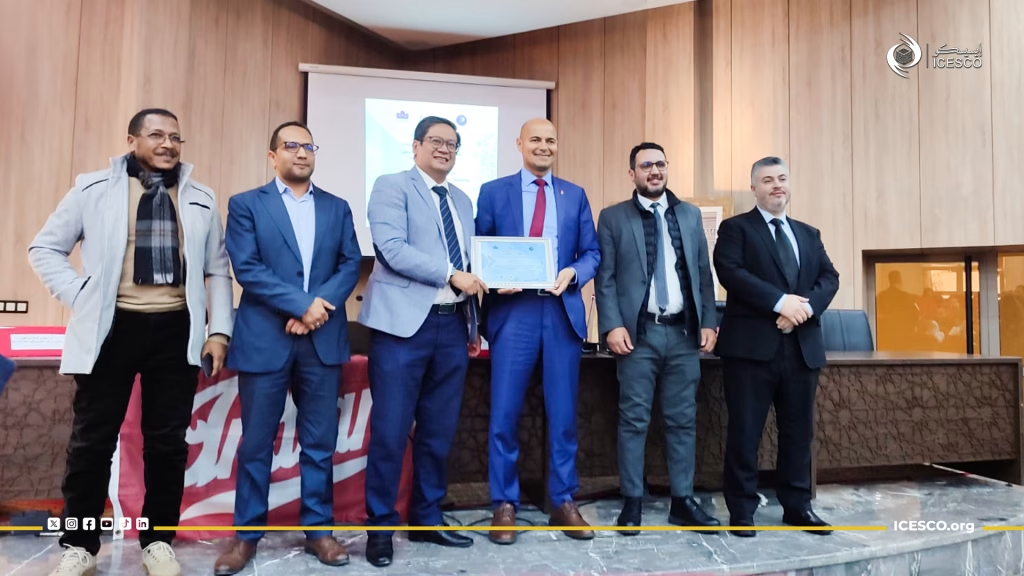
For his part, Dr. Mhamed Alaoui, Director of the University Center for Teaching Arabic to Non-Arabic Speakers at Sultan Moulay Slimane University, underscored the importance of such scientific initiatives in developing the mechanisms of Arabic language teaching and enhancing its openness to technological advancements. The workshop was facilitated by Dr. Youssef Ismaili, Head of the Language Training Division at ICESCO’s Center of Arabic for Non-Arabic Speakers.
Subsequently, Dr. Attia Youseif, Senior Lecturer at Indiana University Bloomington (USA), delivered a presentation showcasing practical models for employing artificial intelligence tools in teaching Arabic. He also guided participants in redesigning learning activities according to clear pedagogical principles, while taking into account the accuracy of linguistic outputs, academic integrity, and cultural appropriateness.
The workshop also focused on integrating artificial intelligence tools based on learning objectives and linguistic competencies, with practical applications of tools such as Gemini and customized GPT models for teaching Arabic.