
ICESCO Calls for Adoption of Educational Plans That Incorporate Artificial Intelligence Technologies at an International Conference in Riyadh

28 January 2026
Dr. AlMalik: Artificial Intelligence Is a Platform for Improving Quality of Life, Shifting Societies from Sufficiency to Creativity
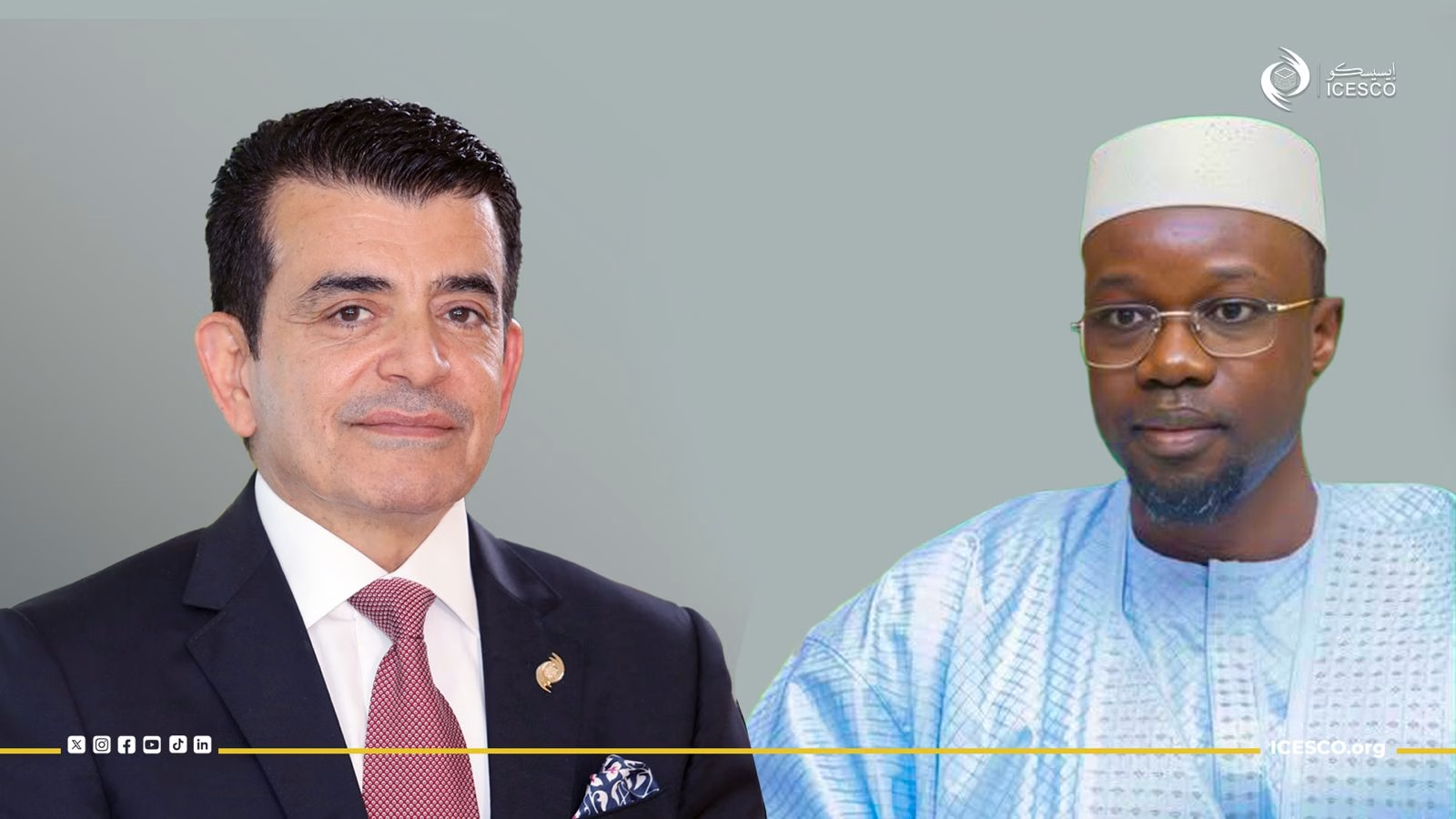
Dr. Salim M. AlMalik, Director-General of the Islamic World Educational, Scientific and Cultural Organization (ICESCO), emphasized that artificial intelligence has become a new platform for improving the quality of life, increasing job opportunities, and consolidating the pillars of effective governance, thus taking societies from sufficiency to societal creativity and promoting sustainable development.
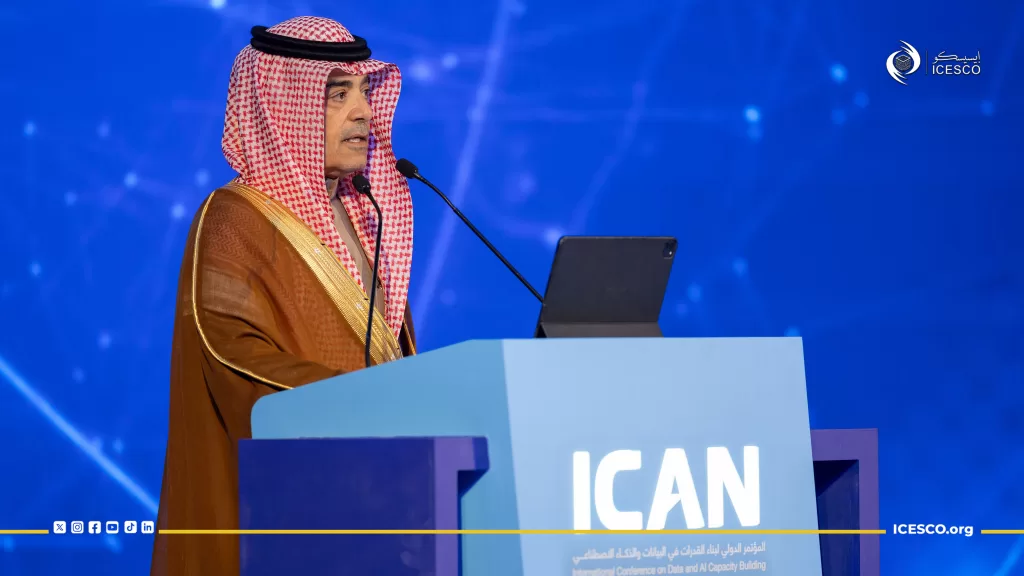
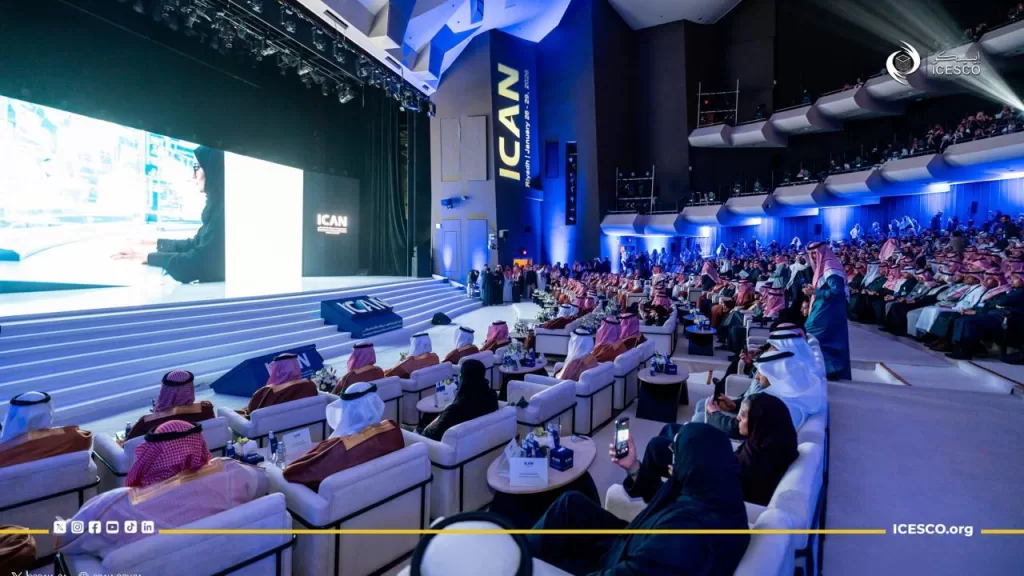
His remarks came on Wednesday, January 28, 2026, during the two-day International Conference on Data and AI Capacity Building (ICAN 2026), organized by the Saudi Data and Artificial Intelligence Authority (SDAIA) in Riyadh, in partnership with King Saud University and the Human Capability Development Program (HCDP), in the presence of experts and specialists from more than 50 local and international bodies, to discuss the future of humanity in education and work in the age of artificial intelligence.
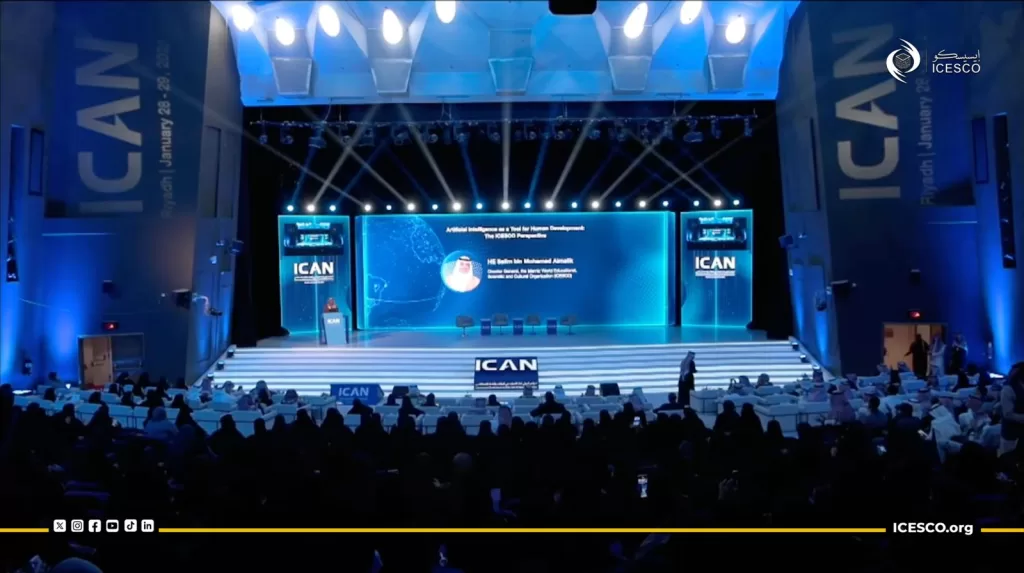
Dr. AlMalik shed light on the Riyadh Charter of Artificial Intelligence for the Islamic World, launched by ICESCO in partnership with SDAIA, as an ethical and strategic reference framework that guides the responsible development and use of artificial intelligence and promotes its use in the service of humanity and sustainable development, stressing that capacity building is the key to reducing development gaps.
In this regard, the ICESCO Director-General called on the ministries of education of Member States to adopt educational plans that incorporate artificial intelligence technologies into educational curricula, while including the principles of the Riyadh Charter with its ethical foundations.
Dr. AlMalik also warned of rapid changes in the job market, noting that artificial intelligence will lead to a decline in the number of traditional jobs, which will be replaced by emerging jobs with new names and skills, requiring accelerated efforts in preparation and continuous training.
In this context, the ICESCO Director-General commended the measures adopted by the Kingdom of Saudi Arabia, under the leadership of the Custodian of the Two Holy Mosques, King Salman bin Abdulaziz Al Saud, and His Royal Highness Prince Mohammed bin Salman, Crown Prince and Prime Minister, to keep pace with this historic transformation through human capacity development programs, the development of the education and training system, and the anticipation of future skills.
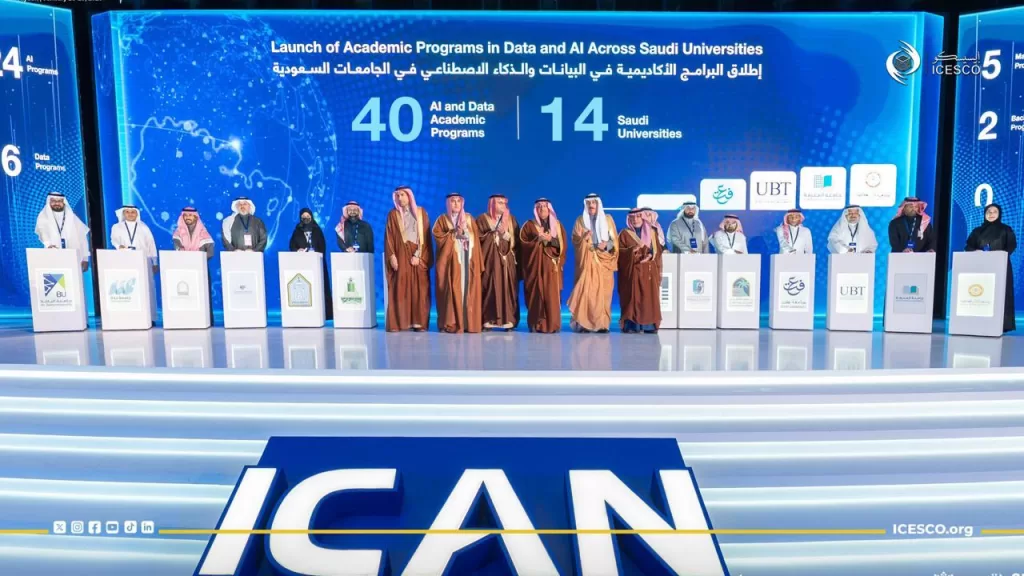
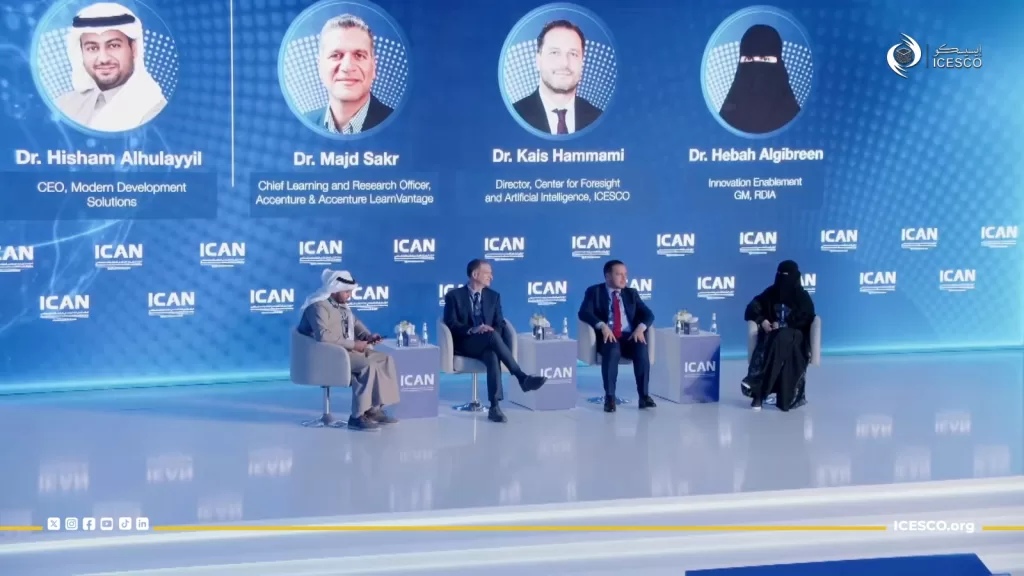
For his part, Dr. Kais Hammami, Director of ICESCO’s Center for Foresight and Artificial Intelligence, participated in one of the conference sessions entitled “From National Data and Artificial Intelligence Strategies to Measurable Impact,” in which he reviewed ICESCO’s Artificial Intelligence Index in the Islamic World, emphasizing that it is a practical tool for assessing readiness, identifying gaps, and supporting policies in Member States.