
ICESCO Receives Replica of Rare Manuscript of the Holy Quran Penned by Calligrapher Ibn al-Bawwab

25 December 2025
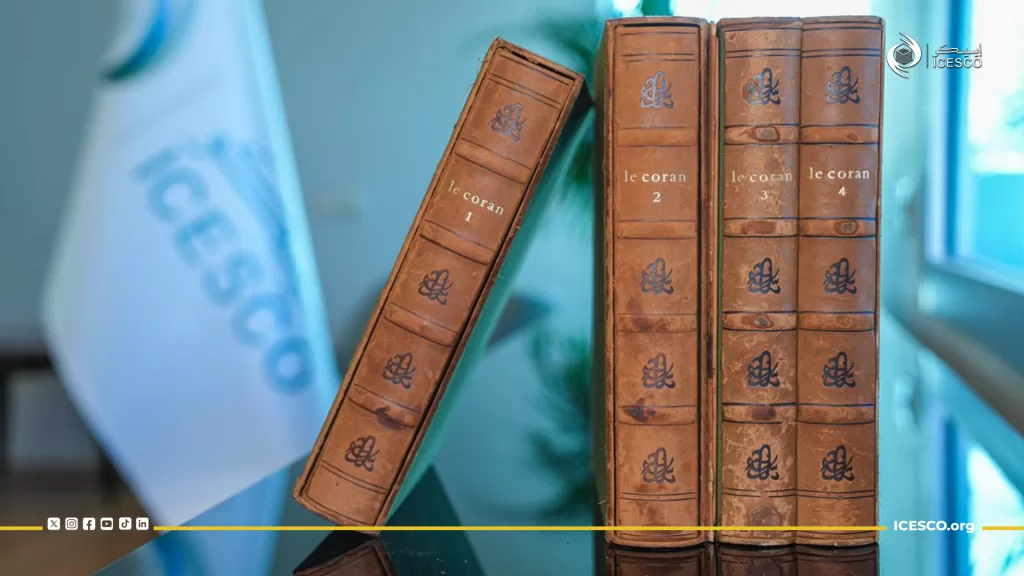
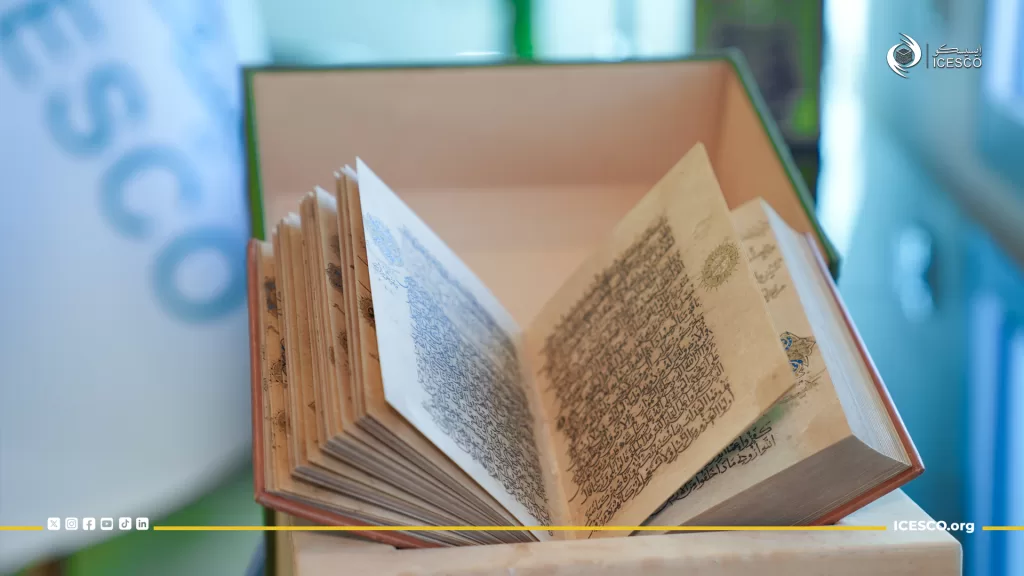
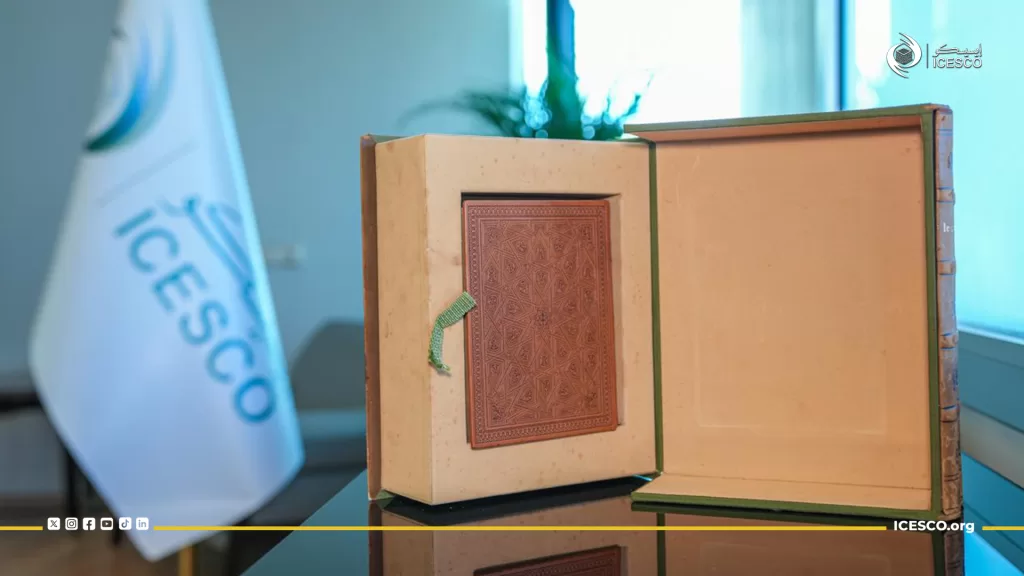
Dr. Salim M. AlMalik, Director General of the Islamic World Educational, Scientific and Cultural Organization (ICESCO), received a replica of a rare manuscript of the Holy Quran penned by Abu al-Hasan Ali ibn Hilal ibn Abdulaziz, widely known as Ibn al-Bawwab, from Ms. Ratiba Sefrioui, a retired university professor, in recognition of ICESCO’s pioneering roles in preserving and promoting manuscript heritage in the Islamic world.
During the meeting, held on Wednesday, 24 December 2025, at the Organization’s headquarters in Rabat, Dr. AlMalik commended this initiative, describing it as a commendable step towards the protection of manuscripts of the Islamic world. He affirmed that such initiatives, which encourage the dissemination of knowledge, strengthen ICESCO’s efforts to preserve cultural elements from disappearance and deterioration, and to introduce the heritage of Muslim societies and their cultural, scientific, and civilizational contributions.
For her part, Ms. Sefrioui provided a detailed explanation of the components of the manuscript, which came into her possession from her late brother, Mr. Abdelhay Sefrioui. The manuscript includes an introductory booklet and a translated version of the meanings of some Quran surahs into French. Mrs. Sefrioui praised ICESCO’s role in promoting the civilization of the Islamic world and in raising awareness of the importance of preserving Arab and Islamic identity among future generations.
The meeting was attended by Dr. Abdelilah Benarafa, Deputy ICESCO Director-General, and Mr. Amine Debbi.
Ibn al-Bawwab is one of the most prominent calligraphers of the third and fourth Hijri centuries. He developed the principles of the Naskh script and established aesthetic proportions governing the components of each letter. He also wrote 64 copies of the Quran, the most famous of which is the only surviving manuscript among the Qurans he penned. It was written in Baghdad in 391 AH and is preserved at the Chester Beatty Library in Dublin, Ireland, from which the replica donated to the Organization was produced.