ICESCO Holds Webinar on Safeguarding Heritage in the Age of the Technological Revolution with International Experts

18 December 2025
The Islamic World Educational, Scientific and Cultural Organization (ICESCO) held, on Tuesday, 16 December 2025, webinar titled “Rethinking Heritage Conservation in the Digital Age.” The webinar is part of the series of digital seminars organized by the ICESCO Center for Heritage in the Islamic World, aiming to support efforts to preserve and protect the heritage of Member States and to build the capacities of professionals in the field.
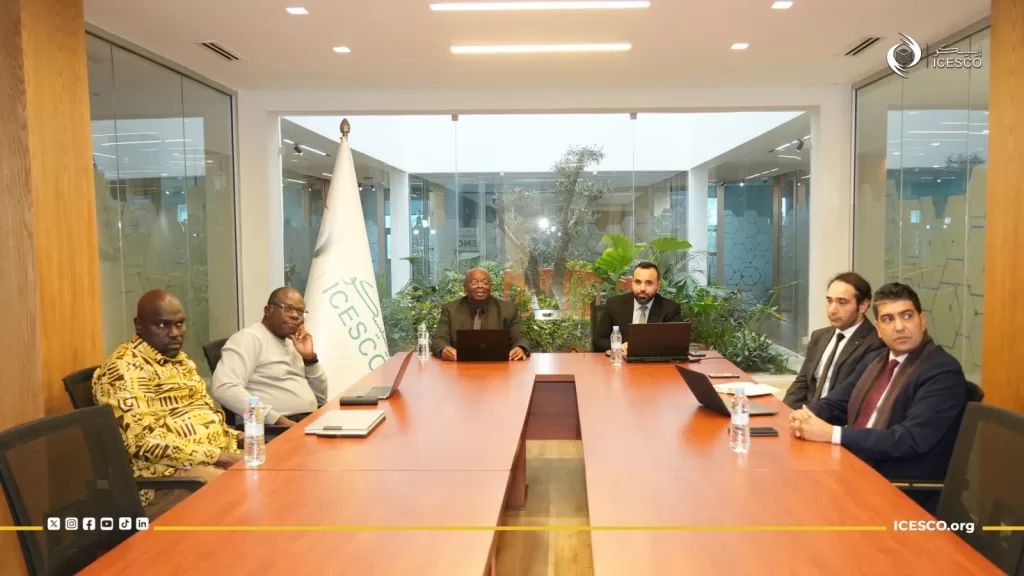
The webinar opened with an address by Dr. Webber Ndoro, Director of the ICESCO Center for Heritage in the Islamic World, in which he stressed the importance of harnessing modern technologies for preserving and valorizing heritage, as it constitutes an integral part of peoples’ identity and a pillar of sustainability.
The session was moderated by Mr. Mohamed Al-Absi, Expert at ICESCO’s Center for Heritage, with the participation of four international experts in heritage and digital technologies. The session featured a review of several field experiences and projects of regional and international scope in employing technology to serve heritage.
Dr. Bijan Rouhani, of Oxford University, began the presentations with an overview of the UK-based Endangered Archaeology in the Middle East and North Africa (EAMENA) project, which relies on remote sensing and satellite imagery to monitor and document threatened archaeological sites. Expert Annabel Lee Enriquez, from the Getty Conservation Institute, delivered a presentation on the use of Geographic Information Systems (GIS) and the open-source platform “Arches” for interactive documentation and monitoring of heritage sites.
For her part, expert Giorgia Cesaro, from the Saudi Heritage Commission, outlined mechanisms for leveraging technology to prepare for natural disasters through early warning systems and data analysis to protect heritage. Engineer Mohammed Al Shibli, from Jordan’s Department of Antiquities, concluded the presentations with a review of the latest digital methods for documenting cultural heritage and their role in strengthening the protection of heritage sites.