
The Arabic Language Training Program in Central Asia Reaches Its Fifth Phase in Tashkent

13 February 2026
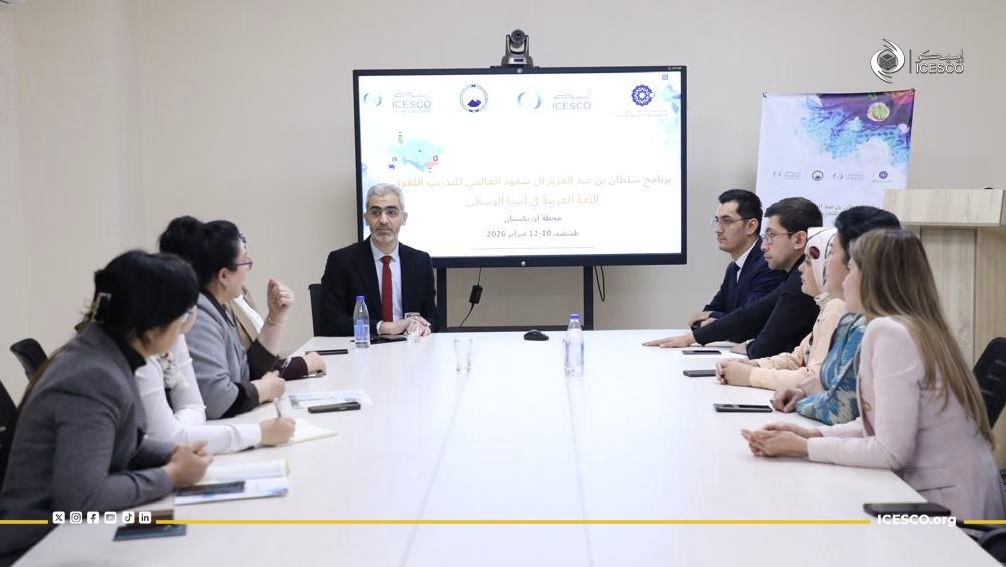
The Islamic World Educational, Scientific and Cultural Organization (ICESCO), in partnership with the Sultan bin Abdulaziz Al Saud Foundation and in cooperation with ICESCO’s Regional Office in Baku and Tashkent State University of Oriental Studies, implemented the fifth stop of the “Sultan bin Abdulaziz Al Saud International Program for Language Training: Arabic Language in Central Asia.” The event was organized in Tashkent, Uzbekistan, from 10 to 12 February 2026.
The program kicked off with an official reception at the University, which included a tour of its departments and an introduction to its academic history. This was followed by an expanded meeting to explore prospects for cooperation in training and scientific research related to teaching Arabic to non-Arabic speakers. The meeting was attended by the Ambassador of the Custodian of the Two Holy Mosques to the Republic of Uzbekistan, His Excellency Saad Nasir Abdullah Abuhaimed, representatives of the partner foundation, and the University’s leadership.
Subsequently, the scheduled training workshops began, with the participation of more than 40 trainees, including faculty members and postgraduate students. Four specialized workshops were delivered by Dr. Adham Hamwiya, Head of the Language Development Section at ICESCO’s Center of Arabic for Non-Arabic Speakers. The sessions focused on the latest approaches adopted in teaching Arabic, ways to enhance classroom practices, and discussions on challenges associated with teaching Arabic in the Uzbek context.
The program concluded with a closing session dedicated to reviewing outcomes, presenting the final report and recommendations, and awarding certificates of completion to participants.
It is worth noting that the program was launched in September 2025, with previous stops held in Kyrgyzstan, Kazakhstan, Bashkortostan, and Uzbekistan. The initiative will conclude in Azerbaijan, reflecting a vision grounded in partnership, integration, and the expansion of language training impact across the region.