
ICESCO Holds Roundtable Celebrating Ibn Rochd’s Intellectual Legacy with Philosophers and ResearchersRabat: 13 February 2026

13 February 2026
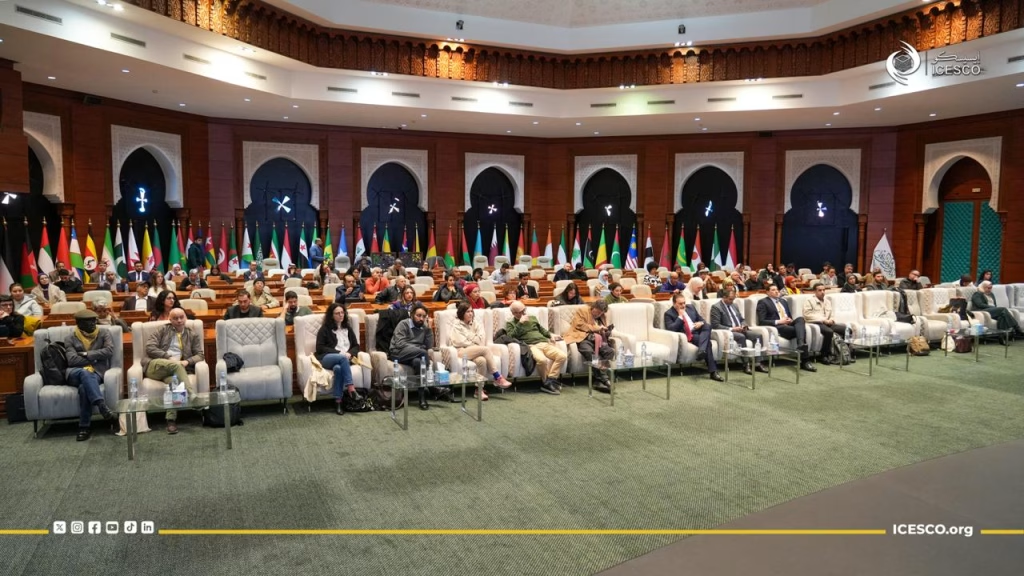
The Islamic World Educational, Scientific and Cultural Organization (ICESCO) held on Friday, 13 February 2026, at its headquarters in Rabat, a roundtable celebrating the 9th centenary anniversary of the birth of Ibn Rochd, titled “The Legacy of Ibn Rochd: Landmarks for Thinking Tomorrow”. The event was organized in partnership with the French Institute in Morocco and brought together a distinguished group of philosophers, researchers, and specialists in Medieval Thought.
This initiative is part of the “Philosophical Encounters” program launched by ICESCO’s Center of Strategic Foresight and Artificial Intelligence, aiming to provide a space for intellectual dialogue and the exchange of views on issues of philosophy and knowledge, while deepening debate on philosophical heritage and its continually renewed questions.
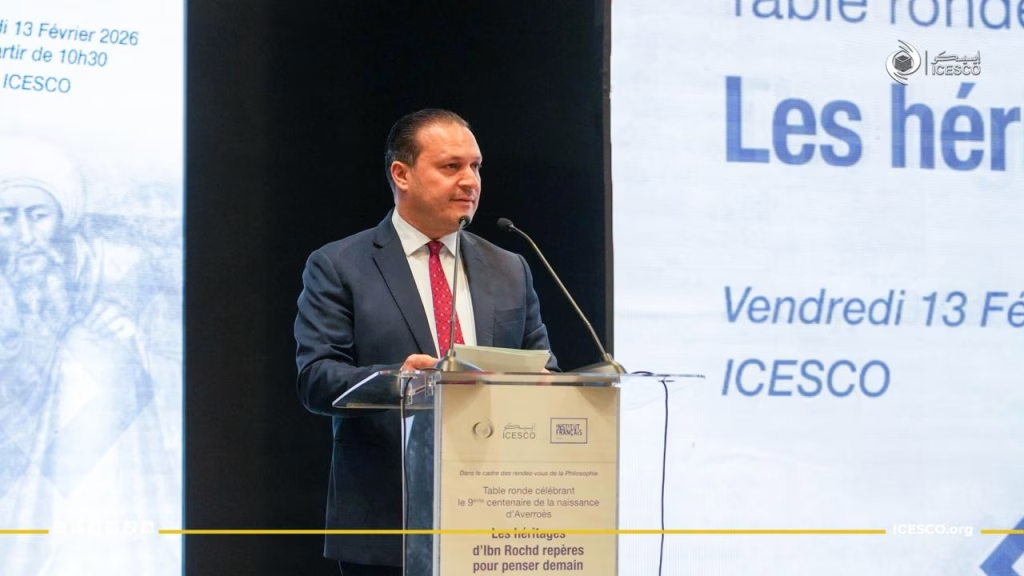
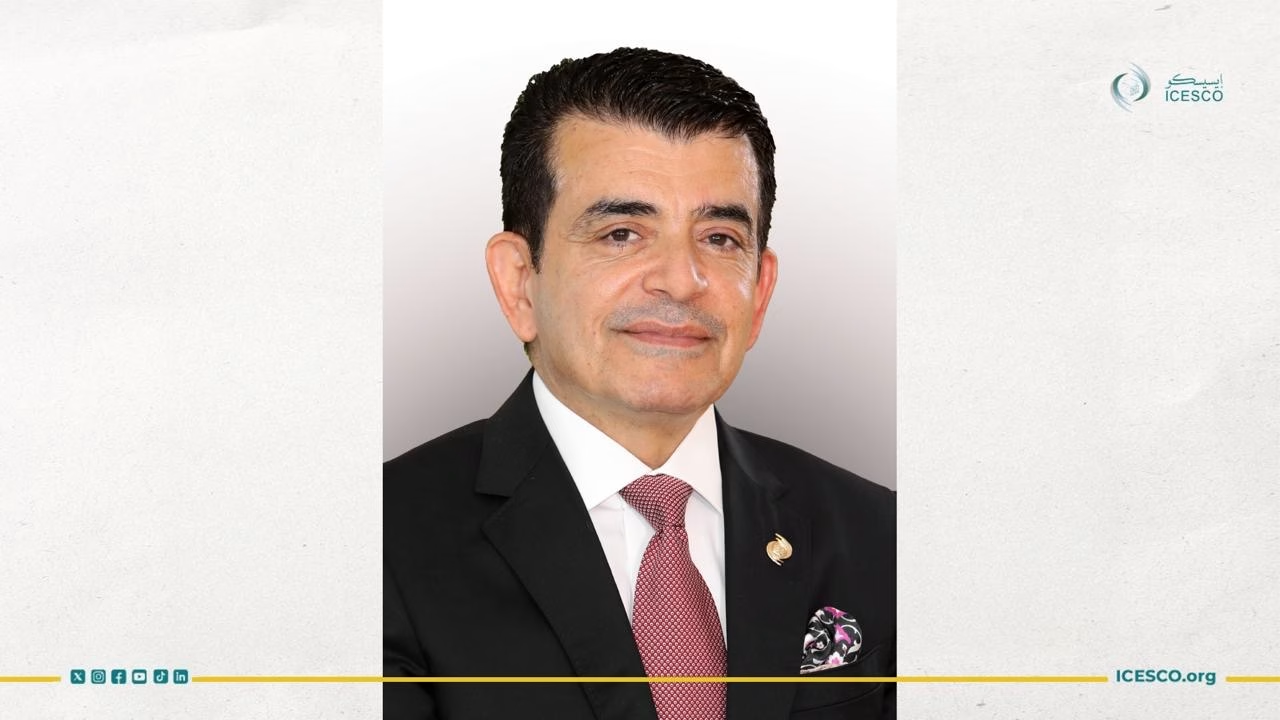
In his opening remarks, Dr. Kais Hammami, Director of the Center of Strategic Foresight and Artificial Intelligence, stressed that commemorating the 9th centenary anniversary of the birth of Ibn Rochd is an invitation to revisit a body of thought whose modernity remains striking. He recalled that certain intellectual figures constitute a living human heritage whose reinterpretation is essential for understanding present challenges and contributing to shaping future choices.
Dr. Hammami highlighted the importance of engaging with Ibn Rochd’s thought at a time of technological, environmental, and social transformations, emphasizing the need to place reason at the core of understanding the world and interpreting its phenomena. He added that foresight is not merely a predictive technique but a long-term intellectual culture.
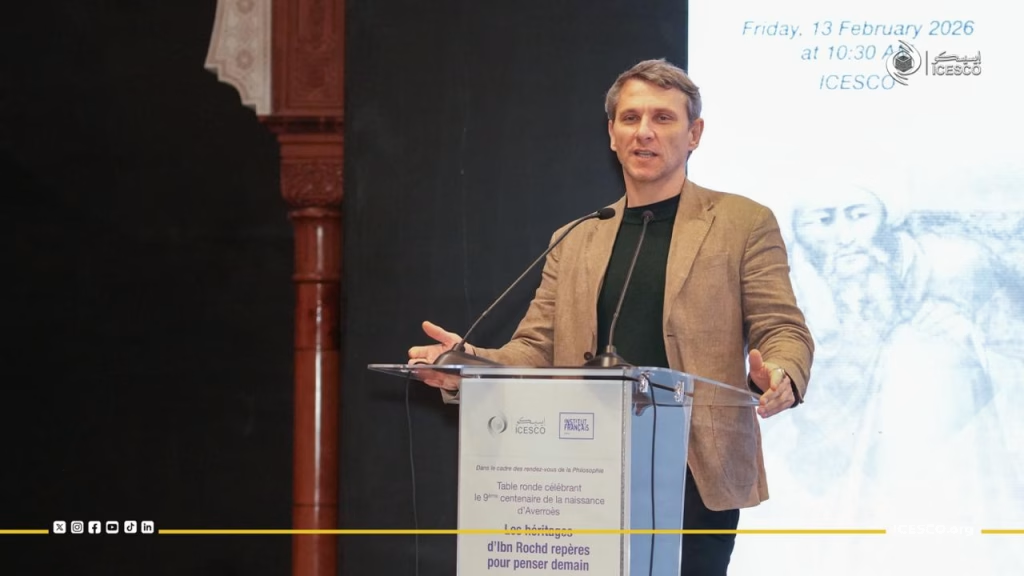
For his part, Dr. Jean-Baptiste Brenet, French philosopher and Professor of Arabic Philosophy at Paris 1 Panthéon-Sorbonne University, noted that Ibn Rochd’s works, which have not yet all been edited and published, have had a profound impact on various intellectual and religious traditions. He added that each era returns to Ibn Rochd to question its own concerns, including contemporary issues related to Artificial Intelligence.
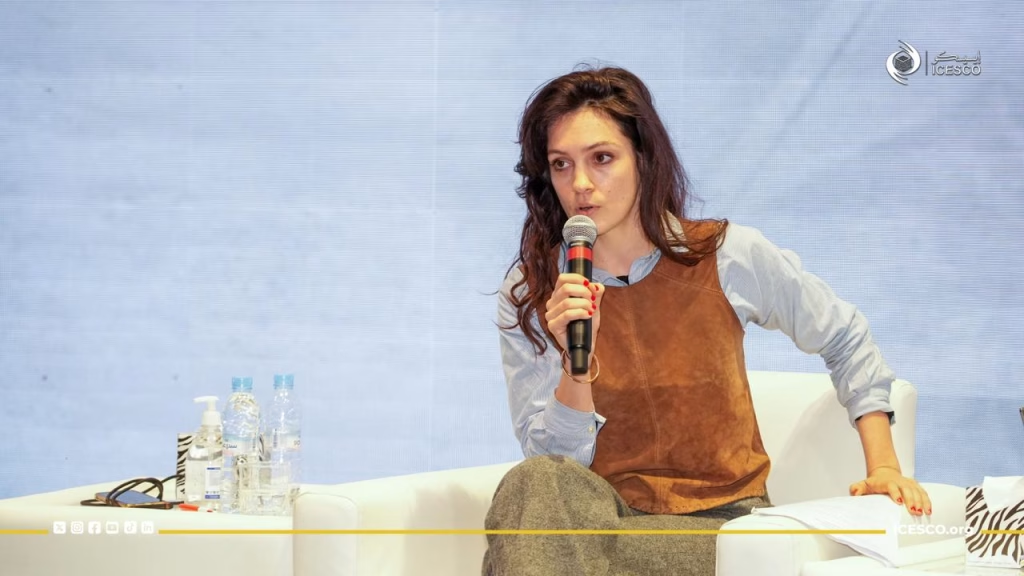
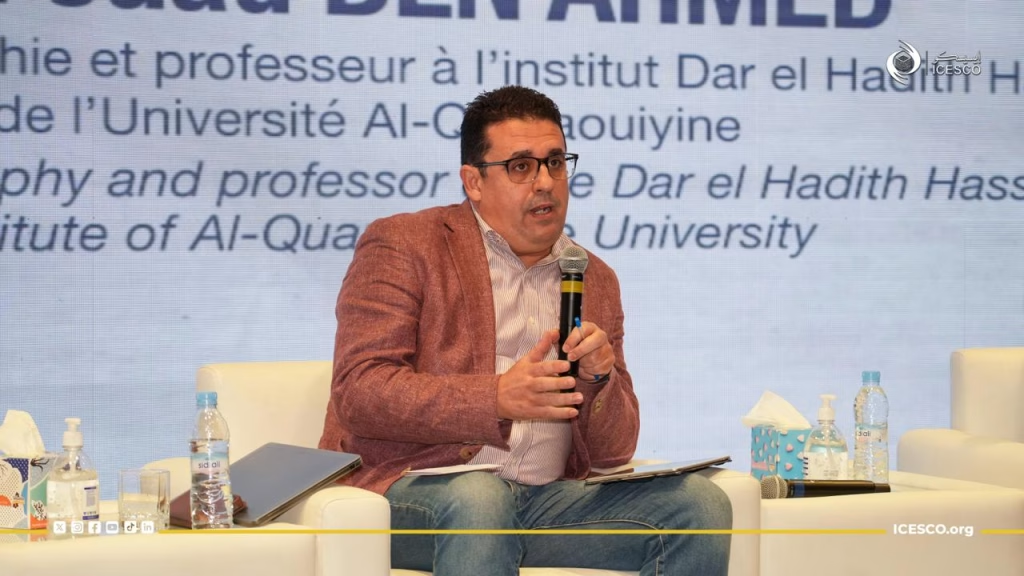
The roundtable was moderated by Dr. Pauline Koetschet, Director of the Department of Arabic Studies at the French Institute for the Near East (IFPO). The sessions featured specialized scholarly presentations, during which Dr. Fouad Ben Ahmed, Professor of Philosophy at Dar Al-Hadith Al-Hassania in Morocco, offered a critical reading of the thesis of the “death of philosophy in Islam after Ibn Rochd,” arguing that it is based on a reductive historical conception and calling for moving beyond simplistic interpretations of intellectual history.
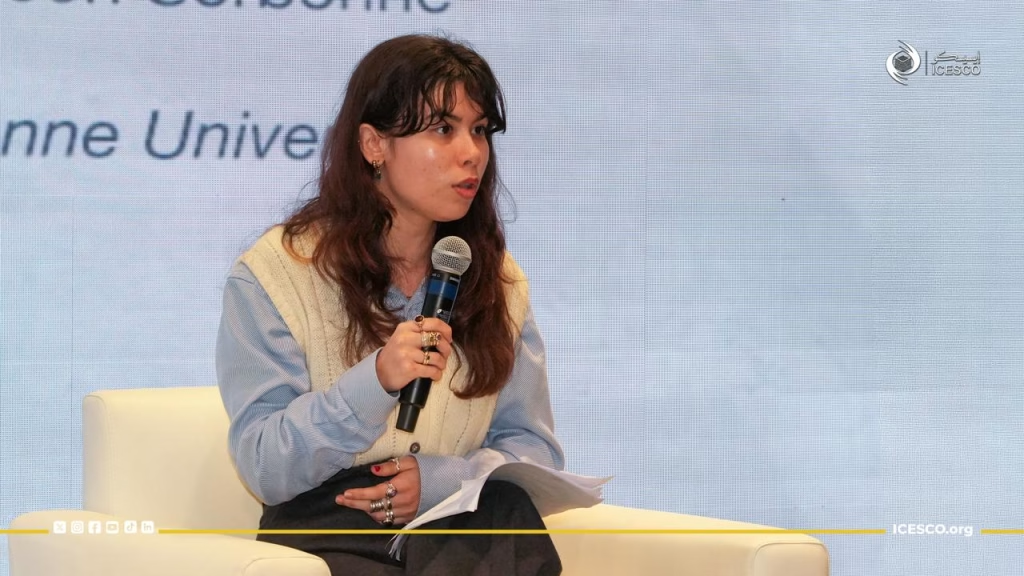
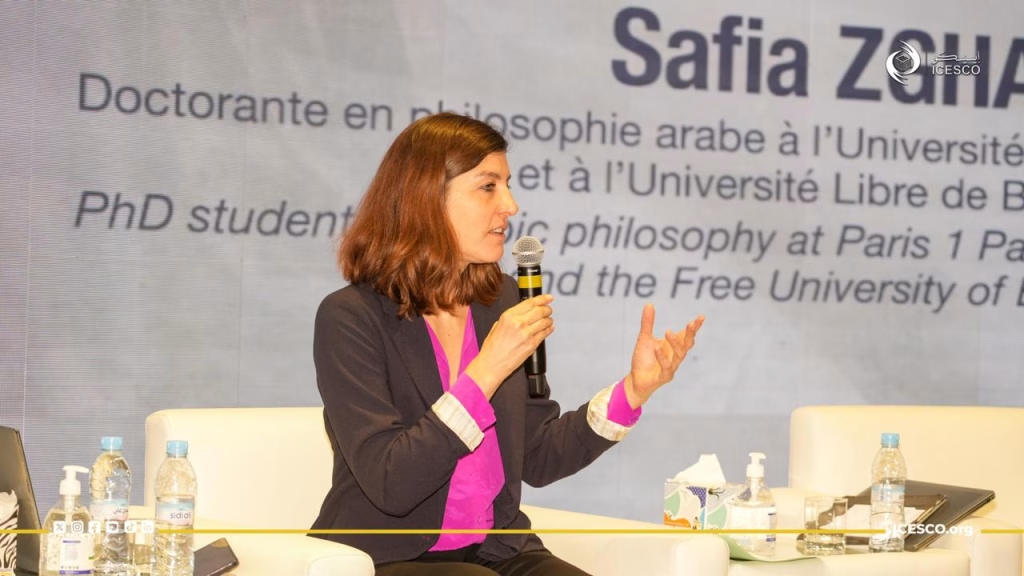
Safia Zghal, researcher in philosophy at Paris 1 Panthéon-Sorbonne University, examined modern uses of the figure of Ibn Rochd through the early twentieth-century debate between Mohammed Abdo and Farah Anton, showing how each relied on Ibn Rochd to defend a distinct vision of the relationship between religion, reason, and modernity.